- Company Articles
- Products and Technology
- Product knowledge
- Parallel Lean Pipe Joint Chrome vs. Powder-Coated: Which Coating is Better?

Parallel Lean Pipe Joint Chrome vs. Powder-Coated: Which Coating is Better?
Related Product
Parallel Lean Pipe Joint Chrome
Parallel lean pipe joint used for 2 pcs 28MM lean pipe connection in parallel direction to enhance frame structure, usually for heavy payload requirement for workbench. flow rack, hand trolley.
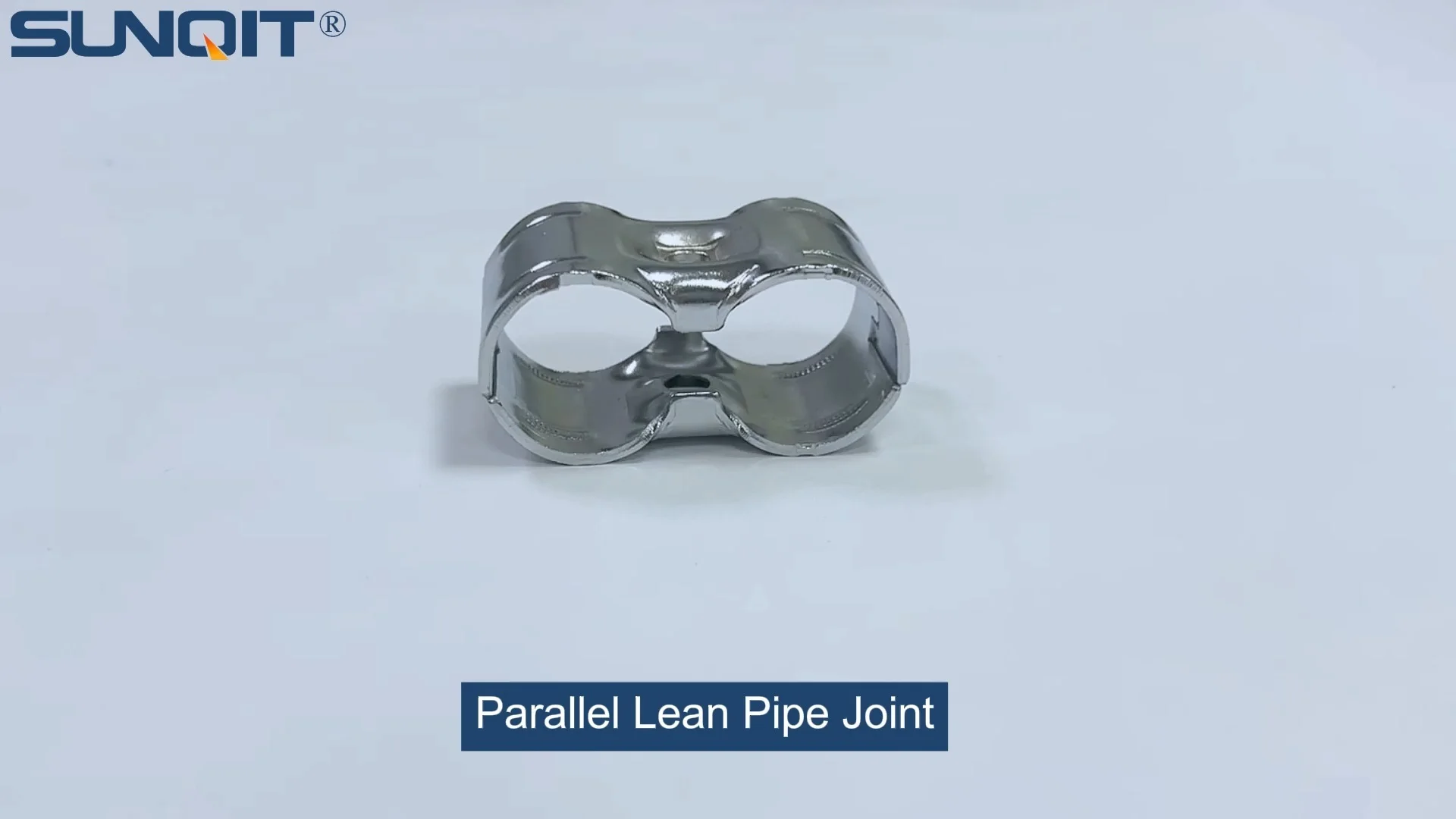
In the world of lean manufacturing, where efficiency and durability are the cornerstones of success, every component plays a role—even the smallest ones. Lean pipe systems, the backbone of workshops, assembly lines, and warehouses worldwide, rely on precision-engineered parts to keep operations running smoothly. Among these parts, the parallel lean pipe joint stands out as a quiet workhorse. These unassuming connectors are what hold together the structures that define modern production: workbenches that support assembly tasks, flow racks that move materials seamlessly, and trolleys that transport goods across factory floors. But here's the thing: not all parallel lean pipe joints are created equal. The coating that protects and enhances these joints can make or break their performance, longevity, and suitability for specific environments. Today, we're diving deep into two of the most common coatings for parallel lean pipe joints: chrome and powder-coated. By the end, you'll understand which one deserves a spot in your lean system—and why.
First Things First: What Are Parallel Lean Pipe Joints?
Before we compare coatings, let's make sure we're on the same page about the star of the show: the parallel lean pipe joint. Simply put, these joints are the "glue" that holds lean pipe systems together—specifically, when pipes need to be connected in parallel to form stable, load-bearing structures. Imagine building a workbench: you need horizontal pipes running parallel to each other to create the tabletop frame. A parallel lean pipe joint is what links those horizontal pipes at the corners or along the length, ensuring they stay aligned and sturdy, even under the weight of tools, materials, or products.
Most parallel lean pipe joints are made from steel (though aluminum variants exist) and are designed to work with standard lean pipes—typically 28mm in diameter for traditional steel lean pipes or 30mm for aluminum lean pipes. Their design allows for quick assembly and disassembly, which aligns perfectly with lean manufacturing principles: adaptability and flexibility. Whether you're reconfiguring a production line for a new product or scaling up a warehouse rack system, these joints let you make changes without welding or heavy tools. But none of this matters if the joint itself fails prematurely. That's where coatings come in.
Why Coating Matters: More Than Just a Pretty Finish
At first glance, a coating might seem like a cosmetic choice—something to make the joint look shiny or match a factory's color scheme. But in reality, coatings are a critical protective barrier. Lean pipe systems live in tough environments: they're exposed to moisture from cleaning routines, chemicals from production processes, friction from repeated assembly/disassembly, and even physical impacts from moving equipment or heavy loads. Without a durable coating, the metal underneath (usually steel) is vulnerable to rust, corrosion, and wear. Over time, a corroded joint can weaken, leading to wobbly workbenches, sagging flow racks, or even collapsed structures—all of which spell downtime, safety risks, and increased costs.
So, the right coating isn't just about aesthetics; it's about extending the lifespan of your lean system, maintaining structural integrity, and ensuring consistent performance. Now, let's meet the two contenders: chrome-coated and powder-coated parallel lean pipe joints.
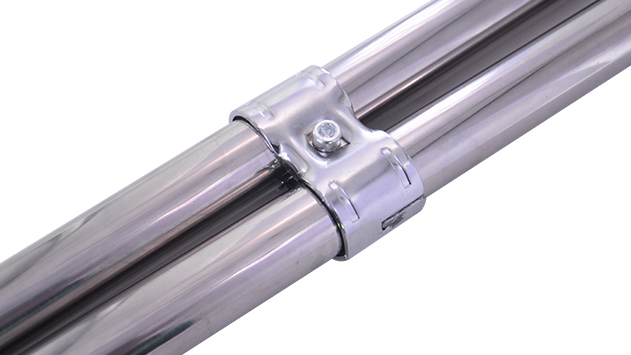
Chrome-Coated Parallel Lean Pipe Joints: The Classic Choice
Chrome coating has been a staple in industrial components for decades, and for good reason. When you hear "chrome," you probably picture that mirror-like, silver finish—and that's exactly what electroplated chrome delivers. The process involves submerging the joint in a chromic acid solution and passing an electric current through it, which deposits a thin layer of chromium onto the metal surface. The result is a hard, smooth coating that's both visually striking and functionally robust.
Pros of Chrome Coating
Hardness and Wear Resistance: Chrome is one of the hardest coatings available for metal components. It has a high hardness rating (often 800-1000 HV on the Vickers scale, compared to steel's 100-300 HV), which means it resists scratches, dents, and abrasion exceptionally well. In high-traffic areas—like a workbench where tools are constantly placed and moved, or a flow rack where boxes slide across joints—chrome-coated joints hold up longer without showing signs of wear.
Corrosion Resistance (In Dry Environments): When applied correctly, chrome forms a dense, non-porous layer that blocks moisture and oxygen from reaching the steel underneath. In dry, indoor environments—think climate-controlled electronics assembly plants or clean rooms—chrome-coated joints can resist rust for years, even with minimal maintenance.
Aesthetic Appeal: Let's not overlook the visual factor. Chrome's high-gloss finish gives joints a professional, polished look. For lean systems that are on display (like customer-facing demonstration areas or showroom workbenches), chrome can enhance the overall appearance of the setup, making it look more modern and well-maintained.
Low Friction: Chrome's smooth surface reduces friction, which can be an advantage in applications where joints might come into contact with other components (e.g., sliding parts or rotating mechanisms). This low friction also makes cleaning easier—dirt and grime are less likely to stick to the smooth surface, so a quick wipe with a cloth is often enough to keep joints looking clean.
Cons of Chrome Coating
Vulnerable to Moisture and Chemicals: While chrome is great in dry environments, it's less forgiving in humid or wet conditions. The coating is thin (usually 5-10 microns), and if it gets scratched or chipped, the exposed steel can start to rust quickly. In areas with high humidity (like food processing plants that require frequent washdowns) or exposure to chemicals (like oil, coolants, or cleaning agents), chrome may corrode faster than expected.
Environmental and Health Concerns: Traditional chrome plating uses hexavalent chromium, a toxic chemical that's harmful to both workers and the environment. Strict regulations (like the EU's REACH or OSHA's standards in the U.S.) now limit its use, pushing manufacturers toward trivalent chromium (a less toxic alternative). However, trivalent chrome still requires careful handling, and the plating process itself is energy-intensive and generates hazardous waste—factors that can increase costs and complicate sourcing for eco-conscious companies.
Cost: Chrome plating is a complex, multi-step process, and that complexity translates to higher costs. Compared to powder coating, chrome-coated joints are often 20-30% more expensive, depending on the supplier and order size. For large-scale projects—like outfitting an entire factory with lean pipe systems—the added cost can add up quickly.
Brittleness: While chrome is hard, it's also brittle. If a joint is subjected to a heavy impact (e.g., a dropped tool or a collision with a trolley), the chrome layer can crack or chip, exposing the underlying metal. Once chipped, the coating no longer provides full protection, and corrosion can set in around the damaged area.

Powder-Coated Parallel Lean Pipe Joints: The Modern Alternative
Powder coating, on the other hand, is a relative newcomer to the industrial coating scene—but it's quickly gaining ground. Instead of liquid paint or electroplating, powder coating uses fine particles of resin and pigment that are electrostatically charged and sprayed onto the joint. The coated joint is then baked in an oven, where the powder melts and cures into a hard, uniform layer. Unlike chrome, powder coating comes in a wide range of colors (think matte black, industrial gray, or even custom shades) and finishes (matte, satin, or semi-gloss).
Pros of Powder Coating
Durability and Impact Resistance: Powder coating is thicker than chrome (typically 50-150 microns) and forms a flexible, tough layer that can absorb impacts without cracking. If you've ever seen a powder-coated metal part survive a drop without chipping, you know what we're talking about. This flexibility makes it ideal for environments where joints might be bumped or knocked—like busy warehouses with forklift traffic or production lines with frequent reconfigurations.
Superior Corrosion Resistance: Powder coating provides excellent protection against moisture, chemicals, and UV rays. Most powder coatings are formulated with corrosion inhibitors, and the thick, continuous layer leaves no gaps for rust to take hold. In humid environments (e.g., coastal factories), areas with frequent washdowns (e.g., pharmaceutical plants), or even outdoor applications (e.g., covered warehouse loading docks), powder-coated joints outlast chrome by years. Some high-performance powder coatings (like epoxy-polyester hybrids) even meet industrial standards for salt spray resistance (ASTM B117) for 500+ hours—far longer than chrome in similar conditions.
Eco-Friendliness: Unlike chrome plating, powder coating produces little to no volatile organic compounds (VOCs) or hazardous waste. Overspray can be collected and reused, reducing material waste, and the curing process uses less energy than electroplating. For companies prioritizing sustainability or complying with strict environmental regulations, powder coating is often the greener choice.
Cost-Effectiveness: While the upfront equipment cost for powder coating is higher, the per-unit cost is lower than chrome plating—especially for large orders. Powder-coated joints are typically 10-20% cheaper than their chrome counterparts, making them a budget-friendly option for scaling lean systems. Plus, their longer lifespan means fewer replacements over time, which further reduces total cost of ownership.
Color and Customization: Unlike chrome's limited silver finish, powder coating offers endless color options. This is more than just aesthetics: colored joints can help with organization (e.g., red for ESD-safe zones, blue for material flow paths) or brand alignment (matching a company's logo colors). Some lean pipe suppliers even offer custom color matching for bulk orders.
Cons of Powder Coating
Thickness and Precision: The thick coating can be a downside in applications where tight tolerances are critical. For example, if a joint needs to fit into a narrow slot or connect to a component with precise spacing, the extra thickness of powder coating might cause fitment issues. In most lean pipe systems, though, this isn't a problem—joints are designed with enough clearance to accommodate standard coatings.
Scratch Visibility: While powder coating resists impacts, deep scratches can still happen. Unlike chrome, which has a metallic base, powder coating's color is throughout the layer—so a scratch will reveal the underlying metal (usually steel), which can be more noticeable than a scratch on chrome. That said, touch-up kits are available for small scratches, and the thick coating means minor abrasions (like from cleaning) are less likely to show.
Heat Sensitivity: Powder coating cures at high temperatures (160-200°C), which can be an issue for heat-sensitive materials. However, since parallel lean pipe joints are typically made of steel or aluminum (both heat-resistant), this is rarely a problem in practice.
Chrome vs. Powder-Coated: A Head-to-Head Comparison
To make it easier to see how these two coatings stack up, let's break down their key features side by side:
| Feature | Chrome-Coated Parallel Lean Pipe Joints | Powder-Coated Parallel Lean Pipe Joints |
|---|---|---|
| Coating Thickness | Thin (5-10 microns) | Thick (50-150 microns) |
| Hardness/Wear Resistance | Very high (resists scratches, low friction) | High (resists impacts, flexible) |
| Corrosion Resistance | Good in dry, indoor environments; poor in moisture/chemicals | Excellent in all environments (moisture, chemicals, UV) |
| Aesthetics | Mirror-like silver finish; high gloss | Wide range of colors/finishes (matte, satin, custom) |
| Cost | Higher (20-30% more than powder coating) | Lower (10-20% cheaper than chrome) |
| Environmental Impact | High (uses toxic chemicals, generates hazardous waste) | Low (VOC-free, recyclable overspray) |
| Best For | Dry, low-moisture environments; high-visibility areas; low-friction applications | Humid/wet environments; high-impact areas; cost-sensitive or eco-friendly projects |
Factors to Consider When Choosing Between Chrome and Powder-Coated Joints
Now that you know the pros and cons, how do you decide which coating is right for your parallel lean pipe joints? Here are the key factors to weigh:
1. Environment: Where Will the Joint Live?
This is the most critical factor. If your lean system is in a dry, climate-controlled indoor space (e.g., an electronics assembly clean room with minimal moisture), chrome could work well. Its low friction and shiny finish might even be beneficial for ESD workstations, where cleanability is key. But if the environment is humid (e.g., a food processing plant with daily washdowns), has chemical exposure (e.g., an automotive factory with oil/coolant spills), or is outdoors (e.g., a warehouse with open loading bays), powder coating is the safer bet. Remember: moisture is chrome's worst enemy, and powder coating laughs in the face of humidity.
2. Usage: How Will the Joint Be Treated?
Consider how much abuse the joint will take. If it's part of a stationary workbench that's rarely moved, chrome's scratch resistance might be enough. But if the joint is on a turnover trolley that's pushed around a warehouse daily, or a flow rack that's loaded/unloaded with heavy boxes, powder coating's impact resistance will prevent chips and cracks. Similarly, if you frequently reconfigure your lean system (disassembling and reassembling joints), powder coating's flexibility will stand up to repeated tightening/loosening better than brittle chrome.
3. Budget: Short-Term Cost vs. Long-Term Value
Chrome-coated joints have a higher upfront cost, but in low-stress environments, they might last just as long as powder-coated ones. Powder-coated joints are cheaper upfront and last longer in tough environments, making them better for long-term value. If you're outfitting a small workshop with minimal usage, chrome could be a splurge for aesthetics. If you're scaling a large production line or warehouse, powder coating will save you money in replacements and maintenance.
4. Sustainability and Compliance
If your company has green initiatives or needs to comply with environmental regulations (like the EU's RoHS or California's CARB), powder coating is the clear choice. Chrome plating's toxic byproducts can lead to compliance headaches and reputational risks, whereas powder coating aligns with sustainability goals.
5. Aesthetics: Does Looks Matter?
While function should always come first, aesthetics play a role in some settings. If your lean system is in a customer-facing area (e.g., a retail warehouse where clients tour production), chrome's shiny finish might enhance the visual appeal. For most industrial settings, though, powder coating's color options and clean finish are more than sufficient—and the ability to color-code joints (e.g., red for ESD zones, blue for material flow) can improve workflow efficiency.
Real-World Examples: How the Right Coating Makes a Difference
Let's look at two hypothetical scenarios to see how these factors play out in practice.
Scenario 1: Electronics Manufacturing ESD Workstation
A manufacturer of circuit boards needs ESD-safe workstations to prevent static damage to components. The facility is climate-controlled (20°C, 40% humidity) with strict cleanroom protocols (daily wiping with isopropyl alcohol). The workstations are rarely reconfigured, and the joints are mostly stationary. In this case, chrome-coated parallel lean pipe joints could work well. Their smooth, non-porous surface is easy to clean with alcohol, and the dry environment minimizes corrosion risk. The shiny finish also gives the cleanroom a professional look. However, if the manufacturer ever expands to a humid region or increases washdown frequency, powder coating would be a safer long-term investment.
Scenario 2: Automotive Parts Warehouse
A warehouse storing automotive parts (e.g., metal brackets, plastic components) uses flow racks and turnover trolleys to move materials to the production line. The warehouse is in a coastal city (high humidity), and the floors are pressure-washed weekly to remove oil and debris. Trolleys are moved multiple times daily, and flow racks are loaded with 50+ kg boxes. Here, powder-coated joints are the clear winner. The high humidity and weekly washdowns would corrode chrome quickly, while powder coating's thick, moisture-resistant layer prevents rust. The impact resistance also ensures joints on trolleys and racks don't chip when bumped by forklifts or loaded with heavy parts. Plus, the warehouse manager opts for gray powder coating to hide dirt, reducing cleaning time.
Choosing the Right Coating: Advice from a Lean Pipe Supplier
We reached out to a leading lean pipe supplier with over 15 years of experience to get their take. According to their technical sales manager, "90% of our customers now choose powder-coated parallel lean pipe joints—especially in manufacturing and logistics. The only exceptions are clients in dry, clean environments who specifically want the chrome look, or those with legacy systems where they're replacing old chrome joints to match existing ones." They added, "We always ask clients about their environment first: humidity levels, cleaning routines, chemical exposure. If they mention moisture or impacts, we immediately recommend powder coating. It's not just about selling a product—it's about making sure their lean system lasts 5+ years without issues."
When asked about common mistakes, they noted, "Some clients choose chrome for cost without realizing the long-term savings of powder coating. A chrome joint might cost $2 today, but if it rusts and needs replacement in 2 years, while a powder-coated joint costs $1.50 and lasts 5 years, the math is clear."
Conclusion: Powder-Coated Joints Win for Most Applications—But Chrome Has Its Place
At the end of the day, there's no one-size-fits-all answer, but powder-coated parallel lean pipe joints are the better choice for most lean manufacturing and warehouse environments. Their superior durability, corrosion resistance, cost-effectiveness, and eco-friendliness make them a workhorse that can handle the rigors of industrial settings. Chrome-coated joints still have a niche: dry, low-moisture environments where aesthetics or low friction are priorities. But for the vast majority of applications—from humid factories to busy warehouses—powder coating delivers better value and performance.
When sourcing parallel lean pipe joints, remember to ask your lean pipe supplier about the coating specifications: thickness, corrosion resistance ratings, and warranty. A reputable supplier will be happy to share test data (like salt spray results) and help you choose based on your specific environment. After all, the goal of lean manufacturing is to eliminate waste—and there's no bigger waste than replacing corroded or damaged joints prematurely.
So, whether you're building a new lean system or upgrading an existing one, choose your coating wisely. Your production line (and your bottom line) will thank you.