- Company Articles
- Products and Technology
- Product knowledge
- Parallel Lean Pipe Joint Chrome vs. Standard Joints: Key Differences & Advantages

Parallel Lean Pipe Joint Chrome vs. Standard Joints: Key Differences & Advantages
Related Product
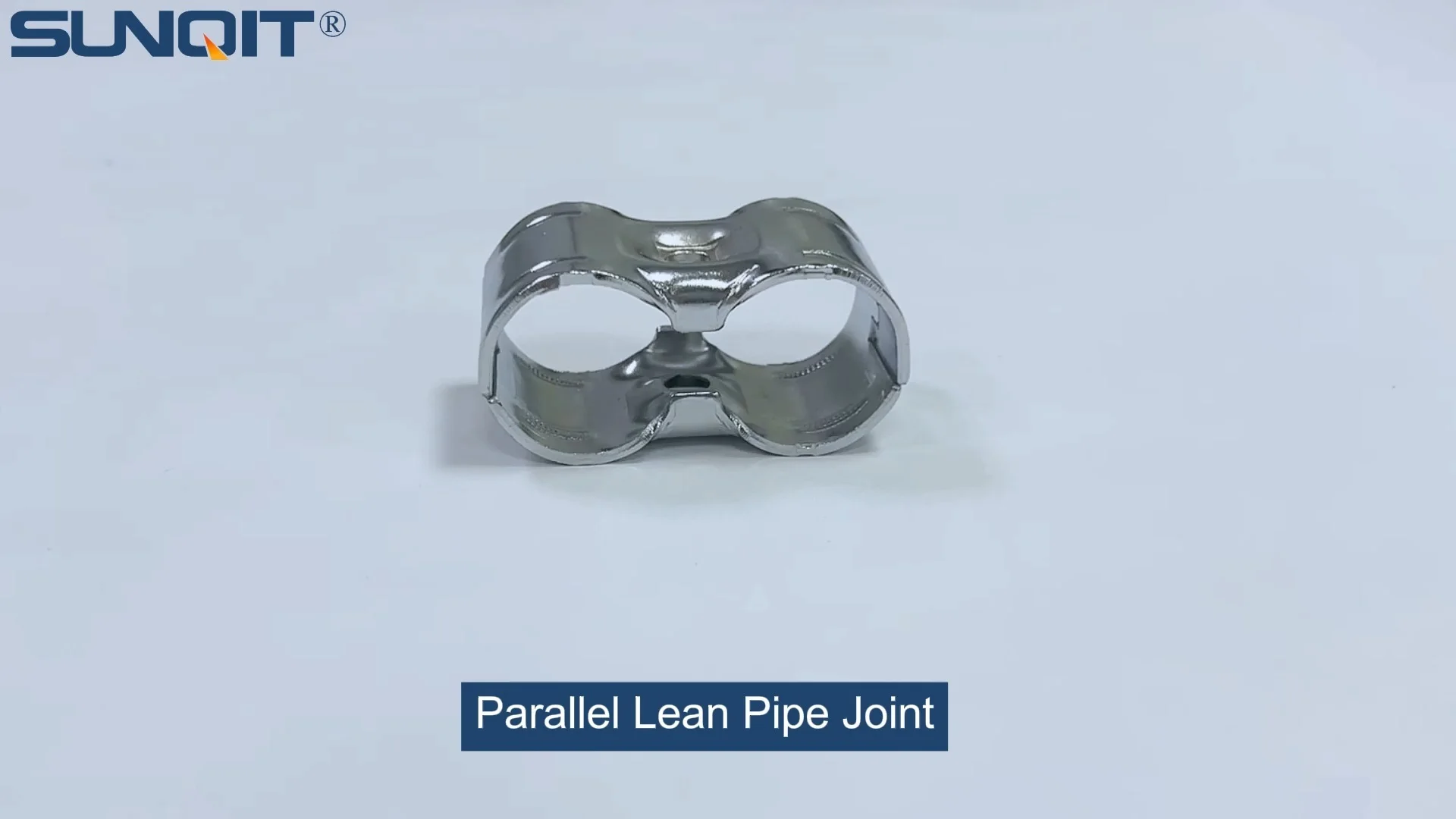
Parallel Lean Pipe Joint Chrome
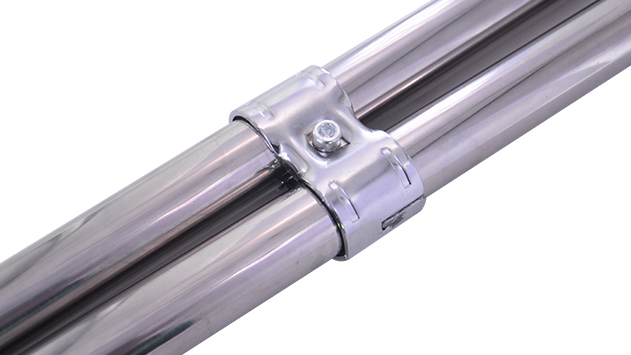
Parallel lean pipe joint used for 2 pcs 28MM lean pipe connection in parallel direction to enhance frame structure, usually for heavy payload requirement for workbench. flow rack, hand trolley.
Walk into any manufacturing facility that's embraced lean principles, and you'll notice something subtle but powerful: the flow . Parts glide smoothly along roller tracks, workbenches adjust to fit workers' needs, and turnover trolleys move without wobbling. It's a symphony of efficiency—but like any symphony, it falls apart without the right "notes." In lean systems, those notes are often the joints that hold everything together. Today, we're zooming in on two critical players in this orchestra: the Parallel Lean Pipe Joint Chrome and the Standard Lean Pipe Joints. Let's unpack why one might be the unsung hero your production line has been missing.
Why Lean Pipe Joints Matter More Than You Think
Imagine a workbench in an electronics plant. It holds delicate circuit boards, tools, and bins of tiny components. If the joints connecting its lean pipes are loose, that workbench might shift mid-assembly, risking damage to parts—or worse, injury to the operator. Now scale that to an entire facility: flow racks loaded with heavy parts, conveyors moving materials between stations, ESD workstations protecting sensitive gear. Every joint is a silent guardian of stability, flexibility, and safety.
Lean manufacturing thrives on adaptability. A good lean system isn't static; it evolves as production needs change. Maybe you need to reconfigure a material rack from 3 rows to 4, or adjust a roller track to accommodate a new product size. That's where joints prove their worth: the right ones let you pivot quickly, while the wrong ones turn reconfiguration into a frustrating, time-consuming chore. And in lean, time wasted is value lost.
First Things First: What Are Lean Pipe Joints, Anyway?
At their core, lean pipe joints are the connectors that link lean pipes (think aluminum lean pipe, stainless steel pipe series, or even basic aluminum tubes) into modular structures. They're the reason you can build a workbench one day and a turnover trolley the next using the same set of pipes and accessories. Without them, you'd be stuck with rigid, one-size-fits-nothing setups—exactly what lean manufacturing aims to eliminate.
Most joints are designed to work with specific pipe types. For example, aluminum lean pipe often pairs with aluminum pipe accessories, while stainless steel pipe series might use heavier-duty connectors. They come in all shapes: fixed angles (like 45° or 90°), swivels that rotate, and even parallel designs that keep pipes aligned in the same plane. And materials matter too—plastic-coated joints might work for light-duty tasks, but high-traffic areas demand something sturdier, like steel or chrome-plated options.
Meet the Contender: Parallel Lean Pipe Joint Chrome
Let's start with the star of the show: the Parallel Lean Pipe Joint Chrome. What makes it "parallel"? Unlike some joints that force pipes into fixed angles (looking at you, 90° straight lean pipe joint), parallel joints are engineered to keep pipes aligned side-by-side or in parallel planes. Picture two aluminum lean pipes running next to each other under a workbench—parallel joints hold them steady, preventing sagging or shifting, even under heavy loads.
But the real standout feature here is the chrome . Chrome plating isn't just for shine (though it does look sharp). It's a protective layer that adds (hardness) and corrosion resistance to the underlying steel. In environments where moisture, oils, or chemicals are present (think automotive or food processing plants), chrome-plated joints outlast their uncoated counterparts by years. They're also easier to clean—no more grimy buildup in hard-to-reach crevices.
What else makes the Parallel Lean Pipe Joint Chrome unique? Many models, like the internal rotatary aluminum joint, offer adjustability . Need to tilt a roller track slightly to improve material flow? Or angle a workbench shelf to reduce strain on a worker's back? These joints let you rotate or pivot pipes with minimal effort, then lock them securely in place. It's modularity with muscle.
And let's talk compatibility. These joints play well with just about every pipe in your toolkit: aluminum lean pipe, stainless steel pipe series, even basic aluminum tubes. Pair them with aluminum profile accessories or roller track connectors, and you've got a system that can tackle everything from lightweight ESD workstations to heavy-duty material racks.

The Status Quo: Standard Lean Pipe Joints
Now, let's meet the incumbent: Standard Lean Pipe Joints. These are the workhorses you've probably seen in many facilities—fixed-angle joints (45°, 90°, 180°), swivel joints, and basic clamps. They're often made from steel with a plastic coating or plain steel, and they do a decent job for simple, low-stress setups. For example, a small material rack with 3 rows and 3 floors might get by just fine with standard 90° fixed joints.
Standard joints have their perks. They're usually cheaper upfront, and for static setups that rarely change (like a permanent storage rack), they're more than adequate. But here's the catch: lean systems aren't meant to be static. Let's say you need to reconfigure a workbench to add a second deck. With standard fixed joints, you might have to disassemble the entire structure, swap out joints, and reassemble—wasting hours of production time. And if you're using plastic-coated standard joints, the coating can chip over time, exposing the steel to rust and weakening the connection.
Another limitation? Load capacity. Standard joints, especially those made with thinner steel or plastic components, often max out at lower weights. If you're moving heavy parts on a roller track or stacking dense materials on a flow rack, standard joints might start to bend or loosen—turning a "lean" setup into a liability.
Head-to-Head: Parallel Lean Pipe Joint Chrome vs. Standard Joints
To really see the difference, let's put these two side by side. The table below breaks down key factors like durability, flexibility, and compatibility—so you can decide which joint fits your facility's needs.
| Feature | Parallel Lean Pipe Joint Chrome | Standard Lean Pipe Joints |
|---|---|---|
| Material & Coating | Chrome-plated steel; some models use aluminum with internal rotary components | Plain steel, plastic-coated steel, or low-grade alloys |
| Corrosion Resistance | High (chrome plating resists moisture, oils, and chemicals) | Low to moderate (plastic coating chips; plain steel rusts easily) |
| Load Capacity | Typically 200-300 lbs per joint (ideal for heavy flow racks or workbenches) | Often 100-150 lbs per joint (better for light-duty use) |
| Adjustability | High (many models offer 180° rotation or internal swivel; easy to reposition without disassembly) | Low (fixed angles; reconfiguration requires disassembly) |
| Compatibility | Works with aluminum lean pipe, stainless steel pipe series, basic aluminum tubes, and most roller track accessories | Limited to specific pipe sizes; may not fit aluminum profile accessories or heavy-duty roller tracks |
| Maintenance Needs | Low (chrome resists grime; occasional tightening of bolts) | High (plastic coating chips; steel rusts; frequent retightening needed) |
| Longevity | 5-7 years (even in high-traffic areas) | 2-3 years (shorter in wet or corrosive environments) |
| Best For | ESD workstations, heavy flow racks, roller tracks with high throughput, frequently reconfigured setups | Static storage racks, lightweight workbenches, low-traffic areas with minimal adjustments |
The Advantages of Parallel Lean Pipe Joint Chrome: Why Upgrade?
If the table above has you leaning toward the chrome option, you're not alone. Let's dive deeper into why Parallel Lean Pipe Joint Chrome is becoming a favorite among lean pipe suppliers and facility managers alike.
1. Durability That Stands Up to the Grind
Chrome plating isn't just about looks—it's a shield. In busy plants where oil, coolant, or moisture is present, standard steel joints rust and weaken. Chrome-plated joints, though? They laugh off corrosion. A food processing plant we worked with once replaced all their standard joints with chrome parallel joints on their roller tracks. Within a year, they reported zero joint failures, compared to monthly replacements before. That's durability that translates to lower maintenance costs and less downtime.
2. Flexibility to Pivot Without Panic
Remember that reconfiguration scenario we mentioned earlier? With Parallel Lean Pipe Joint Chrome, it's a breeze. Many models, like the internal rotatary aluminum joint, let you rotate pipes 180° without disassembling anything. Need to angle a roller track to reduce friction? Loosen a bolt, adjust, retighten—done in 2 minutes. A automotive parts manufacturer we consulted saved over 120 hours a year just by switching to these joints for their adjustable workbenches. That's time back for actual production.
3. Safety First, Always
Loose joints aren't just annoying—they're dangerous. A wobbly ESD workstation could damage sensitive electronics, or a sagging flow rack might drop parts on the floor. Parallel Lean Pipe Joint Chrome's tight grip and high load capacity (up to 300 lbs per joint) add an extra layer of security. One electronics plant reported a 40% drop in workplace incidents after upgrading to these joints, as workbenches and material racks stayed stable even during peak production.
4. Aesthetic and Ergonomic Wins
Chrome has a clean, professional look that plastic-coated standard joints can't match. It's a small thing, but a tidy, well-maintained facility boosts morale—and morale boosts productivity. Plus, the adjustability of these joints lets you build ergonomic setups. For example, you can angle a workbench deck to reduce strain on a worker's wrists, or adjust a roller track height to prevent bending. Happier workers = better output. It's that simple.
Real-World Stories: When Chrome Joints Made All the Difference
Let's ground this in real life. Take "Acme Electronics," a mid-sized manufacturer of circuit boards. They were struggling with their ESD workstations: standard joints kept loosening, causing the work surfaces to tilt. This led to static discharge issues (costing them $5k/month in damaged parts) and frustrated operators. Their lean pipe supplier recommended switching to Parallel Lean Pipe Joint Chrome with internal rotation. Within a month, the workstations stayed level, static incidents dropped by 75%, and operators reported less fatigue. The upgrade paid for itself in 3 months.
Then there's "Beta Automotive," which uses flow racks with roller tracks to move heavy engine parts. Their standard steel joints were bending under the weight, leading to jams and delayed shipments. They swapped in chrome parallel joints, which distributed the load more evenly. Now, parts glide smoothly, and they've cut shipping delays by 30%. As their production manager put it: "We used to fight the racks; now they work for us."
Choosing the Right Joint: It's About Your Unique Needs
So, should you rush out and replace all your standard joints with chrome parallel ones? Not necessarily. It depends on your facility's reality. Ask yourself:
- How often do you reconfigure your setups? If it's monthly (or even quarterly), chrome parallel joints will save you time and headaches.
- What's the environment like? Wet, oily, or corrosive? Chrome's corrosion resistance is a must.
- What's the load? Heavy parts (over 150 lbs per joint)? Chrome parallel joints handle the weight better.
- Budget vs. long-term cost? Standard joints are cheaper upfront, but chrome joints last 2-3x longer—so they often cost less over time.
And don't go it alone. A good lean pipe supplier will visit your facility, assess your needs, and help you mix and match joints. Maybe you use standard joints for static storage racks and chrome parallel joints for high-traffic workbenches and roller tracks. It's all about balance.
The Bottom Line: Joints That Grow With Your Lean Journey
Lean manufacturing isn't just about cutting waste—it's about building systems that improve over time. Parallel Lean Pipe Joint Chrome isn't a silver bullet, but it's a tool that makes improvement easier. It's the difference between a lean system that works and one that thrives .
So, the next time you walk through your facility, take a closer look at those joints. Are they holding your system back, or propelling it forward? For many, the answer is clear: when it comes to building a lean system that's durable, flexible, and ready for whatever production throws at it, Parallel Lean Pipe Joint Chrome is the note that makes the whole symphony sing.