- Company Articles
- Products and Technology
- Product knowledge
- Parallel Lean Pipe Joint Compatibility with Lean Management Accessories

Parallel Lean Pipe Joint Compatibility with Lean Management Accessories
Related Product
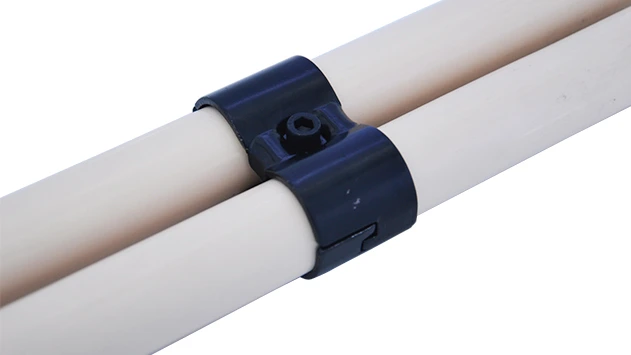
Parallel Lean Pipe Joint
Parallel lean pipe joint used for 2 pcs 28MM lean pipe connection in parallel direction to enhance frame structure, usually for heavy payload requirement for workbench. flow rack, hand trolley.
Introduction: The Unsung Hero of Lean Efficiency
In the world of lean management, where every second and every square inch counts, the tools we use to build our workspaces often fly under the radar—until they fail. Picture this: a manufacturing floor where assembly lines hum, materials glide from station to station, and workers move with purpose. Behind this seamless rhythm lies a quiet architect: the parallel lean pipe joint. These unassuming connectors are the glue that holds together lean systems, from workbenches to roller tracks, and their ability to play well with other accessories can make or break a team's efficiency.
Lean management isn't just about cutting waste; it's about creating adaptable, intuitive spaces that grow with your needs. And at the heart of that adaptability is compatibility. A parallel lean pipe joint that only works with one type of pipe or a single brand of caster wheel? That's not lean—that's a bottleneck. Today, we're diving into why parallel lean pipe joint compatibility matters, how these joints interact with essential accessories like aluminum lean pipe, roller tracks, and caster wheels, and why this synergy is the secret to building workspaces that don't just support your team, but empower them.
What Are Parallel Lean Pipe Joints, Anyway?
Let's start with the basics. Parallel lean pipe joints are specialized connectors designed to link lean pipes (hollow tubes used in lean manufacturing setups) at parallel angles, creating stable, adjustable structures. Unlike fixed joints, they offer a unique blend of rigidity and flexibility—think of them as the Swiss Army knife of industrial connectors. Most are made from durable materials like aluminum or steel, with finishes that resist corrosion, making them ideal for factory floors, warehouses, and even cleanrooms.
What sets parallel joints apart is their design. Many feature a dual-clamping mechanism: one end grips the main pipe, while the other extends outward to attach a secondary pipe, bracket, or accessory—all without welding or complex tools. This simplicity is intentional. In lean environments, where reconfiguring a workbench or rerouting a roller track might be needed weekly (or daily), the ability to assemble and disassemble quickly isn't a luxury; it's a necessity. And when paired with aluminum lean pipe—a lightweight, high-strength alternative to traditional steel—parallel joints become even more versatile, opening the door to custom setups that are both sturdy and easy to adjust.

The Compatibility Code: How Parallel Joints Play Nice with Accessories
Compatibility isn't just about "fitting together"—it's about creating a system where every part enhances the others. For parallel lean pipe joints, this means designing with common accessory standards in mind. Let's break down the key features that make this possible:
Standardized Sizing: Most parallel joints are engineered to fit industry-standard pipe diameters (1.5 inches is common for aluminum lean pipe). This ensures they work with pipes from different suppliers, eliminating vendor lock-in. For example, a parallel joint from Supplier A should grip a pipe from Supplier B just as securely, letting you mix and match based on cost, availability, or material needs.
Modular Attachment Points: Look closely at a parallel joint, and you'll notice threaded holes, slots, or grooves. These aren't accidents—they're intentional connection points for accessories like caster wheels, roller track brackets, or workbench shelves. A joint with a 3/8-inch threaded hole, for instance, can easily attach a caster wheel with a matching bolt, turning a stationary workbench into a mobile cart in minutes.
Adjustable Tension: Many parallel joints use a cam lever or hex bolt to tighten their grip. This adjustability means they can accommodate slight variations in pipe thickness (common with aluminum extrusion profiles) or accessories with minor size differences. Tighten a bit more for heavy loads, loosen slightly for quick repositioning—no need for specialized tools, just a wrench or even a gloved hand.

Aluminum Lean Pipe and Parallel Joints: A Match Made in Lean Heaven
If parallel joints are the connectors, aluminum lean pipe is the canvas they paint on. Aluminum's rise in lean manufacturing isn't random: it's 30% lighter than steel, resists rust, and conducts heat (useful for dissipating static in electronics assembly). But its real superpower? It plays perfectly with parallel joints. Let's take an example from an electronics plant I visited last year:
The facility assembled small circuit boards, and their old workbenches were steel—heavy, hard to move, and prone to scratching delicate components. They switched to aluminum lean pipe paired with parallel joints, and the difference was night and day. By using parallel joints, they could add adjustable shelves (using aluminum profile accessories) at exactly the height each worker needed, attach LED task lights to the frame, and even mount small roller tracks along the edge to slide PCBs from one station to the next. When a new product line required taller work surfaces, they didn't buy new benches—they loosened the parallel joints, raised the pipes, and tightened them back up. Total reconfiguration time? 20 minutes per bench. That's lean in action.
Aluminum's lightweight nature also makes parallel joint setups safer. A single worker can reposition a section of aluminum pipe and joint without a forklift, reducing the risk of strains or accidents. And because aluminum doesn't spark, it's ideal for environments with flammable materials—another win for versatility.
Workbench Wonders: Building Custom Spaces with Parallel Joints
Workbenches are the command centers of lean operations, and parallel lean pipe joints are their architects. Let's say you need a workbench for a small-parts assembly line. With parallel joints, you're not limited to off-the-shelf sizes—you design it around your process. Here's how it might come together:
Start with a base frame of aluminum lean pipe, connected by parallel joints to form a rectangle. Add vertical pipes at the corners, using parallel joints to attach horizontal crossbars for stability. Then, for the work surface, mount a plywood or aluminum honeycomb panel (keyword: workbench) using brackets that clamp into the parallel joints. Need mobility? Screw caster wheels into the bottom joints—lockable ones for when you need stability, swivel ones for easy maneuvering. Want to add a roller track along the back to feed parts? Use parallel joints to mount the track brackets, angling it slightly downward so components glide to the worker automatically. No welding, no drilling—just bolts, clamps, and a few turns of a wrench.
The beauty is in the details. A parallel joint with a rotating collar, for example, lets you pivot a roller track from horizontal to vertical when not in use, saving space. Or, if a worker needs a shelf at waist height instead of chest height, you loosen the joint, slide the shelf bracket up, and retighten. This adaptability turns a static workbench into a tool that evolves with your team's needs, reducing the cost of replacing equipment as processes change.
Roller Tracks and Parallel Joints: Keeping Materials Moving
In lean systems, stagnant materials are wasted time. Roller tracks (keyword) solve this by creating gravity-fed or powered paths for bins, boxes, and components to flow between workstations. But a roller track is only as good as its support structure—and that's where parallel lean pipe joints shine.
Roller tracks typically consist of a series of wheels mounted on a metal frame. To integrate them into a lean setup, you need to attach that frame to a rack, workbench, or overhead structure. Parallel joints simplify this by providing a stable, adjustable mounting point. For example, a 40-inch roller track can be mounted to a vertical aluminum lean pipe using two parallel joints—one at each end—allowing you to angle the track for optimal flow (usually 5-10 degrees). If the track starts to sag under heavy bins, add a third parallel joint in the center for support. No need for custom brackets; the joints do the work.
I once worked with a food packaging plant that struggled with bottlenecks at their labeling station. Workers had to reach across a table to grab unlabeled boxes, then push labeled ones to the next station—wasting steps and causing ergonomic strain. By mounting a roller track to the side of their labeling workbench (using parallel joints), they created a continuous flow: unlabeled boxes rolled in from the left, labeled ones exited to the right, and workers stayed in one position. Productivity jumped 15% in a week, and complaints about shoulder pain dropped to zero. All because parallel joints made it easy to add a simple roller track.
Caster Wheels: Mobility Without Compromise
Mobility is a cornerstone of lean flexibility. A workbench that can be wheeled to a new line, a material cart that follows a worker, or a roller track that's repositioned for a rush order—all rely on caster wheels (keyword). But attaching casters securely to a lean pipe frame requires more than just drilling a hole; it needs a joint that can handle the stress of movement without loosening over time.
Parallel lean pipe joints are up to the task. Many come with reinforced mounting plates or threaded stems designed specifically for caster wheels. A heavy-duty caster with a 2-inch stem, for example, can be screwed directly into a parallel joint's threaded hole, creating a connection that withstands daily rolling over concrete floors. And because parallel joints are often paired with aluminum lean pipe (which is lighter than steel), the overall structure is easier to move, even with a full load of materials.
Consider a scenario: A warehouse needs to reorganize its picking area for a seasonal rush. With caster-equipped racks (built using parallel joints and aluminum pipe), they can wheel entire sections into new layouts overnight, instead of disassembling and rebuilding. This not only saves hours of labor but also minimizes downtime—critical during peak periods.
Compatibility in Action: A Quick Reference Table
| Parallel Joint Type | Common Compatible Accessories | Best For |
|---|---|---|
| Aluminum Parallel Joint (Standard) | Aluminum lean pipe, caster wheels (threaded stem), roller track brackets | Light to medium-duty workbenches, mobile carts |
| Steel Parallel Joint (Heavy-Duty) | Steel lean pipe, heavy-duty caster wheels, large roller tracks | Warehouse racks, industrial workstations with heavy loads |
| Swivel Parallel Joint | Adjustable roller tracks, tilting workbench shelves, rotating bins | Setups needing angular flexibility (e.g., assembly lines with variable workflows) |
| Parallel Joint with T-Slot | Aluminum profile accessories, tool hooks, LED light mounts | Cleanrooms, labs, or workstations with custom add-ons |
Why Compatibility Matters: The Bottom-Line Impact
At this point, you might be thinking, "Okay, compatibility is nice—but does it really move the needle?" The answer is a resounding yes. Here's how it impacts your operations:
Reduced Costs: Compatibility eliminates the need to buy proprietary accessories. If your parallel joints work with generic caster wheels or roller tracks, you can shop around for the best price, saving 10-30% on parts. Plus, reusing existing pipes and joints when reconfiguring setups cuts down on new equipment purchases.
Faster Setup and Reconfiguration: When every part fits together seamlessly, building a new workbench or rerouting a roller track takes hours instead of days. This agility lets you respond quickly to production changes—like ramping up a new product line or shifting to a different shift schedule—without falling behind.
Improved Safety: A loose joint or a mismatched accessory is a safety hazard. Compatibility ensures a snug, secure fit, reducing the risk of collapsed shelves, falling materials, or worker injuries from unstable equipment.
Employee Satisfaction: Workers notice when tools work well. A workstation that's easy to adjust, with materials flowing smoothly via roller tracks and a mobile cart that glides on caster wheels, reduces frustration and fatigue. Happier workers are more productive—and less likely to leave.
Conclusion: Building Lean Systems That Last
Parallel lean pipe joints may not be the most glamorous part of lean management, but they're undeniably critical. Their ability to connect aluminum lean pipe, roller tracks, caster wheels, and workbench components into a cohesive, adaptable system is what turns a collection of parts into a lean powerhouse. In a world where efficiency and flexibility are everything, compatibility isn't just a feature—it's the foundation.
So, the next time you walk through your facility, take a closer look at those unassuming joints holding up your workbenches and roller tracks. They're not just connectors—they're the reason your team can adapt, grow, and keep pushing toward that next level of efficiency. And in lean management, that's the ultimate win.