- Company Articles
- Products and Technology
- Product knowledge
- Parallel Lean Pipe Joint Explained: How It Works in Modular Workstations

Parallel Lean Pipe Joint Explained: How It Works in Modular Workstations
Related Product
Parallel Lean Pipe Joint
Parallel lean pipe joint used for 2 pcs 28MM lean pipe connection in parallel direction to enhance frame structure, usually for heavy payload requirement for workbench. flow rack, hand trolley.
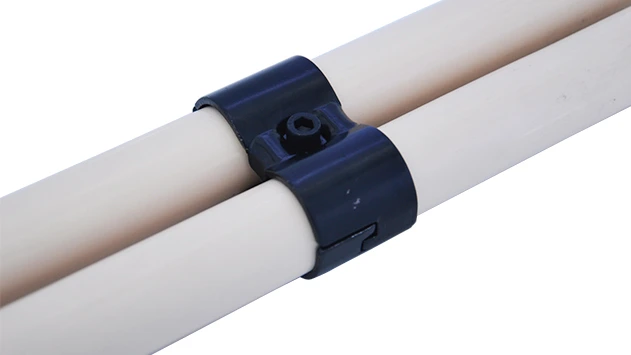
1. Introduction: The Evolution of Workstations and the Need for Flexibility
Walk into any modern manufacturing facility, warehouse, or even a small-scale workshop today, and you'll likely notice a shift in how workspaces are designed. Gone are the days of heavy, fixed workbenches bolted to the floor, or rigid shelving units that can't be adjusted without a wrench and a team of helpers. Instead, there's a quiet revolution happening—one driven by the need to adapt, evolve, and stay efficient in a world where production lines change overnight, product demands fluctuate, and space is often at a premium. This revolution is centered around modular workstations, and at the heart of many of these systems lies a small but mighty component: the parallel lean pipe joint.
Traditional workstations were built for stability, not flexibility. If a factory needed to reconfigure its assembly line to accommodate a new product, it often meant dismantling entire structures, buying new equipment, or worse, working around outdated setups that slowed down production. For small businesses, this rigidity was even more problematic—limited budgets meant they couldn't afford to overhaul their workspace every time a new order came in. Lean manufacturing principles, which focus on minimizing waste and maximizing value, only amplified the need for workspaces that could keep up with constant change.
Enter modular systems. These aren't just fancy workbenches or shelves; they're ecosystems built from interchangeable parts that can be assembled, disassembled, and reconfigured in hours (or even minutes). And while there are many components that make these systems work—from pipes and panels to casters and brackets—few are as critical as the joints that hold everything together. Among these joints, the parallel lean pipe joint stands out for its ability to create stable, linear structures that form the backbone of workbenches, flow racks, and material handling systems. Let's dive into why this unassuming part has become a cornerstone of modern workspace design.
2. What Are Parallel Lean Pipe Joints? Breaking Down the Basics
At first glance, a parallel lean pipe joint might look like just another metal connector, but its design is deceptively clever. Simply put, a parallel lean pipe joint is a fastening component used to connect two or more lean pipes (also known as "lean tubes") in a parallel orientation. Unlike joints that angle pipes at 90 degrees or allow for swiveling movement, parallel joints keep pipes aligned along the same plane, creating straight, sturdy sections that form the frames of workbenches, the rails of flow racks, or the sides of turnover trolleys.
But why "lean"? The term comes from lean manufacturing, a philosophy that emphasizes efficiency and waste reduction. Lean pipes—typically made of steel with a plastic coating (like PE-coated lean pipe) or aluminum—are lightweight yet strong, making them ideal for building structures that are both durable and easy to maneuver. When paired with parallel joints, they become the building blocks of a system that can be tailored to almost any task.
The core function of a parallel lean pipe joint is simple: hold pipes together securely while maintaining parallel alignment. But its simplicity is its strength. Most parallel joints are designed with two or more openings (or "ports") that accept the ends of lean pipes. These ports are spaced and angled to ensure the pipes run parallel to each other, whether they're side-by-side (like the rails of a workbench) or stacked vertically (like the uprights of a material rack). Inside each port, there's usually a clamping mechanism—often a set screw or a friction fit—that tightens down on the pipe, preventing slippage or rotation. Some joints even have reinforced edges or rubber gaskets to reduce wear and improve grip, especially in high-vibration environments like assembly lines.
What makes parallel lean pipe joints different from other types of connectors? Unlike a 90-degree fixed joint, which forces pipes into a right angle, or a swivel joint that allows for rotation, parallel joints are all about straight-line stability. They're the reason you can build a workbench with a perfectly flat surface, or a flow rack where materials glide smoothly along roller tracks without getting stuck on misaligned rails. In short, they're the quiet enforcers of order in a modular system, ensuring that even the most complex structures stay level, sturdy, and true.

3. The Anatomy of a Parallel Lean Pipe Joint: Materials and Manufacturing
To truly understand how parallel lean pipe joints work, let's take a closer look at their construction. These joints might seem simple, but their design is the result of careful engineering to balance strength, weight, and cost. Most parallel lean pipe joints are made from one of three materials: steel, aluminum, or a high-strength plastic composite. Each has its own advantages, depending on the application.
Steel joints are the workhorses of the bunch. They're strong, durable, and resistant to heavy loads—perfect for industrial settings where workbenches might hold hundreds of pounds of tools or materials. Many steel joints are coated with zinc or nickel to prevent rust, which is especially important in damp environments like warehouses or outdoor workshops. Aluminum joints, on the other hand, are lighter and more corrosion-resistant than steel, making them ideal for cleanrooms, food processing facilities, or applications where weight matters (like mobile trolleys with caster wheels). They're also easier to handle during assembly, which can save time when reconfiguring a workspace.
Plastic composite joints are less common but growing in popularity for light-duty applications. They're affordable, lightweight, and won't scratch delicate surfaces—think electronics assembly lines where ESD workstations (electrostatic discharge-protected workbenches) are a must. However, they're not as strong as metal joints, so they're best suited for tasks like holding small parts bins or lightweight shelving.
The manufacturing process for these joints varies by material, but most start with casting or forging. Steel and aluminum joints are often die-cast, which involves pouring molten metal into a mold shaped like the joint. This creates a precise, consistent shape with minimal waste. After casting, the joints are machined to smooth out rough edges and drill holes for set screws or bolts. Plastic joints are usually injection-molded, where heated plastic is forced into a mold and cooled to form the final shape. Regardless of the material, the goal is the same: create a joint that can grip pipes tightly, withstand repeated assembly/disassembly, and maintain parallel alignment over time.
One key detail to note is pipe compatibility. Most parallel lean pipe joints are designed to fit standard lean pipe diameters, typically 28mm (about 1.1 inches) for steel or aluminum pipes. This standardization is crucial because it means you can mix and match joints and pipes from different suppliers without worrying about compatibility issues. For example, a parallel lean pipe joint from one manufacturer will work seamlessly with a lean pipe from another, as long as both follow the 28mm standard. This interchangeability is what makes modular systems so versatile—you're not locked into a single brand, and you can easily expand or modify your setup with parts from different sources.

4. How Parallel Lean Pipe Joints Work: The Mechanics of Modular Assembly
Let's say you want to build a lean pipe workbench for your garage. You've got your pipes, your parallel joints, and a hex key—now what? Assembling with parallel lean pipe joints is surprisingly straightforward, but understanding the mechanics behind it will help you build sturdier, more reliable structures. Here's a step-by-step breakdown of how it all comes together.
First, you'll need to measure and cut your lean pipes to the desired length. Most modular systems use pipes that are pre-cut to common lengths (like 1m, 2m, or 3m), but you can easily trim them with a pipe cutter or hacksaw if needed. Once you have your pipes, the next step is aligning them with the joint. Parallel joints have two or more ports (the openings where the pipes insert), and these ports are spaced to keep the pipes parallel. For example, a standard parallel joint might have two ports 30cm apart, which would create a 30cm gap between the two pipes—perfect for the legs of a workbench or the side rails of a trolley.
insert the pipe ends into the ports until they hit the stop inside the joint (most joints have a small lip or ridge that prevents the pipe from sliding all the way through). Then, tighten the set screws. These are small screws, usually located on the side of the joint, that press against the pipe when tightened. Using a hex key (or Allen wrench), turn the set screws clockwise until they're snug. You don't need to over-tighten—just enough to grip the pipe firmly. Over-tightening can strip the threads or damage the pipe's coating, especially if you're using PE-coated lean pipe. Some joints use wing nuts instead of set screws, which can be tightened by hand, making assembly even faster (though they may not hold as tightly in high-stress applications).
Once the joint is secured, the magic of parallel alignment kicks in. Because the ports are fixed in position, the pipes can't twist or bend relative to each other. This stability is critical for structures like workbenches, where a wobbly surface could lead to errors or accidents. It also ensures that accessories like roller tracks or shelves, which attach to the pipes, stay level. For example, if you're building a flow rack (a shelving unit with roller tracks that let materials slide forward as items are removed), parallel joints keep the roller tracks aligned, so boxes or bins don't get stuck halfway down. Misaligned tracks are a common source of jams, but with parallel joints, that risk is minimized.
Another key feature of parallel lean pipe joints is their reusability. Unlike welded connections, which are permanent, parallel joints can be disassembled and reused countless times. If you need to shorten your workbench, simply loosen the set screws, slide the pipes out, cut them to the new length, and reattach the joint. This flexibility is a game-changer for businesses that need to adapt quickly. A bakery that switches from making cakes to cookies might need to shrink its packaging workstation; a electronics manufacturer ramping up production might need to add extra shelving to its ESD workstation. With parallel joints, these changes can be done in minutes, not days.
It's also worth noting how parallel joints interact with other components in a modular system. For example, if you want to add caster wheels to your workbench for mobility, you'd use a combination of parallel joints and vertical joints. The parallel joints would connect the horizontal rails of the bench, while vertical joints would attach the legs. Casters would then bolt onto the bottom of the legs, turning a stationary workbench into a mobile cart. This mix-and-match approach—combining parallel joints with other types of connectors—lets you build almost anything, from simple shelving to complex assembly lines with integrated conveyor systems.
5. Why Parallel? The Unique Advantages of This Joint Design
By now, you might be wondering: Why focus on parallel joints? After all, there are dozens of other lean pipe connectors out there—90-degree joints, T-joints, swivel joints, even five-way joints for complex intersections. What makes parallel lean pipe joints so indispensable?
The biggest advantage is stability in linear structures. When you're building something like a workbench top, a flow rack, or a conveyor rail, you need the pipes to run perfectly parallel to each other. Even a small misalignment can cause big problems. For example, if the rails of a flow rack are off by just a few millimeters, materials might jam or slide unevenly, slowing down production. Parallel joints eliminate this risk by locking pipes into a fixed, parallel position. They're like the training wheels of modular assembly—they keep everything straight, even if you're new to building with lean pipes.
Another benefit is weight distribution. Parallel joints spread weight evenly across multiple pipes, reducing stress on individual components. Let's say you have a workbench with a 2m-long top supported by two parallel pipes. Each pipe carries half the weight of the top and whatever's on it, which is much more efficient than a single pipe trying to bear the load alone. This even distribution also reduces the risk of bending or warping over time, especially with heavy loads. In industrial settings, where workbenches might hold tools, machinery, or large parts, this durability is non-negotiable.
Cost-effectiveness is another key perk. Parallel lean pipe joints are often cheaper than specialized connectors like swivel joints or multi-way joints because they have simpler designs and require fewer materials to manufacture. For most basic structures—like workbenches, shelving, or trolleys—you'll only need a handful of parallel joints and a few other basic connectors, which keeps costs low. This affordability makes modular systems accessible to small businesses and hobbyists, not just large factories with big budgets. Even better, because the joints are reusable, you can repurpose them when you reconfigure your workspace, so you're not throwing money away on single-use parts.
Flexibility might seem counterintuitive for a joint that's all about keeping pipes straight, but parallel joints actually enable a surprising amount of creativity. By combining them with other joint types, you can build structures that are both stable and adaptable. For example, you could use parallel joints to create the horizontal rails of a workbench, then add T-joints to attach vertical shelves, and swivel joints to mount a tool holder that can rotate out of the way when not in use. The parallel joints provide the foundation, while other connectors add the "extras" that make the workspace unique to your needs. It's like building with Lego blocks—you start with basic pieces (the parallel joints) and add specialty pieces (other connectors) to create something one-of-a-kind.
Finally, parallel lean pipe joints are easy to use—even for beginners. You don't need special tools or training to assemble them; a simple hex key is usually all you need. This low barrier to entry means anyone can build a modular workspace, from a small business owner setting up their first workshop to a warehouse manager reconfiguring a production line. There's no need to hire a contractor or wait for a technician—you can do it yourself, in hours, with minimal frustration. This simplicity is a big reason why modular systems have become so popular; they empower people to take control of their workspace and make changes on their own terms.
6. Building Blocks: How Parallel Lean Pipe Joints Integrate with Other Components
Parallel lean pipe joints rarely work alone. They're part of a larger ecosystem of components that includes pipes, shelves, roller tracks, casters, and more. Understanding how they integrate with these other parts will help you design more functional, efficient workspaces. Let's explore some common pairings and how they enhance modular systems.
Lean Pipe Workbenches: The Classic Combination – The most common use for parallel lean pipe joints is building lean pipe workbenches. A typical workbench consists of a frame made from vertical pipes (the legs) and horizontal pipes (the rails), connected by a mix of parallel joints (for the rails) and 90-degree joints (for the corners). The horizontal rails are where parallel joints shine—they ensure the front and back rails run perfectly parallel, creating a flat surface for the worktop. Once the frame is built, you can add a wooden, metal, or aluminum honeycomb panel on top to create the work surface. Some workbenches even have adjustable height legs, made possible by using parallel joints with extra-long set screws that allow you to raise or lower the rails incrementally. This adjustability is a game-changer for ergonomics—you can set the workbench height to match your own torso, reducing strain on your back and shoulders during long work sessions.
Flow Racks: Keeping Materials Moving – Flow racks are another popular application for parallel lean pipe joints. These racks use gravity to move materials from the back to the front, making them ideal for order picking, assembly lines, or kitting stations. The key to a functional flow rack is the roller track—the series of small wheels that materials glide along. To install roller tracks, you first build a frame using parallel joints to create two parallel rails (one on each side of the rack). The roller track then mounts to these rails, and because the rails are parallel, the track stays level, ensuring materials flow smoothly without getting stuck. Some flow racks even have adjustable angles—by tilting the parallel rails slightly, you can control how fast materials slide down the track. This is especially useful for delicate items that need to move slowly, or heavy boxes that need a steeper angle to get moving.
Caster Wheels: Adding Mobility – Want to turn your stationary workbench into a mobile trolley? Just add caster wheels, and parallel lean pipe joints will help you do it securely. Caster wheels typically mount to the bottom of the workbench legs, but to ensure stability, the legs need to be spaced evenly and aligned parallel to each other. Parallel joints connect the horizontal rails near the bottom of the legs, creating a rigid base that prevents the trolley from wobbling when you push it. Without these joints, the legs might splay or twist, making the trolley unstable and potentially dangerous. Some casters even have locks, so you can secure the trolley in place when you need to work, then unlock it to move it out of the way when you're done. This mobility is a huge advantage in small spaces—you can roll the trolley into a corner when it's not in use, freeing up floor space for other tasks.
Aluminum Profiles: Lightweight Strength – While lean pipes are the backbone of many modular systems, some setups use aluminum profiles instead. These profiles are like extruded aluminum beams with T-slots running along their length, which let you mount accessories like shelves, brackets, or tool holders without drilling holes. Parallel lean pipe joints can connect aluminum profiles just as easily as they connect lean pipes, as long as the profiles have the same diameter (or are compatible with adapter sleeves). This mix of materials—aluminum profiles for the frame, lean pipes for the rails—combines the best of both worlds: the lightweight, corrosion-resistant properties of aluminum with the flexibility of lean pipes. For example, you could build a frame using aluminum profiles connected by parallel joints, then add lean pipe rails to mount roller tracks or bins. The result is a system that's strong enough for industrial use but light enough to move around with ease.
7. Comparing Joints: When to Choose Parallel Over Other Types
Not all joints are created equal, and choosing the right one for your project can make a big difference in stability, cost, and functionality. To help you decide when to reach for a parallel lean pipe joint, let's compare it to three other common types: 90-degree fixed joints, swivel joints, and T-joints. The table below breaks down their key features, use cases, and limitations.
| Joint Type | Primary Function | Load Capacity (Approx.) | Adjustability | Best For | Limitations |
|---|---|---|---|---|---|
| Parallel Lean Pipe Joint | Connects pipes in a straight, parallel line | Medium-high (up to 200kg per joint) | None (fixed parallel alignment) | Workbench rails, flow rack frames, trolley bases | Cannot create angles or T-junctions |
| 90-Degree Fixed Joint | Connects pipes at a right angle | High (up to 300kg per joint) | None (fixed 90-degree angle) | Workbench corners, shelving uprights, rack legs | Not suitable for straight-line connections |
| Swivel Joint | Connects pipes with 360-degree rotation | Low-medium (up to 100kg per joint) | High (rotates freely; some lock in place) | Tool holders, adjustable shelves, mobile arms | Less stable than fixed joints; lower load capacity |
| T-Joint | Connects three pipes in a T-shape (one perpendicular to two parallel pipes) | Medium (up to 150kg per joint) | None (fixed T-shape) | Shelving supports, cross-braces, multi-level racks | Cannot create parallel lines or complex angles |
As the table shows, parallel lean pipe joints excel at creating stable, straight-line connections, making them the go-to choice for any structure that needs flat, level surfaces or frames. They're not the most versatile joint, but they're the most reliable for linear stability. For example, if you're building a workbench, you'd use parallel joints for the front and back rails (to keep them straight), 90-degree joints for the corners (to connect the rails to the legs), and T-joints to add shelves halfway up the legs. Each joint has a specific role, and together they create a sturdy, functional workspace.
Swivel joints, on the other hand, are all about movement. They're great for adding adjustable components like tool holders that swing out of the way, or mobile arms that can reach different parts of a workbench. However, their lower load capacity and rotating design make them unsuitable for structural elements like workbench rails. T-joints are useful for adding cross-braces or shelves to a frame, but they can't replace parallel joints when you need two pipes to run perfectly straight.
The key takeaway? Parallel lean pipe joints are the foundation of any modular system, but they work best when paired with other joint types. Think of them as the "bones" of your structure—providing the straight, sturdy framework—while other joints are the "joints" (like elbows or wrists) that add flexibility and functionality. By mixing and matching, you can build almost anything, from a simple workbench to a complex assembly line with moving parts.
8. Maintenance and Longevity: Keeping Your Joints (and Workstations) in Top Shape
Modular systems are designed to be durable, but like any equipment, they need a little care to stay in good working order. Parallel lean pipe joints are no exception—with proper maintenance, they can last for years, even in harsh industrial environments. Here are some tips to keep your joints (and the workstations they build) strong and reliable.
Regular Inspections – The first step is to check your joints periodically for signs of wear or damage. Look for loose set screws, cracks in the joint body, or rust (if you're using steel joints). Loose set screws are the most common issue—over time, vibration from machinery or repeated use can cause them to back out slightly. Tightening them with a hex key is usually all it takes to fix the problem. For steel joints, rust can be prevented by wiping them down with a dry cloth if they get wet, or applying a thin coat of oil if you notice early signs of corrosion. Aluminum joints are more rust-resistant, but they can still develop white "oxidation" spots if exposed to moisture—these can be cleaned with a mild detergent and a soft brush.
Lubrication – Set screws and threads can sometimes seize up, especially if they're not adjusted for a long time. To prevent this, apply a small amount of lubricant (like WD-40 or machine oil) to the set screws every few months. This will make them easier to tighten or loosen when you need to reconfigure your workspace. Be careful not to over-lubricate, though—excess oil can attract dust and debris, which might gum up the threads over time.
Protecting Against Wear – The ports of parallel lean pipe joints (where the pipes insert) can wear down if pipes are inserted and removed frequently. To reduce wear, avoid forcing pipes into the joints—align them carefully and push gently until they hit the stop. If you notice that a joint is becoming loose (i.e., the pipe wobbles even when the set screw is tight), it might be time to replace the joint. Most manufacturers sell replacement joints for just a few dollars, so it's worth swapping out worn ones to maintain stability.
Handling Heavy Loads – While parallel lean pipe joints are strong, they have limits. Avoid exceeding the recommended load capacity (usually around 200kg per joint for steel models). If you need to support heavier loads, consider using additional joints or reinforcing the structure with cross-braces. For example, instead of using two parallel joints to support a long rail, use three—this spreads the weight out and reduces stress on individual joints. You can also use thicker-walled pipes (like 2.0mm PE-coated lean pipe instead of 1.2mm) for added strength.
Cleaning – In dirty environments like warehouses or garages, dust, grease, and debris can build up on joints and pipes, making them harder to assemble or adjust. Wipe down your joints with a damp cloth every few weeks to remove grime. For stubborn dirt, use a mild soap solution—avoid harsh chemicals like bleach or solvents, which can damage the joint's coating (especially on plastic or zinc-plated steel joints). After cleaning, dry the joints thoroughly to prevent rust or water damage.
By following these simple steps, you can extend the life of your parallel lean pipe joints and keep your modular workspace running smoothly for years. The best part? Maintenance is quick and easy—most tasks take just a few minutes and require only basic tools. This low-maintenance design is one of the reasons modular systems are so popular; they're built to work hard, with minimal effort on your part.
9. Real-World Applications: Where Parallel Lean Pipe Joints Shine
To get a sense of how versatile parallel lean pipe joints are, let's look at some real-world examples of how they're used across different industries. From automotive factories to home workshops, these joints are quietly transforming workspaces and making operations more efficient.
Automotive Manufacturing – Car factories are a hotbed for modular systems, and parallel lean pipe joints are everywhere. One common application is in assembly line workstations, where workers build car components like dashboards or door panels. These workstations need to be sturdy enough to hold heavy tools and parts, but also flexible enough to adapt when the car model changes. Using parallel joints, manufacturers can quickly reconfigure the workbench rails to accommodate new part sizes, or add/remove shelves to hold different tools. Some factories even use parallel joints to build mobile trolleys that carry parts from one station to the next—equipped with caster wheels and parallel-jointed frames, these trolleys are easy to push and can be customized with bins or racks to hold specific components.
Electronics Production – In electronics factories, where precision is key, ESD workstations are critical to prevent static electricity from damaging sensitive components like circuit boards. These workstations are often built with aluminum parallel joints and aluminum pipes, which are lightweight and conductive (helping to dissipate static). The parallel joints ensure the workbench surface is perfectly flat, so small parts like resistors or capacitors don't roll off. Some ESD workstations even have parallel-jointed shelves above the work surface, where workers can store tools or documentation without cluttering the bench itself.
Warehousing and Logistics – Warehouses rely on flow racks to keep order picking efficient, and parallel lean pipe joints are essential for building these racks. For example, a warehouse that ships small parts (like screws or bolts) might use flow racks with parallel-jointed frames and roller tracks to move bins from the back to the front. As workers pick items from the front bins, the bins behind slide forward to take their place, reducing the need to reach or bend. The parallel joints ensure the roller tracks stay level, so bins glide smoothly without jamming. Some warehouses also use parallel-jointed trolleys to transport orders—these trolleys can be customized with dividers (built using parallel joints and pipes) to separate different orders, keeping everything organized during delivery.
Small Businesses and Hobbyists – You don't need a large factory to benefit from parallel lean pipe joints. Small businesses like bike repair shops, woodworking studios, or craft breweries use them to build custom workspaces on a budget. A bike shop might build a lean pipe workbench with parallel-jointed rails to hold bikes at waist height, making repairs easier. A woodworker could use parallel joints to create a shelving system for storing lumber, with adjustable heights to fit different board lengths. Even home hobbyists use them—think of a garage workbench for DIY projects, or a modular shelving unit for storing tools and supplies. The affordability and simplicity of parallel joints make them accessible to anyone who wants a workspace that can grow and change with their needs.
10. The Future of Modular Workstations: Innovations in Lean Pipe Technology
As manufacturing and warehousing continue to evolve, so too will the modular systems that power them. Parallel lean pipe joints, while already versatile, are likely to see improvements in materials, design, and functionality in the coming years. Here are a few trends to watch that could shape the future of these humble but essential components.
Advanced Materials – One area of innovation is in materials science. Researchers are developing new alloys and composites that are lighter, stronger, and more sustainable than traditional steel or aluminum. For example, carbon fiber-reinforced plastic (CFRP) joints could offer the strength of steel with half the weight, making modular systems even easier to assemble and move. These materials could also be more resistant to corrosion and wear, extending the lifespan of joints and reducing maintenance needs. Additionally, there's growing interest in recycled materials—some manufacturers are already experimenting with joints made from recycled aluminum or plastic, which reduces environmental impact without sacrificing performance.
Smart Joints with Sensors – The rise of Industry 4.0 (the fourth industrial revolution, focused on automation and data exchange) could lead to "smart" parallel lean pipe joints embedded with sensors. These sensors could monitor load capacity, track wear and tear, or even detect when a set screw is loose. Data from the sensors could be sent to a central system, alerting managers when a joint needs maintenance or replacement. For example, if a flow rack joint is supporting more weight than it's rated for, the sensor could trigger an alert, preventing a potential collapse. While this technology is still in the early stages, it has the potential to make modular systems safer and more efficient by predicting problems before they occur.
3D-Printed Custom Joints – 3D printing is already revolutionizing manufacturing, and it could soon allow for on-demand production of custom parallel lean pipe joints. Instead of ordering standard joints from a supplier, businesses could design their own joints (with unique port spacing, reinforced edges, or custom shapes) and print them in-house using plastic or metal 3D printers. This would be especially useful for niche applications, like workstations for specialized machinery or custom flow racks for oddly shaped parts. 3D printing also reduces waste, as joints are printed to exact specifications, and allows for rapid prototyping—you can test a new joint design in hours, not weeks.
Integration with Automation – As more factories adopt automated systems (like robots or conveyor belts), modular workstations will need to work seamlessly with these technologies. Parallel lean pipe joints could play a role here by providing stable mounting points for sensors, cameras, or robotic arms. For example, a workbench built with parallel joints could have a robotic arm mounted to its rails, with the joints ensuring the arm stays perfectly aligned for precise tasks like picking and placing small parts. Some manufacturers are even exploring "collaborative" modular systems, where humans and robots work side by side, with parallel-jointed barriers or work surfaces that keep both safe while maintaining efficiency.
11. Conclusion: Parallel Lean Pipe Joints – The Unsung Heroes of Flexible Workspaces
In the world of modular workstations, there are few components as essential yet overlooked as the parallel lean pipe joint. It doesn't have the flash of a swivel joint or the complexity of a multi-way connector, but it's the backbone that holds everything together—literally. From the workbench in your garage to the flow racks in a sprawling warehouse, these simple, sturdy joints enable the flexibility, efficiency, and adaptability that modern workspaces demand.
We've explored how parallel lean pipe joints work: their simple design, the materials that make them strong, and the mechanics of assembling with them. We've seen how they integrate with other components like lean pipe workbenches, flow racks, and caster wheels to build functional, customizable structures. We've compared them to other joint types and discovered that while they can't do everything, they excel at creating the straight-line stability that's critical for so many applications. And we've looked to the future, where innovations in materials and technology could make these joints even more versatile and intelligent.
But perhaps the most important takeaway is this: parallel lean pipe joints empower people. They give small businesses the ability to build professional-grade workspaces on a budget. They let factory managers reconfigure assembly lines overnight to keep up with demand. They allow hobbyists to create custom workbenches that grow with their skills. In a world where change is the only constant, these joints provide a foundation of stability that lets us adapt without starting over.
So the next time you walk into a workshop, warehouse, or factory, take a moment to look at the workbenches, the shelves, the flow racks. Chances are, you'll spot the telltale signs of parallel lean pipe joints—straight, sturdy pipes held together by small, unassuming connectors. They might not be the most glamorous part of the workspace, but they're proof that sometimes, the simplest solutions are the most powerful. And in the end, that's what modular systems are all about: solving complex problems with smart, straightforward tools. Parallel lean pipe joints may be small, but their impact on how we work is anything but.