- Company Articles
- Products and Technology
- Product knowledge
- Parallel Lean Pipe Joint Failure Analysis: How to Prevent Breakage

Parallel Lean Pipe Joint Failure Analysis: How to Prevent Breakage
Related Product
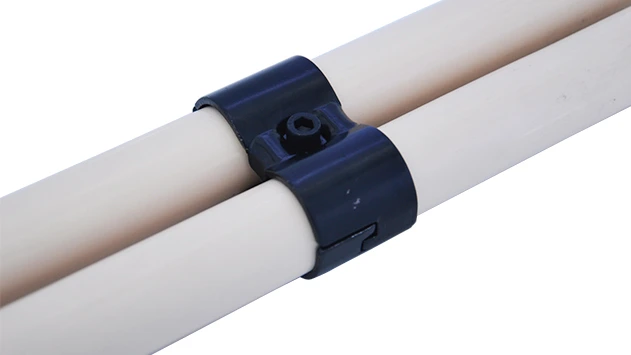
Parallel Lean Pipe Joint
Parallel lean pipe joint used for 2 pcs 28MM lean pipe connection in parallel direction to enhance frame structure, usually for heavy payload requirement for workbench. flow rack, hand trolley.
Introduction: The Backbone of Lean Manufacturing
Walk into any modern manufacturing facility, and you'll likely spot a network of workbenches, flow racks, and assembly lines that seem to effortlessly adapt to changing production needs. Behind this flexibility lies a humble yet critical component: the parallel lean pipe joint. These unassuming connectors are the glue that holds lean systems together, enabling the modular, efficient workflows that define lean manufacturing. But when they fail—whether through sudden breakage, gradual loosening, or wear—they don't just disrupt production; they risk downtime, safety hazards, and costly repairs.
In this article, we'll dive deep into the world of parallel lean pipe joints. We'll explore why they fail, how to spot early warning signs, and most importantly, how to prevent breakage before it happens. Whether you're a plant manager, maintenance technician, or someone just curious about the mechanics of lean systems, this guide will equip you with the knowledge to keep your operations running smoothly. Along the way, we'll touch on key elements like material selection (hint: aluminum lean pipe might be your best bet), proper installation, and the role of quality lean pipe and accessories in long-term reliability.
Understanding Parallel Lean Pipe Joints: More Than Just a Connector
Before we jump into failure analysis, let's make sure we're on the same page about what parallel lean pipe joints are and why they matter. At their core, these joints are designed to connect two or more lean pipes in parallel—think of them as the hinges that let you build structures like workbenches, material racks, or conveyor supports with precision and flexibility. Unlike fixed welds, they allow for easy reconfiguration, which is why they're a staple in lean environments where adaptability is key.
Most parallel lean pipe joints are made from metal alloys, with options ranging from steel to aluminum. Aluminum lean pipe joints, in particular, have grown in popularity thanks to their lightweight yet durable nature, resistance to corrosion, and compatibility with aluminum lean pipe systems. They're often paired with other lean pipe and accessories like casters, roller tracks, and end caps to create complete, functional workstations.
But here's the thing: not all parallel lean pipe joints are created equal. Their design, material quality, and manufacturing precision can vary widely between suppliers. A cheap, poorly made joint might save you money upfront, but it's far more likely to fail under the stresses of daily use. That's why understanding the common failure modes is the first step toward prevention.

Common Failure Modes: How Parallel Lean Pipe Joints Break
Parallel lean pipe joints don't just "break" in one way. Failure can manifest in several forms, each with its own set of causes and warning signs. Let's break down the most common ones:
1. Brittle Breakage
This is the most dramatic failure mode: a sudden, sharp break in the joint, often with a clean, jagged edge. Brittle breakage typically occurs when the joint is subjected to a load it can't handle—either a one-time impact or repeated stress that exceeds the material's fatigue limit. You might see this in high-traffic areas where workbenches or racks are frequently loaded and unloaded, or in environments with heavy vibration.
2. Gradual Loosening
Not all failures are catastrophic. Sometimes, joints simply loosen over time, causing the connected pipes to wobble or shift. While this might not seem urgent, loose joints create a domino effect: they increase stress on adjacent components, lead to uneven load distribution, and can eventually result in full breakage if left unaddressed. Loosening is often caused by improper torque during installation or repeated thermal expansion and contraction.
3. Wear and Tear
Joints that experience regular movement—like those in adjustable workbenches or mobile trolleys—are prone to wear. Over time, the contact points between the joint and the pipe can erode, leading to excessive play or even deformation. This is especially common in joints made from softer metals or those exposed to abrasive materials, such as in manufacturing processes with metal shavings or debris.
4. Corrosion
In humid, damp, or chemical-exposed environments, corrosion can eat away at joint materials, weakening their structural integrity. Steel joints are particularly susceptible, but even aluminum lean pipe joints can corrode if they're not properly coated or if their protective finish is scratched. Corrosion often starts as discoloration or pitting and can progress to full-scale cracking if ignored.

Root Cause Analysis: Why Do Joints Fail?
To prevent failure, we need to dig deeper than just the symptoms. Let's explore the root causes behind each failure mode, using real-world scenarios to illustrate how these issues play out on the factory floor.
Material Fatigue: The Silent Killer
Imagine a production line where a material rack is loaded with 50kg boxes eight hours a day, five days a week. The parallel lean pipe joints holding the rack together are designed to handle that load, but over months and years of repeated stress, microscopic cracks form in the metal. This is material fatigue, and it's a leading cause of brittle breakage. Fatigue is especially problematic in joints made from low-grade steel or those with manufacturing defects like air bubbles or impurities, which act as stress concentrators.
Aluminum lean pipe joints, while lighter, aren't immune. Pure aluminum is soft, so many manufacturers use aluminum alloys reinforced with other metals to improve strength. However, even these alloys can fatigue if they're exposed to cyclic loads beyond their design limits.
Improper Installation: A Recipe for Disaster
Even the highest-quality joint will fail if it's installed incorrectly. Common installation mistakes include under-tightening (leading to loosening), over-tightening (stripping threads or deforming the joint), and misalignment (creating uneven stress distribution). For example, a maintenance technician rushing to set up a new workbench might skip using a torque wrench, guessing at the correct tightness. Over time, that joint will loosen, causing the workbench to wobble and putting extra strain on neighboring joints.
Another installation error is using mismatched components. Pairing a parallel lean pipe joint with a pipe of the wrong diameter or wall thickness creates gaps, which lead to movement and wear. This is where choosing a reputable lean pipe supplier matters—they'll ensure that all lean pipe and accessories are compatible and tested for fit.
Overload: Pushing Joints Beyond Their Limits
It's tempting to maximize space by stacking materials higher or loading workbenches with more tools than intended, but this is a surefire way to overload parallel lean pipe joints. Every joint has a maximum load rating, which accounts for both static (stationary) and dynamic (moving) weights. Exceeding this rating accelerates fatigue and can cause immediate breakage, especially if the load is applied suddenly (like dropping a heavy component onto a rack).
Overload isn't always obvious. Sometimes, it's the result of cumulative additions: a workbench starts with a few tools, then a monitor is added, then a storage bin, until the total weight creeps past the joint's limits. Without clear load labels or regular inspections, this slow creep can go unnoticed until failure occurs.
Environmental Factors: When the Workplace Works Against You
The environment plays a bigger role in joint failure than many realize. High humidity speeds up corrosion, extreme temperatures cause materials to expand and contract (loosening joints), and constant vibration—from nearby machinery or heavy foot traffic—amplifies fatigue. In food processing facilities, for example, frequent washdowns with harsh chemicals can strip protective coatings from joints, while in automotive plants, oil and grease can degrade rubber gaskets (if used) and weaken metal bonds.
Poor Maintenance: Out of Sight, Out of Mind
Finally, neglect is a major contributor to joint failure. In busy production environments, maintenance tasks like tightening joints or inspecting for wear often take a backseat to meeting deadlines. But skipping these tasks is like ignoring a check engine light—small issues become big problems. A 2023 survey of manufacturing facilities found that 68% of joint failures could be traced back to infrequent or inadequate maintenance, making this the most preventable root cause.
Preventive Measures: Keeping Joints Strong for the Long Haul
Now that we understand why parallel lean pipe joints fail, let's focus on solutions. Preventing breakage isn't about reacting to problems—it's about building resilience into your lean system from the start. Here are actionable steps to keep joints strong and reliable:
1. Choose the Right Materials: Aluminum Lean Pipe and Beyond
Material selection is the first line of defense. For most applications, aluminum lean pipe joints offer an excellent balance of strength, weight, and corrosion resistance. Aluminum alloys like 6061-T6 are heat-treated for durability, making them ideal for high-stress environments. They're also lightweight, which reduces the overall load on the joints themselves.
In corrosive environments—like coastal factories or those with chemical exposure—consider stainless steel joints, which resist rust and oxidation. For heavy-load applications, reinforced steel joints may be necessary, but be sure to pair them with corrosion-resistant coatings (like zinc plating) if moisture is a concern. Always consult with your lean pipe supplier to match materials to your specific environment and load requirements.
2. Master the Art of Installation
Proper installation is non-negotiable. Start by training your team on best practices: use torque wrenches to ensure consistent tightness (follow the manufacturer's specs), align pipes straight before tightening, and avoid cross-threading. For critical joints, consider using thread-locking compounds (like Loctite) to prevent loosening over time, but be cautious—some compounds can make future disassembly difficult if you need to reconfigure the system.
Another tip: document installations. Keep a log of when joints were installed, who installed them, and the torque applied. This creates accountability and makes it easier to trace issues back to installation if problems arise later.
3. Implement Load Management and Clear Labeling
Prevent overload by clearly labeling all structures with their maximum load ratings. These labels should be visible, durable, and updated if the structure is reconfigured. Train employees to respect these limits and encourage them to report overloading if they see it. For dynamic environments, consider installing load sensors or visual indicators (like spring-loaded gauges) that show when a rack or workbench is approaching its limit.
It's also smart to design systems with redundancy. For example, adding extra support joints to high-load areas distributes weight more evenly and reduces stress on individual components. Think of it as building in a safety net—if one joint weakens, others can pick up the slack until maintenance is performed.
4. Regular Inspections: Catch Problems Early
Even the best materials and installation can't prevent all issues, which is why regular inspections are critical. Create a schedule based on usage: high-traffic areas (like assembly lines) might need weekly checks, while stationary racks can be inspected monthly. During inspections, look for:
- Loose or wobbly joints (tighten immediately)
- Signs of wear (scratches, dents, or deformation)
- Corrosion (discoloration, pitting, or flaking)
- Cracks (especially around bolt holes or stress points)
- Uneven loading (sagging pipes or tilted structures)
Record inspection findings in a log, and prioritize repairs based on severity. A loose joint might get a quick tightening, while a cracked joint should be replaced immediately. Don't delay—what seems minor today can become a major issue tomorrow.
5. Protect Against Environmental Hazards
Combat corrosion by controlling the environment where possible: use dehumidifiers in damp areas, install proper ventilation in chemical zones, and clean joints regularly to remove debris. For steel joints, apply anti-corrosion sprays or paints; for aluminum, ensure the surface anodization (a protective layer) isn't scratched. In extreme cases, consider enclosing sensitive structures or using protective covers during off-hours.
Vibration is another environmental threat. If machinery near lean structures causes constant shaking, add vibration-dampening pads or isolate the structures to reduce stress on joints. Similarly, in areas with extreme temperature swings, allow for thermal expansion by leaving small gaps in fixed joints or using flexible connectors where appropriate.
Case Study: How One Manufacturer Solved Chronic Joint Failure
The Problem: A Frustrating Cycle of Breakage
A mid-sized electronics manufacturer was struggling with repeated parallel lean pipe joint failures on their assembly line racks. Every few months, a joint would break, halting production for hours while maintenance crews replaced it. The racks held circuit board components, and the failures often occurred during peak production times, leading to missed deadlines and frustrated staff.
The Investigation: Digging Into the Root Cause
The maintenance team started by examining the failed joints. They noticed that most breaks occurred at the base of the racks, where the vertical pipes met the horizontal supports. The joints were made of standard steel, and corrosion was visible on several of them—unsurprising, since the facility used water-based cleaning solutions that occasionally splashed onto the racks. Load tests revealed that the racks were within their weight limits, but interviews with operators uncovered a pattern: the racks were frequently bumped by mobile trolleys, causing sudden impacts to the joints.
The Solution: A Multi-Pronged Approach
Working with their lean pipe supplier, the manufacturer implemented three changes:
- Material Swap: They replaced steel joints with aluminum lean pipe joints, which offered better corrosion resistance and were lighter, reducing overall load on the base joints.
- Impact Protection: Installed rubber bumpers on the corners of the racks to absorb trolley impacts, reducing sudden stress on the joints.
- Enhanced Inspections: Added weekly inspections of base joints, with a focus on checking for looseness or corrosion, and trained operators to report bumps or unusual noises immediately.
The Result: Zero Failures in 18 Months
Within six months of implementing these changes, the manufacturer saw a 100% reduction in joint failures. The aluminum joints held up to the cleaning solutions, the bumpers prevented impact damage, and regular inspections caught minor loosening before it became a problem. Production downtime related to rack failures dropped to zero, and staff morale improved now that they could rely on stable, safe workstations.
Best Practices for Long-Term Joint Health
Preventing parallel lean pipe joint failure is an ongoing process, not a one-time fix. Here are some best practices to keep your joints healthy for years to come:
1. Invest in Training
Your employees are your first line of defense. Train them to recognize signs of joint failure (wobbling, rust, cracks) and encourage them to report issues immediately. Include installation and load limit training for anyone who sets up or reconfigures lean structures. The more informed your team, the faster problems can be addressed.
2. Partner with a Quality Lean Pipe Supplier
Not all lean pipe and accessories are created equal. Choose a supplier with a track record of quality and reliability—one that tests products for load capacity, corrosion resistance, and durability. A good supplier will also offer technical support, helping you select the right materials and design systems that minimize joint stress. Avoid cutting costs with cheap, untested components; the savings will vanish when joints start failing.
3. Embrace Predictive Maintenance
Move beyond reactive inspections to predictive maintenance. Use tools like ultrasonic testing to detect internal cracks or strain gauges to monitor joint stress in real time. For critical systems, consider using IoT sensors that alert maintenance teams to unusual vibration or load spikes. Predictive maintenance lets you replace joints before they fail, reducing downtime and extending the life of your entire lean system.
4. Document and Learn from Failures
Even with the best prevention, failures may still occur. When they do, treat them as learning opportunities. Conduct a root cause analysis, document what went wrong, and update your processes to prevent recurrence. Share these lessons with your team and your lean pipe supplier—they might use the insights to improve their products or support.
Conclusion: Strengthening the Backbone of Your Operations
Parallel lean pipe joints may be small, but their role in lean manufacturing is enormous. They enable the flexibility, efficiency, and adaptability that modern production demands—when they work. By understanding the common failure modes, addressing root causes like material fatigue and improper installation, and implementing proactive prevention strategies, you can keep these critical components strong and reliable.
Remember: preventing joint failure isn't just about avoiding downtime. It's about creating a safer workplace, extending the life of your lean systems, and ensuring that your operations can adapt and grow without being held back by broken components. Whether you're upgrading to aluminum lean pipe, training your team, or partnering with a trusted lean pipe supplier, every step you take toward prevention is an investment in the future of your business.
So, the next time you walk through your production floor, take a moment to look at those parallel lean pipe joints. They might not be glamorous, but they're the unsung heroes keeping your operations moving. Treat them with care, and they'll keep working hard for you.
Failure Mode Comparison Table
| Failure Mode | Common Causes | Warning Signs | Preventive Measures |
|---|---|---|---|
| Brittle Breakage | Material fatigue, overload, impact damage | Visible cracks, sudden structural collapse | Use high-strength materials (aluminum alloys), avoid overload, add impact protection |
| Loosening | Improper torque, thermal cycling, vibration | Wobbling pipes, creaking noises, uneven gaps | Use torque wrenches, apply thread-locking compounds, regular tightening checks |
| Wear and Tear | Repeated movement, abrasive environments | Excessive play, deformed contact points, rough movement | Use wear-resistant materials, lubricate moving joints, protect from debris |
| Corrosion | Moisture, chemicals, salt exposure | Rust, pitting, discoloration, flaking coatings | Choose corrosion-resistant materials (aluminum, stainless steel), apply protective coatings, control environment |