- Company Articles
- Products and Technology
- Product knowledge
- Parallel Lean Pipe Joint One Side Rotatory: Applications in Home Appliance Assembly Lines

Parallel Lean Pipe Joint One Side Rotatory: Applications in Home Appliance Assembly Lines
Related Product
Parallel Lean Pipe Joint One Side Rotatory
Parallel rotatory lean pipe joint, for 2 pcs 28mm pipe conenction in parallel direction with one side rotatory function.
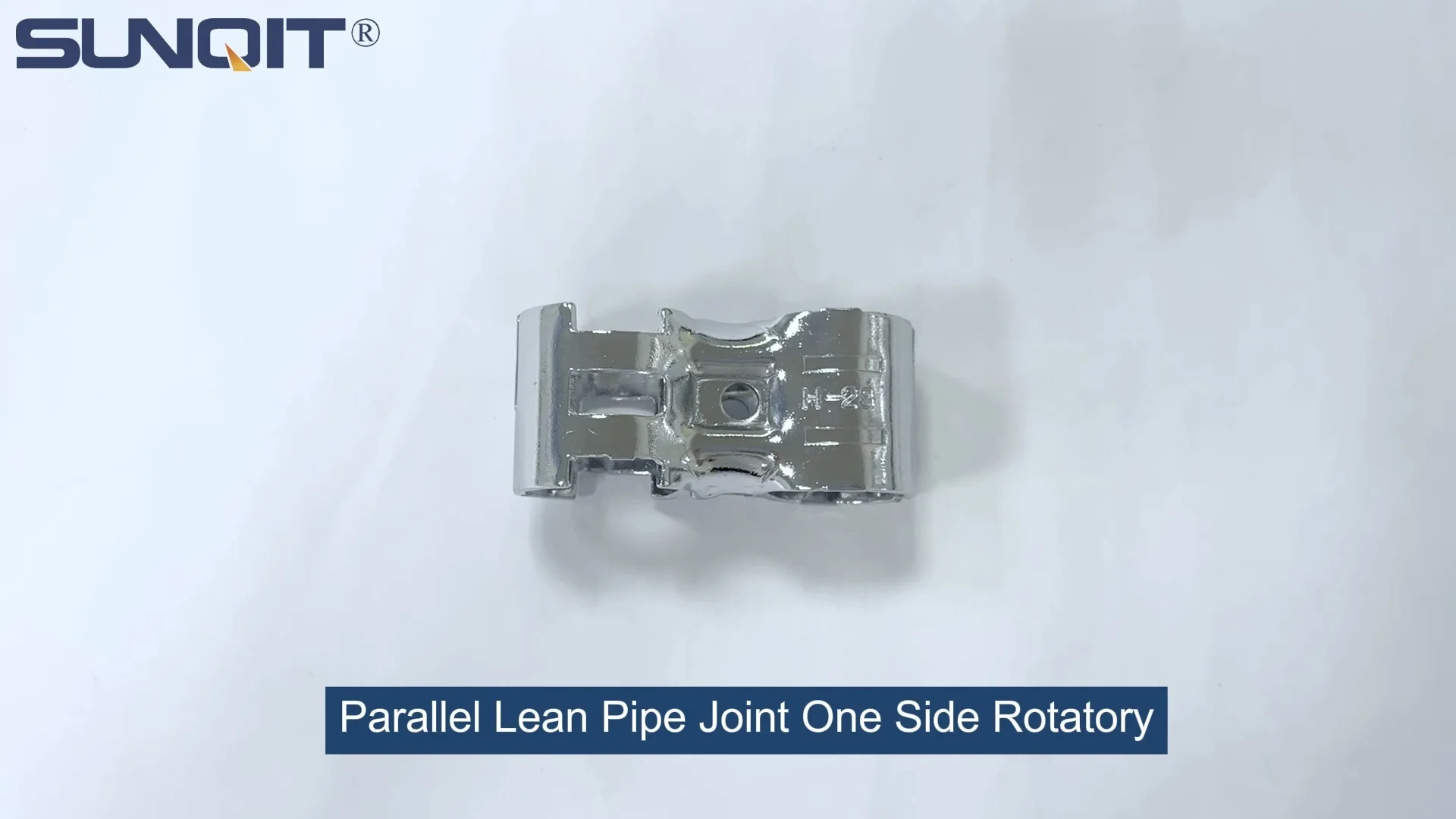
Walk into any modern home appliance assembly plant, and you'll witness a carefully choreographed dance of machines, materials, and workers. From the sleek curves of a new refrigerator door to the precision-engineered components of a smart washing machine, every step demands efficiency, adaptability, and reliability. At the heart of this orchestration lies a network of lean manufacturing tools—unassuming yet critical components that keep production flowing. Among these, the parallel lean pipe joint one side rotatory stands out as a quiet workhorse, transforming rigid assembly lines into flexible, human-centered workspaces. In this article, we'll explore how this small but mighty joint is redefining efficiency in home appliance manufacturing, with a focus on its real-world applications, benefits, and impact on everyday operations.
The Home Appliance Assembly Line: Challenges Beyond Speed
Home appliance manufacturing is a high-stakes industry. Consumer demand for smarter, more energy-efficient products—think refrigerators with touchscreen controls or dishwashers that connect to your phone—means production lines must juggle complexity with speed. A single assembly line might produce 500+ units daily, each requiring dozens of components (motors, circuit boards, plastic casings, glass panels) to come together flawlessly. Add to this the pressure to switch between models (a 24-inch vs. 30-inch oven, for example) with minimal downtime, and the challenges become clear.
Traditional assembly setups often struggle here. Fixed workbenches force workers into awkward postures when handling bulky parts. Rigid material racks can't adapt to varying component sizes, leading to cluttered workspaces. And reconfiguring a line for a new model? That might take hours—even days—wasting valuable production time. These inefficiencies don't just hurt the bottom line; they take a toll on workers, too. Repetitive strain injuries, fatigue, and frustration are all too common in inflexible environments.
Enter lean manufacturing: a philosophy centered on eliminating waste, optimizing flow, and empowering workers. Lean systems rely on modular, adaptable tools to create lines that can pivot quickly, reduce downtime, and prioritize ergonomics. And at the core of these systems are components like lean pipes , flow racks , and specialized joints—tools designed to make change feel effortless rather than disruptive.
What Is a Parallel Lean Pipe Joint One Side Rotatory?
Before diving into applications, let's demystify the star of the show: the parallel lean pipe joint one side rotatory. At first glance, it's a simple connector, typically made of durable materials like aluminum or steel, designed to link two parallel lean pipes. But its magic lies in its movement: one side of the joint is fixed to a pipe, while the other rotates 180 degrees (or more, depending on the model), allowing the connected pipe to pivot, tilt, or swivel. This rotation isn't just for show—it's engineered to solve specific problems in assembly lines.
Most lean pipe joints are fixed, meaning once installed, they lock pipes into a rigid angle (90 degrees, 45 degrees, etc.). The one-side rotatory joint flips this script. Imagine a hinge that lets you adjust a shelf from horizontal to 30 degrees, then lock it in place—without tools, without disassembly, and in seconds. That's the flexibility we're talking about. And when paired with lightweight, strong materials like aluminum lean pipe , it becomes a game-changer for adaptability.
But why "parallel"? This design ensures the two connected pipes stay aligned along a parallel axis, preventing wobbling or misalignment even when rotated. For assembly lines, where precision matters, this stability is non-negotiable. Whether supporting a 50-pound motor or a delicate glass panel, the joint maintains structural integrity while offering movement.

Applications in Home Appliance Assembly: Where the Joint Shines
Now, let's get practical. How does this joint actually improve day-to-day operations in home appliance plants? Let's break it down by key areas of the assembly line, from workstations to material flow.
1. Lean Pipe Workbench: Ergonomics Redefined
The lean pipe workbench is the backbone of any assembly line. It's where workers spend most of their time—installing screws, connecting wires, or fitting components into place. But not all workbenches are created equal. A fixed-height, flat workbench might work for assembling a small blender, but try installing a heavy washing machine drum on one, and you'll quickly see the problem: workers hunch, strain their backs, or overreach, increasing the risk of injury and errors.
This is where the parallel lean pipe joint one side rotatory transforms the workspace. By integrating the joint into the workbench frame, manufacturers can create adjustable surfaces that tilt, rotate, or with minimal effort. For example:
- Refrigerator Door Assembly: Installing hinges on a refrigerator door requires precision. Workers need to align holes, insert screws, and test the door's swing—all while the door rests on the workbench. With a rotatory joint, the workbench surface can tilt to a 25-degree angle, bringing the door closer to eye level and reducing neck strain. Once the hinges are on, the joint rotates the surface back to horizontal for the next step (attaching the seal).
- Microwave Control Panel Installation: Control panels are delicate, with tiny buttons and circuit boards that must align perfectly. A flat workbench forces workers to lean over, squinting to see small components. The rotatory joint lets the panel holder swivel 90 degrees, so workers can stand upright and view the panel head-on. This simple adjustment cuts down on eye strain and reduces the chance of misaligned buttons.
The best part? Adjustments take seconds. No tools, no calling a maintenance team—just a quick twist of the joint to lock it into the desired position. This not only saves time but empowers workers to customize their stations to their body types, fostering a sense of ownership and comfort.
2. Flow Racks: Smoothing Material Flow with Roller Tracks
Material flow is the lifeblood of assembly lines. Components—from small screws to large plastic casings—need to move from storage to workstations quickly and safely. Enter flow racks : gravity-fed systems where components slide along roller tracks from the back to the front, ensuring workers always have easy access to parts. But flow racks are only effective if the angle of the tracks is just right. Too steep, and delicate parts (like glass oven doors) might slide too fast and chip. Too shallow, and heavy parts (like compressor units) get stuck, causing delays.
Here, the parallel lean pipe joint one side rotatory becomes a flow rack's best friend. By attaching the joint to the roller track supports, operators can the track angle on the fly. For example:
- Dishwasher Tub Components: A flow rack holding stainless steel dishwasher tubs needs a steeper angle (around 15 degrees) to move the heavy tubs smoothly. But when switching to lighter plastic tub liners, the angle can be reduced to 5 degrees to prevent sliding too quickly. The rotatory joint makes this adjustment possible in minutes, without disassembling the rack.
- Glass Shelf Handling: Glass refrigerator shelves are fragile. A flow rack with a fixed 10-degree angle might cause shelves to collide at the bottom, leading to cracks. With the rotatory joint, workers can tilt the track to 2 degrees, creating a gentle glide that protects the glass while still keeping parts accessible.
The joint also helps with space optimization. When a flow rack isn't in use (e.g., during a production lull), the roller tracks can be rotated upward, folding the rack against the wall to free up floor space for other tasks—like staging finished products for shipping.
3. Turnover Trolleys and Racks: Adaptable Material Transport
Not all components stay on the flow rack. Some—like large motor assemblies or bulky wiring harnesses—need to be transported directly to workstations. That's where turnover trolley and rack systems come in. These mobile carts carry materials across the plant, but their usefulness depends on how well they adapt to different load sizes.
Traditional trolleys are often one-size-fits-all: a fixed frame with shelves that can't adjust. If you need to carry a tall component (like a dryer drum), you might have to leave the trolley's top shelf off, wasting space. If you need to carry small parts, the shelves might be too far apart, leading to jostling and damage.
The parallel lean pipe joint one side rotatory solves this by letting trolleys "morph" to fit the load. For example:
- Adjustable Shelving: Trolley shelves connected by rotatory joints can be folded up or down. Need to carry a 3-foot-tall compressor? Fold the middle shelf up to make room. Switching to small circuit boards? Fold the shelves back down to create three levels, keeping parts organized.
- Collapsible Frames: When not in use, the trolley's side rails (connected via rotatory joints) can be rotated inward, folding the cart to half its size. This is a game-changer in tight plants, where storage space is limited. Instead of 10 trolleys taking up a corner, they collapse into a neat stack, freeing up room for other equipment.
Even better, the joint's compatibility with caster wheels (another key accessory in lean systems) means these adaptable trolleys remain easy to move, even when fully loaded. Workers don't have to strain to push heavy carts—they glide smoothly, thanks to the joint's stability.

The Impact: Numbers That Matter
It's one thing to talk about "flexibility" and "ergonomics," but what do these benefits look like in hard numbers? To quantify the impact of the parallel lean pipe joint one side rotatory, let's compare it to traditional fixed joints across key metrics. The table below draws on data from a mid-sized home appliance manufacturer that switched to rotatory joints in 2024.
| Metric | Traditional Fixed Joints | Parallel Lean Pipe Joint One Side Rotatory | Improvement |
|---|---|---|---|
| Time to reconfigure a workbench | 2 hours (requires tools/disassembly) | 15 minutes (no tools needed) | 92% faster |
| Worker-reported strain (1-10 scale) | 7.2 (high neck/back strain) | 3.5 (adjustable work angles reduce strain) | 51% reduction |
| Flow rack material jams per week | 12 (due to fixed track angles) | 2 (adjustable angles prevent jams) | 83% fewer jams |
| Turnover trolley storage space | 10 sq. ft. per trolley (fixed size) | 4 sq. ft. per trolley (collapsed) | 60% space saved |
| Model changeover downtime | 8 hours (reconfiguring lines) | 2.5 hours (quick joint adjustments) | 69% less downtime |
These numbers tell a clear story: the rotatory joint isn't just a "nice-to-have"—it's a critical tool for reducing waste, improving worker well-being, and boosting productivity. For the manufacturer in question, these changes translated to a 12% increase in units produced per day and a 35% drop in workplace injuries related to manual handling.

Why Aluminum Lean Pipe? The Perfect Partner for the Joint
While the joint itself is a star, its performance depends on the lean pipe it's paired with. Enter aluminum lean pipe —a lightweight, durable material that complements the joint's flexibility perfectly. Unlike steel pipes, which are heavy and prone to rust, aluminum pipes are corrosion-resistant (ideal for plants with moisture, like those producing washing machines), easy to clean, and light enough for workers to adjust without strain.
Aluminum's strength-to-weight ratio is key. A 1.5mm-thick aluminum pipe can support up to 150 pounds, making it sturdy enough for most home appliance components. When combined with the rotatory joint, this means workers can adjust workbenches, flow racks, or trolleys without worrying about bending or breaking the pipes. Plus, aluminum's smooth surface is less likely to snag on delicate parts (like wiring harnesses) compared to steel, reducing the risk of damage.
Another advantage? Aluminum lean pipe is compatible with a wide range of accessories, from lean pipe and accessories like clamps and brackets to roller tracks and caster wheels. This modularity means manufacturers can build custom solutions—like a workbench with integrated tool hooks or a flow rack with adjustable dividers—without starting from scratch.
Looking Ahead: The Future of Lean Assembly
As home appliances grow smarter and more customizable, assembly lines will need to become even more adaptable. The parallel lean pipe joint one side rotatory is just the beginning. Imagine a future where these joints are paired with sensors that automatically adjust workbench angles based on a worker's height (using AI) or track material flow in real time to optimize roller track angles. Or where the joints are made from recycled aluminum, aligning with the industry's push for sustainability.
But even without futuristic tech, the joint's current impact is undeniable. It's a reminder that lean manufacturing isn't just about big machines or complex software—it's about the small, thoughtful components that make work easier, faster, and safer. For the worker assembling their 50th refrigerator door of the day, the ability to adjust their workbench with a quick twist of a joint isn't just a convenience; it's a sign that their well-being matters. And for manufacturers, that translates to happier teams, fewer errors, and a stronger bottom line.
Conclusion: The Joint That Moves the Industry Forward
In the fast-paced world of home appliance manufacturing, every second counts. The parallel lean pipe joint one side rotatory may be small, but its ability to turn rigid assembly lines into flexible, human-centric workspaces is nothing short of revolutionary. From ergonomic workbenches that reduce strain to flow racks that adapt to fragile parts, and turnover trolleys that save space, this joint is proving that efficiency and worker well-being can go hand in hand.
As manufacturers continue to innovate, one thing is clear: the future of assembly lines isn't just about speed—it's about adaptability. And with tools like the parallel lean pipe joint one side rotatory, that future is already here. So the next time you open your refrigerator or start your dishwasher, take a moment to appreciate the quiet precision of the assembly line—and the small but mighty joint that helped bring it all together.