- Company Articles
- Products and Technology
- Product knowledge
- Parallel Lean Pipe Joint One Side Rotatory: Benefits for Automotive Parts Storage Racks

Parallel Lean Pipe Joint One Side Rotatory: Benefits for Automotive Parts Storage Racks
Related Product
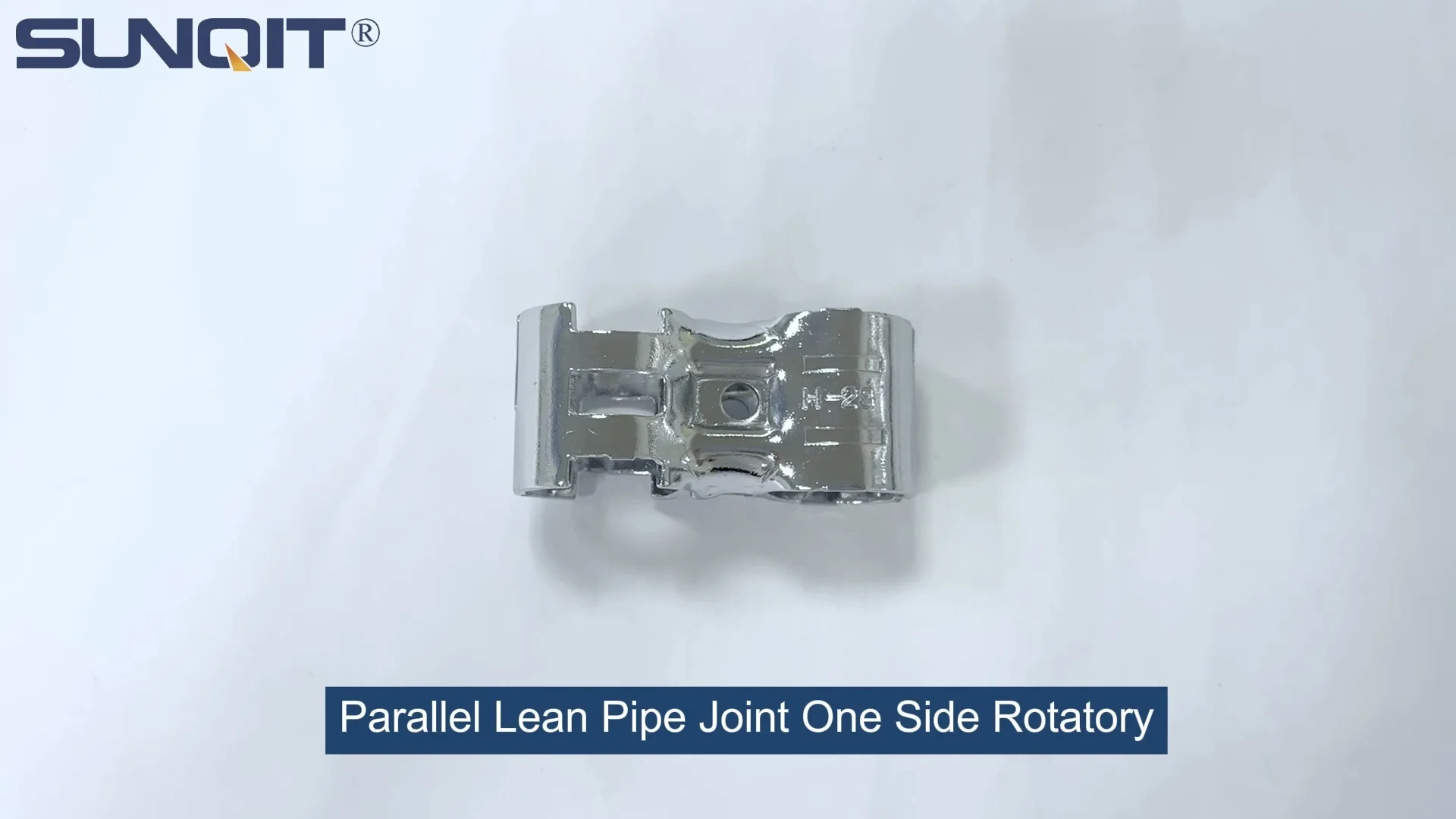
Parallel Lean Pipe Joint One Side Rotatory
Parallel rotatory lean pipe joint, for 2 pcs 28mm pipe conenction in parallel direction with one side rotatory function.
Walk into any automotive manufacturing facility, and you'll quickly realize that behind every sleek car rolling off the production line lies a hidden backbone: the storage and organization of millions of parts. From tiny screws and washers to bulky engine components and body panels, the way these parts are stored directly impacts efficiency, productivity, and even the quality of the final product. Yet, for many manufacturers, storage remains a persistent headache. Warehouses overflow with disorganized racks, workers waste precious time searching for misplaced parts, and rigid shelving systems struggle to adapt to ever-changing production needs—whether it's a new model launch, a seasonal surge, or a shift in component sizes.
This is where innovative solutions rooted in lean principles come into play. Among the most transformative tools in modern automotive storage is the Parallel Lean Pipe Joint One Side Rotatory —a humble yet powerful component that redefines how storage racks are built, adjusted, and utilized. Designed to work seamlessly with lean pipes and lean systems, this joint isn't just a hardware piece; it's a catalyst for smarter, more adaptable, and human-centric warehouse operations. In this article, we'll explore why this unassuming joint has become a game-changer for automotive parts storage, diving into its benefits, real-world applications, and how it aligns with the demands of today's fast-paced manufacturing environments.
What Is the Parallel Lean Pipe Joint One Side Rotatory?
Before we dive into its benefits, let's demystify the star of the show: the Parallel Lean Pipe Joint One Side Rotatory. At its core, this joint is a connecting component engineered to link lean pipes (also known as or lean tubes) in storage racks, workbenches, and material handling systems. What sets it apart from standard fixed joints is its unique one-sided rotational design —a feature that allows for dynamic adjustment and reconfiguration without disassembly.
Typically crafted from high-strength materials like galvanized steel, aluminum, or reinforced plastic, the joint features a rotating mechanism on one end, while the other end remains fixed. This design lets one segment of the lean pipe rotate relative to the other, enabling users to adjust angles, heights, or shelf positions with minimal effort. Imagine building a shelf where you can tilt a section to slide parts toward you, or reposition a crossbar to accommodate a taller box—all without tools or time-consuming disassembly. That's the flexibility this joint brings to the table.
But it's not just about movement. The joint is also built for stability. Its precision-engineered connections ensure that once adjusted, the structure remains rigid, even under heavy loads. Whether supporting lightweight electronic components or heavy metal brackets, the Parallel Lean Pipe Joint One Side Rotatory strikes a rare balance between flexibility and strength—two qualities that are non-negotiable in automotive storage.
Lean Systems: The Backbone of Modern Automotive Manufacturing
To fully appreciate the value of this joint, we need to step back and understand the role of lean systems in automotive manufacturing. Lean principles, pioneered by Toyota, focus on eliminating waste, optimizing flow, and continuously improving processes. In this context, "waste" isn't just physical scrap; it includes time wasted searching for parts, space wasted on underutilized storage, and effort wasted on inflexible systems that can't adapt to change.
Storage is a critical component of lean systems. A disorganized warehouse with rigid racks leads to "motion waste" (workers walking farther than needed), "inventory waste" (overstocking because parts are hard to track), and "waiting waste" (delays when parts aren't accessible). Lean storage solutions—like those built with lean pipes, flow racks, and adjustable joints—aim to minimize these wastes by making parts easy to access, systems easy to reconfigure, and space easy to maximize.
The Parallel Lean Pipe Joint One Side Rotatory is a perfect embodiment of lean thinking. It reduces waste by eliminating the need for custom-built racks (which become obsolete when part sizes change), cuts down on setup time (no more welding or drilling to adjust shelves), and empowers workers to tailor storage to their immediate needs—all while keeping costs in check. In short, it's lean innovation at its most practical.

Key Benefits for Automotive Parts Storage Racks
Now, let's get to the heart of the matter: how does this joint transform automotive parts storage? Below are the most impactful benefits, backed by the realities of warehouse operations.
1. Unmatched Flexibility for Diverse Part Sizes
Automotive parts come in an astonishing range of shapes and sizes: from 0.5-inch swivel roller balls used in door mechanisms to 6-foot-long aluminum extrusion profiles for chassis components. Traditional storage racks, with fixed shelves and rigid frames, struggle to keep up. A rack built for small bolts can't accommodate a bulky alternator, and vice versa—leading to wasted space or the need for multiple specialized racks.
The Parallel Lean Pipe Joint One Side Rotatory solves this with its on-the-fly adjustability . For example, a storage rack segment using this joint can be reconfigured in minutes to hold:
- Small parts (e.g., 1-inch swivel roller balls) on closely spaced, horizontal shelves;
- Tall parts (e.g., aluminum guide rails) by rotating the joint to create vertical dividers;
- Irregularly shaped parts (e.g., plastic roller track guide rails) by tilting shelves to prevent rolling or sliding.
This flexibility is a lifesaver during model transitions. When a car manufacturer shifts from producing sedans to SUVs, part sizes change dramatically. With traditional racks, this might require investing in new shelving or spending days modifying existing ones. With the Parallel Lean Pipe Joint One Side Rotatory, workers can simply adjust the racks to fit the new parts—saving time, money, and frustration.
2. Space Optimization: Making Every Inch Count
Warehouse space is a premium in automotive manufacturing. Every square foot not used efficiently translates to higher costs and slower operations. Traditional storage racks often waste space by forcing a "one-size-fits-all" layout, with fixed heights and widths that leave gaps between shelves or underutilize vertical space.
The Parallel Lean Pipe Joint One Side Rotatory turns this around by enabling precision space utilization . Its rotational design allows for:
- Vertical optimization : Adjust shelf heights to fit parts exactly, eliminating "dead space" between shelves. For example, if a batch of parts is 12 inches tall, the joint can be rotated to set the next shelf at 13 inches—no more leaving 6 inches of unused space "just in case."
- Horizontal adaptability : Create angled or curved sections to follow the warehouse layout, such as wrapping around pillars or fitting into tight corners that would otherwise go unused.
- Integration with flow racks : Pair the joint with flow rack systems (a staple in lean material handling) to create gravity-fed lanes. By rotating the joint, workers can adjust the slope of the flow rack to control how quickly parts move—ensuring a steady supply to assembly lines without overstocking.
The result? Warehouses that feel larger, more organized, and less cluttered. In one case study, a mid-sized automotive supplier reported freeing up 18% of their warehouse space within six months of adopting racks with these joints—space that was then repurposed for additional assembly stations, boosting overall production capacity.
3. Durability That Withstands the Automotive Grind
Automotive warehouses are tough environments. Racks are subjected to constant use—parts are loaded, unloaded, pushed, and pulled daily. They must withstand vibrations from nearby machinery, temperature fluctuations, and occasional impacts from forklifts or pallet jacks. A flimsy joint that bends or breaks under stress isn't just an inconvenience; it's a safety hazard and a productivity killer.
The Parallel Lean Pipe Joint One Side Rotatory is built to endure this grind. Constructed from robust materials like hardened steel or anodized aluminum, it resists corrosion, wear, and deformation. Its rotational mechanism is sealed to prevent dust and debris from jamming the works, ensuring smooth operation even in dirty or oily warehouse conditions. Most models can support loads of 50-100 kg per joint, making them suitable for heavy automotive parts like steel roller tracks or aluminum honeycomb panels.
This durability translates to longer system lifespans and lower maintenance costs. Unlike plastic joints that crack or welded joints that loosen over time, these rotatory joints require minimal upkeep—just occasional lubrication of the rotating mechanism. For busy automotive facilities, this means fewer breakdowns, less downtime, and more reliable storage.
4. Seamless Compatibility with Lean System Components
No storage solution exists in isolation. Automotive warehouses rely on a ecosystem of components: lean pipes, aluminum profiles, flow racks, workbenches, casters, and more. The best storage systems are those that play well with others, allowing for modular expansion and customization.
The Parallel Lean Pipe Joint One Side Rotatory is a team player. It integrates effortlessly with:
- Aluminum profiles : Pair it with 4040 or 3030 aluminum extrusion profiles to build sturdy, lightweight frames for workbenches or material racks.
- Flow racks : Connect to roller tracks (e.g., 40 steel roller track yellow wheel) to create gravity-fed lanes, with the joint allowing slope adjustments for optimal part flow.
- Casters : Add caster wheels to the base of a rack using compatible caster accessories, turning a stationary shelf into a mobile cart that can be rolled directly to the assembly line.
- Workbenches : Build hybrid systems where storage racks transition seamlessly into workbenches (e.g., Workbench E with single deck), with the joint enabling adjustable shelving above or below the work surface.
This compatibility is key to building lean ecosystems . For example, a manufacturer might design a "kit station" where a workbench (using aluminum profiles) is flanked by flow racks (using roller tracks and the Parallel Lean Pipe Joint One Side Rotatory) holding all the parts needed for a specific assembly task. Workers can grab parts from the flow rack, assemble them at the workbench, and push finished components onto a mobile trolley—all within arm's reach. This reduces motion waste, speeds up assembly, and keeps the workspace organized.

Traditional Racks vs. Racks with Parallel Lean Pipe Joint One Side Rotatory: A Comparison
To truly grasp the impact of this joint, let's compare traditional storage racks with those built using the Parallel Lean Pipe Joint One Side Rotatory. The table below highlights key differences in critical areas like flexibility, cost, and efficiency:
| Feature | Traditional Storage Racks | Racks with Parallel Lean Pipe Joint One Side Rotatory |
|---|---|---|
| Flexibility | Fixed design; cannot be adjusted without disassembly or tools. Requires new racks for part size changes. | On-the-fly adjustment via rotational joint. Reconfigurable for small, large, or irregular parts in minutes. |
| Space Utilization | Wastes space due to fixed shelf heights/gaps. Often requires oversize racks to accommodate occasional large parts. | Maximizes space with precise vertical/horizontal adjustment. Eliminates dead space between shelves. |
| Setup/Modification Time | Hours to days to build or modify (welding, drilling, cutting required). | Minutes to assemble or adjust (no tools needed for basic reconfigurations). |
| Durability | Welded joints may loosen over time; plastic components prone to cracking under heavy loads. | High-strength steel/aluminum construction; sealed rotational mechanism resists wear and corrosion. |
| Cost Over Time | Higher long-term costs due to frequent replacement of specialized racks and downtime for modifications. | Lower total cost of ownership: one rack system adapts to changing needs, reducing the need for new equipment. |

Real-World Impact: A Case Study
To put these benefits into perspective, let's look at a real-world example. A leading automotive parts supplier in Michigan, USA, was struggling with storage inefficiencies in their brake component warehouse. The facility stored over 200 types of brake parts—from small caliper bolts to large rotor assemblies—and relied on traditional welded steel racks. Their pain points included:
- Wasted space: Fixed shelves left 8-12 inches of unused vertical space between layers.
- Slow model transitions: Switching between passenger car and truck brake parts required 2-3 days of rack modifications.
- Worker frustration: Parts often rolled off flat shelves, leading to time spent fallen items and occasional damage.
The supplier partnered with a lean pipe supplier to retrofit their racks with Parallel Lean Pipe Joint One Side Rotatory components, paired with aluminum profiles and flow rack accessories. The results were striking:
- Space savings : By adjusting shelf heights to fit parts exactly, they freed up 22% of warehouse space—enough to add two new assembly lines.
- Faster model transitions : Reconfiguring racks for truck parts now takes 2 hours instead of 3 days, cutting downtime by 97%.
- Reduced waste : Tilting shelves (using the rotatory joint) eliminated part rolling, reducing damage and time spent items by 40%.
As the warehouse manager noted: "We used to dread model changes because of the racking hassle. Now, with these joints, my team can adjust the shelves during lunch break. It's not just about saving time—it's about making the warehouse feel like a place that works for us, not against us."
Choosing the Right Supplier: Why Quality Matters
To unlock the full benefits of the Parallel Lean Pipe Joint One Side Rotatory, partnering with a reliable lean pipe supplier is critical. Not all joints are created equal—cheap, poorly made versions may lack durability, have rough rotational mechanisms, or fail under load. A reputable supplier will offer:
- Quality materials : Joints made from high-grade steel, aluminum, or corrosion-resistant alloys.
- Testing and certification : Products tested for load capacity, durability, and compliance with safety standards (e.g., ISO, OSHA).
- Customization support : Assistance in designing rack systems tailored to your specific parts and workflow.
- After-sales service : Replacement parts, maintenance guidance, and technical support if issues arise.
When evaluating suppliers, ask for samples to test the joint's rotation smoothness and load-bearing capacity. A good supplier will also provide case studies or references from other automotive clients—proof that their products deliver on their promises.
Conclusion: Building the Future of Automotive Storage
In the fast-paced world of automotive manufacturing, storage isn't just about "putting things away"—it's about creating systems that adapt, empower, and drive efficiency. The Parallel Lean Pipe Joint One Side Rotatory embodies this vision, offering a simple yet profound solution to the industry's most pressing storage challenges. Its flexibility, space-saving design, durability, and compatibility with lean system components make it more than a joint; it's a tool for building warehouses that work with people, not against them.
As automotive manufacturers continue to embrace lean principles and agile production, components like this rotatory joint will only grow in importance. They represent the shift from rigid, one-size-fits-all systems to dynamic, human-centric solutions that can keep up with the industry's ever-changing demands. So, the next time you walk through a well-organized automotive warehouse, take a closer look at the racks—chances are, the Parallel Lean Pipe Joint One Side Rotatory is quietly hard at work, making efficiency look effortless.