- Company Articles
- Products and Technology
- Application Cases
- Parallel Lean Pipe Joint One Side Rotatory: Case Study – 3C Factory Productivity Boost

Parallel Lean Pipe Joint One Side Rotatory: Case Study – 3C Factory Productivity Boost
Related Product
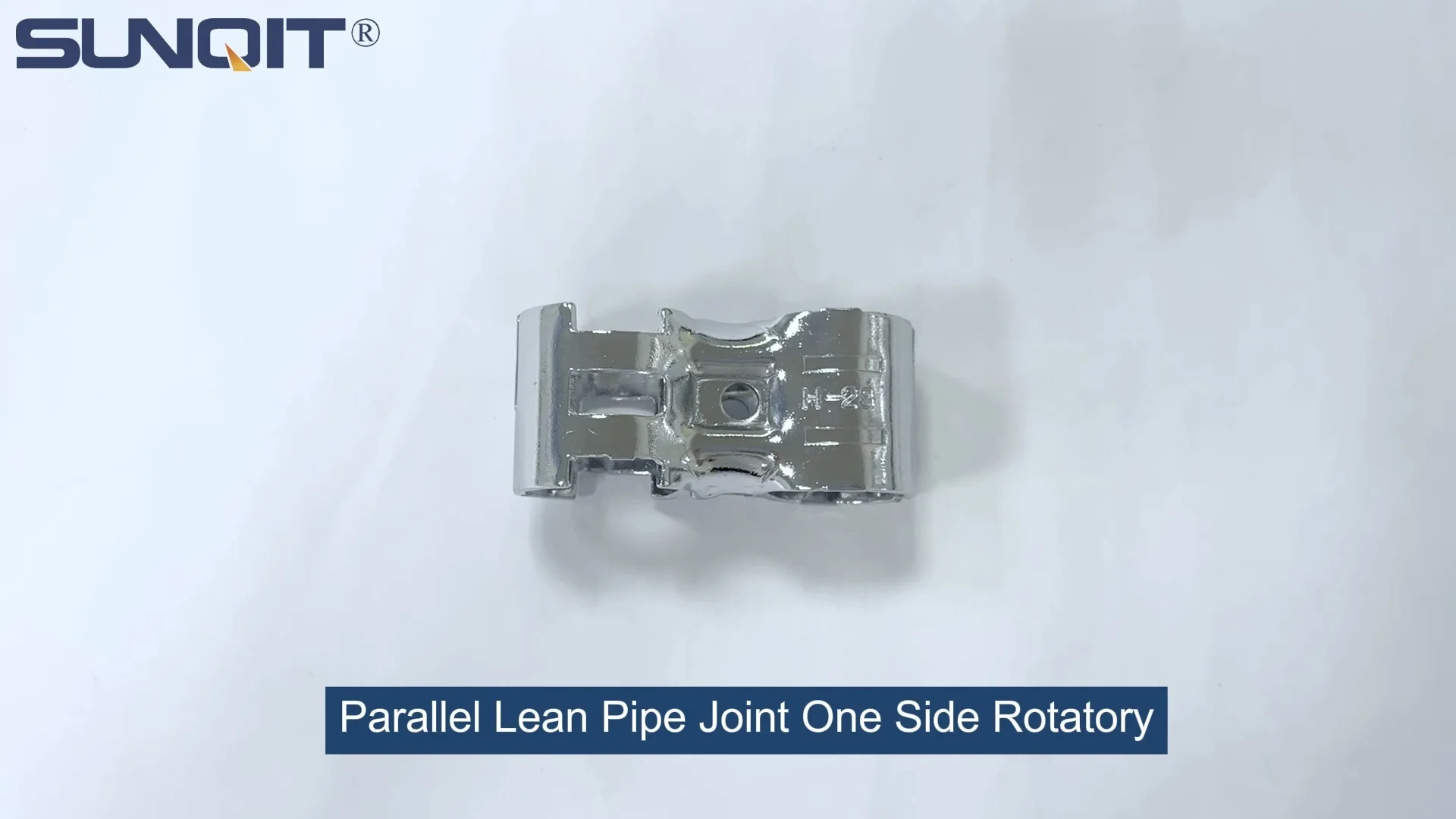
Parallel Lean Pipe Joint One Side Rotatory
Parallel rotatory lean pipe joint, for 2 pcs 28mm pipe conenction in parallel direction with one side rotatory function.
The 3C Industry's Silent Battle: Speed, Precision, and the Pressure to Perform
In the fast-paced world of 3C manufacturing—where smartphones, laptops, and consumer electronics fly off production lines at breakneck speed—every second counts. For factories like TechFlow Electronics, a mid-sized assembly plant outside Shenzhen, the challenge isn't just meeting demand; it's doing so while keeping error rates low, workers happy, and costs in check. But by early 2024, TechFlow was stuck in a rut. Their assembly lines, once a source of pride, had become a bottleneck. Changeovers between product models took hours, workers strained to reach tools on rigid workbenches, and parts often got jammed on clunky flow racks. "We were losing 2-3 hours a day just adjusting equipment," recalls Li Wei, TechFlow's production manager. "Our team was frustrated, and our clients were asking why we couldn't keep up with delivery times."
TechFlow's story isn't unique. Across the 3C sector, manufacturers grapple with the need to balance flexibility (to adapt to frequent design changes) and stability (to maintain quality). Their old setup relied on fixed steel workbenches and welded flow racks—sturdy, but impossible to reconfigure without calling in maintenance crews. "We'd spend half a day switching from assembling phone chargers to smartwatch components," Li Wei explains. "By the time we finished, the team was drained, and we'd already missed our morning production targets."
That's when TechFlow turned to a lean system supplier specializing in modular solutions. What they discovered would transform their workflow: a but powerful component called the Parallel Lean Pipe Joint One Side Rotatory . This small, unassuming joint would become the linchpin of their productivity turnaround—paired with lean pipe workbenches and flow racks that finally worked with their team, not against them.
The Problem: Rigid Systems Strangling a Flexible Workforce
To understand why TechFlow struggled, let's step onto their factory floor before the upgrade. Picture a typical assembly line for wireless earbuds: workers hunched over fixed steel workbenches, reaching across cluttered surfaces to grab tiny circuit boards. The workbenches were bolted to the floor, so if a worker needed to adjust the height or angle—say, to reduce strain on their shoulders—they'd have to ask maintenance to bring in tools. "One of our assemblers, Xiao Mei, developed shoulder pain from stretching to reach parts on the far side of her bench," Li Wei remembers. "She's been with us five years, and here we were, making her job harder than it needed to be."
Then there were the flow racks—metal structures loaded with plastic bins of components, feeding parts to the assembly line. The racks were built with fixed shelves, so if a new batch of parts was taller or shorter than the last, workers had to stack bins on the floor or leave them half-empty. Worse, the roller tracks on the racks were rigid; if a bin got stuck, someone had to stop the line to free it. "We had a rule: 'If the rack jams, drop everything and fix it,'" Li Wei says. "But dropping everything meant losing 10, 15, even 20 minutes of production. Over a week, that added up to hours of lost time."
The final straw came in March 2024, when TechFlow landed a contract to assemble 50,000 smartwatch chargers for a major brand. The client demanded a 30-day turnaround—tight, but doable… if TechFlow could reconfigure their lines quickly. Instead, the first model changeover took 6 hours. "We had to unbolt the old workbenches, disassemble the flow racks, and rebuild everything from scratch," Li Wei groans. "By the end, the team was exhausted, and we realized: our equipment was holding us back. We needed something modular—something that could adapt as fast as our workers did."

The Solution: A Rotatory Joint That Changed Everything
TechFlow's search for a better way led them to LeanPro Solutions, a lean system supplier recommended by a neighboring factory. "The LeanPro rep didn't just sell us parts—he walked our floor for two days, asking questions," Li Wei says. "He noticed how our workers were contorting themselves to use the workbenches and how often we had to stop for rack jams. Then he showed us the Parallel Lean Pipe Joint One Side Rotatory ."
At first glance, the joint looks simple: a metal connector with a rotating arm that attaches to aluminum lean pipes. But its magic lies in its flexibility. Unlike fixed steel joints, this rotatory joint lets workers pivot sections of their lean pipe workbench up to 180 degrees—no tools required. "Imagine a workbench where the left side can swing out to meet you, so you don't have to stretch," Li Wei explains. "Or a flow rack where the roller tracks can tilt slightly to keep parts moving smoothly. That's what this joint does."
LeanPro proposed a full overhaul: replacing fixed steel workbenches with modular lean pipe workbenches built with aluminum pipes and the rotatory joints, plus upgrading the old flow racks with adjustable roller tracks. "The key was modularity," says Zhang Hao, LeanPro's lead consultant. "Every component—pipes, joints, even the roller tracks—could be snapped together or repositioned in minutes. No welding, no bolts, no waiting for maintenance."
TechFlow was skeptical at first. "We'd tried 'modular' solutions before that still needed tools to adjust," Li Wei admits. But after a demo—where Zhang Hao reconfigured a sample workbench in under 5 minutes—they were sold. "He moved the shelves, tilted the roller track, and even adjusted the height—all by hand. Our workers watched, wide-eyed. Xiao Mei said, 'Why didn't we have this years ago?'"

Implementation: From Chaos to Coordination in 48 Hours
By late April 2024, the transformation began. LeanPro's team arrived with truckloads of aluminum pipes, rotatory joints, and new flow rack components. The goal: upgrade three assembly lines in 48 hours without halting production entirely. "We worked in shifts," Li Wei says. "One team assembled the new workbenches overnight, while the day shift kept the old lines running. By morning, we swapped them out."
The first change workers noticed? The lean pipe workbenches . Built with lightweight aluminum and the rotatory joints, they were adjustable on the fly. "I can now swing my tool tray around to my left side when I'm assembling the top of the charger, then pivot it back when I need to reach the bottom," says Xiao Mei, the assembler who'd struggled with shoulder pain. "No more stretching. My shoulder hasn't ached since."
Next came the flow racks. The old steel racks were replaced with modular units using the same rotatory joints to adjust shelf angles. "Before, if a bin was too heavy, the parts would get stuck on the roller track," explains Wang Jun, a line supervisor. "Now, we just tilt the track slightly using the joint, and gravity does the rest. Jams? Almost nonexistent."
But the biggest win was changeover time. Remember that 6-hour nightmare switching from phone chargers to smartwatch components? With the new setup, it took 45 minutes. "We don't have to disassemble anything," Li Wei says. "We just unlock the rotatory joints, reposition the workbench sections, and adjust the flow rack shelves. The team goes from one product to another like it's second nature."
Training was surprisingly quick. "The joints are intuitive—you pull a lever to rotate, push to lock," Zhang Hao notes. "We held a 2-hour workshop, and by the end, the workers were teaching each other tricks. One team even figured out how to use the rotatory joints to create a 'U-shaped' assembly line, so parts pass from one worker to the next without anyone moving."

The Results: Numbers That Speak for Themselves
By June 2024—just two months after the upgrade—TechFlow's metrics told a clear story: the Parallel Lean Pipe Joint One Side Rotatory wasn't just a gadget; it was a game-changer. Let's break down the impact:
| Metric | Before (Q1 2024) | After (Q2 2024) | Improvement |
|---|---|---|---|
| Assembly Line Changeover Time | 4-6 hours | 30-45 minutes | 87.5% reduction |
| Daily Defect Rate | 2.3% | 0.8% | 65% reduction |
| Worker Absenteeism (due to strain) | 5-7 days/month | 1-2 days/month | 71% reduction |
| Daily Output (smartwatch chargers) | 800 units | 1,400 units | 75% increase |
| Worker Satisfaction Score (1-10) | 5.2 | 8.7 | 67% improvement |
"The defect rate drop was the biggest surprise," Li Wei says. "When workers aren't straining to reach parts, they're more focused. The rotatory workbenches let them keep components organized and within arm's reach, so fewer mistakes happen." Xiao Mei adds, "I used to rush to meet quotas, and that's when I'd fumble a part. Now, the bench works with me. I'm calmer, and my work is better."
Even the factory's energy bill improved. The lightweight aluminum lean pipe workbenches and flow racks required less power to move (when needed) than the old steel ones, cutting electricity costs by 12%. "We didn't expect that," Li Wei laughs. "It's like the universe was rewarding us for making the switch."
But the most heartening change? Worker morale. "Before, our team meetings were full of complaints," Li Wei recalls. "Now, they're full of ideas. 'What if we use the rotatory joints to build a mobile testing station?' 'Can we add a flow rack here to feed parts faster?' It's like they've rediscovered their pride in the work."
Beyond the Joint: Building a Lean Culture
TechFlow's success wasn't just about the Parallel Lean Pipe Joint One Side Rotatory —it was about how the joint enabled a leaner, more human-centered approach to manufacturing. "Lean isn't just about tools; it's about empowering workers to solve problems," Zhang Hao says. "When you give a team a workbench they can adjust in 30 seconds, you're telling them, 'Your comfort and efficiency matter.' That's powerful."
Since the upgrade, TechFlow has expanded their use of modular solutions. They've added flow racks with adjustable roller tracks in their warehouse, reducing picking errors by 40%. They're even experimenting with rotatory joints on turnover trolleys, making it easier to transport parts between lines. "We're not just building products anymore—we're building a system that grows with us," Li Wei says.
For other 3C factories struggling with rigidity, Li Wei has a simple message: "Stop fighting your equipment. Invest in tools that adapt to your team, not the other way around. The rotatory joint might seem small, but it's the difference between a factory that survives and one that thrives."
As for TechFlow? They're already preparing for their next challenge: a contract to assemble 100,000 wireless earbuds. "Two years ago, that would've terrified me," Li Wei admits. "Now? Bring it on. Our team—and our rotatory joints—are ready."
Conclusion: The Power of Small Changes in a Fast-Paced World
In the high-stakes world of 3C manufacturing, where innovation and speed reign supreme, the Parallel Lean Pipe Joint One Side Rotatory proves that big results often come from small, thoughtful solutions. TechFlow's journey from frustration to productivity isn't just about a better workbench or a smoother flow rack—it's about remembering that behind every assembly line is a team of people. When you design systems that respect their time, their comfort, and their ingenuity, productivity isn't just a metric; it's a natural outcome.
So, to the manufacturers out there, stuck in the same rigid routines: take a page from TechFlow's book. Look at your floor through your workers' eyes. Ask: What's slowing them down? What small change could make their day easier? You might just find that the solution is simpler than you think—maybe even a rotatory joint that lets your team swing into action, quite literally.
After all, in a world that moves as fast as 3C manufacturing, the best systems aren't the ones that stay fixed—they're the ones that rotate, adapt, and grow. Just like the people who use them.