- Company Articles
- Products and Technology
- Product knowledge
- Parallel Lean Pipe Joint One Side Rotatory Chrome: Future Trends in Manufacturing Applications

Parallel Lean Pipe Joint One Side Rotatory Chrome: Future Trends in Manufacturing Applications
Related Product
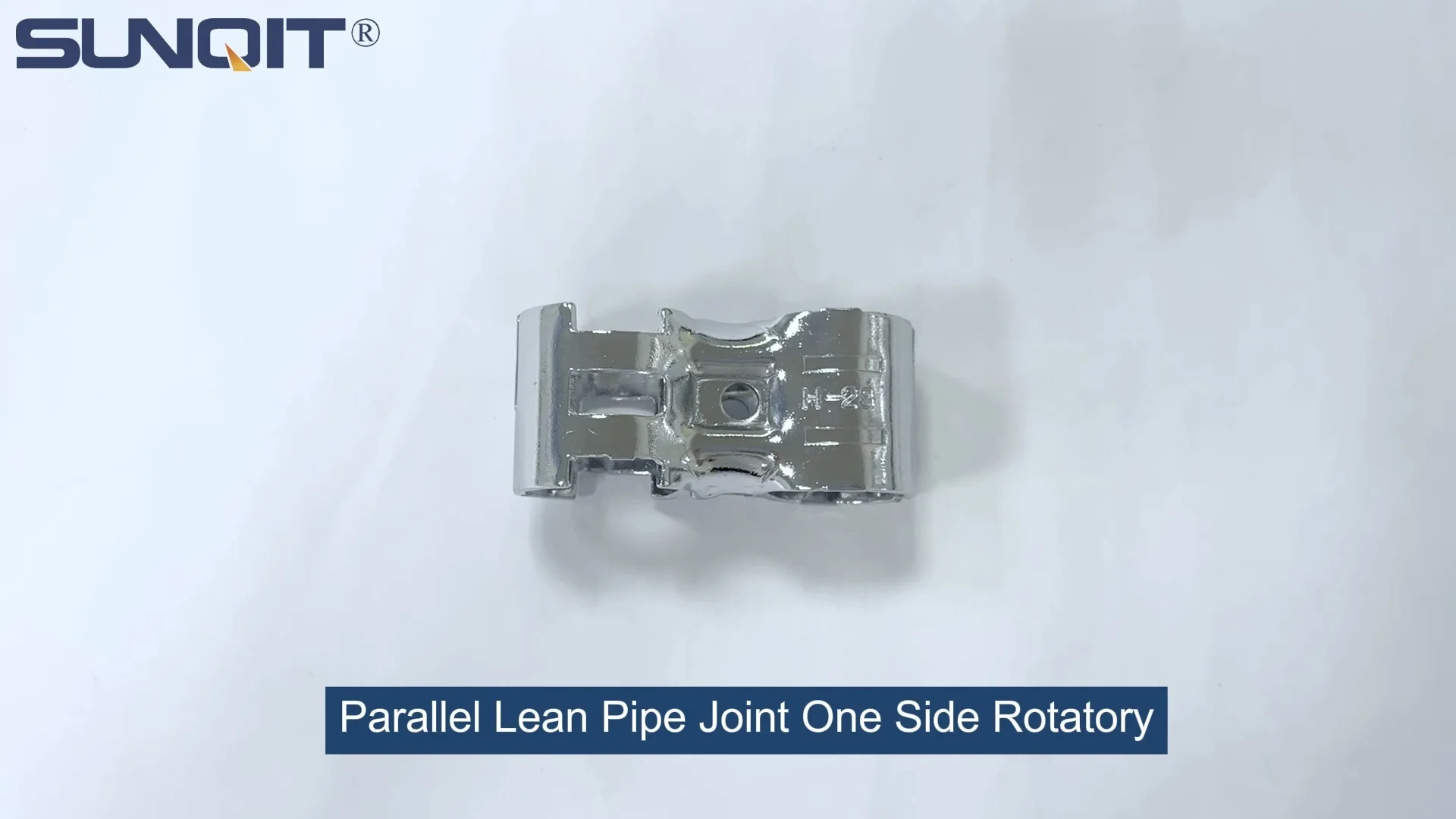
Parallel Lean Pipe Joint One Side Rotatory Chrome
Parallel rotatory lean pipe joint, for 2 pcs 28mm pipe conenction in parallel direction with one side rotatory function.
Walk into any modern factory today, and you'll notice a quiet revolution unfolding on the shop floor. Gone are the days of rigid, one-size-fits-all production lines that take weeks to reconfigure. Instead, there's a fluidity—workstations that adapt in hours, material racks that shift with new product demands, and assembly lines that feel almost alive, responding to the ebb and flow of manufacturing needs. At the heart of this transformation lies a commitment to lean system principles: eliminating waste, maximizing efficiency, and prioritizing flexibility. And if lean systems are the backbone of this new era, then components like the Parallel Lean Pipe Joint One Side Rotatory Chrome are the unsung heroes holding it all together.
You might be thinking, "A pipe joint? How can something so small make such a big difference?" But in manufacturing, the smallest parts often have the biggest impact. This isn't just any joint—it's a precision-engineered solution designed to solve one of the biggest challenges in lean manufacturing: how to build systems that are both sturdy and adaptable. Let's dive into why this unassuming component is becoming a cornerstone of future-focused factories, and how it's reshaping everything from workbench setups to flow rack designs.
The Lean System Revolution: Why Flexibility Matters More Than Ever
Before we zoom in on the Parallel Lean Pipe Joint One Side Rotatory Chrome, let's take a step back to understand the context. Lean manufacturing isn't a new concept—it's been around since the Toyota Production System of the 1950s—but its importance has skyrocketed in recent years. Today's manufacturers face pressures that would have been unthinkable a decade ago: shorter product lifecycles, custom orders becoming the norm, and global supply chains that demand constant agility.
A traditional lean system might have relied on fixed structures: bolted-down workbenches, welded material racks, and conveyor belts that were more permanent than a brick wall. But in 2025, that's no longer viable. A factory making smartphone components in January might need to switch to medical device parts by March, and that transition can't take months of retooling. Enter the modern lean system: built on modularity, where every component is designed to be reconfigured, reused, and repurposed.
This is where pipe joints come into play. Lean pipes—often made of steel, aluminum, or coated materials—are the building blocks of these modular systems. They're lightweight, strong, and easy to cut to length. But pipes alone aren't enough; the joints that connect them determine how flexible the system can be. A fixed joint locks two pipes at a 90-degree angle, great for stability but terrible for change. A rotatory joint, on the other hand, lets pipes pivot, tilt, or swivel, turning a rigid structure into something that can evolve with your needs.
Introducing the Parallel Lean Pipe Joint One Side Rotatory Chrome: What Makes It Unique?
So, what exactly is the Parallel Lean Pipe Joint One Side Rotatory Chrome? Let's break it down. "Parallel" means it's designed to connect two pipes that run alongside each other (think of the rails on a workbench or the sides of a flow rack). "One Side Rotatory" is the game-changer: one end of the joint can rotate 360 degrees, while the other stays fixed. And "Chrome" refers to its finish—a layer of chromium that adds durability, corrosion resistance, and a sleek, professional look.
Imagine you're building a workbench. With a traditional fixed joint, the legs and frame are locked in place. If you need to adjust the height of the tabletop or angle a shelf to better fit a new tool, you'd have to disassemble the entire thing, buy new parts, and start over. With the Parallel Lean Pipe Joint One Side Rotatory Chrome, you simply loosen the locking mechanism on the rotatory side, pivot the pipe to the new angle, and tighten it back up. No disassembly, no new parts, no wasted time.
But it's not just about rotation. The chrome finish matters, too. Manufacturing environments can be tough—oils, coolants, and humidity can take a toll on metal components. Chrome plating creates a barrier that resists rust and wear, extending the life of the joint. In factories where equipment is expected to last 5+ years (or more), that durability translates to significant cost savings over time.

Real-World Applications: How Factories Are Using This Joint Today
To understand the impact of this joint, let's look at how it's being used in three key areas: workbenches, flow racks, and material handling trolleys. These are the workhorses of the factory floor, and small improvements here can ripple out to big gains in productivity.
1. Workbenches: From Static to Adaptive
A workbench is where the magic happens—assembly, inspection, packaging. But not all tasks are the same. A worker assembling small electronics needs a flat, stable surface with tool holders close at hand. A worker testing heavy machinery might need a bench that can tilt to reduce strain on their back. With the Parallel Lean Pipe Joint One Side Rotatory Chrome, manufacturers can build workbench setups that adapt to both scenarios.
For example, a leading automotive parts supplier in Michigan recently reconfigured 20 of their workbenches using these joints. They added adjustable shelves that can rotate to face the worker or fold down when not in use. The result? A 15% reduction in time spent reaching for tools and a 20% drop in worker fatigue complaints. "It's like having a custom workbench for every task, without buying 20 different benches," said their plant manager.
2. Flow Racks: Smoother Material Flow, Faster Production
Flow racks are essential for keeping materials moving from storage to assembly lines. They use gravity or rollers to slide bins and parts to the front, so workers don't have to bend or reach. But traditional flow racks have fixed angles—if you switch to a heavier bin or a different-sized part, the flow rate might slow down or speed up unpredictably.
By using the Parallel Lean Pipe Joint One Side Rotatory Chrome in the frame of the flow rack, manufacturers can adjust the angle of the roller tracks. Need to slow down heavy bins? Tilt the rack slightly less. Switching to lighter parts? Increase the angle for faster flow. A medical device manufacturer in California did just that, and they reported a 30% reduction in material jams and a 12% increase in line throughput. "We used to have two people just monitoring the flow racks to fix jams," said their operations director. "Now, one person can manage twice as many racks because the angles are always optimized."
3. Material Handling Trolleys: Maneuverability Meets Strength
Trolleys are the unsung heroes of material transport, moving parts from storage to lines and finished products to shipping. But many trolleys are rigid—if you need to navigate a tight corner or fit through a narrow doorway, you might have to disassemble the load. The Parallel Lean Pipe Joint One Side Rotatory Chrome changes that by allowing the sides of the trolley to fold or pivot.
A food packaging plant in Texas started using these joints on their trolleys. They added fold-down side rails that can rotate inward when moving through tight aisles, then lock back into place for stability during transport. "We used to have to make two trips for loads that were too wide for our aisles," said their logistics coordinator. "Now, we can fold the rails, move everything in one trip, and unfold them at the destination. It's cut our transport time by half."

Comparing the Competition: Why This Joint Stands Out
You might be wondering: Are there other rotatory joints on the market? Absolutely. But the Parallel Lean Pipe Joint One Side Rotatory Chrome has a few key advantages that set it apart. Let's compare it to two common alternatives: plastic rotatory joints and fixed steel joints.
| Feature | Plastic Rotatory Joints | Fixed Steel Joints | Parallel Lean Pipe Joint One Side Rotatory Chrome |
|---|---|---|---|
| Flexibility | High (rotatory), but limited weight capacity | None (fixed angles only) | High (360° rotation) with heavy-duty weight capacity |
| Durability | Low (prone to cracking under stress or temperature changes) | High (steel is strong, but no rotation) | Very high (chrome-plated steel resists corrosion and wear) |
| Compatibility | Limited (often fits only specific pipe sizes) | Broad (fits standard lean pipes, but no rotation) | Broad (fits standard and aluminum profile pipes) |
| Cost Over Time | High (needs frequent replacement) | Medium (low upfront cost, but high reconfiguration costs) | Low (durable, reusable, minimal reconfiguration costs) |
| Best For | Light-duty, low-cost setups (e.g., small workshops) | Static, heavy-duty setups (e.g., permanent assembly lines) | Dynamic, high-use environments (e.g., lean manufacturing facilities) |
The table tells the story: plastic joints are cheap but flimsy, fixed steel joints are strong but rigid. The Parallel Lean Pipe Joint One Side Rotatory Chrome hits the sweet spot—flexible enough to adapt to changing needs, durable enough to handle heavy loads, and compatible with a wide range of pipes, including aluminum profiles. That compatibility with aluminum profiles is key, by the way. Aluminum is lightweight, corrosion-resistant, and increasingly popular in modern factories. Being able to pair chrome joints with aluminum pipes means manufacturers can build systems that are both strong and easy to move—perfect for agile production lines.
Future Trends: Where This Joint Is Headed in the Next 5 Years
So, what does the future hold for the Parallel Lean Pipe Joint One Side Rotatory Chrome? As manufacturing continues to evolve, here are three trends that will make this component even more essential:
1. Smart Factories and IoT Integration
The rise of Industry 4.0 means factories are getting smarter—sensors, data analytics, and automation are becoming standard. Imagine a joint that can "talk" to your factory management system. Built-in sensors could detect when the joint is loose (alerting maintenance before a failure), track how often it's rotated (helping you identify which setups are most adaptable), or even adjust rotation automatically based on production schedules. While this is still in the prototype stage, early tests suggest smart joints could reduce unplanned downtime by up to 40%.
2. Sustainability and Circular Manufacturing
Manufacturers are under increasing pressure to reduce waste and embrace circular economies—designing products that can be reused, recycled, or repurposed. The Parallel Lean Pipe Joint One Side Rotatory Chrome aligns perfectly with this trend. Unlike welded or glued joints, it's easy to disassemble and reuse. When a factory upgrades its production line, the joints can be stripped, cleaned, and used in a new setup. Chrome plating is also more eco-friendly than many alternatives, as it extends the life of the joint, reducing the need for frequent replacements.
3. Customization for Niche Industries
As manufacturing becomes more specialized, we'll see more niche applications for this joint. Think aerospace factories building components for electric planes, where precision and weight are critical. Or pharmaceutical labs that need sterile, easy-to-clean setups. The Parallel Lean Pipe Joint One Side Rotatory Chrome can be adapted with specialized coatings (like anti-microbial chrome for labs) or locking mechanisms (like quick-release levers for rapid reconfiguration). Suppliers are already developing versions with smaller profiles for micro-manufacturing (think tiny electronics) and heavy-duty versions for industrial machinery.
The Bottom Line: Small Component, Big Impact
At the end of the day, the Parallel Lean Pipe Joint One Side Rotatory Chrome is more than just a piece of hardware. It's a symbol of how manufacturing is evolving—away from rigidity and towards adaptability, away from waste and towards efficiency, away from one-size-fits-all and towards customization. In a world where change is the only constant, the ability to build systems that can pivot, adjust, and grow is no longer a luxury; it's a necessity.
Whether you're running a small workshop or a large-scale production facility, this joint offers a simple, cost-effective way to make your lean system work harder for you. It's not about replacing your entire setup overnight—it's about making small, smart upgrades that add up to big improvements in productivity, flexibility, and worker satisfaction.
So, the next time you walk through a factory, take a closer look at the workbenches, flow racks, and trolleys. Chances are, you'll spot the Parallel Lean Pipe Joint One Side Rotatory Chrome hard at work—quietly, reliably, and adaptably building the future of manufacturing, one rotation at a time.