- Company Articles
- Products and Technology
- Product knowledge
- Parallel Lean Pipe Joint One Side Rotatory: Enhancing Conveyor System Adaptability

Parallel Lean Pipe Joint One Side Rotatory: Enhancing Conveyor System Adaptability
Related Product
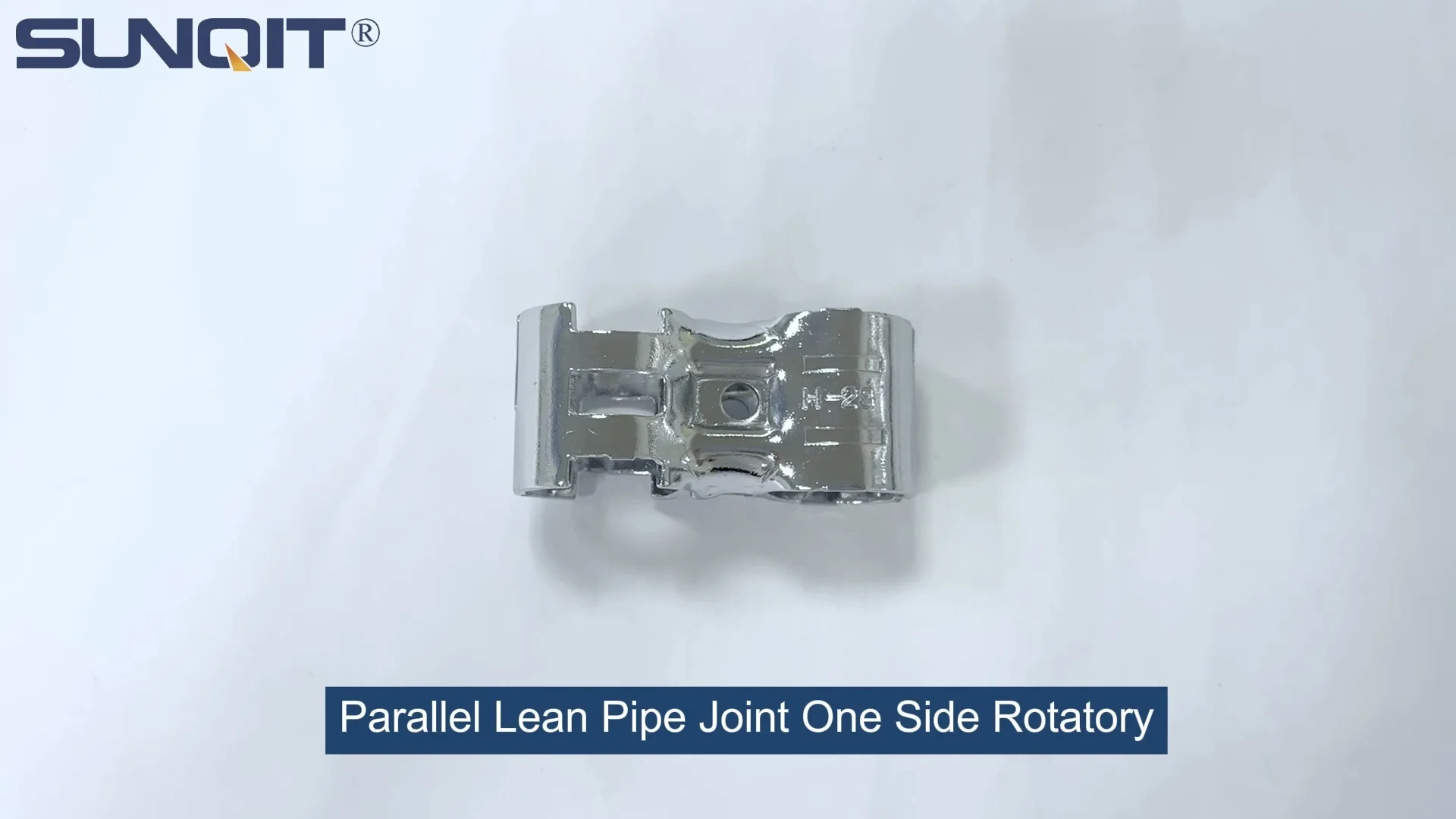
Parallel Lean Pipe Joint One Side Rotatory
Parallel rotatory lean pipe joint, for 2 pcs 28mm pipe conenction in parallel direction with one side rotatory function.
The Heartbeat of Modern Manufacturing – Conveyor Systems
Walk into any bustling factory, warehouse, or assembly plant, and you'll notice an unsung hero keeping operations alive: the conveyor system. These networks of belts, rollers, and tracks are the circulatory system of manufacturing, moving materials, components, and finished products from one station to the next with precision and speed. In today's fast-paced industrial landscape, where production lines must pivot quickly to meet shifting demands—whether for a new product model, seasonal spikes, or unexpected design changes—conveyor systems can no longer afford to be rigid, one-size-fits-all structures. The ability to adapt has become as critical as efficiency itself. Yet, for years, many manufacturers have grappled with a common frustration: traditional conveyor components, built for stability over flexibility, often act as bottlenecks when reconfiguration is needed. This is where innovative solutions like the parallel lean pipe joint one side rotatory step in, transforming static systems into dynamic, adaptable tools that grow and change with your business.
The Static Struggle: Why Traditional Conveyor Components Fall Short
Think about the last time you tried to rearrange a heavy piece of furniture in a small room. You twist, you turn, you swear under your breath as it gets stuck between the wall and the door. Now imagine that furniture is a section of your conveyor system, bolted to the floor with fixed joints and rigid supports. That's the reality for many manufacturers using traditional conveyor components. Fixed joints, often made of solid steel or welded connections, lock conveyor sections into place, making even minor adjustments a time-consuming ordeal. Want to angle a roller track slightly to accommodate a new workstation? You'll need tools, extra parts, and possibly a team of technicians. Need to raise or lower a section to align with a new machine? Prepare for hours of disassembly and reassembly.
The problem isn't just inconvenience—it's cost. Every minute a production line is down for reconfiguration is a minute of lost output. In industries like automotive or electronics, where margins are tight and deadlines are non-negotiable, those minutes add up to thousands of dollars. Worse, rigid systems discourage innovation. If reconfiguring feels like too much hassle, teams might stick with inefficient layouts simply because "it's always been that way." This resistance to change stifles the very lean manufacturing principles—continuous improvement, waste reduction, customer focus—that modern businesses rely on to stay competitive. What manufacturers need is a component that marries the stability of traditional joints with the flexibility to pivot quickly. Enter the parallel lean pipe joint one side rotatory.
The problem isn't just inconvenience—it's cost. Every minute a production line is down for reconfiguration is a minute of lost output. In industries like automotive or electronics, where margins are tight and deadlines are non-negotiable, those minutes add up to thousands of dollars. Worse, rigid systems discourage innovation. If reconfiguring feels like too much hassle, teams might stick with inefficient layouts simply because "it's always been that way." This resistance to change stifles the very lean manufacturing principles—continuous improvement, waste reduction, customer focus—that modern businesses rely on to stay competitive. What manufacturers need is a component that marries the stability of traditional joints with the flexibility to pivot quickly. Enter the parallel lean pipe joint one side rotatory.

Meet the Game-Changer: Parallel Lean Pipe Joint One Side Rotatory
At first glance, the parallel lean pipe joint one side rotatory might seem like a small part, but its impact on conveyor system adaptability is monumental. Designed as a connecting piece for lean pipe structures—those versatile, modular tubes used to build everything from workbenches to material racks—this joint solves the "fixed vs. flexible" dilemma by allowing controlled rotation on one side while keeping the other side stable. Picture a hinge that lets you adjust the angle of a roller track section without disconnecting it entirely. That's the essence of this joint: it gives you the freedom to tilt, swivel, or reposition conveyor components with minimal effort, all while maintaining structural integrity.
Let's break down its design. The joint consists of two main parts: a fixed end that attaches securely to a lean pipe or aluminum profile, and a rotating end that connects to another pipe or track. The rotating end typically features a smooth, precision-engineered bearing or pivot mechanism, allowing 360-degree rotation (or a defined range, depending on the model) with little friction. This means you can adjust the angle of a roller track to guide materials around a corner, tilt a section to match the height of a new workstation, or even reverse the direction of a flow rack—all without unbolting or replacing the joint itself.
Materials matter here, too. Most parallel lean pipe joints are made from high-grade aluminum or steel, chosen for their strength-to-weight ratio. Aluminum variants, in particular, offer the added benefits of corrosion resistance and lightweight handling, making them ideal for environments where cleanliness (like electronics manufacturing) or frequent adjustments are priorities. When paired with aluminum lean pipe or aluminum profile, the joint becomes part of a lightweight yet durable system that's easy to maneuver during reconfiguration. Unlike heavy steel welded joints, which require specialized tools to modify, these aluminum-based components can be adjusted by a single worker with basic hand tools, saving both time and labor.
Let's break down its design. The joint consists of two main parts: a fixed end that attaches securely to a lean pipe or aluminum profile, and a rotating end that connects to another pipe or track. The rotating end typically features a smooth, precision-engineered bearing or pivot mechanism, allowing 360-degree rotation (or a defined range, depending on the model) with little friction. This means you can adjust the angle of a roller track to guide materials around a corner, tilt a section to match the height of a new workstation, or even reverse the direction of a flow rack—all without unbolting or replacing the joint itself.
Materials matter here, too. Most parallel lean pipe joints are made from high-grade aluminum or steel, chosen for their strength-to-weight ratio. Aluminum variants, in particular, offer the added benefits of corrosion resistance and lightweight handling, making them ideal for environments where cleanliness (like electronics manufacturing) or frequent adjustments are priorities. When paired with aluminum lean pipe or aluminum profile, the joint becomes part of a lightweight yet durable system that's easy to maneuver during reconfiguration. Unlike heavy steel welded joints, which require specialized tools to modify, these aluminum-based components can be adjusted by a single worker with basic hand tools, saving both time and labor.

Integration in Action: Working with Lean Pipe and Roller Track
To truly appreciate the parallel lean pipe joint one side rotatory, it helps to see it in action within a complete system. Let's start with the backbone: lean pipe. Lean pipe—also known as "kitchen pipe" for its early use in Japanese factories to organize kitchen supplies—has become a staple of modular manufacturing setups. Lightweight, affordable, and compatible with a range of accessories, lean pipe is the building block of everything from simple workbenches to complex conveyor networks. When combined with the parallel lean pipe joint one side rotatory, it transforms from a static frame into a dynamic structure that can evolve with your needs.
Now add roller track to the mix. Roller tracks are the workhorses of conveyor systems, using a series of wheels or rollers to move materials smoothly along a path. Traditional roller tracks are often fixed to frames with rigid brackets, limiting their adjustability. But when you attach a roller track to a lean pipe frame using a parallel lean pipe joint one side rotatory, magic happens. Suddenly, that roller track isn't stuck at a 90-degree angle to the frame—it can be tilted to create a gentle slope for gravity-fed material flow, swiveled to connect two previously disconnected workstations, or even rotated vertically to serve as a temporary storage rack.
Consider a scenario in an electronics assembly plant. A team is tasked with assembling a new smartphone model, which requires a slightly different workflow than the previous version. The old conveyor layout has a roller track feeding components to Station A at a fixed height, but the new model's assembly process needs that track to feed Station B instead, which is 15 degrees to the left and 6 inches lower. With traditional fixed joints, this would mean unbolting the entire roller track section, moving the supporting frames, and rebolting everything—a process that could take hours. With a parallel lean pipe joint one side rotatory, a single technician can loosen the joint, swivel the track to the new angle, adjust the height using the joint's rotation, and tighten it back in place. Total time? Maybe 15 minutes. That's the difference between a minor adjustment and a production shutdown.
Now add roller track to the mix. Roller tracks are the workhorses of conveyor systems, using a series of wheels or rollers to move materials smoothly along a path. Traditional roller tracks are often fixed to frames with rigid brackets, limiting their adjustability. But when you attach a roller track to a lean pipe frame using a parallel lean pipe joint one side rotatory, magic happens. Suddenly, that roller track isn't stuck at a 90-degree angle to the frame—it can be tilted to create a gentle slope for gravity-fed material flow, swiveled to connect two previously disconnected workstations, or even rotated vertically to serve as a temporary storage rack.
Consider a scenario in an electronics assembly plant. A team is tasked with assembling a new smartphone model, which requires a slightly different workflow than the previous version. The old conveyor layout has a roller track feeding components to Station A at a fixed height, but the new model's assembly process needs that track to feed Station B instead, which is 15 degrees to the left and 6 inches lower. With traditional fixed joints, this would mean unbolting the entire roller track section, moving the supporting frames, and rebolting everything—a process that could take hours. With a parallel lean pipe joint one side rotatory, a single technician can loosen the joint, swivel the track to the new angle, adjust the height using the joint's rotation, and tighten it back in place. Total time? Maybe 15 minutes. That's the difference between a minor adjustment and a production shutdown.

Real-World Impact: Industries Transformed by Adaptable Conveyors
The parallel lean pipe joint one side rotatory isn't just a theoretical improvement—it's changing how industries operate, from automotive to logistics. Let's take automotive manufacturing first. Car plants are notoriously complex, with conveyor systems spanning acres and feeding hundreds of workstations. When a new model is introduced, even small changes in component size or assembly order can throw off the entire flow. With traditional fixed joints, reconfiguring these systems often requires shutting down entire sections of the plant for days. But with rotatory joints, teams can adjust roller tracks, material racks, and workbench positions incrementally, keeping production running while the line evolves. For example, a tier-one supplier producing door panels might use rotatory joints to angle roller tracks, allowing panels to feed into welding stations from either side depending on which model is being assembled that day.
Electronics manufacturing is another sector reaping the benefits. In this industry, precision is everything, and production lines often switch between small-batch, high-mix products. An ESD workstation (electrostatic discharge-protected workbench) used for assembling circuit boards might need to be repositioned weekly to accommodate different component sizes. By mounting the workstation on a lean pipe frame with parallel rotatory joints, technicians can swivel the entire setup to face a new direction or tilt the work surface for better ergonomics—no disassembly required. The same logic applies to material racks: a flow rack holding delicate semiconductors can have its roller tracks adjusted via rotatory joints to prevent jamming or damage, ensuring components glide smoothly to the next station.
Logistics and warehousing are also embracing the trend. With e-commerce driving demand for faster order fulfillment, warehouses need conveyor systems that can adapt to seasonal spikes (think Black Friday) or new storage layouts. A roller track used for sorting packages might need to be reangled to handle larger boxes during peak season, then reset to its original position afterward. Rotatory joints make this a one-person job, done in minutes, rather than a multi-day project involving contractors. Even small businesses benefit: a local distribution center using lean pipe and rotatory joints can reconfigure its conveyor system to handle different product sizes without investing in entirely new equipment.
Electronics manufacturing is another sector reaping the benefits. In this industry, precision is everything, and production lines often switch between small-batch, high-mix products. An ESD workstation (electrostatic discharge-protected workbench) used for assembling circuit boards might need to be repositioned weekly to accommodate different component sizes. By mounting the workstation on a lean pipe frame with parallel rotatory joints, technicians can swivel the entire setup to face a new direction or tilt the work surface for better ergonomics—no disassembly required. The same logic applies to material racks: a flow rack holding delicate semiconductors can have its roller tracks adjusted via rotatory joints to prevent jamming or damage, ensuring components glide smoothly to the next station.
Logistics and warehousing are also embracing the trend. With e-commerce driving demand for faster order fulfillment, warehouses need conveyor systems that can adapt to seasonal spikes (think Black Friday) or new storage layouts. A roller track used for sorting packages might need to be reangled to handle larger boxes during peak season, then reset to its original position afterward. Rotatory joints make this a one-person job, done in minutes, rather than a multi-day project involving contractors. Even small businesses benefit: a local distribution center using lean pipe and rotatory joints can reconfigure its conveyor system to handle different product sizes without investing in entirely new equipment.
The Benefits Beyond Adaptability: Cost, Time, and Sustainability
The most obvious benefit of the parallel lean pipe joint one side rotatory is adaptability, but its value goes deeper. Let's start with cost savings. Traditional conveyor reconfigurations often require new parts: extra pipes, brackets, connectors, maybe even entirely new sections. With rotatory joints, you reuse existing components, reducing the need for replacement parts. Labor costs drop too—what once took a team of two or three people hours to accomplish can now be done by one person in minutes. Over time, these savings add up, especially for businesses that reconfigure lines frequently.
Time is another critical factor. In manufacturing, downtime is the enemy. Every minute a line is idle is revenue lost. Rotatory joints minimize downtime by making adjustments quick and easy. For example, a food packaging plant that switches between bagged snacks and boxed meals can reangle its roller tracks in between shifts, ensuring the line is ready for the next product without extended breaks. This agility also lets businesses respond faster to customer demands. If a client suddenly increases an order, a manufacturer can reconfigure its conveyor to prioritize that product's assembly, all without disrupting other operations.
Sustainability is a less obvious but equally important benefit. Lean manufacturing principles emphasize reducing waste, and rotatory joints align perfectly with this goal. By extending the life of existing conveyor components—since you're reusing them instead of replacing them—you reduce the amount of scrap metal and plastic going to landfills. Aluminum components, in particular, are recyclable, further lowering your environmental footprint. Additionally, the ability to reconfigure instead of rebuild means less energy spent on manufacturing new parts and transporting them to your facility. It's a small change that contributes to a larger commitment to green manufacturing.
Time is another critical factor. In manufacturing, downtime is the enemy. Every minute a line is idle is revenue lost. Rotatory joints minimize downtime by making adjustments quick and easy. For example, a food packaging plant that switches between bagged snacks and boxed meals can reangle its roller tracks in between shifts, ensuring the line is ready for the next product without extended breaks. This agility also lets businesses respond faster to customer demands. If a client suddenly increases an order, a manufacturer can reconfigure its conveyor to prioritize that product's assembly, all without disrupting other operations.
Sustainability is a less obvious but equally important benefit. Lean manufacturing principles emphasize reducing waste, and rotatory joints align perfectly with this goal. By extending the life of existing conveyor components—since you're reusing them instead of replacing them—you reduce the amount of scrap metal and plastic going to landfills. Aluminum components, in particular, are recyclable, further lowering your environmental footprint. Additionally, the ability to reconfigure instead of rebuild means less energy spent on manufacturing new parts and transporting them to your facility. It's a small change that contributes to a larger commitment to green manufacturing.
Installation and Maintenance: Keeping It Simple
You might be thinking, "This sounds great, but is it hard to install?" The answer is a resounding no. One of the biggest advantages of lean pipe systems, including the parallel lean pipe joint one side rotatory, is their simplicity. Unlike welded steel structures or complex mechanical joints, these components are designed for "plug-and-play" assembly. Most joints attach to lean pipe or aluminum profile using set screws or quick-release levers, requiring nothing more than a hex key or a wrench. Even someone with minimal technical experience can learn to assemble and adjust them in minutes.
Maintenance is just as straightforward. The rotating mechanism in these joints is built to withstand regular use, but like any moving part, it benefits from occasional care. A quick wipe with a dry cloth to remove dust and debris, and a drop of lubricant on the pivot point every few months, is usually all it takes to keep the joint rotating smoothly. Since the joints are modular, if one does wear out (a rare occurrence with proper care), you can replace it individually without taking apart the entire conveyor section. This ease of maintenance means your team can focus on production, not fixing equipment.
Maintenance is just as straightforward. The rotating mechanism in these joints is built to withstand regular use, but like any moving part, it benefits from occasional care. A quick wipe with a dry cloth to remove dust and debris, and a drop of lubricant on the pivot point every few months, is usually all it takes to keep the joint rotating smoothly. Since the joints are modular, if one does wear out (a rare occurrence with proper care), you can replace it individually without taking apart the entire conveyor section. This ease of maintenance means your team can focus on production, not fixing equipment.
Comparing the Options: Fixed vs. Rotatory Joints
| Feature | Traditional Fixed Joints | Parallel Lean Pipe Joint One Side Rotatory |
|---|---|---|
| Adjustability | None—locked into fixed angles | 360° rotation on one side; allows tilting, swiveling, and repositioning |
| Reconfiguration Time | Hours (requires disassembly and reassembly) | Minutes (adjust with basic tools, no disassembly needed) |
| Labor Requirements | 2–3 workers | 1 worker |
| Cost Over Time | Higher (frequent need for new parts and labor) | Lower (reuses existing parts, minimal labor) |
| Compatibility | Often limited to specific pipe/rack types | Works with standard lean pipe, aluminum profile, and roller track |
| Durability | High (but rigidity leads to stress cracks over time) | High (flexible rotation reduces structural stress) |
Conclusion: The Future of Conveyor Systems is Flexible
In a world where manufacturing demands are constantly shifting, the parallel lean pipe joint one side rotatory isn't just an upgrade—it's a necessity. It turns rigid conveyor systems into adaptable tools that grow with your business, supporting lean principles, reducing waste, and keeping production lines moving. Whether you're in automotive, electronics, logistics, or any industry that relies on material flow, this small but powerful component has the potential to transform how you operate.
Think back to that heavy furniture analogy. With the parallel lean pipe joint one side rotatory, your conveyor system stops being that stuck piece of furniture and becomes a modular, reconfigurable workspace that bends to your needs. It's not just about moving materials—it's about moving forward. As lean manufacturing continues to evolve, flexibility will be the key to staying competitive. And with components like this rotatory joint, that flexibility is finally within reach for businesses of all sizes.
Think back to that heavy furniture analogy. With the parallel lean pipe joint one side rotatory, your conveyor system stops being that stuck piece of furniture and becomes a modular, reconfigurable workspace that bends to your needs. It's not just about moving materials—it's about moving forward. As lean manufacturing continues to evolve, flexibility will be the key to staying competitive. And with components like this rotatory joint, that flexibility is finally within reach for businesses of all sizes.