- Company Articles
- Products and Technology
- Product knowledge
- Parallel Lean Pipe Joint One Side Rotatory: Essential for Mechanical Manufacturing Flexibility

Parallel Lean Pipe Joint One Side Rotatory: Essential for Mechanical Manufacturing Flexibility
Related Product
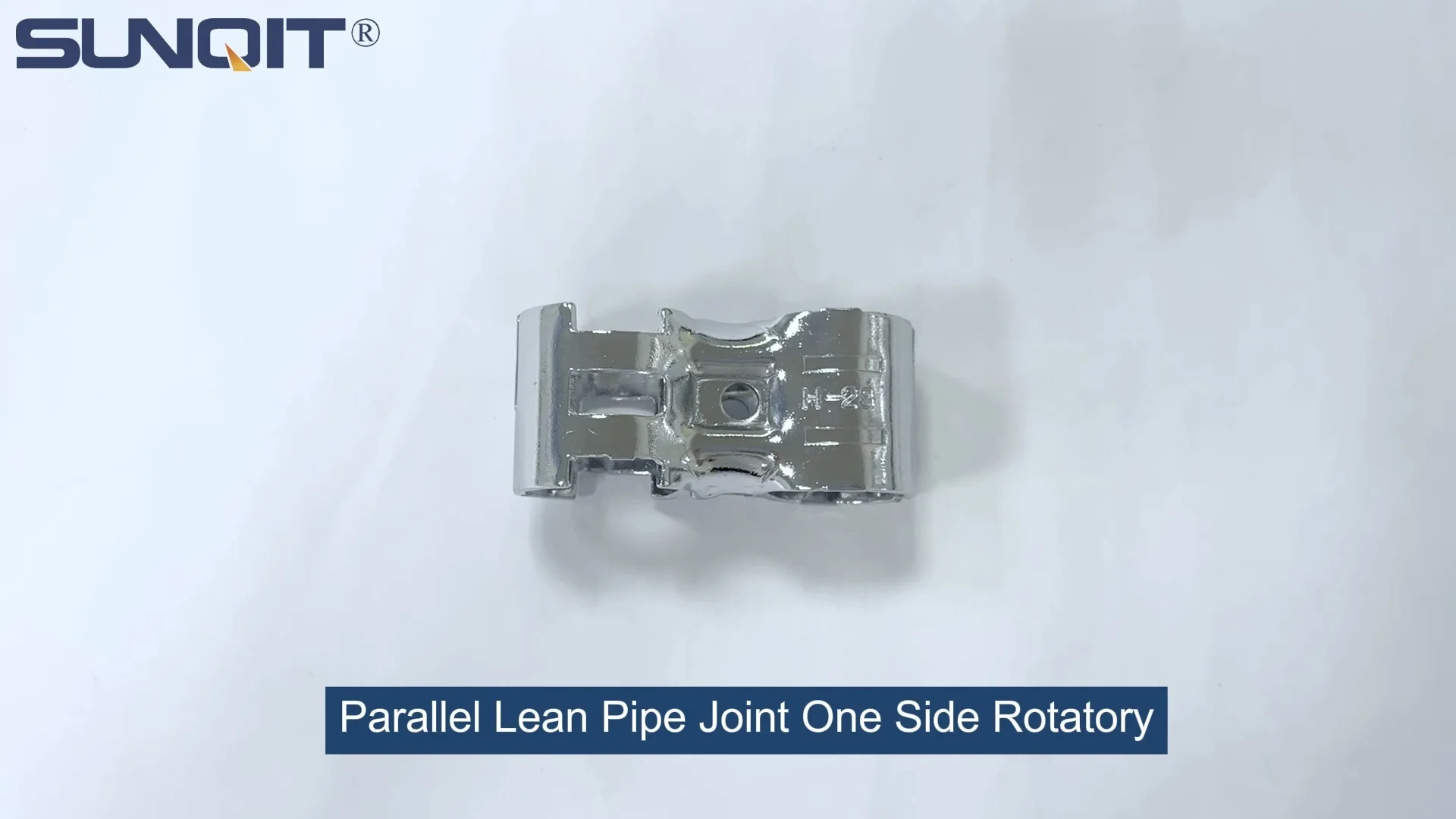
Parallel Lean Pipe Joint One Side Rotatory
Parallel rotatory lean pipe joint, for 2 pcs 28mm pipe conenction in parallel direction with one side rotatory function.
In the fast-paced world of mechanical manufacturing, the ability to adapt quickly to changing production needs isn't just a luxury—it's a survival skill. Factories and assembly lines are no longer static environments; they're dynamic spaces where product designs evolve, batch sizes fluctuate, and workflow demands shift overnight. Yet, for many manufacturers, the biggest roadblock to this agility lies in their own infrastructure: rigid workstations, fixed material racks, and inflexible production lines that take weeks to reconfigure. This is where the parallel lean pipe joint one side rotatory emerges as a quiet revolutionary—a small but mighty component that transforms how factories build, adapt, and thrive.
At first glance, a pipe joint might seem like an part of the manufacturing puzzle. But anyone who's spent time on a factory floor knows better. The joints that connect lean pipe —the backbone of modular workstations, roller tracks, and material handling systems—dictate everything from how quickly a workstation can be adjusted to how well it withstands the daily grind of production. Traditional fixed joints lock structures into place, making even minor tweaks a hassle. Standard rotating joints, while better, often sacrifice stability for flexibility. The parallel lean pipe joint one side rotatory, however, strikes a rare balance: it lets one side of the joint rotate freely while keeping the other anchored, offering both adaptability and reliability. Let's dive into why this makes it an indispensable tool for modern manufacturing.
What Is the Parallel Lean Pipe Joint One Side Rotatory?
To understand the value of this joint, let's start with the basics. Lean pipe systems—also known as "flexible pipe systems"—are built from lightweight, durable pipes (often steel with a plastic coating, aluminum, or stainless steel) and a variety of joints that connect them. These systems form the foundation of workbenches, flow racks, conveyor lines, and material trolleys, all designed to support lean manufacturing principles: minimizing waste, maximizing efficiency, and empowering teams to optimize their workspace.
The parallel lean pipe joint one side rotatory is a specialized connector within this ecosystem. As the name suggests, it's engineered for parallel pipe setups—think two pipes running side by side, like the legs of a workbench or the rails of a roller track. What sets it apart is its unique rotation mechanism: one end of the joint locks firmly onto a fixed pipe, while the other end rotates 180 degrees (or more, depending on the model) around a central axis. This means the connected pipe can pivot up, down, or sideways without disrupting the stability of the fixed structure. Imagine a workbench shelf that can tilt from horizontal to a 45-degree angle to feed parts into an assembly line, then swing back to hold tools—all without needing to disassemble and rebuild the entire shelf.
Most models are made from high-strength materials like zinc-plated steel or aluminum, designed to handle the weight of tools, components, and materials common in manufacturing. They often feature a spring-loaded locking mechanism or a tightening knob that lets operators secure the joint in any rotated position, ensuring stability once adjusted. Some even come with rubber gaskets or friction pads to prevent slippage under heavy loads—critical for safety in fast-moving environments.
How It Works: The Mechanics of Flexibility
The beauty of the parallel lean pipe joint one side rotatory lies in its simplicity. Unlike complex hydraulic or pneumatic adjusters, it relies on mechanical ingenuity to deliver flexibility. Let's break down its operation step by step:
1. Fixed and Rotating Components: The joint has two main parts: a stationary base and a rotating arm. The base slides over one lean pipe and is secured with a setscrew or clamp, locking it in place. The rotating arm, which connects to the second parallel pipe, is attached to the base via a central pin or bearing. This pin allows the arm to swivel freely around the base, while internal washers or bushings reduce friction, ensuring smooth rotation even after months of use.
2. Locking Mechanism: To keep the rotated pipe stable, the joint includes a locking feature—typically a threaded knob or lever. When loosened, the arm rotates freely; when tightened, it presses against the base (or a friction plate) to hold the desired angle. This "adjust-and-lock" design means operators can reposition the pipe in seconds, without tools. For example, a worker assembling small electronics might tilt a tool rack 30 degrees to bring screwdrivers and pliers closer to eye level, then lock it in place to avoid movement during use.
3. Compatibility with Lean Pipe Systems: These joints are designed to work seamlessly with standard lean pipe sizes (often 28mm or 30mm in diameter), making them easy to integrate into existing setups. They also pair well with other components: roller track guides, caster wheels for mobile trolleys, and workbench surfaces. This compatibility is key—manufacturers don't need to replace their entire infrastructure to adopt the joint; they can upgrade incrementally, reducing upfront costs.

Why It Matters: The Benefits of One-Side Rotation
At this point, you might be wondering: "Why not just use a fully rotating joint or a flexible hose?" The answer lies in the unique challenges of manufacturing environments, where three factors reign supreme: flexibility, stability, and cost. Let's explore how the parallel lean pipe joint one side rotatory excels in all three.
1. Unmatched Flexibility for Dynamic Workflows
The most obvious advantage is flexibility—and not just the "can-move" kind, but the "can-move-quickly-and-often" kind. In a typical day, a single workstation might need to handle multiple tasks: assembling a large component in the morning, inspecting small parts in the afternoon, and serving as a temporary storage rack in the evening. With a fixed joint, this would require disassembling and rebuilding the workstation each time. With a one-side rotatory joint, it's a matter of loosening a knob, adjusting the angle, and locking it down.
Consider a roller track system used to transport boxes from a packing station to a shipping area. On most days, the track runs horizontally, letting boxes glide smoothly. But when the factory switches to larger, heavier boxes, the team might need to tilt the track slightly downward to reduce friction and speed up flow. With a standard fixed joint, this would mean unbolting the track from its supports and repositioning it—a 2-hour job. With a parallel lean pipe joint one side rotatory, a single operator can adjust the angle in 10 minutes, getting the line back up and running with minimal downtime.
2. Stability When You Need It Most
Flexibility means nothing if the structure wobbles or fails under load. Traditional fully rotating joints often feel "loose" because both sides can move, making them unsuitable for heavy-duty applications. The parallel lean pipe joint one side rotatory solves this by anchoring one side firmly. This fixed end acts as a stabilizer, ensuring the structure remains rigid where it needs to be—like the legs of a workbench supporting a 50kg assembly fixture—while the rotating end adapts to changing needs.
Take a workbench used for welding small metal parts. The main frame (connected with fixed joints) needs to stay steady to prevent weld inaccuracies. But the side shelf holding welding rods and safety gear? That can rotate to stay out of the way when the operator needs more space, then swing back into position when tools are needed. The one-side rotatory joint keeps the shelf stable in both positions, avoiding the "sway" that could knock tools off or disrupt the workflow.
3. Cost-Effective Agility (No More "Tear and Rebuild")
In manufacturing, downtime is expensive. Every hour spent reconfiguring a workstation is an hour of lost production. Traditional fixed joints force teams into a "tear and rebuild" cycle: to adjust a workbench height, you might need to cut pipes, drill new holes, or replace entire sections. This not only wastes time but also materials—pipes that are cut can't be reused, and old joints end up in landfills.
The parallel lean pipe joint one side rotatory eliminates this waste. Because it's reusable and adjustable, teams can reconfigure structures dozens of times without damaging components. A study by the Lean Enterprise Institute found that manufacturers using modular joints like this reduced reconfiguration costs by 40% and cut setup time by 60% compared to fixed systems. For small to mid-sized factories, this translates to thousands of dollars saved annually—and the ability to take on smaller, more profitable orders that require quick turnaround.

Real-World Applications: From Workbenches to Roller Tracks
To truly grasp the impact of this joint, let's look at how it's transforming everyday manufacturing setups. These examples aren't hypothetical—they're based on real-world implementations in automotive, electronics, and medical device facilities.
Case 1: Adaptive Workbenches for Electronics Assembly
A contract electronics manufacturer in Taiwan specializes in assembling circuit boards for smartphones and wearables. The challenge? Each client's board design requires different tools, and workers of varying heights use the same workstations. Before adopting the parallel lean pipe joint one side rotatory, the factory used fixed-height workbenches with tool racks bolted to the sides. Workers often had to stretch or bend to reach tools, leading to fatigue and slower assembly times.
After upgrading to workbenches with one-side rotatory joints, the transformation was immediate. Tool racks could now tilt 15-45 degrees, bringing tools to waist height for shorter operators and eye level for taller ones. The joint's locking mechanism ensured racks stayed put during assembly, preventing accidental movement. Within three months, the factory reported a 12% increase in assembly speed and a 20% drop in worker complaints about discomfort. Best of all, when a new client's design required additional tool slots, the team simply rotated the racks outward, added new pipes, and locked them in place—no cutting or drilling needed.
Case 2: Tilted Roller Tracks for Food Packaging
A food processing plant in Germany produces frozen pizzas, with packaging lines that handle boxes of varying sizes (from personal 6-inch pizzas to family-sized 16-inch ones). The problem? Their roller track system, which moved boxes from the filling station to the freezer, was fixed at a 5-degree incline. Small boxes slid too slowly, causing backups, while large boxes accelerated too quickly, crashing into the freezer door.
By installing parallel lean pipe joint one side rotatory along the track's supports, the plant gained control over the incline. For small boxes, operators tilt the track to 8 degrees to increase speed; for large boxes, they reduce it to 3 degrees. The joint's smooth rotation and secure locking mean adjustments take less than 5 minutes between batches. As a result, box jams dropped by 75%, and the plant now handles 20% more orders daily without adding staff.
Case 3: Mobile Material Trolleys for Automotive Parts
An automotive parts supplier in the U.S. delivers brake calipers to assembly plants. Their material trolleys need to carry calipers of different sizes, and loading/unloading often requires alignment with conveyor belts of varying heights. Previously, the trolleys used fixed shelves, so workers had to lift heavy calipers over the sides, risking injury and damage to parts.
By adding one-side rotatory joints to the trolley shelves, the supplier made the shelves tiltable. Now, when aligned with a conveyor, workers rotate the shelf to match the conveyor's height, creating a smooth "bridge" for sliding calipers on and off. The joint's stability ensures the shelf doesn't sag under the weight of 20+ calipers, and the locking mechanism prevents accidental tilting during transport. Since the upgrade, the supplier has seen zero workplace injuries related to material handling and a 15% faster loading time.

Comparing the Options: How It Stacks Up Against Other Joints
Still not convinced this joint is right for your facility? Let's put it head-to-head with two common alternatives: standard fixed joints and fully rotating aluminum profile joints. The table below compares key factors like flexibility, load capacity, and cost.
| Feature | Parallel Lean Pipe Joint One Side Rotatory | Standard Fixed Joint | Fully Rotating Aluminum Profile Joint |
|---|---|---|---|
| Rotation Range | 180° (one side fixed, one side rotating) | 0° (no rotation) | 360° (both sides rotating) |
| Load Capacity | Up to 150kg per joint (steel construction) | Up to 200kg (rigid but unadjustable) | Up to 100kg (lower due to rotating mechanism) |
| Setup Time | 5-10 minutes (no tools needed for adjustment) | 30-60 minutes (requires tools to disassemble/reassemble) | 10-15 minutes (tools needed to lock rotation) |
| Flexibility for Reconfiguration | High (adjust angles/heights without disassembly) | Low (requires rebuilding for changes) | Medium (can rotate but may lack stability for heavy loads) |
| Cost per Unit | Moderate ($8-15 USD) | Low ($3-8 USD) | High ($15-30 USD) |
| Best For | Workbenches, roller tracks, mobile trolleys with variable needs | Fixed structures (e.g., permanent storage racks) | Light-duty applications (e.g., display shelves, lab benches) |
As the table shows, the parallel lean pipe joint one side rotatory fills a critical gap: it offers more flexibility than fixed joints without sacrificing the stability needed for manufacturing. While aluminum profile joints are sleek, their higher cost and lower load capacity make them impractical for heavy-duty use. For most factories, the one-side rotatory joint is the sweet spot—affordable, adaptable, and built to last.
Maintenance and Longevity: Keeping the Joints Rotating Smoothly
Like any tool, the parallel lean pipe joint one side rotatory performs best with basic care. Fortunately, maintenance is minimal, thanks to its simple design. Here are a few tips to ensure years of reliable use:
1. Clean and Lubricate the Rotation Mechanism: Factory floors are dusty, and debris can build up in the joint's bearing over time, causing stiffness. Every 3-6 months, wipe the joint with a dry cloth to remove dust, then apply a small amount of machine oil or silicone spray to the rotating pin. This keeps rotation smooth and prevents rust (especially important in humid environments).
2. Check the Locking Knob Regularly: The knob or lever that locks the joint in place can loosen with repeated use. A quick monthly check—simply tightening it by hand—prevents unexpected movement during operation. If the knob becomes stripped, replace it immediately (most suppliers offer replacement parts for under $5).
3. Avoid Overloading: While these joints are sturdy, they have limits. Exceeding the recommended load capacity (typically 100-150kg per joint) can bend the rotating pin or crack the housing. If you're unsure about a load, test it gradually: start with lighter items, then add weight while checking for wobble or stress on the joint.
The Future of Manufacturing: Flexibility as Standard
As manufacturing continues to evolve—with trends like mass customization, small-batch production, and lights-out factories—flexibility will only grow more important. The parallel lean pipe joint one side rotatory isn't just a tool for today; it's an investment in tomorrow. By enabling factories to adapt quickly, reduce waste, and empower workers to optimize their space, it's helping manufacturers stay competitive in a world where change is the only constant.
So, whether you're running a small workshop or a large-scale production facility, consider this: the next time you look at your rigid workbench or fixed roller track, ask yourself: "Is this setup holding us back?" If the answer is yes, the solution might be smaller than you think—a single joint that unlocks a world of possibilities. After all, in manufacturing, the best innovations aren't always the flashiest. Sometimes, they're the ones that quietly make every day a little more flexible, a little more efficient, and a lot more profitable.