- Company Articles
- Products and Technology
- Product knowledge
- Parallel Lean Pipe Joint One Side Rotatory: Future Trends in Lean Pipe System Design

Parallel Lean Pipe Joint One Side Rotatory: Future Trends in Lean Pipe System Design
Related Product
Parallel Lean Pipe Joint One Side Rotatory
Parallel rotatory lean pipe joint, for 2 pcs 28mm pipe conenction in parallel direction with one side rotatory function.
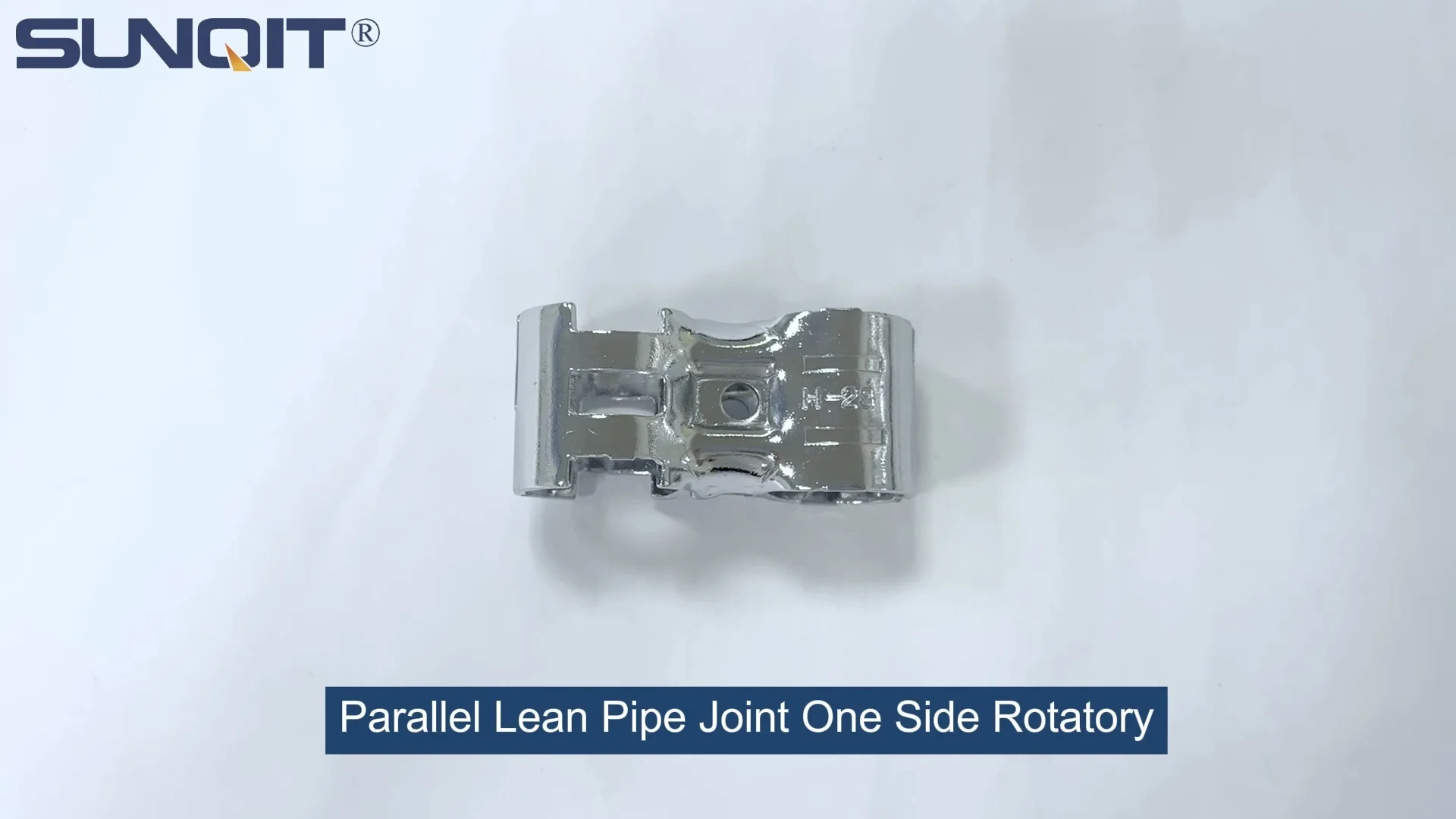
In the fast-paced world of manufacturing and production, adaptability isn't just a buzzword—it's the difference between thriving and falling behind. For decades, lean pipe systems have been the backbone of efficient workflows, offering modular, cost-effective solutions to organize spaces, streamline processes, and reduce waste. But as industries evolve—demanding faster turnarounds, customizable setups, and sustainable practices—the components that power these systems are evolving too. Among the most promising innovations? The Parallel Lean Pipe Joint One Side Rotatory . This unassuming yet revolutionary component is quietly reshaping how we design lean systems, from workbenches to material racks, and pointing the way toward the future of flexible manufacturing.
Understanding Lean Pipe Systems: The Foundation of Modern Manufacturing
Before diving into the specifics of the Parallel Lean Pipe Joint One Side Rotatory, let's take a step back to appreciate the role of lean pipe systems in today's factories, warehouses, and assembly lines. At their core, these systems are built on the principles of lean manufacturing—eliminating waste, optimizing flow, and empowering teams to work smarter, not harder. Traditional lean pipe systems typically consist of metal pipes (often steel or aluminum), connectors, and accessories like shelves, casters, and roller tracks, all designed to be assembled and reconfigured with minimal tools.
What makes lean pipe systems so enduring? Their versatility. Unlike fixed, custom-built furniture or machinery, lean systems can be adjusted on the fly. Need to expand a workbench to accommodate a new team member? Swap out a few pipes and joints. Redesign a material rack to fit a larger product? Disassemble and rebuild in hours, not weeks. This flexibility has made them indispensable in industries ranging from automotive and electronics to pharmaceuticals and logistics.
But as manufacturing demands have grown more complex—with shorter product lifecycles, smaller batch sizes, and a greater focus on ergonomics—traditional fixed joints have begun to show their limits. Fixed joints, while sturdy, restrict movement and reconfiguration. If you wanted to angle a roller track for better material flow or adjust a workbench's height to suit a taller operator, you'd often need to disassemble the entire structure and rebuild it from scratch. Enter the Parallel Lean Pipe Joint One Side Rotatory: a component designed to solve this very problem.
The Game-Changer: What Is the Parallel Lean Pipe Joint One Side Rotatory?
At first glance, the Parallel Lean Pipe Joint One Side Rotatory might look similar to other lean pipe connectors. It's a small, often metallic component designed to join two parallel pipes, but its defining feature is hidden in its name: one side rotatory . Unlike fixed joints, which lock pipes into a rigid position, this joint allows one connected pipe to rotate smoothly around the other, all while maintaining structural integrity. Imagine a workbench shelf that can tilt up to 30 degrees for easier access to tools, or a roller track that can be angled downward to speed up material flow—all without disconnecting a single pipe. That's the power of this rotatory joint.
The engineering behind this flexibility is surprisingly elegant. Inside the joint, a precision-machined bearing or bushing allows for controlled rotation, while a locking mechanism lets users set and secure the desired angle. Some models even include graduated markings to ensure consistency across multiple joints, critical for maintaining alignment in larger systems. Materials vary, but most are made from high-grade aluminum or stainless steel to balance strength, weight, and corrosion resistance—key considerations in busy industrial environments.
Real-World Impact: A Case Study in Electronics Manufacturing
Consider a mid-sized electronics plant producing circuit boards. Their assembly line relied on a traditional lean pipe workbench with a fixed roller track to feed components to operators. When they introduced a new, larger circuit board model, the fixed roller track sat too flat, causing components to get stuck—a bottleneck that slowed production by 15%. By replacing the fixed joints with Parallel Lean Pipe Joints One Side Rotatory, they were able to angle the roller track by 12 degrees, allowing gravity to assist in moving components smoothly. The result? The bottleneck vanished, and the line was back to full speed within a day. No disassembly, no custom parts, just a simple adjustment.

Key Features of the Parallel Lean Pipe Joint One Side Rotatory
To understand why this joint is becoming a staple in modern lean systems, let's break down its most impactful features:
- Controlled Rotation: The joint allows 360-degree rotation on one side (or a limited range, depending on the model), with smooth movement that doesn't require excessive force. This makes on-the-fly adjustments easy for operators, even during shifts.
- Secure Locking: A built-in locking mechanism—often a thumb screw or cam lever—lets users fix the joint in place once the desired angle is set. This ensures stability during use, even with heavy loads (some models support up to 50kg per joint).
- Compatibility: Designed to work with standard lean pipes (typically 28mm or 30mm diameter) and aluminum profiles , the joint integrates seamlessly with existing systems. No need to replace entire setups—simply swap out old joints for new ones.
- Durability: Made from robust materials like anodized aluminum or stainless steel, the joint withstands daily wear and tear, including exposure to oils, coolants, and cleaning agents common in manufacturing environments.
- Cost-Efficiency: By reducing the need for custom parts or full system overhauls, the joint lowers long-term costs. A single rotatory joint might cost slightly more than a fixed joint upfront, but the savings in labor and downtime quickly offset the difference.

Integration with Workbenches: Ergonomics Meets Efficiency
One of the most practical applications of the Parallel Lean Pipe Joint One Side Rotatory is in workbench design. Workbenches are the heart of any assembly or packaging operation, and their ergonomics directly impact operator comfort, productivity, and even injury rates. Traditional workbenches, with fixed heights and angles, force operators to adapt to the furniture—often leading to slouching, reaching, or straining.
With rotatory joints, workbenches become adaptable to the people using them. For example, a workbench with a rotatory joint at the base of its tabletop can be tilted to reduce glare on screens or documents, easing eye strain. A shelf mounted on rotatory joints can swing out of the way when not in use, freeing up valuable surface space. In a study by the International Journal of Industrial Ergonomics, workers using adjustable workbenches reported a 22% reduction in neck and shoulder fatigue—a statistic that translates to fewer sick days and higher morale.
But the benefits go beyond ergonomics. In industries with frequent product changes—like consumer electronics, where new phone models launch every few months—adjustable workbenches mean faster changeovers. Instead of building a new workbench for each product, teams can reconfigure existing ones using rotatory joints to accommodate different tool layouts, component sizes, or testing equipment. This agility is a game-changer in markets where time-to-market is everything.

Synergy with Aluminum Profiles: Lightweight Strength for the Future
While lean pipe systems have historically relied on steel pipes, the shift toward aluminum profiles is undeniable. Aluminum offers a winning combination of lightweight durability, corrosion resistance, and sustainability (it's 100% recyclable), making it ideal for modern manufacturing. The Parallel Lean Pipe Joint One Side Rotatory, with its aluminum construction, is perfectly suited to complement this trend.
Aluminum profiles, with their T-slot designs, allow for easy attachment of accessories like shelves, lights, and tools. When paired with rotatory joints, they create systems that are both strong and supremely flexible. For instance, a material rack built with aluminum profiles and rotatory joints can have its shelves rotated to face different directions, allowing operators at adjacent workstations to access materials without walking across the floor. This not only saves time but also reduces congestion in busy areas.
Sustainability is another key driver here. By using aluminum profiles and rotatory joints, manufacturers can reduce their carbon footprint. Aluminum requires 95% less energy to recycle than to produce from raw materials, and the modular nature of lean systems means components can be reused or repurposed instead of being sent to landfills. As companies face increasing pressure to meet ESG (Environmental, Social, Governance) goals, this combination of aluminum profiles and adaptable joints is becoming a selling point for both internal operations and customer-facing sustainability reports.
Roller Track Compatibility: Smoothing the Flow of Materials
No discussion of lean systems is complete without mentioning roller tracks —the conveyor-like components that move materials from one workstation to the next. In traditional setups, roller tracks are often fixed at a slight incline to use gravity for movement. But what if the product being transported is lighter (and needs a steeper angle) or heavier (and needs a gentler slope)? With fixed joints, you'd need to rebuild the track. With rotatory joints, you simply adjust the angle.
The Parallel Lean Pipe Joint One Side Rotatory excels here. By attaching roller tracks to rotatory joints, teams can fine-tune the incline to match the product's weight, size, and fragility. For example, delicate electronic components might require a 5-degree incline to prevent jostling, while sturdy plastic parts could handle a 15-degree slope to speed up flow. This level of control reduces product damage and minimizes bottlenecks, as materials move at the optimal pace for each stage of production.
In high-volume environments, like automotive assembly plants, this adaptability is critical. A single production line might handle dozens of part variations, each with unique handling requirements. By using rotatory joints to adjust roller track angles, plants can avoid the cost of building dedicated tracks for each part. Instead, they can reconfigure existing tracks in minutes, ensuring that even small-batch runs remain cost-effective.
Traditional vs. Rotatory: A Comparison Table
| Feature | Traditional Fixed Joints | Parallel Lean Pipe Joint One Side Rotatory |
|---|---|---|
| Flexibility | Limited—requires disassembly for reconfiguration | High—360-degree rotation on one side, no disassembly needed |
| Ergonomic Benefits | Low—fixed positions force operator adaptation | High—adjustable angles reduce strain and fatigue |
| Changeover Time | Long (hours to days for full system redesign) | Short (minutes to hours for adjustments) |
| Compatibility | Works with standard pipes but not adaptable to angles | Compatible with standard pipes and aluminum profiles |
| Long-Term Cost | Higher (frequent need for new parts/overhauls) | Lower (reusable, reduces downtime and labor costs) |
Future Trends: Where Lean Pipe Systems Are Headed Next
The Parallel Lean Pipe Joint One Side Rotatory is more than just an incremental improvement—it's a sign of where lean pipe systems are headed. As manufacturing continues to evolve, we can expect to see four key trends shaped by components like this rotatory joint:
1. Hyper-Customization at Scale
Gone are the days of one-size-fits-all production lines. Tomorrow's factories will need to handle mass customization—producing unique products for individual customers—without sacrificing efficiency. Rotatory joints, combined with modular aluminum profiles and smart accessories, will make this possible. Imagine a workbench that automatically adjusts its height and tool layout based on a worker's biometrics (scanned via a smart badge) or a roller track that tilts to accommodate a custom-sized package, all controlled via a tablet app. This level of customization will become standard, and adaptable joints will be the enablers.
2. IoT Integration for Predictive Maintenance
The Industrial Internet of Things (IIoT) is already transforming manufacturing, and lean pipe systems won't be left behind. Future rotatory joints could include embedded sensors to monitor rotation, vibration, and wear. Data from these sensors would feed into a central system, alerting maintenance teams when a joint needs lubrication or replacement before it fails. This predictive approach would reduce unplanned downtime—a critical advantage in 24/7 production environments.
3. Sustainability as a Core Design Principle
As companies strive to meet net-zero goals, lean systems will prioritize sustainability. Aluminum profiles, already recyclable, will be paired with joints made from recycled materials. Rotatory joints, by extending the lifespan of lean systems (since they can be reconfigured instead of replaced), will further reduce waste. We might even see "circular" lean systems, where old components are collected, refurbished, and resold—creating a closed-loop economy for manufacturing supplies.
4. AI-Driven Design Tools
Designing a lean system today often relies on trial and error or the expertise of seasoned engineers. Tomorrow, artificial intelligence (AI) tools could simplify the process. By inputting parameters like workspace size, production volume, and product dimensions, AI could generate optimal system designs, including where to place rotatory joints for maximum flexibility. These tools might even simulate how the system would perform under different scenarios—like a sudden spike in demand or a product redesign—allowing teams to refine their setups before building them.
Conclusion: The Rotatory Joint as a Catalyst for Change
The Parallel Lean Pipe Joint One Side Rotatory may seem like a small component, but its impact on lean pipe system design is profound. By solving the longstanding challenge of rigidity in traditional joints, it unlocks new levels of flexibility, ergonomics, and efficiency—qualities that are no longer optional in today's manufacturing landscape. Whether integrated into workbenches, paired with aluminum profiles, or used to optimize roller tracks, this joint is a catalyst for the future of lean manufacturing.
As we look ahead, the message is clear: the most successful manufacturers will be those that embrace adaptability. They'll invest in components that grow with their needs, reduce waste, and empower their teams to work smarter. The Parallel Lean Pipe Joint One Side Rotatory is more than a tool—it's a symbol of this mindset. And in a world where change is the only constant, that's the ultimate competitive advantage.
So, the next time you walk through a factory or warehouse, take a closer look at the lean systems around you. Chances are, you'll spot a rotatory joint or two—quietly working to keep the world of manufacturing moving forward, one rotation at a time.