- Company Articles
- Products and Technology
- Product knowledge
- Parallel Lean Pipe Joint One Side Rotatory: How It Supports Just-In-Time Manufacturing

Parallel Lean Pipe Joint One Side Rotatory: How It Supports Just-In-Time Manufacturing
Related Product
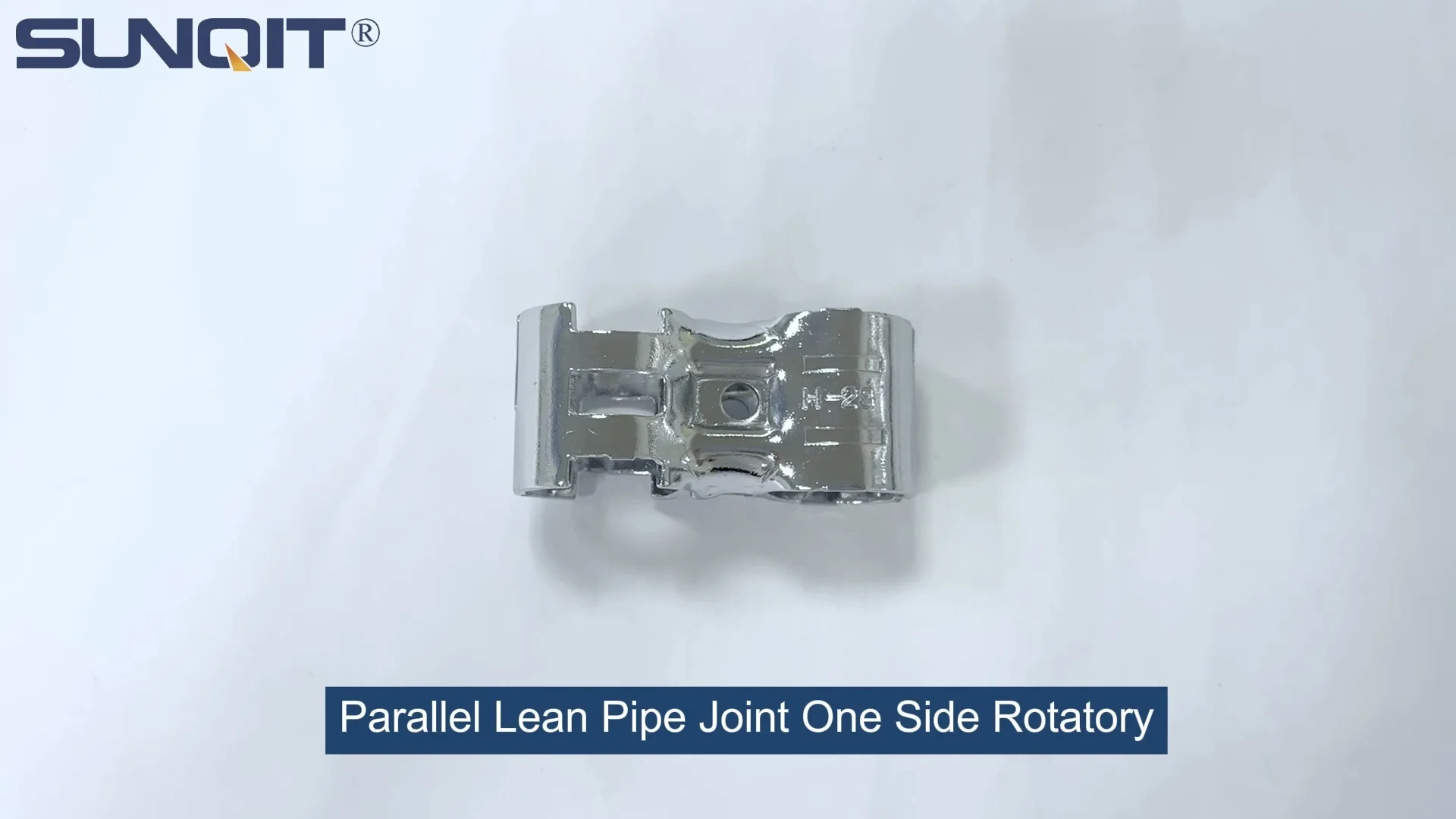
Parallel Lean Pipe Joint One Side Rotatory
Parallel rotatory lean pipe joint, for 2 pcs 28mm pipe conenction in parallel direction with one side rotatory function.
The Pulse of Just-In-Time Manufacturing: Why Flexibility Matters
In the fast-paced world of modern manufacturing, where customer demands shift overnight and production lines must adapt in real time, Just-In-Time (JIT) manufacturing has become more than a strategy—it's a survival skill. JIT thrives on minimizing waste, reducing inventory, and ensuring every step of the production process flows seamlessly, like a well-choreographed dance. But here's the catch: that dance can't happen on a rigid stage. Factories need infrastructure that bends, not breaks, when production schedules change. Enter the unsung hero of lean systems everywhere: the Parallel Lean Pipe Joint One Side Rotatory .
You've probably walked through a factory and admired the neat rows of workbenches, the smooth glide of flow racks, or the precision of conveyor systems. What you might not have noticed is the tiny component holding it all together—literally. Joints connect pipes, pipes form structures, and structures shape how work gets done. Traditional fixed joints lock those structures in place, turning once-useful setups into rigid obstacles when production needs evolve. The Parallel Lean Pipe Joint One Side Rotatory changes that. Its ability to rotate on one axis isn't just a mechanical trick; it's a catalyst for the flexibility JIT manufacturing demands.
Understanding Lean Systems: Where Every Component Counts
Before diving into the specifics of this rotatory joint, let's ground ourselves in what a lean system really is. At its core, lean manufacturing is about stripping away inefficiency—whether that's excess inventory, unnecessary movement, or downtime from retooling. It's about creating a system where materials flow smoothly, workers move with purpose, and every tool and structure serves a clear, adaptable function.
Think of a lean system as a living organism. Just as a body needs flexible joints to move, a factory needs flexible components to adapt. A workbench that can be reconfigured in minutes, a flow rack that adjusts to different product sizes, a turnover trolley that switches from transporting parts to holding assemblies—these aren't just nice-to-haves. They're essential for responding to sudden order spikes, design changes, or shifts in production priorities.
This is where the Parallel Lean Pipe Joint One Side Rotatory shines. Unlike fixed joints that weld structures into place, this joint introduces controlled movement. Imagine a workbench where the height of a shelf can be adjusted by simply rotating the joint and locking it in a new position. Or a flow rack where the angle of the roller track tilts slightly to speed up material flow during peak hours, then resets for delicate components later. That's the power of intentional flexibility—and it all starts with a small, unassuming joint.

Anatomy of the Parallel Lean Pipe Joint One Side Rotatory: Small Design, Big Impact
Let's get up close with this component. The Parallel Lean Pipe Joint One Side Rotatory is designed to connect two parallel lean pipes while allowing one side to rotate up to 180 degrees (depending on the model). Its construction is deceptively simple: a durable outer casing (often made of zinc-plated steel or aluminum for corrosion resistance), an inner rotating mechanism with ball bearings for smooth movement, and a locking lever or bolt to secure the joint once positioned. Some versions even include rubber gaskets to reduce vibration—a small detail that prevents parts from shifting during production.
What makes it special? Most traditional joints fix pipes at 90-degree or 45-degree angles, offering limited adjustability. This rotatory joint, however, lets operators pivot one pipe relative to the other, creating variable angles and heights without disassembling the entire structure. For example, on a material rack, this means you can tilt a shelf to create a gravity-fed flow for parts, then flatten it later to store bulkier items. On a turnover trolley, it allows the handle to fold down for compact storage when not in use. The possibilities multiply when combined with other lean pipe accessories like casters, roller tracks, or adjustable feet.
Durability is another key feature. In manufacturing environments—where metal-on-metal contact, heavy loads, and constant use are the norm—a flimsy joint would fail quickly. The rotatory joint is built to withstand daily wear: its rotating mechanism is sealed to keep out dust and debris, and the locking mechanism is reinforced to hold heavy loads without slipping. A quality joint can support hundreds of pounds, making it suitable for everything from lightweight electronic component racks to heavy-duty automotive part storage.

How It Supports Just-In-Time: Solving Real-World Manufacturing Pain Points
JIT manufacturing isn't just about "making things fast"—it's about making things smart . It requires that every resource, from labor to space to equipment, is used optimally. Let's look at three common JIT challenges and how the Parallel Lean Pipe Joint One Side Rotatory addresses them:
1. Minimizing Setup Time
In traditional setups, reconfiguring a workbench or flow rack might take hours: you'd need wrenches to loosen bolts, remove pipes, adjust angles, and retighten. With the rotatory joint, that process shrinks to minutes. A line worker can unlock the joint, pivot the pipe to the desired angle, lock it, and get back to production. For a factory running multiple product lines in a single day, this saves hours of downtime. For example, a smartphone assembly plant switching from assembling 6-inch to 7-inch models can adjust their component flow racks in under 10 minutes, keeping production on track without costly delays.
2. Reducing Inventory Waste
JIT relies on "pull" production—making only what's needed, when it's needed. This means less inventory sitting idle, but it also requires storage solutions that can adapt to smaller, more frequent batches. A flow rack with rotatory joints can be adjusted to hold fewer parts per shelf when demand is low, then expanded when orders pick up. No more wasting space on oversized racks for small batches or cluttering the floor with temporary storage. The joint turns static storage into dynamic space that grows and shrinks with demand.
3. Supporting Continuous Improvement (Kaizen)
Kaizen, the Japanese philosophy of continuous improvement, encourages workers to suggest small changes that boost efficiency. But how can a line worker propose a better workbench layout if reconfiguring it requires a maintenance crew and half a day? The rotatory joint empowers frontline teams to experiment. A machinist might realize tilting a tool shelf by 30 degrees reduces reaching time—so they adjust the joint themselves, test it, and share the improvement with the team. This culture of ownership is critical to JIT success, and it's only possible when the tools to change are within arm's reach.

Traditional vs. Rotatory Joints: A Side-by-Side Comparison
| Feature | Traditional Fixed Joints | Parallel Lean Pipe Joint One Side Rotatory |
|---|---|---|
| Flexibility | Limited to fixed angles (90°, 45°, etc.) | Rotates 180° on one axis; adjustable angles |
| Setup/Reconfiguration Time | 1–2 hours (requires disassembly) | 5–10 minutes (no disassembly needed) |
| Durability Under Load | High, but rigid (prone to stress cracks if overloaded) | High, with shock absorption from rotating mechanism |
| Cost Over Time | Lower upfront, but higher due to frequent replacements/modifications | Higher upfront, but lower long-term (reduces need for new structures) |
| Worker Satisfaction | Low (frustration with rigid setups) | High (empowers workers to customize their space) |
From the Factory Floor: Real Stories of Impact
Numbers and features tell part of the story, but real-world examples bring it to life. Let's look at two manufacturers that integrated the Parallel Lean Pipe Joint One Side Rotatory into their lean systems—and the results they saw.
Case Study 1: Automotive Parts Supplier
A mid-sized automotive parts supplier in Michigan was struggling with frequent changeovers between brake caliper models. Their old flow racks, built with fixed joints, couldn't accommodate the varying sizes of caliper housings. Workers were forced to stack parts on temporary pallets, leading to wasted time searching for components and occasional damage from improper storage. After switching to flow racks equipped with rotatory joints, they could adjust shelf angles and heights in minutes. The result? Changeover time dropped from 2 hours to 15 minutes, and part damage decreased by 40%. "It's like night and day," said a production supervisor. "Now, when the next order comes in, we don't panic—we just adjust the racks and keep moving."
Case Study 2: Electronics Assembly Plant
An electronics plant in California produces both smartwatches and fitness trackers, which require different assembly workbenches. With fixed-joint workbenches, they needed two separate lines—one for each product—taking up valuable floor space. By retrofitting workbenches with rotatory joints, they created adjustable stations: workers could rotate the tool shelves and component bins to switch between watch and tracker assembly in under 5 minutes. The plant consolidated two lines into one, freeing up 300 square feet of space for a new testing area. "We used to think we needed more space to grow," said the operations manager. "Turns out, we just needed smarter joints."
Choosing the Right Partner: The Role of a Trusted Lean Pipe Supplier
A great component is only as good as the lean pipe supplier behind it. When selecting a supplier for rotatory joints (or any lean system components), look for three key qualities: quality, variety, and support. Quality ensures the joints can handle your factory's demands—ask about load ratings, material certifications, and warranty periods. Variety means they offer compatible pipes, accessories (like roller tracks or casters), and customization options to fit your unique needs. Support is critical too: a supplier that provides installation guides, video tutorials, or even on-site training can help your team get the most out of the joints.
Avoid suppliers that cut corners on materials—thin steel or cheap plastic joints might save money upfront, but they'll fail quickly under industrial use. A reputable supplier will also stay ahead of trends, offering innovations like ESD-safe joints for electronics manufacturing or corrosion-resistant options for food processing plants. Remember, your supplier isn't just selling parts—they're partnering with you to build a leaner, more efficient operation.
The Future of Lean: Small Components, Big Dreams
As manufacturing evolves—with trends like mass customization, reshoring, and Industry 4.0—flexibility will only grow more important. Factories won't just need to adapt to changes; they'll need to anticipate them. The Parallel Lean Pipe Joint One Side Rotatory is a glimpse into that future: a small, affordable component that transforms static infrastructure into dynamic, responsive systems. It's proof that lean manufacturing isn't about grand overhauls—it's about the cumulative impact of smart, thoughtful choices.
Imagine a factory where every workbench, rack, and trolley can reconfigure itself at the push of a button (some already use motorized rotatory joints!). Or where AI sensors detect production bottlenecks and automatically adjust flow rack angles to redirect materials. These innovations are on the horizon, and they'll build on the foundation laid by components like the rotatory joint. Today's "small" advancements are tomorrow's industry standards.
Conclusion: Rotating Toward a Leaner Tomorrow
Just-In-Time manufacturing isn't a destination—it's a journey of continuous improvement. And every journey needs reliable tools. The Parallel Lean Pipe Joint One Side Rotatory may seem like a humble component, but its impact ripples through the entire production process: reducing waste, saving time, empowering workers, and turning rigid factories into agile, adaptable spaces.
So the next time you walk through a factory, take a moment to look at the joints holding it all together. You might just be looking at the future of manufacturing—one rotation at a time.