- Company Articles
- Products and Technology
- Installation And Maintenance
- Parallel Lean Pipe Joint One Side Rotatory: Maintenance Costs vs. Long-Term Savings

Parallel Lean Pipe Joint One Side Rotatory: Maintenance Costs vs. Long-Term Savings
Related Product
Parallel Lean Pipe Joint One Side Rotatory
Parallel rotatory lean pipe joint, for 2 pcs 28mm pipe conenction in parallel direction with one side rotatory function.
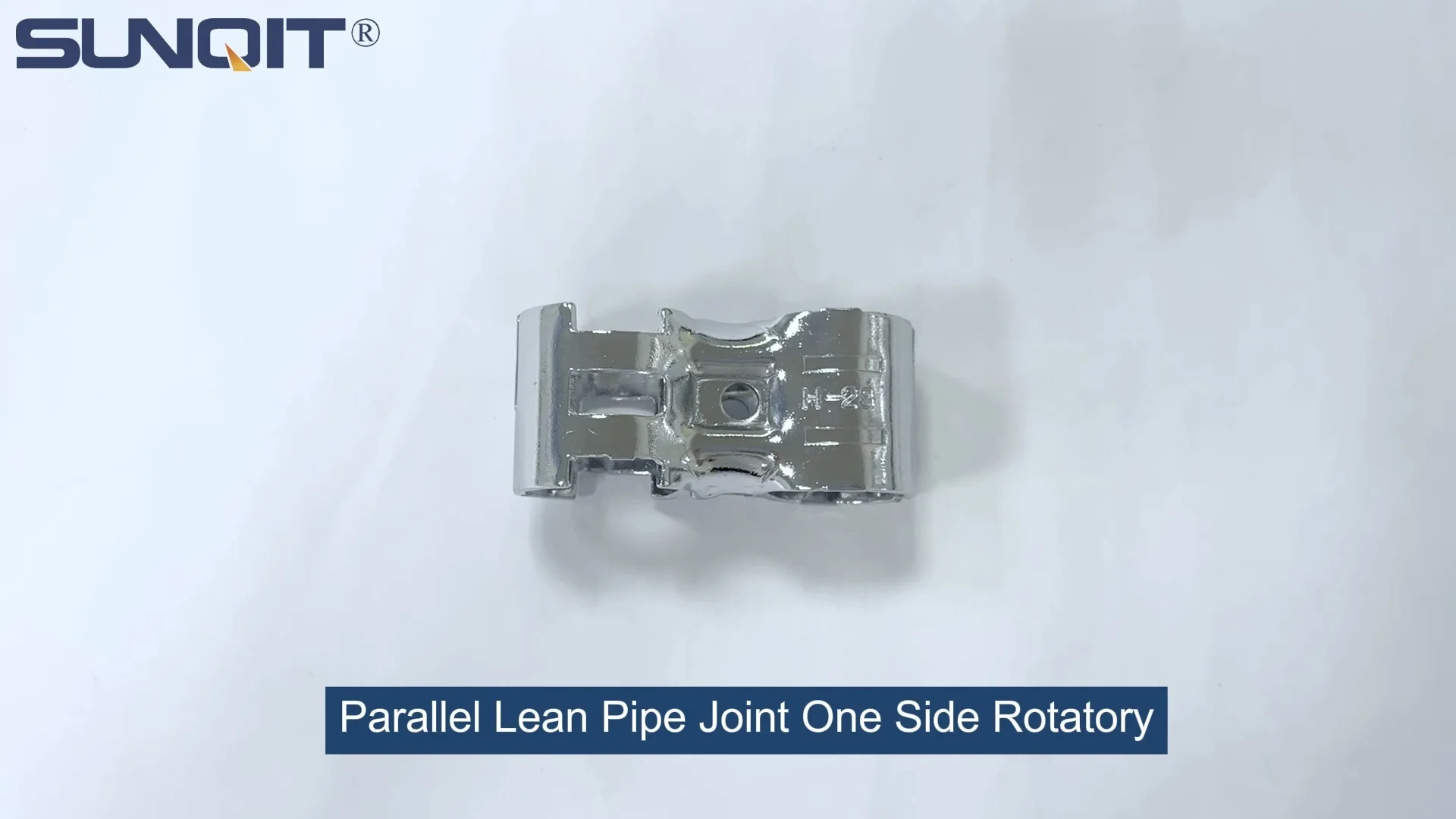
In the world of manufacturing and production, where every second and every penny counts, lean systems have become the backbone of efficient operations. From the assembly line humming with activity to the neatly organized workbenches where precision meets productivity, every component plays a role in keeping waste at bay and profits flowing. But here's the thing: while most businesses focus on big-ticket machinery or high-tech software to optimize their lean processes, it's often the smallest parts that quietly make or break the bottom line. Today, we're shining a spotlight on one such unsung hero: the parallel lean pipe joint one side rotatory . It might sound like a mouthful, but this unassuming component holds the key to balancing short-term maintenance costs and long-term savings—two factors that can make or break a company's lean journey.
Understanding the Star of the Show: What Is a Parallel Lean Pipe Joint One Side Rotatory?
Before we dive into costs and savings, let's get to know this joint a little better. Imagine a typical lean pipe setup—think workbenches, flow racks, or turnover trolleys, all built from interconnected pipes and joints. These systems are loved for their flexibility: you can reconfigure them on the fly to adapt to new production needs, which is the heart of lean thinking. But not all joints are created equal. The parallel lean pipe joint one side rotatory is designed with a specific superpower: one side rotates freely while the other stays fixed. This might seem simple, but it's a game-changer for setups that need adjustable angles or frequent repositioning—like a workbench where operators switch between tasks, or a flow rack that feeds materials to different stations.
Unlike rigid fixed joints, which lock pipes into a static position, this rotatory joint lets one segment of the lean pipe system pivot without losing stability. Picture a workbench where the upper shelf can tilt slightly to reduce operator strain, or a roller track that adjusts to the height of a conveyor—all without disassembling and rebuilding the entire structure. That flexibility isn't just about convenience; it's about keeping production lines moving, even when needs change. And when paired with durable materials like aluminum (hello, aluminum lean pipe ), these joints become even more valuable, resisting corrosion and wear in busy factory environments.
The Hidden Cost of Cutting Corners: Why "Cheap" Joints Cost More in the Long Run
Let's be honest: when budgets are tight, it's tempting to opt for the lowest-priced components. A basic steel joint might cost half as much as a high-quality rotatory one, and in the moment, that savings feels like a win. But here's the catch: maintenance costs have a way of creeping up and eroding those initial gains. Let's break down why "cheap" joints often end up being the most expensive choice.
First, there's the issue of durability. Many budget joints are made from low-grade steel or plastic that wears quickly under the stress of daily use. The rotating mechanism, if poorly designed, can seize up from dust or debris, forcing workers to stop production and fiddle with wrenches to free it. Worse, a cracked joint might cause a section of a workbench or flow rack to sag, risking damage to materials or even injury to operators. Each of these scenarios translates to downtime—and in manufacturing, downtime is measured in dollars. A single hour of halted production on a line that generates $500 per hour? That's $500 lost, just because a $10 joint failed.
Then there's the cost of replacement parts. Cheap joints often use non-standard components, meaning you can't just swap in a new washer or pin—you have to buy an entire new joint. Multiply that by dozens of joints across a facility, and the numbers add up fast. A factory with 50 workbenches, each using 8 joints, might replace 20% of those joints annually if they're low-quality. At $15 per replacement joint, that's 50 x 8 x 0.20 x $15 = $1,200 per year. Over five years, that's $6,000—money that could have been invested in better equipment or training.

Breaking Down Maintenance Costs: What You're Really Paying For
To understand the true impact of maintenance, let's zoom in on the three main cost drivers: materials, labor, and downtime. Each plays a role in turning a "small" joint problem into a big financial headache.
Materials: Even if you manage to source replacement parts for cheap joints, they're rarely built to last. A standard steel joint might need new lubrication every month to keep the rotation smooth, costing $5 per joint annually in lubricant. Multiply that by 400 joints (across workbenches, racks, and trolleys), and you're looking at $2,000 per year. High-quality aluminum joints, on the other hand, often come pre-lubricated with long-lasting compounds, cutting that cost to $1 per joint annually—saving $1,600 right there.
Labor: Time is money, and every minute a technician spends fixing a joint is a minute they're not doing higher-value work. Let's say a maintenance worker earns $25 per hour, and each joint repair takes 15 minutes (including gathering tools, shutting down the workbench, and testing the fix). For 200 repairs per year, that's 200 x 0.25 hours = 50 hours of labor, costing 50 x $25 = $1,250. With durable rotatory joints, repairs might drop to 20 per year, slashing labor costs to $125—a $1,125 saving.
Downtime: This is often the biggest hidden cost. If a joint failure shuts down a production line for 30 minutes, and that line produces 100 units per hour worth $10 each, the lost revenue is 50 units x $10 = $500. Even a "minor" 10-minute delay on a busy line can cost $167. Over a year, a facility with frequent joint issues might lose $10,000 or more to unplanned downtime—money that vanishes without a trace in the budget.

Long-Term Savings: How Quality Joints Pay You Back
Now, let's flip the script. Investing in a high-quality parallel lean pipe joint one side rotatory might cost more upfront—say $30 instead of $15—but the savings over time are substantial. Here's how these joints turn into long-term assets for your lean system .
Durability That Lasts: Quality joints are built to withstand the chaos of factory life. Aluminum lean pipe joints, for example, resist rust and corrosion, even in humid or dusty environments. The rotating mechanism is sealed to keep out debris, reducing the need for frequent cleaning or lubrication. Many manufacturers back these joints with 5-year warranties, a testament to their longevity. A joint that lasts 10 years instead of 2 cuts replacement costs by 80% over a decade.
Efficiency Gains: A smoothly rotating joint keeps workflows flowing. Operators don't waste time struggling with stuck shelves or misaligned roller tracks; they adjust the joint with a quick twist and get back to work. This might save just 2 minutes per operator per shift, but across 50 operators, that's 100 minutes of recovered productivity daily—over 400 hours per year. At $20 per hour, that's $8,000 in added value.
Adaptability Without Rebuilding: Lean systems thrive on change, and rotatory joints make adaptation easy. Need to reconfigure a workbench for a new product? Tilt the shelf, lock the joint, and you're done. No need to buy new pipes or joints—just repurpose what you have. A manufacturer that retools its line twice a year might save $5,000 per retooling by avoiding new components, adding up to $50,000 over a decade.
Case Study: How ABC Electronics Cut Costs by 40% with Quality Joints
To see these savings in action, let's look at ABC Electronics, a mid-sized manufacturer of circuit boards. Three years ago, their production floor was struggling with frequent joint failures on their assembly workbenches. The maintenance team was replacing an average of 30 joints per month, and downtime from stuck or broken joints was costing an estimated $2,000 per month in lost production.
Fed up, ABC switched to parallel lean pipe joint one side rotatory made from aluminum, sourced from a reputable lean pipe supplier . The upfront cost was double what they'd paid before, but the results were striking: in the first year, joint replacements dropped to 6 per month, and downtime fell by 75%. By year three, replacements were down to just 2 per month, and operators reported a 15% increase in daily output due to smoother workflows.
Let's crunch the numbers: Before, annual joint costs (materials + labor + downtime) totaled $36,000. After the switch, that number fell to $21,600—a 40% reduction. Over five years, ABC will save $72,000, more than justifying the initial investment in quality joints.

Making the Numbers Work: A 5-Year Cost Comparison
Still not convinced? Let's put it all together in a table. Below is a side-by-side comparison of a facility using low-quality fixed joints versus one using high-quality parallel lean pipe joint one side rotatory. We'll assume 100 workbenches, each with 8 joints, in a factory operating 250 days per year.
| Cost Category | Low-Quality Fixed Joints | High-Quality Rotatory Joints | 5-Year Savings |
|---|---|---|---|
| Initial Joint Cost (100 workbenches x 8 joints) | $15/joint x 800 = $12,000 | $30/joint x 800 = $24,000 | -$12,000 (Higher upfront) |
| Annual Replacement Joints (20% vs. 2% failure rate) | 800 x 0.20 x $15 = $2,400/year x 5 = $12,000 | 800 x 0.02 x $30 = $480/year x 5 = $2,400 | $9,600 |
| Annual Labor for Repairs (15 mins vs. 5 mins per repair) | 160 repairs/year x 0.25 hrs x $25 = $1,000/year x 5 = $5,000 | 16 repairs/year x 0.083 hrs x $25 = $33/year x 5 = $165 | $4,835 |
| Annual Downtime (5 hrs vs. 0.5 hrs per month) | 60 hrs/year x $500/hr = $30,000/year x 5 = $150,000 | 6 hrs/year x $500/hr = $3,000/year x 5 = $15,000 | $135,000 |
| Total 5-Year Cost | $179,000 | $41,565 | $137,435 |
The numbers speak for themselves: over five years, the facility using high-quality rotatory joints saves $137,435—more than three times the initial investment in better joints. That's money that can fund new technology, employee bonuses, or expansion. And remember, this doesn't even include intangible benefits like reduced operator frustration or improved safety—both of which boost morale and retention.
Choosing the Right Supplier: It's About Partnership, Not Just Parts
Of course, not all rotatory joints are created equal. To maximize savings, you need to choose a supplier who understands your lean goals, not just someone selling parts. A good lean pipe supplier will offer more than just products—they'll provide technical support, help you design efficient systems, and stand behind their components with warranties and replacement guarantees.
Look for suppliers who specialize in aluminum lean pipe systems, as aluminum offers the best balance of durability and lightweight flexibility. Ask about their joint testing processes: Do they simulate years of wear in the lab? Can they provide case studies from other manufacturers in your industry? A supplier who's proud of their product will happily share this information.
Also, consider the full ecosystem of components. A great supplier will offer compatible accessories—like caster wheels, roller tracks, and workbench surfaces—that work seamlessly with their joints. This ensures your entire lean system is optimized for minimal maintenance, not just individual parts.
Conclusion: Small Joints, Big Impact on Your Lean Journey
In the world of lean manufacturing, success lies in the details. The parallel lean pipe joint one side rotatory might seem like a small component, but its impact on maintenance costs and long-term savings is anything but minor. By investing in quality joints—especially those made from durable materials like aluminum—you're not just buying a part; you're buying peace of mind, smoother workflows, and a healthier bottom line.
Remember, lean isn't just about eliminating waste in production—it's about eliminating waste in every area, including maintenance and replacement costs. A joint that lasts longer, works harder, and adapts faster is more than a tool; it's a partner in your success. So the next time you're tempted to cut costs on "small" components, think about ABC Electronics. Think about the $137,435 in savings over five years. Think about the operators who no longer waste time fighting stuck joints. Then ask yourself: Can your business afford not to invest in quality?
The answer, for any lean-focused company, is clear: When it comes to joints, the best "deal" is the one that keeps your production line moving, your costs down, and your profits up—for years to come.