- Company Articles
- Products and Technology
- Product knowledge
- Parallel Lean Pipe Joint One Side Rotatory: Transforming Medical Equipment Assembly Flexibility

Parallel Lean Pipe Joint One Side Rotatory: Transforming Medical Equipment Assembly Flexibility
Related Product
Parallel Lean Pipe Joint One Side Rotatory
Parallel rotatory lean pipe joint, for 2 pcs 28mm pipe conenction in parallel direction with one side rotatory function.
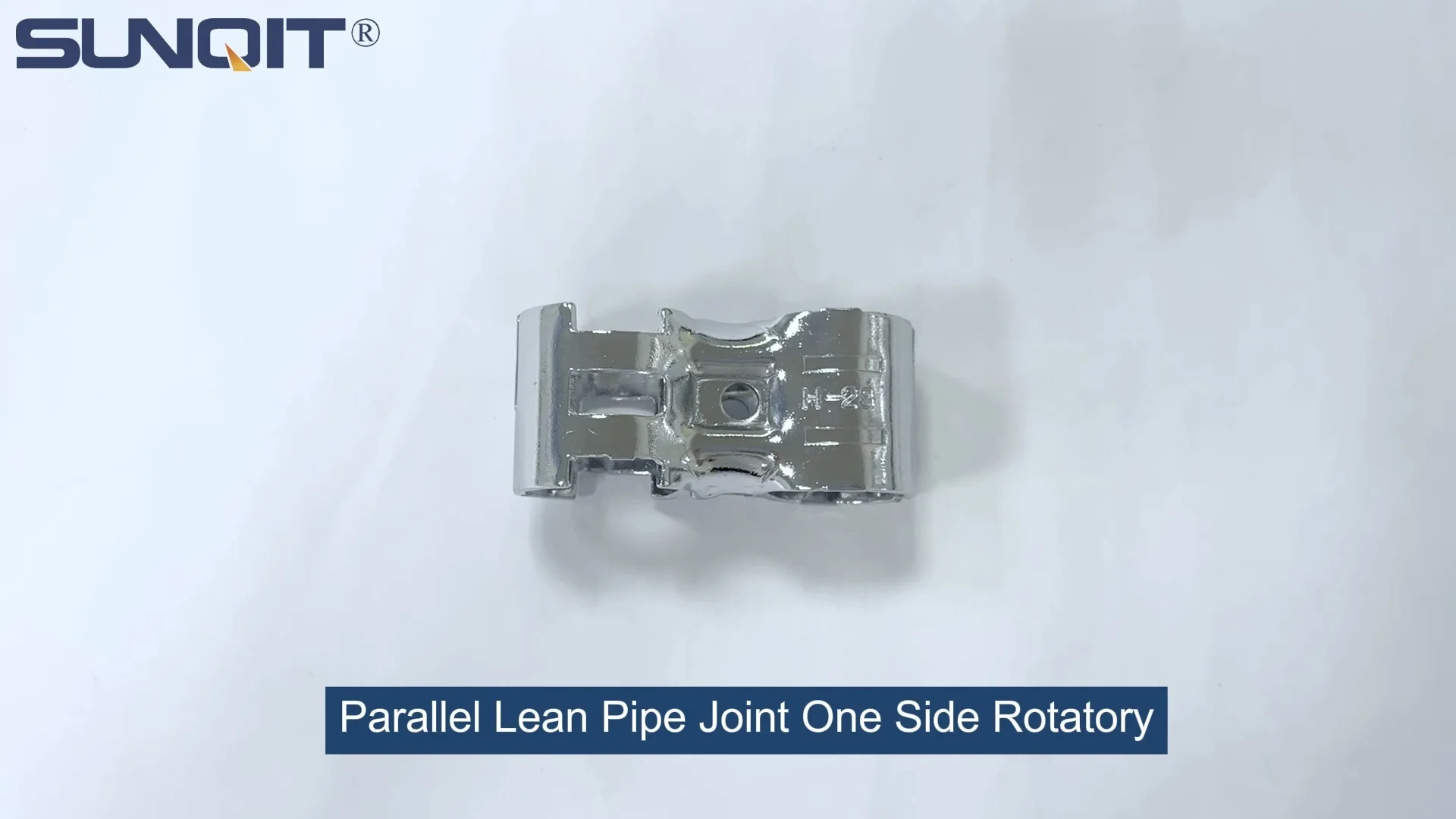
In the quiet hum of a medical device assembly plant, precision isn't just a goal—it's a lifeline. Every screw tightened, every wire connected, and every component aligned contributes to tools that diagnose illnesses, monitor vital signs, and save lives. But behind this precision lies a hidden challenge: flexibility . Medical manufacturing isn't static. New device models roll out, regulatory standards evolve, and production volumes ebb and flow. A rigid assembly line that works perfectly for one product can become a bottleneck when the next innovation arrives. This is where the unsung heroes of lean manufacturing step in—components like the Parallel Lean Pipe Joint One Side Rotatory —quietly revolutionizing how medical equipment comes to life.
The Stakes of Rigidity in Medical Assembly
Imagine a scenario: A mid-sized medical manufacturer specializes in portable ultrasound machines. Their assembly line, built with fixed steel workbenches and bolted-down material racks, has served them well for years. But suddenly, demand spikes for a new, larger model with additional sensors. The existing workbenches are too narrow to accommodate the bigger chassis. The material racks, with fixed shelving, can't angle the new components for easy access. Retooling means days of downtime—ordering custom workbenches, welding new racks, and retraining staff. In a industry where time-to-market can mean the difference between meeting a hospital's urgent need or losing a contract, rigidity isn't just inefficient; it's costly.
This isn't an isolated problem. Medical device assembly faces unique pressures: compliance with strict FDA and ISO standards (which often require frequent process audits and adjustments), ergonomic demands (workers need to handle delicate parts without strain), and the need for rapid prototyping (testing new designs without disrupting full production). Traditional rigid setups, while sturdy, struggle to keep pace. They're built for stability, not adaptability. And in a field where innovation is constant, that's a critical gap.
Lean Systems: The Foundation of Adaptability
Enter lean system principles—born from the idea that efficiency isn't just about speed, but about eliminating waste and embracing flexibility. In medical manufacturing, lean systems transform assembly lines from static monoliths into dynamic ecosystems. At their core are modular components: lightweight pipes, adjustable joints, and interchangeable accessories that can be reconfigured in hours, not days. These systems aren't just about saving time; they're about empowering teams to respond to change with confidence.
But lean systems are only as strong as their parts. And among those parts, joints are the connectors that turn individual pipes into functional structures. Fixed joints work for static setups, but for medical assembly—where a workbench might need to tilt 30 degrees for better access, or a flow rack might need to angle to accommodate a new part size—rotatory joints are game-changers. This is where the Parallel Lean Pipe Joint One Side Rotatory shines. Unlike fixed joints that lock pipes into rigid angles, this specialized joint adds a pivot point, letting sections of a structure rotate smoothly while keeping the other side stable. It's the difference between a workbench that's "one size fits all" and one that bends to the task at hand.

Meet the Parallel Lean Pipe Joint One Side Rotatory: A Closer Look
Let's break down what makes this joint unique. At first glance, it's unassuming—a compact, often aluminum-cast component with a central pivot and two connection points. One side locks firmly to a lean pipe (or aluminum profile ), while the other rotates 180 degrees, allowing the attached pipe to swing, tilt, or angle as needed. What sets it apart is its precision: the rotation is smooth but controlled, with built-in resistance to prevent sudden movements (critical when handling delicate medical parts like circuit boards or glass sensors). It's also designed for durability—aluminum construction resists corrosion (essential for cleanroom environments), and the pivot mechanism is sealed to avoid trapping dust or debris, making it easy to sanitize (a must for compliance with medical-grade hygiene standards).
But its true power lies in its versatility. Pair it with an aluminum profile workbench, and suddenly the assembly surface can tilt to a 45-degree angle, letting a technician work comfortably on the underside of a device without hunching. Attach it to a flow rack with roller tracks, and shelves can be angled to speed up material flow for smaller parts or flattened for larger components. Even better, it's tool-free: a simple twist of a lever or turn of a knob loosens the joint, allowing adjustment, then locks it securely in place. No wrenches, no welding, no downtime.

From Joint to System: How It All Comes Together
A single joint might seem small, but in the context of a full lean system, it becomes a catalyst for transformation. Let's walk through how it integrates with other key components to solve real-world medical assembly challenges.
1. Workbenches: Ergonomics Redefined
Consider workbench E—a standard single-deck model without casters, commonly used for detailed assembly tasks. Out of the box, it's a flat, sturdy surface. But add a Parallel Lean Pipe Joint One Side Rotatory to its frame, and suddenly the deck isn't fixed. A technician assembling a pacemaker battery pack, for example, might need to tilt the deck 15 degrees to get a clearer view of the wiring connections. With the rotatory joint, they adjust it in seconds, reducing eye strain and hand fatigue. Later, when switching to assembling a larger defibrillator pad, they flatten the deck again. The workbench isn't just a table anymore—it's an extension of the worker's needs.
Ergonomics isn't just about comfort; it's about precision. When a worker bends or strains to reach a part, the risk of a misplaced screw or a frayed wire increases. The rotatory joint turns static workbenches into adjustable platforms, aligning the task with the worker, not the other way around. In one case study, a medical device manufacturer reported a 12% reduction in assembly errors after retrofitting their workbenches with rotatory joints—simply because technicians could position parts at the optimal angle.
2. Flow Racks: Material Flow That Adapts
Material flow is the lifeblood of assembly lines. Parts need to move from storage to the workbench quickly, without jams or delays. Flow rack s—with their roller tracks and sloped shelves—are designed to do just that. But what happens when the parts change size? A flow rack optimized for 2-inch sensor modules might struggle with 5-inch circuit boards, which could get stuck or slide too quickly. This is where the rotatory joint becomes indispensable.
Take Material Rack B, a 3-row, 3-floor setup common in medical facilities. By adding Parallel Lean Pipe Joints One Side Rotatory to the shelf supports, each shelf's angle can be adjusted. For small, lightweight parts like electrode leads, a steeper angle ensures they glide to the front. For heavier components like battery packs, a gentler slope prevents them from slamming into the stop, reducing damage. During a recent product launch at a diagnostics company, this flexibility let them switch from assembling blood glucose monitors to larger EKG machines in under an hour—no new racks, no custom roller tracks, just a few turns of the rotatory joints.
3. Mobility Meets Flexibility: Casters and Beyond
Even the most adjustable workbench or flow rack needs to move sometimes. Caster wheel s add mobility, but pairing them with rotatory joints takes it a step further. Imagine a mobile assembly cart used for final testing of ventilator components. Equipped with casters, it can roll to different stations. But with a rotatory joint on its top deck, the testing surface can tilt to align with a hospital bed mockup, simulating real-world use. When not in use, the deck flattens, and the cart doubles as a storage unit for spare parts. It's not just a cart anymore—it's a multi-functional tool that adapts to the day's tasks.

The Numbers Behind the Flexibility
It's easy to talk about "flexibility," but what does it mean for the bottom line? Let's compare traditional rigid setups with lean systems using the Parallel Lean Pipe Joint One Side Rotatory. The table below, based on data from medical manufacturers who've made the switch, tells the story:
| Feature | Traditional Rigid Setup | Lean System with Rotatory Joint |
|---|---|---|
| Time to Reconfigure for New Product | 3–5 days (custom workbenches/racks) | 1–2 hours (adjustable joints/shelves) |
| Ergonomic Strain Reports (per 100 workers/month) | 12–15 incidents (back pain, eye strain) | 3–5 incidents (adjustable angles reduce strain) |
| Cost of Retooling for Volume Spikes | $15,000–$30,000 (new equipment, labor) | $500–$1,500 (additional lean pipes/joints) |
| Compliance Audit Preparation Time | 8–10 hours (fixed setups require detailed measurements) | 2–3 hours (adjustable components can be quickly aligned to specs) |
| Worker Satisfaction (1–10 Scale) | 6.2 (frustration with rigid tools) | 8.7 (empowerment from adaptable setups) |
The takeaway? Flexibility isn't just about convenience—it translates to faster time-to-market, lower costs, happier workers, and fewer compliance headaches. For a medical manufacturer operating on tight margins and even tighter deadlines, these numbers are transformative.
Beyond the Assembly Line: Long-Term Impact
The benefits of the Parallel Lean Pipe Joint One Side Rotatory extend far beyond daily adjustments. Over time, they foster a culture of adaptability. When teams know they can reconfigure their workspace in minutes, they're more likely to experiment with process improvements. A technician might suggest angling a flow rack shelf to reduce part retrieval time; a supervisor might prototype a new workbench layout for a prototype device—all without waiting for engineering approval or budget sign-offs. This kind of agility turns the assembly line into a hub of innovation, not just production.
Sustainability also plays a role. Traditional rigid setups often end up in landfills when they're no longer needed. Lean components, by contrast, are reusable. A rotatory joint from a retired workbench can be repurposed into a new flow rack. Aluminum profiles, resistant to corrosion and wear, last for decades. For medical companies aiming to reduce their environmental footprint (and meet ESG goals), this is a tangible win.
Choosing the Right Partner: More Than Just Parts
Of course, not all lean components are created equal. The effectiveness of the Parallel Lean Pipe Joint One Side Rotatory depends on partnering with a supplier who understands the nuances of medical manufacturing. Look for suppliers who prioritize:
•
Material Quality:
Aluminum joints should be anodized to resist scratches and easy to sanitize. Pivot mechanisms should be sealed to prevent dust buildup in cleanrooms.
•
Compliance Expertise:
Components should meet medical-grade standards (e.g., ISO 13485) and be accompanied by documentation for audits.
•
Customization Support:
While standard components work for most needs, a good supplier can help design hybrid solutions—like combining rotatory joints with specialized aluminum profiles for unique device sizes.
•
Training Resources:
Even the best joint is useless if teams don't know how to use it. Suppliers should offer guides or on-site training to help workers make the most of adjustability.
The Future of Medical Assembly: Small Parts, Big Impact
As medical technology advances—think AI-powered diagnostic tools, wearable health monitors, and miniaturized surgical robots—the need for flexible assembly will only grow. These innovations demand precision, but they also demand agility. The Parallel Lean Pipe Joint One Side Rotatory, in its quiet, unassuming way, is helping build that future. It's a reminder that in manufacturing, the most powerful solutions aren't always the flashiest. Sometimes, they're the small, adaptable parts that let people do their best work.
So the next time you walk into a hospital room and see a heart monitor beeping steadily or an IV pump delivering medication, take a moment to appreciate the unseen: the assembly line that brought it to life, the workers who built it, and the humble joint that made sure it could adapt, evolve, and ultimately, save a life. In medical manufacturing, flexibility isn't just a feature—it's a promise. And the Parallel Lean Pipe Joint One Side Rotatory is keeping that promise, one rotation at a time.