- Company Articles
- Products and Technology
- Product knowledge
- Parallel Lean Pipe Joint One Side Rotatory: Why It's Ideal for Temporary Workstations

Parallel Lean Pipe Joint One Side Rotatory: Why It's Ideal for Temporary Workstations
Related Product
Parallel Lean Pipe Joint One Side Rotatory
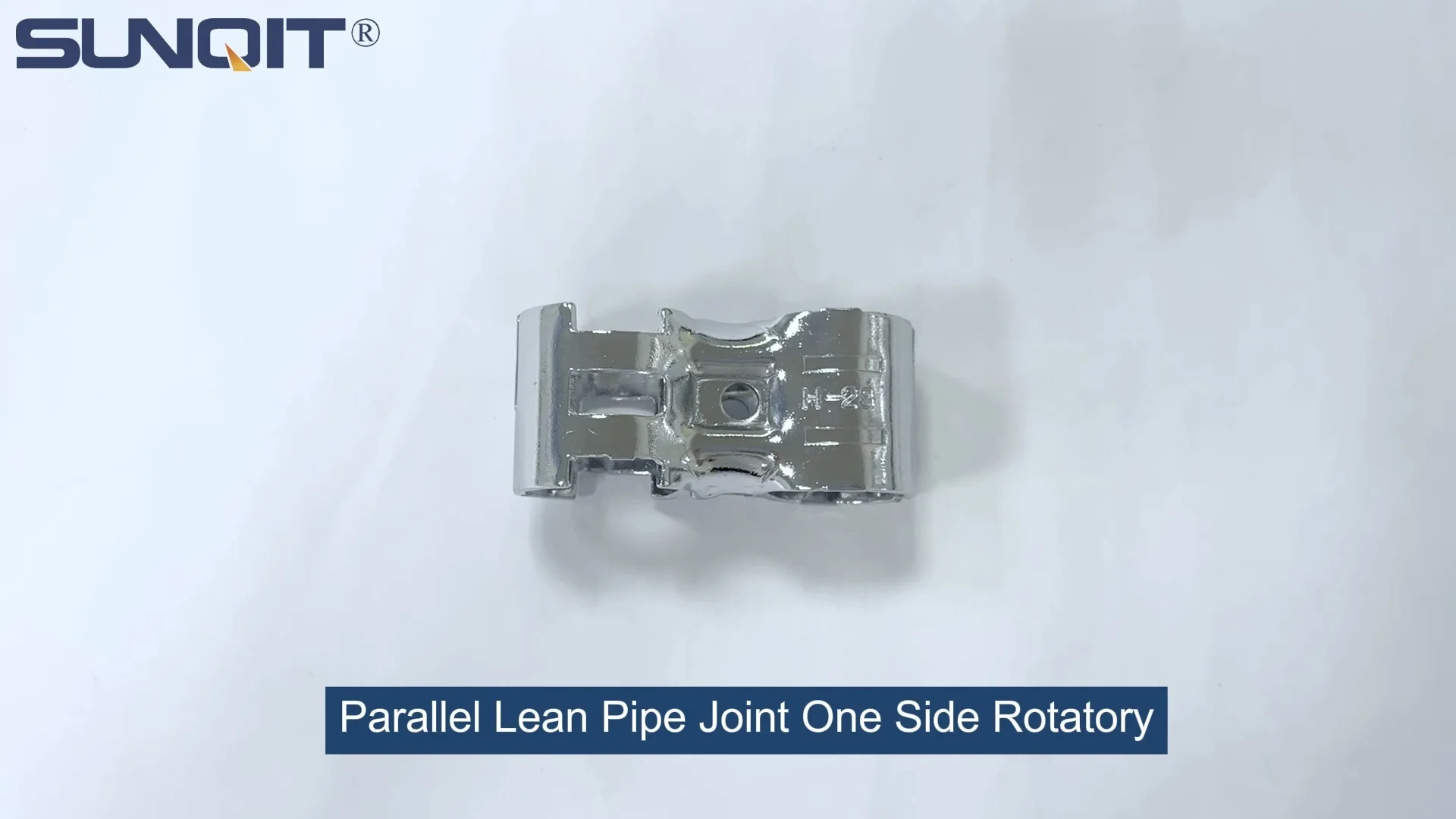
Parallel rotatory lean pipe joint, for 2 pcs 28mm pipe conenction in parallel direction with one side rotatory function.
In today's fast-paced work environments—whether it's a bustling manufacturing floor, a dynamic warehouse, or a flexible workshop—temporary workstations have become indispensable. They're the unsung heroes that adapt to sudden demand spikes, seasonal projects, or last-minute operational changes. But here's the catch: building a temporary workstation that's sturdy, easy to set up, and quick to reconfigure isn't as simple as it sounds. Traditional solutions often involve bulky materials, complicated assembly, or rigid structures that resist adjustments. That's where the parallel lean pipe joint one side rotatory comes in—a small but mighty component that's quietly revolutionizing how we approach temporary workspace design. Let's dive into why this unassuming joint has become a go-to choice for teams that need flexibility without sacrificing reliability.
What Is the Parallel Lean Pipe Joint One Side Rotatory, Anyway?
Before we jump into its benefits, let's get familiar with the star of the show. The parallel lean pipe joint one side rotatory—often finished with a durable chrome coating—is a specialized connector designed to link lean pipes (also known as or "lean tubes") in industrial setups. Unlike fixed joints that lock pipes into rigid angles, this joint features a unique rotating mechanism on one side, allowing connected pipes to pivot and adjust dynamically. Think of it as a flexible hinge that lets you reposition components without disassembling the entire structure.
At first glance, it might look like just another metal connector, but its design is surprisingly thoughtful. The chrome plating isn't just for shine—it adds corrosion resistance, making the joint suitable for humid warehouses or workshops where moisture is a concern. The rotation mechanism, typically a smooth ball-bearing or friction-based system, allows for 360-degree movement on one axis, while the other side remains fixed to provide stability. Most models can handle loads ranging from 50kg to 150kg, depending on the pipe diameter and material, striking a perfect balance between flexibility and strength.
5 Reasons It's a Game-Changer for Temporary Workstations
Temporary workstations thrive on three principles: speed, adaptability, and cost-effectiveness. The parallel lean pipe joint one side rotatory checks all three boxes—and then some. Let's break down its standout features:
1. Unmatched Flexibility Without Compromise
– Imagine needing to adjust a workstation's height to accommodate a taller worker, or reangle a shelf to fit awkwardly shaped tools. With a fixed joint, you'd have to unscrew, disassemble, and rebuild. But with the parallel lean pipe joint one side rotatory, a quick twist is all it takes. The rotating side lets pipes pivot smoothly, so you can tweak angles, heights, or layouts in minutes. This is a lifesaver for temporary setups, where needs change daily—like a pop-up assembly line for a rush order or a mobile workbench that shifts between packing and sorting tasks.
2. Tool-Free Assembly That Saves Time (and Sanity)
– Wrenches, drills, and welding torches have no place in a temporary workstation timeline. This joint is designed for "click-and-go" simplicity: slide a lean pipe into the fixed end, secure it with a setscrew (often included), and the rotating end is ready to connect to another pipe. No special skills required—even a new team member can assemble a basic structure in under 10 minutes. Compare that to traditional welded frames, which take hours and require professional help, and the time savings become undeniable.
3. Durable Enough for Heavy Use, Light Enough for Mobility
– Temporary doesn't mean flimsy. The chrome-plated steel construction ensures the joint can withstand daily knocks, vibrations, and weight without bending or breaking. Yet, it's lightweight enough that even fully assembled structures—like a lean pipe workbench or turnover trolley and rack—can be moved by two people. This is crucial for workstations that need to shift locations, such as a mobile packing station that moves between warehouse zones or a temporary repair bench that follows a maintenance crew.
4. Works Seamlessly with Other Lean Components
– A great joint shouldn't work in isolation, and this one plays well with others. It pairs effortlessly with standard lean pipes, aluminum profiles, and even accessories like caster wheels and aluminum profile accessories. Want to add wheels to your temporary workstation? Attach caster wheels to the base using compatible lean pipe clamps, and suddenly your static bench becomes a mobile cart. Need to add a shelf? Connect aluminum profile accessories like brackets or panels using the same joint. It's like building with modular blocks—endless combinations, zero compatibility headaches.
5. Cost-Effective in the Long Run
– Temporary workstations often get a bad rap for being "disposable," but the parallel lean pipe joint one side rotatory flips that script. Instead of buying new materials for every project, you can reuse the same joints and pipes repeatedly. The chrome coating resists wear, so even after multiple disassembly-reassembly cycles, the joint maintains its grip and rotation smoothness. Over time, this reduces waste and cuts down on material costs—a win for both your budget and sustainability goals.

Real-World Scenarios: Where This Joint Shines Brightest
Theory is great, but let's look at how this joint solves real problems. Here are three scenarios where teams are already reaping its benefits:
Scenario 1: Manufacturing's "Rush Order" Assembly Line
A electronics manufacturer lands a last-minute order for 5,000 units, requiring a temporary assembly line alongside their main production floor. Using parallel lean pipe joints one side rotatory, they build a 20-foot line in under 2 hours: pipes connected with rotating joints form workstations at varying heights (for standing and seated workers), while caster wheels on the base let the entire line shift to make space for forklifts. When the order wraps, the line is disassembled, and components are stored for the next rush—no waste, no permanent changes to the facility layout.
Scenario 2: Warehouse Pop-Up Picking Station
A e-commerce warehouse needs extra picking stations during the holiday season. They use the rotating joints to build lightweight, adjustable shelving units (paired with aluminum profile accessories for stability) that can be angled to match workers' reach. When the season ends, the units are broken down into a few boxes, freeing up floor space. The best part? The same joints are later repurposed to build turnover trolley and rack systems for inventory counts.
Scenario 3: Workshop Tool Bench for Seasonal Projects
A woodworking shop takes on a summer project building custom furniture. They need a temporary bench with tool holders, material racks, and a vice. Using the parallel lean pipe joint one side rotatory, they adjust the bench height daily to switch between cutting and sanding tasks. The rotating joints let them swing tool holders out of the way when not in use, maximizing workspace. When the project ends, the bench is disassembled, and the joints are used to build a temporary storage rack for leftover materials.

How It Stacks Up Against Other Lean Pipe Joints
Not all lean pipe joints are created equal. Let's see how the parallel lean pipe joint one side rotatory compares to common alternatives when it comes to temporary workstation needs:
| Joint Type | Rotation Ability | Assembly Time (per joint) | Reconfiguration Ease | Best For | Limitations for Temporary Use |
|---|---|---|---|---|---|
| Fixed 90° Joint | None—locks at 90° | 5–7 minutes (requires tools) | Low—must disassemble to adjust | Permanent workbenches, fixed racks | Too rigid for frequent layout changes |
| Swivel 360° Joint (Both Sides) | Full 360° on both ends | 4–6 minutes | Medium—can over-rotate, less stable | Light-duty shelving, display racks | Too wobbly for heavy tools or materials |
| Parallel Lean Pipe Joint One Side Rotatory Chrome | 360° on one side, fixed on the other | 2–3 minutes (tool-free option available) | High—adjust angles without disassembly | Temporary workstations, mobile carts, adaptive lines | None—optimized for flexibility + stability |
| Welded Joints | None—permanently fixed | 30+ minutes (requires welding equipment) | Impossible—permanent by design | Heavy machinery bases, structural supports | Not temporary—can't be reused or adjusted |

Pro Tips for Getting the Most Out of Your Joints
Make Your Temporary Workstation Even Better
To truly maximize the parallel lean pipe joint one side rotatory's potential, pair it with these complementary components and practices:
Pair with High-Quality Lean Pipes
– Opt for 28mm or 30mm diameter lean pipes (either steel or aluminum) to ensure a snug fit with the joint. Avoid cheap, thin-walled pipes that might bend under load.
Add Caster Wheels for Mobility
– For workstations that need to move, attach heavy-duty caster wheels to the base frame using compatible brackets. Look for wheels with brakes to lock the workstation in place when needed.
Invest in Aluminum Profile Accessories
– Use aluminum profile brackets, panels, or shelf supports to add stability to rotating structures. These accessories bolt directly to lean pipes, creating a sturdier setup for tools or materials.
Label Components for Quick Reassembly
– If you plan to disassemble and reuse the workstation, label joints and pipes with numbers or color-codes. This cuts down on setup time for future projects.
Regularly Inspect Rotation Mechanisms
– Wipe chrome surfaces clean to prevent rust, and check setscrews for tightness monthly. A little maintenance goes a long way in keeping joints rotating smoothly.
Why Chrome Finish Matters for Durability
You might be wondering: why specify "chrome" in the parallel lean pipe joint one side rotatory chrome? The answer lies in longevity. Chrome plating adds a hard, corrosion-resistant layer to the steel joint, protecting it from moisture, oils, and chemicals common in industrial environments. This is especially important for temporary workstations, which are often moved outdoors (e.g., for loading dock tasks) or exposed to spills. A chrome finish also reduces friction in the rotation mechanism, ensuring smooth movement even after months of use. In short, it's not just about aesthetics—it's about making sure your joint lasts through multiple projects and environments.