- Company Articles
- Products and Technology
- Product knowledge
- Parallel Lean Pipe Joint Sizing Guide: Matching Pipes & Joints Perfectly

Parallel Lean Pipe Joint Sizing Guide: Matching Pipes & Joints Perfectly
Related Product
Parallel Lean Pipe Joint
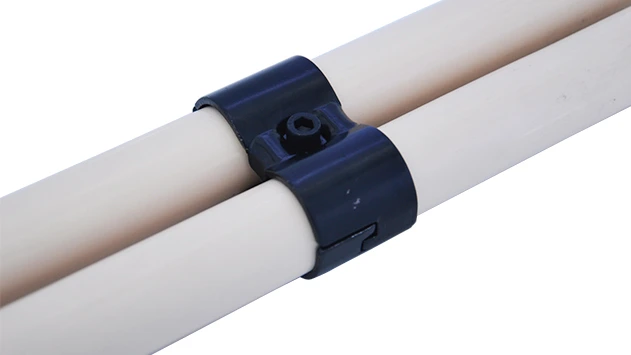
Parallel lean pipe joint used for 2 pcs 28MM lean pipe connection in parallel direction to enhance frame structure, usually for heavy payload requirement for workbench. flow rack, hand trolley.
Introduction: Why Sizing Matters in Lean Systems
Walk into any well-run manufacturing facility, and you'll likely spot a network of workbenches, material racks, and assembly lines that seem to hum with efficiency. Behind that seamless flow? Often, it's the unsung hero of lean systems: the parallel lean pipe joint. These small but critical components are the glue that holds together the pipes, frames, and structures that make up everything from lightweight trolleys to heavy-duty production stations. But here's the thing: get the sizing wrong, and that efficiency can grind to a halt.
Mismatched pipes and joints don't just look unprofessional—they create wobbly workbenches that shake when you set down tools, material racks that sag under even moderate weight, and worst of all, safety hazards for the team members who rely on these structures daily. As someone who's helped countless workshops optimize their lean setups, I've seen the difference proper sizing makes: fewer breakdowns, less time wasted on repairs, and a workspace that actually supports the "lean" in lean manufacturing.
In this guide, we're diving deep into the world of parallel lean pipe joints. We'll break down how to measure, match, and select the right joints for your pipes, whether you're working with aluminum lean pipe, stainless steel pipe series, or the classic PE-coated options. By the end, you'll have the know-how to avoid common pitfalls and build structures that are not just functional, but built to last.
Understanding Parallel Lean Pipe Joints: More Than Just a Connector
Before we talk sizing, let's make sure we're on the same page about what a parallel lean pipe joint actually is. Simply put, these joints are designed to connect two or more pipes that run parallel to each other—think the side rails of a workbench or the vertical supports of a material rack. Unlike corner joints (which connect pipes at 90-degree angles) or T-joints (which split pipes into branches), parallel joints keep pipes aligned in the same direction, distributing weight evenly and adding stability to the structure.
But not all parallel joints are created equal. Some are fixed, locking pipes into a rigid, unchanging position—ideal for workbenches that need to stay rock-solid during assembly. Others are rotary, letting pipes swivel or rotate slightly to accommodate movement, like the arms of a tool holder that needs to swing into place. There are even double-end fixed joints, which connect two parallel pipes on both ends, creating a sturdy frame for heavy loads.
Materials matter too. Many parallel joints are made from durable plastics, which offer flexibility and corrosion resistance for light to medium use. For industrial settings where strength is key, you'll find metal joints—often zinc-plated steel or aluminum—that can handle higher tension and heavier weights. And if you're working in a cleanroom or food-processing environment? Stainless steel joints are the way to go, thanks to their non-porous, easy-to-sanitize surface.

Pipe Materials: The Foundation of Sizing
To size a parallel lean pipe joint correctly, you first need to understand the pipe it will connect. Pipes come in a range of materials, each with its own dimensions, strengths, and quirks that directly impact joint fit. Let's break down the most common options you'll encounter:
Aluminum Lean Pipe: Lightweight and Versatile
Aluminum lean pipe has become a favorite in modern workshops, and it's easy to see why. It's lightweight (so structures are easy to move), corrosion-resistant (no rust in humid environments), and surprisingly strong for its weight. Most aluminum pipes have a smooth, anodized finish that resists scratches, making them ideal for clean workspaces like electronics assembly lines.
When it comes to sizing, aluminum pipes typically have an outer diameter (OD) ranging from 28mm to 30mm, with wall thicknesses between 1.0mm and 2.0mm. The key here? The outer diameter is non-negotiable. Joints designed for aluminum lean pipe are precision-machined to grip this specific OD, so even a 1mm difference can mean a loose fit or a joint that's impossible to slide onto the pipe.
Stainless Steel Pipe Series: Built for Heavy Lifting
If your setup needs to handle serious weight—think stacks of metal parts or fully loaded material bins—the stainless steel pipe series is your go-to. These pipes are thick-walled, rigid, and built to withstand corrosion, making them perfect for outdoor use or environments with chemicals, moisture, or extreme temperatures.
Stainless steel pipes often have a slightly larger OD than aluminum ones, commonly 30mm to 32mm, with wall thicknesses starting at 1.2mm and going up to 2.0mm or more. Because they're less flexible than aluminum, the fit between pipe and joint must be exact. A joint that's too tight can warp the pipe; too loose, and the structure will shift under load.
PE-Coated Lean Pipe: The Workhorse of General Workshops
You've probably seen these: pipes with a smooth, colorful plastic coating (usually white, black, or yellow) over a metal core. PE-coated pipes are the budget-friendly, all-purpose option for most lean systems. They're durable enough for daily use, easy to clean, and the coating adds a layer of protection against dents and scratches.
Their sizing is similar to aluminum—ODs around 28mm to 30mm—but there's a catch: the plastic coating can add a tiny amount to the overall diameter. A pipe with a 28mm metal core might measure 28.5mm with the coating, which can throw off a joint designed for a bare aluminum pipe. Always measure the coated OD, not just the core, when working with PE-coated options.

Key Measurements: The Numbers That Matter
Sizing a parallel lean pipe joint isn't guesswork—it's about three critical measurements. Get these right, and you're 90% of the way to a perfect fit:
1. Outer Diameter (OD) of the Pipe
This is the most important number. Joints are designed to fit a specific pipe OD, so if your pipe has a 28mm OD, you need a joint with a 28mm inner diameter (ID) opening. Even a 0.5mm difference can cause problems: a 28mm pipe in a 29mm joint will wobble, while a 29mm pipe in a 28mm joint won't fit at all. Pro tip: Use a digital caliper to measure OD—tape measures can slip, leading to inaccurate readings.
2. Wall Thickness of the Pipe
Wall thickness affects how much of the pipe inserts into the joint. A pipe with a 1.0mm wall is hollow enough that the joint's internal prongs (or grippers) can bite into it securely. A thicker-walled pipe (2.0mm) has less hollow space, so the joint may need longer prongs or a different gripping mechanism to hold on. Ignore wall thickness, and you might end up with a joint that feels tight initially but loosens over time as the pipe shifts.
3. Insertion Depth
How far should the pipe slide into the joint? Most manufacturers recommend inserting the pipe at least 25mm to 30mm into the joint for a secure hold. Shallow insertion might seem fine for light loads, but add weight or vibration (like a workbench near a stamping machine), and the pipe will gradually pull out. Always check the joint's specs for minimum insertion depth—this is often marked on the joint itself or in the product manual.
Matching Joints to Pipes: A Practical Guide
Now that we've covered the basics, let's put it all together. Below is a table comparing common parallel lean pipe joint types, their compatible pipes, and key sizing details. Use this as a starting point, but always cross-check with the manufacturer's specs for your specific products.
| Joint Type | Compatible Pipe Material | Pipe Outer Diameter (OD) | Recommended Wall Thickness | Typical Application |
|---|---|---|---|---|
| Parallel Fixed Joint (Plastic) | PE-coated lean pipe, Aluminum lean pipe | 28mm | 1.0mm–1.5mm | Light-duty lean pipe workbench, mobile trolley |
| Parallel Rotary Joint (Aluminum) | Aluminum lean pipe | 30mm | 1.2mm–2.0mm | Adjustable tool holder, swiveling workbench shelf |
| Parallel Double End Fixed Joint (Stainless Steel) | Stainless steel pipe series | 32mm | 1.5mm–2.0mm | Heavy-duty material rack, production line frame |
| Parallel Internal Rotary Joint | Aluminum lean pipe, PE-coated lean pipe | 28mm | 1.0mm–1.5mm | Articulating conveyor arm, foldable workbench |
Let's take a real-world example: Suppose you're building a lean pipe workbench for a small electronics team. You want it to be lightweight but sturdy enough to hold a soldering iron, parts bins, and a laptop. Aluminum lean pipe (28mm OD, 1.2mm wall) is a great choice here. For the frame, you'd pair it with a parallel fixed joint (plastic or aluminum) designed for 28mm OD pipes. The fixed joint ensures the workbench doesn't wobble, while the aluminum pipe keeps it easy to move if the team needs to rearrange the workspace.
Common Sizing Mistakes (and How to Avoid Them)
Even seasoned workshop managers can fall into sizing traps. Here are the most frequent errors I've seen, and simple ways to steer clear:
- Mistake #1: Assuming "One Size Fits All" – A joint that works for a 28mm PE-coated pipe won't necessarily fit a 28mm stainless steel pipe. Stainless steel has a slightly rougher surface, which can make insertion harder, while PE-coated pipes have that extra plastic layer. Always check the joint's material compatibility.
- Mistake #2: Ignoring Wall Thickness – A 28mm OD pipe with a 2.0mm wall is stiffer than one with a 1.0mm wall. Joints for thick-walled pipes often have deeper grooves or stronger locking mechanisms to prevent slippage. Using a "one-size" joint for both can lead to failure under stress.
- Mistake #3: Relying on "Close Enough" Measurements – That old tape measure in the toolbox might say "28mm," but is it accurate? Pipes can have slight variations in OD (manufacturers usually allow a ±0.1mm tolerance). A digital caliper costs around $20 and will save you hours of frustration.
- Mistake #4: Overlooking Environmental Factors – In hot environments, metal pipes expand slightly; in cold ones, they contract. If you're building a structure that will live in a temperature-fluctuating area (like a warehouse with no AC), opt for joints with a small amount of flexibility (like plastic) to accommodate these changes.
Choosing the Right Joint: Beyond Sizing
Sizing is critical, but it's not the only factor. Once you've nailed the measurements, ask yourself these questions to pick the best parallel lean pipe joint for your project:
What's the Load Capacity?
A joint that works for a lightweight trolley won't cut it for a rack holding 50kg bins. Check the joint's load rating—manufacturers usually list this as a maximum weight per joint. For heavy loads, go with metal joints (stainless steel or aluminum) over plastic, and consider double-end fixed joints for extra stability.
Do You Need Movement?
If the structure needs to adjust (e.g., a workbench shelf that tilts, or a material rack that folds), a rotary joint is a must. Fixed joints lock pipes in place, while rotary ones allow limited swiveling or rotation. Just note: rotary joints often have lower load capacities than fixed ones, so balance movement needs with weight requirements.
Are Lean Pipe Accessories Involved?
Joints don't work alone—they often connect to casters, roller tracks, or tool hooks. Make sure the joint has mounting points or slots for these accessories. For example, if you're adding caster wheels to a trolley, the base joints should have holes or brackets to attach the casters securely without weakening the pipe connection.
Installation Tips for a Perfect Fit
Even the best-sized joint will fail if installed poorly. Follow these steps to ensure a tight, long-lasting connection:
- Clean the Pipe and Joint – Dust, oil, or debris on the pipe can prevent the joint from gripping properly. Wipe both with a clean cloth before assembly.
- insert the Pipe Fully – Push the pipe into the joint until it hits the stop (most joints have an internal lip that marks maximum insertion). A quick tap with a rubber mallet can help seat it fully without damaging the pipe.
- Tighten Gradually – If the joint has screws or bolts, tighten them evenly (like you would a car tire) to avoid warping the pipe or joint. Over-tightening can crack plastic joints or strip metal threads.
- Test Before Full Assembly – Once the joint is on, give the pipe a gentle tug and twist. It should feel solid, with no movement. If it wobbles, double-check the OD and insertion depth.
Conclusion: Sizing for Success
Parallel lean pipe joints might seem small, but they're the backbone of efficient, safe lean systems. By taking the time to measure your pipes, understand material differences, and choose the right joint for the job, you'll build structures that not only look professional but stand up to the daily grind of workshop life.
Remember: sizing isn't just about numbers—it's about knowing your materials, your load, and your environment. Whether you're working with aluminum lean pipe for a sleek electronics workbench or stainless steel pipe series for a heavy-duty production line, the principles stay the same: measure twice, check compatibility, and test before you build. Your team (and your productivity) will thank you.