- Company Articles
- Products and Technology
- Product knowledge
- Parallel Lean Pipe Joint vs. Regular Pipe Fittings: Critical Differences

Parallel Lean Pipe Joint vs. Regular Pipe Fittings: Critical Differences
Related Product
Parallel Lean Pipe Joint
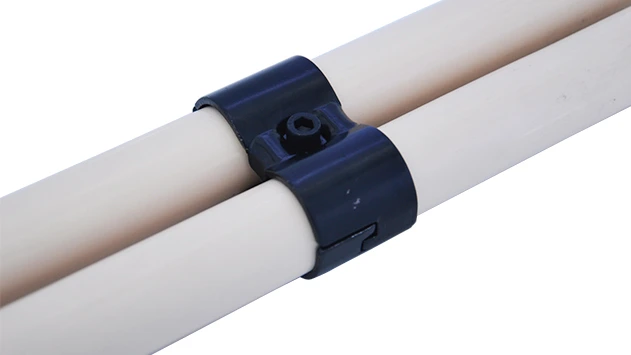
Parallel lean pipe joint used for 2 pcs 28MM lean pipe connection in parallel direction to enhance frame structure, usually for heavy payload requirement for workbench. flow rack, hand trolley.
In the world of manufacturing and warehouse operations, the unsung heroes of efficiency are often the humble pipe fittings that hold everything together. From assembly lines to material racks, the choice between parallel lean pipe joints and regular pipe fittings can mean the difference between a workflow that adapts and thrives, or one that stagnates and drains resources. Let's dive into what makes these two options distinct, and why understanding their differences could transform how you build, adjust, and maintain your workspace.
1. Design Philosophy: Flexibility vs. Tradition
At their core, parallel lean pipe joints and regular pipe fittings are born from entirely different design philosophies. Regular pipe fittings—think threaded elbows, welded tees, or fixed flanges—come from a time when industrial setups were built to last decades with minimal changes. They're the "set it and forget it" of the pipe world: sturdy, reliable, but about as flexible as a cast-iron skillet.
Parallel lean pipe joints, on the other hand, are products of the lean manufacturing revolution. They're engineered for adaptability. Picture a system where every joint is a pivot point, every connection is a chance to reconfigure, and every part is designed to work with others in a modular dance. This isn't just about pipes and joints—it's about building workspaces that can keep up with shifting production needs, seasonal demands, or sudden product design changes.
Take, for example, the lean pipe system that powers modern assembly lines. A parallel lean pipe joint might feature multiple connection points, allowing a single joint to hold two or three pipes at varying angles, or even rotate to adjust the direction of a material flow. Regular fittings? They're typically limited to one or two fixed angles—like a 90-degree elbow that only bends 90 degrees, no exceptions. It's the difference between a Swiss Army knife and a butter knife: both have their uses, but one was built to adapt.
2. Structural Differences: A Closer Look at What Makes Them Tick
To really understand the gap between parallel lean pipe joints and regular fittings, let's break down their structural features. This isn't just about shape—it's about how these designs impact everything from installation to daily use.
| Feature | Parallel Lean Pipe Joint | Regular Pipe Fitting |
|---|---|---|
| Material | Often paired with aluminum lean pipe or coated steel for lightweight durability; resistant to corrosion and easy to handle. | Typically made of plain steel, galvanized steel, or PVC; heavier, and steel variants may rust without additional coating. |
| Connection Mechanism | Modular, with clamp-style or snap-on designs; many include rotatory or swivel components (like the "rotatory two end lean pipe joint") for multi-angle adjustments. | Threaded, welded, or glued; fixed connections that require tools (or heat) to alter. |
| Adjustability | Highly adjustable—pipes can be repositioned, angled, or removed without replacing the joint itself. Some models allow 360-degree rotation. | Fixed once installed; changing angles or positions requires cutting, rewelding, or replacing the entire fitting. |
| Load Capacity | Moderate to high (often 200-500kg per joint), depending on material and design; optimized for dynamic, shifting loads. | High (500-1000kg+ for steel fittings), but designed for static, unchanging loads. |
| Weight | Lightweight, thanks to aluminum lean pipe and plastic or aluminum joints; easier to maneuver during setup. | Heavier, especially steel variants; requires more labor to install and adjust. |
One of the most striking differences is the parallel lean pipe joint's focus on "connection multiplicity." A single joint might have ports for 2-5 pipes, allowing for complex, three-dimensional structures—like a lean pipe workbench with integrated material racks and tool holders. Regular fittings, by contrast, are usually single-axis: a tee connects three pipes in a straight line or 90-degree angle, and that's it. There's no room for on-the-fly tweaks.

3. Installation: From Hours of Work to Minutes of Setup
If you've ever spent a Saturday afternoon assembling furniture, you know the frustration of confusing instructions and missing tools. Now multiply that by 100 for industrial pipe installations—and you'll start to see why installation is a make-or-break factor for manufacturers.
Regular pipe fittings are the "assembly from hell" version of this scenario. Welded fittings require a skilled welder, a torch, and hours of work to ensure joints are sealed and straight. Threaded fittings? They demand pipe cutters, thread sealant, and the patience to avoid cross-threading (which can ruin an entire section). Even PVC fittings, while simpler, require glue that takes time to dry—meaning you're stuck waiting before testing the structure.
Parallel lean pipe joints? They're the "click-and-go" alternative. Most use hand-tightened bolts, snap-on clamps, or lever-locks that require nothing more than a hex key or adjustable wrench. Imagine building a lean pipe workbench : with parallel joints, you could have the frame up in under an hour, even if you're new to the process. No sparks, no fumes, no waiting for glue to set. It's like using building blocks instead of trying to sculpt with stone.
This speed isn't just convenient—it's transformative for businesses. A small manufacturer switching from welded regular fittings to parallel lean pipe joints reported cutting their assembly line setup time by 70%. Instead of shutting down production for a full day to reconfigure a line, they could make changes during a lunch break. For companies where downtime equals lost revenue, that's a game-changer.

4. Durability and Longevity: Built to Last vs. Built to Adapt
Critics of parallel lean pipe joints sometimes argue: "Sure, they're easy to install, but do they hold up?" It's a fair question—and the answer depends on what you mean by "hold up."
Regular pipe fittings, especially welded steel ones, are built like tanks. They'll withstand heavy loads, vibrations, and harsh environments for decades— as long as you never need to move them . The problem comes when "never" turns into "next month." A welded joint that's rock-solid today becomes a liability when you need to rearrange your workspace; cutting and rewelding weakens the metal over time, and rust can eat away at uncoated steel fittings in humid warehouses.
Parallel lean pipe joints, paired with aluminum lean pipe , take a different approach. Aluminum is naturally resistant to corrosion, so even in damp conditions, they'll stay rust-free. The modular design also reduces wear and tear: instead of stressing a single welded point, weight is distributed across multiple connection points. And because adjustments don't require cutting or welding, the joints themselves stay intact—you're just repositioning the pipes, not damaging the hardware.
Take the example of a food packaging plant that switched to aluminum lean pipe systems. Their old steel regular fittings were constantly rusting from steam and moisture, requiring replacement every 2-3 years. The parallel lean pipe joints? After five years, they still look new, with only minor wear on the clamp bolts (easily replaced with standard lean pipe and accessories ).
5. Cost-Effectiveness: The Upfront Price Tag vs. the Long Game
Let's talk money. At first glance, regular pipe fittings seem cheaper. A standard steel elbow fitting might cost $5, while a parallel lean pipe joint could run $15-$20. But that's like comparing the price of a bicycle to a car based solely on the initial sticker—you're missing the bigger picture.
Regular fittings have hidden costs: labor. Welders charge $50-$100 per hour, and a single welded joint can take 30 minutes to complete. Threaded fittings need sealant, pipe cutters, and sometimes even a plumber to ensure they don't leak. When you add it all up, that $5 elbow could easily turn into $50 by the time it's installed.
Parallel lean pipe joints eliminate most of these labor costs. A single worker with a hex key can install 10 joints in an hour—no specialized skills required. And when you need to reconfigure? Instead of paying for a welder to redo the entire structure, you just loosen a few bolts and move the pipes. One electronics manufacturer calculated that they saved $20,000 in labor costs alone in the first year after switching to parallel joints.
There's also the "scrap factor." Regular fittings are often one-and-done—if you cut a pipe too short or weld a joint at the wrong angle, you're stuck with scrap metal. Parallel lean pipe joints are reusable: you can disassemble a structure and rebuild it elsewhere with zero waste. For companies focused on sustainability (and avoiding landfill fees), that's an added bonus.
6. Application Scenarios: When to Choose Which
Neither parallel lean pipe joints nor regular fittings are "better"—they're better for different jobs. Here's how to decide which fits your needs:
Choose parallel lean pipe joints if… You work in a dynamic environment where layouts change often. Think electronics assembly lines (where new phone models require new workbench setups), e-commerce warehouses (seasonal demand shifts mean rearranging storage), or small-batch manufacturing (every product run might need a unique setup). They're also ideal for teams that value agility—like startups scaling quickly or R&D labs testing new production methods.
Choose regular pipe fittings if… Your setup is static. Heavy machinery bases, fixed material racks in a warehouse that never changes, or outdoor plumbing systems (where welding ensures watertight seals) are all good fits. Regular fittings also shine for extreme loads—if you're supporting 1000kg+ per joint and never need to move it, welded steel will outperform most modular options.
A middle ground? Some manufacturers mix and match. They use regular fittings for fixed structural elements (like the base of a conveyor system) and parallel lean pipe joints for the parts that need adjustment (like the height of workbenches along the line). It's the best of both worlds: stability where you need it, flexibility where you don't.
7. Real-World Case Study: From Stagnation to Speed
The Small Electronics Manufacturer That Cut Downtime by 90%
A 50-person electronics company in the Midwest used to build their assembly lines with regular steel pipe fittings. When they launched a new smartphone model, they needed to reconfigure their lean pipe workbench stations to accommodate smaller components. The process? Hire a welder for two days, shut down the line, and hope the new layout worked. If it didn't (and sometimes it didn't), they'd repeat the process.
After switching to aluminum lean pipe with parallel lean pipe joints, their next reconfiguration was a revelation. The team disassembled the old workbenches in the morning, reconnected the pipes with new angles using parallel joints by lunch, and were testing the new setup by afternoon. Total downtime? 4 hours. Labor cost? $0 (their existing maintenance team handled it). And when they realized one station was too low? They adjusted it on the spot with a hex key.
The result? They launched the new phone model two weeks ahead of schedule, and the flexibility to tweak layouts meant fewer errors during production. Today, they estimate saving $40,000 annually in downtime and labor costs.
8. Maintenance and Repairs: Fixing Problems Fast vs. Fighting With Fittings
Even the best systems break down. A pipe might bend, a joint might loosen, or a wheel might wear out. How easy is it to fix these issues with parallel lean pipe joints vs. regular fittings?
Regular fittings are maintenance nightmares. A welded joint that cracks? You'll need to cut it out, grind down the old metal, and weld a new fitting—assuming you can even get to it in a tight space. Threaded fittings can seize up over time, requiring pipe wrenches, heat, or even brute force to remove. And if a PVC fitting leaks? You're replacing the entire section, since the glue doesn't allow for easy repairs.
Parallel lean pipe joints turn repairs into a 5-minute task. Most joints are designed with replaceable parts: a worn clamp bolt can be swapped out with a new one from your lean pipe and accessories kit. A bent pipe? Loosen the joint, pull out the old pipe, and slide in a new one. Even if the joint itself breaks, you can replace just that joint without disturbing the rest of the structure.
Consider a warehouse with a conveyor system built with regular steel fittings. When a roller seized, they had to shut down the entire line, cut the welded joint holding the roller, and weld a new one. The fix took 3 hours. With a parallel lean pipe joint system, the same repair would involve removing two bolts, sliding out the old roller, and popping in a new one—done in 15 minutes, with no line shutdown.
9. Future Trends: Why Modularity Matters in the Age of Industry 4.0
We're living in the era of Industry 4.0—smart factories, customization, and agile production. In this world, the ability to adapt quickly isn't just a nice-to-have; it's survival. Regular pipe fittings, rooted in a time of mass production and static layouts, are struggling to keep up.
Parallel lean pipe joints, though, are perfectly aligned with this future. They support the "lot size 1" manufacturing model, where every product can be different, and production lines need to shift on a dime. They pair seamlessly with automation: imagine a robot reconfiguring a lean pipe workbench overnight using parallel joints, so workers arrive to a fresh setup in the morning.
Sustainability is another driver. Aluminum lean pipe is 100% recyclable, and the modular design means fewer materials end up in landfills when layouts change. Regular steel fittings, especially welded ones, are often scrapped entirely when no longer needed—contributing to waste.
That's not to say regular fittings will disappear. They'll always have a place in heavy construction, oil and gas, and other industries where static strength is critical. But in the factories and warehouses of tomorrow? Parallel lean pipe joints are poised to become the new standard.
10. Conclusion: The Right Tool for the Right Job
Parallel lean pipe joints and regular pipe fittings aren't enemies—they're tools for different challenges. Regular fittings excel in static, heavy-load scenarios where change is rare. Parallel lean pipe joints thrive in dynamic, fast-paced environments where adaptability is key.
If your workspace feels stuck—if reconfiguring takes too long, repairs are a headache, or you're paying too much in labor—parallel lean pipe joints might be the solution. They're not just about pipes and joints; they're about giving your team the freedom to innovate, iterate, and grow without being held back by rigid infrastructure.
At the end of the day, the choice comes down to this: Are you building for the present, or for a future that demands flexibility? For most manufacturers and warehouses, the answer is clear. The future isn't static—and neither should your pipe fittings.