- Company Articles
- Products and Technology
- Product knowledge
- Parallel Lean Pipe Joint vs. Rotational Joint: Which Improves Workflow More?

Parallel Lean Pipe Joint vs. Rotational Joint: Which Improves Workflow More?
Related Product
Parallel Lean Pipe Joint
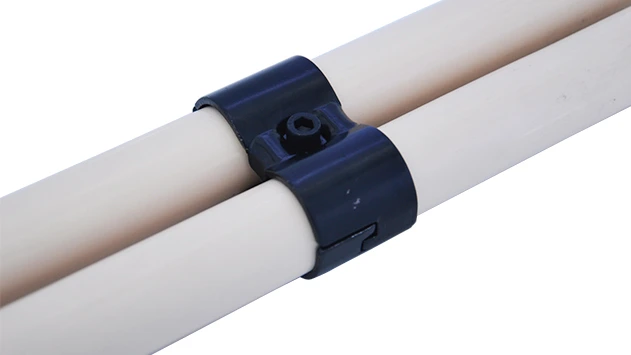
Parallel lean pipe joint used for 2 pcs 28MM lean pipe connection in parallel direction to enhance frame structure, usually for heavy payload requirement for workbench. flow rack, hand trolley.
In the fast-paced world of manufacturing and production, where every second and every movement counts, the tools and systems we use can make or break operational efficiency. At the heart of many lean manufacturing setups lies a seemingly simple yet critical component: the lean pipe joint. These unassuming connectors are the building blocks of everything from workbenches and flow racks to material handling trolleys, forming the backbone of lean systems designed to eliminate waste and streamline workflow. But not all joints are created equal. Today, we're diving deep into two of the most common types: parallel lean pipe joints and rotational lean pipe joints. Which one truly holds the key to unlocking smoother, faster, and more adaptable workflows? Let's explore.
Understanding Lean Pipe Joints: The Unsung Heroes of Lean Systems
Before we compare parallel and rotational joints, let's take a step back to appreciate their role in the bigger picture. Lean pipe joints are the connectors that link pipes—often made from durable materials like aluminum profile for strength and lightweight performance—to create customizable structures. Whether you're building a sturdy lean pipe workbench for assembly tasks, a dynamic flow rack for material transport, or a mobile trolley with caster wheels for easy movement, these joints determine how well your structure functions, adapts, and supports your team's work.
Think of them as the "glue" of lean manufacturing. A poorly chosen joint can lead to wobbly workstations, inefficient material flow, and even safety hazards. On the flip side, the right joint can turn a static setup into a dynamic, responsive system that grows with your needs. So, what sets parallel and rotational joints apart?
Parallel Lean Pipe Joints: Stability Meets Strength
What Are They?
Parallel lean pipe joints are designed for one primary goal: unwavering stability. As the name suggests, these joints connect pipes in a fixed, parallel alignment, creating rigid structures that resist movement or rotation. Imagine building a workbench where you need to mount heavy machinery or tools—you wouldn't want that bench shifting mid-operation. Parallel joints ensure that pipes stay locked in place, maintaining precise spacing and alignment even under significant weight.
Key Features & Benefits
Rigidity: The fixed design means no unwanted movement. This is crucial for tasks requiring precision, like electronics assembly or quality inspection, where a wobbly surface could lead to errors.
High Load Capacity: Because they eliminate rotational stress, parallel joints excel at supporting heavy loads. A lean pipe workbench built with parallel joints can easily hold tools, parts bins, and even small machinery without sagging or shifting.
Simplicity: Installation is straightforward. Once tightened, they require minimal adjustment, making them ideal for setups that don't need frequent reconfiguration. This simplicity also reduces the risk of human error during assembly.
Compatibility with Mobility: While parallel joints themselves are fixed, they pair surprisingly well with caster wheels . For example, a mobile workstation built with parallel joints will glide smoothly on casters, but the work surface remains steady—perfect for moving tools between assembly stations without disrupting alignment.
Ideal Applications
Parallel joints shine in static or semi-static environments where consistency is key:
- Permanent Workbenches: Assembly lines where tasks rarely change, such as automotive part installation.
- Heavy-Duty Storage Racks: Holding bulk materials like metal sheets or large components.
- Inspection Stations: Where precision tools (e.g., microscopes, calipers) need a stable base.

Rotational Lean Pipe Joints: Flexibility for Dynamic Workflows
What Are They?
If parallel joints are the "rock" of lean systems, rotational joints are the "chameleons." These joints feature a swiveling mechanism that allows connected pipes to rotate around an axis, offering unprecedented flexibility. Need to adjust the angle of a flow rack to better align with a conveyor? Rotational joints make it possible. Want to reconfigure a workstation from a sitting to a standing setup in minutes? Rotational joints have you covered.
Key Features & Benefits
Adaptability: The ability to rotate (often 360 degrees) means pipes can be adjusted to different angles, heights, or positions. This is a game-changer for dynamic production lines where processes evolve based on product changes or demand.
Ergonomics: Rotational joints let teams customize workstations to fit individual operators. For example, a height-adjustable workbench can be tilted to reduce strain on the back or shoulders, boosting employee comfort and reducing fatigue.
Support for Material Flow: In flow racks , rotational joints allow rollers or tracks to be angled for gravity-fed material movement. This ensures parts glide smoothly from storage to the assembly line, cutting down on manual handling time.
Quick Reconfiguration: Unlike parallel joints, which often require tools to adjust, many rotational joints can be repositioned by hand (with a simple twist or lever). This is invaluable for lean systems that prioritize rapid changeovers, like kitting areas or small-batch production.
Ideal Applications
Rotational joints thrive in environments where change is constant:
- Dynamic Flow Racks: Kitting areas where materials need to be routed to different assembly lines based on daily production schedules.
- Adjustable Workstations: Multi-purpose areas where tasks switch between packing, labeling, and quality control.
- Prototype Development: Labs or R&D facilities where teams test new processes and need to reconfigure setups frequently.

Parallel vs. Rotational Joints: A Head-to-Head Comparison
To truly understand which joint improves workflow more, let's break down their performance across key categories. The table below compares parallel and rotational lean pipe joints side by side:
| Category | Parallel Lean Pipe Joints | Rotational Lean Pipe Joints |
|---|---|---|
| Design | Fixed, parallel alignment; no rotation. | Swiveling mechanism; allows 360° rotation or angled adjustment. |
| Flexibility | Low. Best for static setups; reconfiguration requires disassembly. | High. Easy to adjust angles/heights without full disassembly. |
| Load Capacity | High. Supports heavy loads (500+ lbs per joint in some cases). | Moderate to high. Load capacity decreases with rotation angle. |
| Installation Time | Fast. Simple tightening; minimal setup. | Slightly longer. Requires alignment during rotation setup. |
| Maintenance | Low. Tighten occasionally; no moving parts to lubricate. | Moderate. Rotational mechanisms may need lubrication; wear over time. |
| Ideal Workflow Type | Static or semi-static (e.g., mass production lines). | Dynamic or variable (e.g., small-batch, custom production). |
| Ergonomic Impact | Limited. Fixed height/angle may cause strain in non-ideal setups. | High. Adjustable to operator height/comfort; reduces fatigue. |
Real-World Workflow Impact: Case Scenarios
Numbers and features tell part of the story, but let's look at how these joints perform in actual production environments.
Scenario 1: Static Assembly Line with Parallel Joints
A mid-sized electronics manufacturer runs a static assembly line for smartphone chargers. Their workbenches, built with parallel lean pipe joints, hold soldering irons, testers, and parts bins. The line hasn't changed in two years, and workers perform the same tasks daily. Here's the impact:
Pros: The workbenches are rock-solid, reducing errors from tool movement. Load capacity means workers can keep all tools within arm's reach, cutting down on time spent retrieving items. Maintenance is minimal—only quarterly checks to tighten joints.
Cons: When the manufacturer introduces a new charger model requiring a taller work surface, reconfiguring the benches takes 8 hours (vs. 2 hours with rotational joints). This downtime costs the company ~$2,000 in lost production.
Scenario 2: Dynamic Kitting Area with Rotational Joints
A medical device company operates a kitting area where teams prepare custom surgical tool kits. Their flow racks , built with rotational joints, hold bins of tools that need to be sorted into kits for different procedures. The racks are adjusted daily based on volume.
Pros: Workers can tilt racks to 15° for easier bin access, reducing by 30%. When a new tool is added, reconfiguring the rack takes 15 minutes (vs. 1 hour with parallel joints). Employee satisfaction scores are 20% higher due to reduced physical strain.
Cons: The rotational joints on the top rack (holding lightweight bins) occasionally loosen, requiring weekly checks. This adds ~1 hour of maintenance time per week.
Choosing the Right Joint: It's About Your Workflow
So, which joint improves workflow more? The answer depends entirely on your operation's needs. Here's how to decide:
Choose Parallel Joints If…
- Your workflow is static (tasks/processes rarely change).
- You need to support heavy loads (500+ lbs).
- Precision and stability are non-negotiable (e.g., quality inspection).
- You want minimal maintenance and setup time.
Choose Rotational Joints If…
- Your workflow is dynamic (frequent process changes or reconfigurations).
- Ergonomics and employee comfort are priorities.
- You use flow racks or adjustable workstations.
- You're willing to trade slightly higher maintenance for flexibility.
The Hybrid Approach: Why Not Both?
Many lean systems benefit from a mix of both joints. For example, a mobile workstation might use parallel joints for the main frame (stability) and rotational joints for the tool arm (adjustable height). This hybrid approach combines the best of both worlds: strength where you need it, flexibility where you want it.
Final Thoughts: Workflow Improvement Starts with the Right Foundation
Parallel and rotational lean pipe joints are not competitors—they're tools designed for different challenges. Parallel joints provide the rock-solid foundation needed for static, high-load workflows, while rotational joints unlock the adaptability required for dynamic, ever-changing environments. The key is to assess your workflow: Is it steady and predictable, or does it demand constant adjustment? Do your teams need stability, or flexibility? By answering these questions, you'll choose joints that don't just connect pipes—they connect your team to smoother, faster, and more efficient work.
At the end of the day, the "better" joint is the one that fits your lean system like a glove. And when that happens, you'll see the results in every aspect of your operation: happier employees, fewer errors, and a workflow that feels less like a struggle and more like a well-oiled machine.