- Company Articles
- Products and Technology
- Product knowledge
- Parallel Lean Pipe Joints: A Key Component for Lean 5S Implementation

Parallel Lean Pipe Joints: A Key Component for Lean 5S Implementation
Related Product
Parallel Lean Pipe Joint
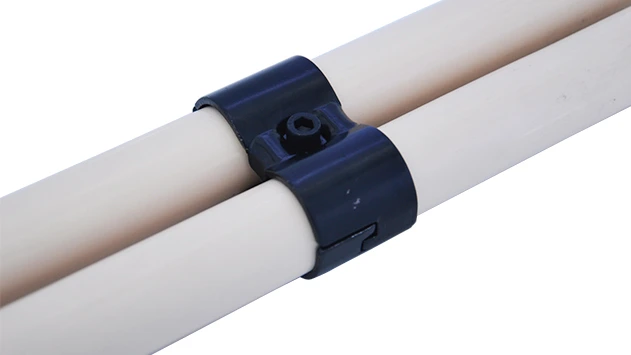
Parallel lean pipe joint used for 2 pcs 28MM lean pipe connection in parallel direction to enhance frame structure, usually for heavy payload requirement for workbench. flow rack, hand trolley.
Walk into any manufacturing facility that's embraced Lean 5S, and you'll notice something subtle but powerful: order. Tools in their place, materials flowing smoothly, workers moving with purpose. It's not magic—it's the result of intentional choices, from big-picture workflows down to the smallest components holding everything together. Today, we're shining a light on one such unsung hero: the parallel lean pipe joint. These unassuming connectors might not grab headlines, but they're the quiet architects of efficient, adaptable workspaces. Let's dive into why they matter, how they work, and the tangible difference they make in bringing Lean 5S to life.
What Are Parallel Lean Pipe Joints, Anyway?
First things first: let's demystify the term. Parallel lean pipe joints are specialized connectors designed to link lean pipes (those lightweight, often metal tubes you see in workstations, flow racks, and conveyors) at precise angles—most commonly, parallel to each other. Think of them as the "elbows" and "knees" of your facility's infrastructure: they hold things together, allow for movement, and adapt to the shape of your workflow.
But here's what sets them apart from generic pipe fittings: they're built for flexibility. Traditional fixed joints lock pipes into rigid, unchanging positions, making it a headache to rearrange a workstation or adjust a flow rack when needs shift. Parallel lean pipe joints? They're the opposite. With rotating components, secure yet adjustable clamps, and compatibility with various lean pipe and accessories , they let you tweak, reconfigure, and repurpose structures without reaching for a wrench (or a whole new set of materials).
Materials matter too. Many parallel lean pipe joints are crafted from aluminum or stainless steel—durable enough to withstand the daily grind of a factory floor, yet lightweight enough that even a single worker can adjust a section of a workbench or conveyor. Some come with plastic or rubber coatings to prevent scratches on delicate materials, while others feature corrosion-resistant finishes for use in humid or messy environments. No two facilities are the same, and these joints are designed to keep up with that diversity.
The 5S Connection: How Parallel Lean Pipe Joints Fuel Lean Success
Lean 5S isn't just a checklist—it's a mindset. Sort, Set in Order, Shine, Standardize, Sustain: each step builds on the last to create a workspace that's efficient, safe, and empowering. And parallel lean pipe joints? They're the glue that holds this mindset together, making each phase actionable and sustainable.
1. Sort: Cutting Clutter, One Joint at a Time
The first S—Sort—is all about separating what's necessary from what's not. In a busy production area, this can feel like a losing battle. Tools pile up, materials get misplaced, and suddenly, that "temporary" storage shelf becomes a permanent eyesore. Parallel lean pipe joints fight back by letting you design workspaces that only hold what you need, exactly when you need it.
Imagine a workbench on the assembly line. With traditional fixed joints, adding a shelf or adjusting the height means drilling new holes, buying new brackets, or even replacing the entire bench. But with parallel lean pipe joints, a supervisor can reconfigure the workbench in minutes: add a small shelf for frequently used tools, remove a redundant layer that's collecting dust, or lower the surface to better suit a shorter worker. The result? A workspace that stays lean, because it's easy to cut the clutter before it starts.
2. Set in Order: Everything in Its (Adjustable) Place
"A place for everything, and everything in its place"—that's the mantra of Set in Order. But what if "its place" changes? A new product line might require longer tools, or a team might discover a more efficient layout after a week of testing. Parallel lean pipe joints thrive here because they turn "fixed" into "flexible."
Take flow racks , for example. These sloped racks are critical for moving materials from storage to assembly lines, but their effectiveness depends on aligning with the workflow. A flow rack built with rigid joints might force workers to stretch or bend awkwardly to reach materials. With parallel lean pipe joints, you can adjust the angle of the rack, add dividers to separate different components, or even extend the rack to accommodate a larger batch—all without disassembling the entire structure. It's like having a flow rack that learns and adapts, ensuring every part is exactly where the team needs it, when they need it.
3. Shine: Keeping Workspaces Bright (and Clean)
Shine is about maintaining cleanliness, which isn't just about aesthetics—it's about safety and quality. Dust, grime, and debris can damage products, create slip hazards, or hide maintenance issues. Parallel lean pipe joints support Shine in two key ways: their design and their materials.
Unlike traditional joints with crevices or complicated nooks where dust loves to hide, parallel lean pipe joints are often smooth and streamlined. Many are made from aluminum or stainless steel, which wipe clean with a damp cloth—no scrubbing required. Even better, when you need to deep-clean a workstation or flow rack, these joints make disassembly a breeze: loosen a few clamps, remove the pipes, clean each part, and reassemble. No more avoiding hard-to-reach spots because "it's too much trouble." With these joints, Shine becomes a habit, not a chore.
4. Standardize: Consistency Without Rigidity
Standardization ensures everyone on the team follows the same processes, reducing errors and training time. But standardization shouldn't mean stifling creativity or ignoring unique team needs. Parallel lean pipe joints strike this balance by letting you create uniform systems that still adapt to individual workstyles.
Consider a factory with three assembly lines. Each line might have slightly different needs—one assembles small electronics, another larger machinery—but they all benefit from consistent workbench heights, tool placement, and material flow. With parallel lean pipe joints, you can standardize the core structure of the workbenches and conveyors (same pipe diameters, same joint types) while letting each team tweak details (adding a tool rail here, adjusting a conveyor's slope there). New employees can jump between lines with confidence, because the basics feel familiar, and veteran workers still have the flexibility to optimize their own spaces. It's standardization with a human touch.
5. Sustain: Building Systems That Last
Sustain is the hardest S—it's about making Lean 5S a permanent part of the culture, not a one-time project. The key here is reducing friction: if maintaining a system is hard, people will revert to old habits. Parallel lean pipe joints reduce that friction by being durable, reusable, and cost-effective over time.
Unlike cheap plastic joints that crack after a few adjustments or welded metal joints that need to be cut and re-welded, parallel lean pipe joints are built to last. They can be taken apart, moved, and reassembled dozens of times without losing strength. A lean pipe system built with these joints isn't just a one-and-done investment—it's a long-term partner. When a facility expands, the joints can be repurposed for new workbenches or flow racks. When a process changes, the system adapts. This durability means teams don't get frustrated with broken parts or expensive replacements, so they keep investing in keeping the workspace lean. That's how Lean 5S becomes a habit, not a project.

Beyond 5S: Real-World Impact in Action
Numbers and theory are one thing, but hearing from the people on the ground tells the real story. Let's take a look at a small electronics manufacturer in the Midwest that implemented parallel lean pipe joints last year. Before the switch, their assembly line was struggling with two major issues: disorganized workbenches causing frequent tool misplacement, and inefficient flow racks leading to delays in material delivery.
"We were spending 15 minutes every morning just cleaning off workbenches—tools everywhere, old parts piling up," says Maria, a shift supervisor. "And the flow racks? They were at the wrong angle, so parts would get stuck. Workers were constantly stopping to unjam them." The team tried traditional fixed-joint systems, but adjusting them was so time-consuming that they'd given up. "We'd just work around the problems instead of fixing them," Maria admits.
After switching to parallel lean pipe joints, everything changed. The workbenches were reconfigured to include small, adjustable shelves for each worker's most-used tools. The flow racks were tilted slightly to prevent jams, and dividers were added to separate different component sizes. "Now, setup takes 5 minutes, not 15," Maria says. "And the line stops? Almost gone. The workers love that they can tweak their workspaces—one even added a cup holder for their water bottle, which sounds small, but it keeps them at their stations instead of walking to the break room." In six months, the plant saw a 20% reduction in assembly time and a 30% drop in tool-related errors. "It's not just about the joints," Maria adds. "It's about giving the team control. They feel like the workspace works for them, not against them."
Traditional vs. Parallel Lean Pipe Joints: A Quick Comparison
| Feature | Traditional Fixed Joints | Parallel Lean Pipe Joints |
|---|---|---|
| Flexibility | Low: Requires drilling, welding, or replacement to adjust | High: Reconfigurable in minutes with simple tools |
| Durability | Medium: Prone to wear from disassembly/reassembly | High: Designed for repeated adjustments without losing strength |
| Installation Time | Long: Requires precise measurements and tools | Short: Snap-and-lock or clamp designs for quick setup |
| Cost Over Time | Higher: Frequent replacements and modifications add up | Lower: Reusable and adaptable, reducing the need for new parts |
| Team Engagement | Low: Workers can't adjust, leading to frustration | High: Empowers teams to optimize their own workspaces |

Choosing the Right Parallel Lean Pipe Joints for Your Facility
Not all parallel lean pipe joints are created equal, so it's important to choose the right ones for your needs. Here are a few key factors to consider:
- Workload: How much weight will the joint need to support? Heavier loads (like large tools or bulk materials) require sturdier joints, often made from stainless steel or thick aluminum.
- Environment: Will the joints be exposed to moisture, chemicals, or extreme temperatures? Look for corrosion-resistant finishes or plastic coatings in harsh environments.
- Compatibility: Ensure the joints work with your existing lean pipe and accessories . Most manufacturers standardize on common pipe diameters (like 28mm or 30mm), but double-check before buying.
- Ease of Use: Can your team adjust the joints without special training? Look for intuitive designs with clear instructions—no need for engineers to handle every tweak.
And don't forget to involve the people who'll use the joints daily. "Ask the workers what they need," Maria advises. "They'll notice things you won't—like a joint that's hard to tighten with gloves on, or a design that catches on their sleeves. The best joints are the ones the team actually wants to use."
Conclusion: The Quiet Power of the Right Tools
Lean 5S is about more than checklists and slogans—it's about creating workspaces that respect people, reduce waste, and unlock potential. Parallel lean pipe joints might seem small in the grand scheme of manufacturing, but they're a powerful reminder that the right tools can turn "impossible" into "everyday." They don't just build workbenches and flow racks; they build confidence, control, and a culture of continuous improvement.
So the next time you walk through a Lean 5S facility—notice the order, the flow, the sense of purpose—remember the quiet heroes holding it all together. The parallel lean pipe joints might not get the spotlight, but they're the reason the workflow hums, the workers smile, and the numbers keep improving. In the end, Lean 5S isn't just about being efficient. It's about making work better. And sometimes, that starts with a joint that lets you adapt, adjust, and keep moving forward—one small, powerful connection at a time.