- Company Articles
- Products and Technology
- Solution
- Parallel Lean Pipe Joints & Flow Racks: Design Principles for Smooth Material Flow

Parallel Lean Pipe Joints & Flow Racks: Design Principles for Smooth Material Flow
Related Product
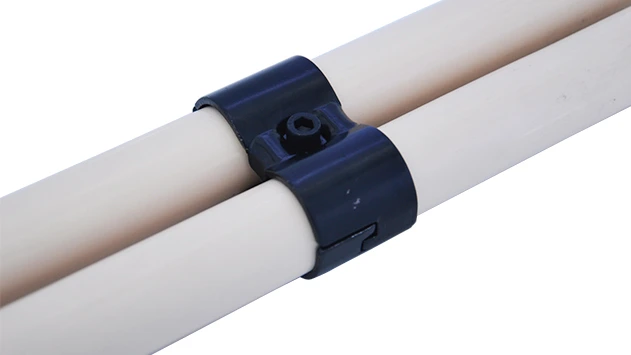
Parallel Lean Pipe Joint
Parallel lean pipe joint used for 2 pcs 28MM lean pipe connection in parallel direction to enhance frame structure, usually for heavy payload requirement for workbench. flow rack, hand trolley.
In the rhythm of a well-oiled production line, every component has a role to play—including the unsung heroes that keep materials moving seamlessly. Parallel lean pipe joints and flow racks might not grab headlines, but they're the backbone of efficient material handling, turning chaotic workflows into symphonies of productivity. Let's explore how these humble components transform manufacturing floors, warehouses, and workshops by prioritizing one critical goal: smooth, uninterrupted material flow.
Why Material Flow Matters: The Hidden Cost of Bottlenecks
Walk into any busy facility, and you'll quickly spot the difference between a workspace optimized for flow and one that's not. In the first, workers glide from task to task, materials appear exactly where they're needed, and downtime is minimal. In the second, you'll see piles of inventory gathering dust, employees bending awkwardly to reach supplies, and carts getting stuck in narrow aisles. The contrast isn't just about "neatness"—it's about efficiency, safety, and profitability.
Poor material flow is a silent productivity killer. When components take too long to reach the assembly line, production stalls. When workers spend 20 minutes hunting for a part instead of assembling it, labor costs rise. When heavy items are stored on high shelves requiring ladders, the risk of injury increases. These issues aren't just operational headaches; they erode your bottom line. Studies show that inefficient material handling can account for up to 30% of total production time in unoptimized facilities—time that could be spent creating value instead of moving things around.
This is where lean manufacturing principles come into play. At its core, lean is about eliminating waste, and one of the biggest sources of waste (or "muda," as it's known in lean terminology) is "motion waste"—unnecessary movement of people or materials. By designing material handling systems that reduce motion, we free up time, cut costs, and create safer, more satisfying work environments. And that's exactly what parallel lean pipe joints and flow racks are built to do.
Parallel Lean Pipe Joints: The Building Blocks of Modular Stability
To understand parallel lean pipe joints, let's start with their foundation: lean pipe . Also called "flexible pipe" or "kitchen pipe" (a nod to its early use in restaurant kitchens), lean pipe is typically a steel tube coated in plastic or rubber, though aluminum and stainless steel variants are common today. It's lightweight, corrosion-resistant, and surprisingly strong—qualities that make it ideal for building everything from workbenches to material racks.
But lean pipe alone is just a tube. Its true power lies in how it's connected—and that's where parallel lean pipe joints shine. These small but mighty connectors are designed to join lean pipes in parallel configurations, creating stable, rigid structures that can be customized to fit almost any need. Unlike fixed, one-size-fits-all frames, parallel lean pipe joints turn lean pipe into a modular system, where you can add, remove, or reposition components in minutes, not days.
Key Traits of Parallel Lean Pipe Joints: What makes these joints so versatile? For starters, they're engineered for alignment. When you connect two lean pipes in parallel using these joints, they stay perfectly straight, ensuring that shelves, racks, or work surfaces built with them won't warp or sag under load. They're also adjustable—many models feature swivel or rotating components, letting you angle pipes slightly if needed, though their primary strength is in parallel setups. Most importantly, they're user-friendly: no welding, no specialized tools, just a simple tightening mechanism (often a hex key or wrench) that makes assembly accessible to anyone on your team.
Materials matter, too. Parallel lean pipe joints are typically made from high-strength plastic, zinc-plated steel, or aluminum. Plastic joints are lightweight and affordable, perfect for light-duty applications like small workbenches. Steel joints offer higher load capacity, making them better for heavy-duty racks or production lines. Aluminum joints, meanwhile, combine strength with corrosion resistance, ideal for cleanrooms or outdoor use. No matter the material, the goal is the same: to create a connection that's strong enough to support daily use but flexible enough to adapt when your needs change.
Consider this: A manufacturer of small appliances needs a workbench for assembling circuit boards. Using lean pipe and parallel joints, they can build a bench that's exactly the right height for their workers, with built-in shelves for tools and a raised platform for components. Six months later, when they introduce a larger appliance model, they don't need to buy a new bench—they simply loosen the joints, adjust the height, and add extra supports. That's the modular magic of parallel lean pipe joints: they grow with your business, not against it.

Flow Racks: Gravity-Fed Efficiency for FIFO and Beyond
If parallel lean pipe joints are the "bones" of a modular material handling system, flow racks are the "muscles"—the components that actively move materials where they need to go. Unlike static shelves, where workers must reach, bend, or climb to access items, flow racks use gravity to do the heavy lifting. Materials are loaded from the back of the rack, and as items are removed from the front, the remaining ones slide forward, ready for the next pick. It's a simple concept, but it's revolutionized inventory management and production line feeding.
At the heart of every flow rack is the roller track —a series of rollers or wheels mounted on a slight incline. The angle is critical: steep enough to let materials flow smoothly, but not so steep that they slide too quickly (which could damage fragile items or cause jams). Roller tracks come in various materials, from plastic (quiet and affordable) to aluminum (durable and corrosion-resistant) to steel (heavy-duty for large loads). Some even feature ball bearings for ultra-smooth movement, while others have brakes or speed controllers for delicate components.
How Flow Racks Support Lean Principles
Flow racks are a lean manufacturing staple for a reason: they embody two core principles: First-In-First-Out (FIFO) and reduced motion waste. FIFO ensures that older inventory is used first, minimizing the risk of obsolescence or expiration—a game-changer for industries like food processing, pharmaceuticals, or electronics, where components have limited shelf lives. Reduced motion waste, meanwhile, cuts down on the steps workers take to retrieve materials. Instead of walking to a shelf, searching for an item, and carrying it back, they simply reach for the front of the flow rack, where the next part is waiting.
| Flow Rack Type | Best For | Key Features | Typical Roller Track Material |
|---|---|---|---|
| Single-Level Flow Rack | Small parts, tools, or lightweight components | Simple, space-saving design; easy to integrate into workstations | Plastic or aluminum |
| Multi-Level Flow Rack (e.g., 3-row, 3-floor) | High-volume inventory, assembly line feeding | Maximizes vertical space; separate lanes for different components | Aluminum or steel |
| Carton Flow Rack | Warehouse order picking, case storage | Wide lanes for cartons or boxes; high capacity | Steel with ball bearings |
| Lean Pipe Flow Rack | Custom applications, low-to-medium volume | Modular design; built with lean pipe and parallel joints for easy reconfiguration | Plastic or aluminum (easily swapped) |
One of the most popular flow rack designs is the multi-level, multi-row configuration—think of a "3-row, 3-floor" rack, where each level has three separate lanes for different materials. This setup is perfect for feeding assembly lines, where each station might need multiple components. For example, an automotive parts manufacturer might use a 3-row, 3-floor flow rack to store bolts, washers, and gaskets, with each lane dedicated to a specific size. Workers at the assembly line simply reach into the front of each lane, grab what they need, and the next set of parts rolls forward automatically.

The Synergy: Parallel Lean Pipe Joints + Flow Racks
Individually, parallel lean pipe joints and flow racks are powerful tools. Together, they're a dynamic duo that transforms how you handle materials. Here's how their strengths complement each other:
Alignment: Keeping Roller Tracks Level and True
For a flow rack to work, its roller tracks must be perfectly aligned. Even a slight tilt to one side can cause materials to jam or slide unevenly, turning a "time-saver" into a "time-waster." This is where parallel lean pipe joints excel. By connecting the vertical and horizontal supports of the flow rack in parallel, they ensure the entire structure is square and level. The joints distribute weight evenly across the frame, preventing sagging over time, which could disrupt the roller track incline. Whether you're building a small 2-foot rack or a 20-foot-long system, parallel joints keep everything in line—no more shimming shelves or adjusting rollers to compensate for a wobbly frame.
Flexibility: Adapting to Changing Needs
Manufacturing isn't static. Product lines change, order volumes fluctuate, and new materials are introduced. A rigid, welded flow rack can't keep up—but one built with lean pipe and parallel joints can. Need to add a new lane to your flow rack for a new component? Loosen the joints, add a section of lean pipe and roller track, and you're done. Want to raise the entire rack by 6 inches to improve ergonomics? Adjust the vertical supports using the joints. This flexibility is a game-changer for small businesses and large enterprises alike, as it lets you future-proof your material handling system without constant reinvestment.
Case Study: A Small Electronics Manufacturer's 30% Productivity Boost
A family-owned electronics company was struggling with a common problem: their assembly line workstations were cluttered, and workers spent too much time walking to central storage to fetch components. Their static shelves were overflowing, and "hot" parts (used frequently) were mixed with rarely used ones, causing delays. The solution? They replaced the static shelves with custom flow racks built using lean pipe, parallel lean pipe joints, and aluminum roller tracks. Each workstation got a small, 2-row flow rack loaded with the parts needed for that station's tasks. The racks were built at waist height to reduce bending, and the roller tracks ensured parts rolled forward as needed.
The results were immediate: workers reported spending 25% less time fetching materials, and assembly errors dropped by 15% (fewer mix-ups between similar components). Most notably, production output increased by 30% in the first month—all because the materials were now flowing to the workers, not the other way around. And when the company introduced a new product line six months later, they simply reconfigured the flow racks using the same lean pipe and joints, avoiding the cost of new equipment.
Strength Without Overcomplication
There's a myth that modular systems are "flimsy" compared to welded ones. Parallel lean pipe joints put that myth to rest. When properly assembled, a lean pipe structure with parallel joints can support hundreds of pounds. The parallel configuration distributes weight across multiple pipes, reducing stress on individual joints. For example, a flow rack built with 1.5mm steel lean pipe and parallel joints can easily hold 50-75 pounds per linear foot—more than enough for most manufacturing or warehousing needs. And because the joints are designed to lock securely, there's no "play" or wobble, even with heavy loads.
Designing for Your Workflow: Key Principles to Follow
Building a flow rack with parallel lean pipe joints isn't just about slapping together pipes and rollers—it's about designing with your specific workflow in mind. Here are the principles that will ensure your system delivers maximum value:
1. Start with the User: Ergonomics First
Your flow rack should work for your workers, not against them. That means positioning it at a height that minimizes bending or stretching. For most adults, the ideal height for picking items is between waist and shoulder level. Use parallel lean pipe joints to adjust the rack's height precisely—1 inch too low or too high can lead to fatigue over a full shift. Also, consider the depth of the rack: if it's too deep, workers will have to reach dangerously far. Aim for a depth that lets them access the back row comfortably (typically 18-24 inches for most applications).
2. Match Roller Track to Material Weight and Size
Not all roller tracks are created equal. A lightweight plastic roller track might work perfectly for small, lightweight parts like screws or connectors, but it will buckle under heavy items like metal castings. Be sure to match the roller track material and design to your materials: plastic for light loads (up to 20 lbs per item), aluminum for medium loads (20-50 lbs), and steel for heavy loads (50+ lbs). Also, consider the size of your materials—wider items may need wider roller tracks or additional guides to prevent tipping.
3. Plan for Accessibility and Safety
A flow rack that's hard to load is just as bad as one that's hard to unload. Ensure the back of the rack is easily accessible for restocking—leave enough space for workers or carts to load materials without blocking aisles. Also, add end stops to the front of each roller track to prevent items from sliding off the rack entirely. For fragile materials, consider adding rubber mats or foam padding at the front to cushion impacts. Safety isn't just about avoiding accidents; it's about creating a workspace where workers feel confident and comfortable, which boosts productivity in the long run.
4. Test, Iterate, and Listen to Feedback
Even the best-laid plans need tweaking. Once your flow rack is installed, observe how it's used. Are workers still struggling with certain aspects? Is a particular lane always jamming? Maybe the roller track incline is too steep (causing items to slide too fast) or too shallow (causing them to get stuck). With parallel lean pipe joints, adjustments are easy—simply loosen the joints, tweak the angle of the roller track, and test again. And don't forget to ask your team for feedback: they're the ones using the rack every day, and their insights can uncover issues you might miss.
Beyond the Basics: Enhancing Your System with Accessories
Parallel lean pipe joints and flow racks are powerful on their own, but the right accessories can take your material flow to the next level. Here are a few to consider:
Casters for Mobility
Need your flow rack to move with your workflow? Add caster wheels (mounted via parallel joints) to create a mobile unit. This is perfect for temporary workstations, event setups, or situations where materials need to be transported short distances. Look for casters with brakes to keep the rack stable when in use.
Dividers and Guides
Prevent materials from shifting or mixing in the flow rack with dividers. Made from lean pipe or plastic, dividers create separate lanes for different items, keeping your rack organized. For long or narrow materials (like rods or tubing), add side guides along the roller track to ensure they stay aligned.
Label Holders
Even the best flow rack can become chaotic without clear labeling. Attach label holders to the front of each lane (using, you guessed it, parallel lean pipe joints) to identify contents, part numbers, or quantities. This reduces picking errors and makes restocking faster.
Conclusion: Building a System That Flows with Your Business
Parallel lean pipe joints and flow racks aren't just tools—they're investments in your business's efficiency, flexibility, and future. By prioritizing smooth material flow, you're not just reducing waste; you're creating a workspace where workers can focus on what they do best: building quality products, serving customers, and driving growth. Whether you're a small workshop or a large manufacturer, the principles are the same: start with modular, adaptable components, design for your users, and never stop iterating.
In the end, the goal isn't just to move materials from A to B—it's to make that journey so seamless that no one even notices it's happening. That's the power of parallel lean pipe joints and flow racks: they turn material handling from a chore into a competitive advantage. So, take a look at your current workflow, identify the bottlenecks, and ask yourself: Could a little more "flow" be the key to unlocking your team's full potential?