- Company Articles
- Products and Technology
- Product knowledge
- Parallel Lean Pipe Joints: Enabling Sustainable Improvement in Production

Parallel Lean Pipe Joints: Enabling Sustainable Improvement in Production
Related Product
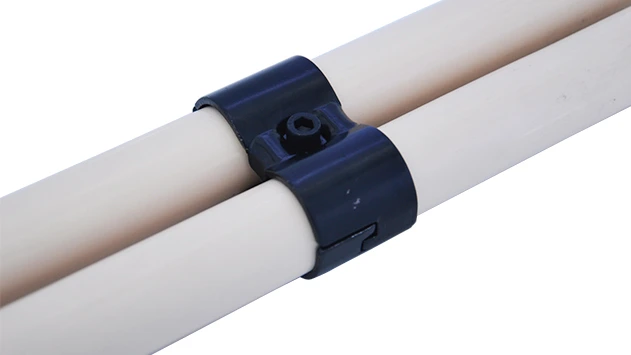
Parallel Lean Pipe Joint
Parallel lean pipe joint used for 2 pcs 28MM lean pipe connection in parallel direction to enhance frame structure, usually for heavy payload requirement for workbench. flow rack, hand trolley.
How a simple component is transforming flexibility, efficiency, and sustainability on the modern factory floor
The Challenge of Stagnant Production Lines
Picture this: It's a Tuesday morning at a mid-sized electronics assembly plant. Maria, the production manager, stands in front of a workbench lined with half-assembled circuit boards. The line has been bogged down all week—last month's product redesign required new tools, but the rigid steel workbench can't accommodate the new fixtures. The maintenance team tried welding on extra brackets, but they're clunky and keep jamming the material flow. "We need to adapt faster," Maria mutters, scrolling through an email from the CEO asking why production targets are slipping. "But how do we do that without tearing everything down and starting over?"
This scenario is all too familiar in manufacturing. In an era where consumer demands shift overnight and product lifecycles shrink by the quarter, rigid, one-size-fits-all production setups are becoming liabilities. Factories need systems that can evolve—quickly, cost-effectively, and without generating mountains of waste. Enter parallel lean pipe joints: a humble yet revolutionary component that's quietly reshaping how manufacturers build, adapt, and sustain their production lines.
What Are Parallel Lean Pipe Joints? A Closer Look
At first glance, parallel lean pipe joints might seem unassuming—small, often metal or plastic connectors designed to link lean pipes (hollow tubes used in lean manufacturing setups). But their design holds the key to their power. Unlike fixed joints, which lock pipes into static angles, parallel lean pipe joints are engineered for dynamic adjustability. They allow pipes to be connected in parallel configurations while maintaining the ability to rotate, pivot, or reposition—all without welding, drilling, or specialized tools.
Think of them as the "building blocks" of lean systems. When paired with lean tubes (often steel, aluminum, or stainless steel), these joints let teams construct everything from workbenches and flow racks to turnover trolleys and material carts. And because they're modular, every structure built with parallel lean pipe joints is inherently adaptable. Need to widen a workbench by 6 inches? Swap out a joint. Repurpose a flow rack for a new product line? Disassemble and rebuild in hours, not days.
But what truly sets parallel lean pipe joints apart is their focus on parallelism . In manufacturing, parallel alignment is critical for ensuring smooth material flow—whether it's parts gliding down a roller track or tools staying within easy reach of assembly workers. These joints maintain that alignment even as the structure is adjusted, preventing the misalignment that often plagues makeshift fixes with standard hardware.

The Core Features That Set Parallel Lean Pipe Joints Apart
To understand why parallel lean pipe joints are becoming staples in forward-thinking factories, let's break down their most impactful features:
Tool-Free Assembly & Disassembly: Traditional production setups rely on welding or bolts, which require skilled labor and time. Parallel lean pipe joints use friction, clips, or simple locking mechanisms. A worker with basic training can assemble a workbench in under an hour—and take it apart just as quickly. This cuts downtime during reconfigurations from days to hours.
Load-Bearing Durability: Don't let their simplicity fool you. High-quality parallel lean pipe joints (often made from reinforced nylon, aluminum, or stainless steel) can support hundreds of pounds. For example, a joint used in a flow rack might bear the weight of stacked component bins day in and day out, without bending or slipping. This durability ensures that even frequently adjusted structures remain safe and stable.
Compatibility with Lean Ecosystems: The best parallel lean pipe joints don't exist in isolation. They're designed to work seamlessly with other lean components— lean system accessories like casters, roller tracks, and workbench decks. A single joint might connect a lean tube to a caster wheel for mobility, or to a roller track guide rail for material flow. This interoperability turns individual parts into a cohesive, adaptable system.
Corrosion & Wear Resistance: Factories are harsh environments—dust, moisture, and constant use take a toll. Many parallel lean pipe joints are coated (e.g., with PE or ESD-safe materials) to resist rust and wear. This extends their lifespan, reducing the need for frequent replacements and keeping maintenance costs low.
Comparing Joint Types: Why Parallel Wins for Adaptability
| Feature | Fixed Lean Pipe Joints | Parallel Lean Pipe Joints |
|---|---|---|
| Adjustability | Locked into static angles; no repositioning without tools | Rotatable/pivotable; reconfigurable in minutes |
| Assembly Time | 2–4 hours for a basic workbench (requires welding/drilling) | 30–60 minutes for the same workbench (tool-free) |
| Waste Generation | High (scrapped if design changes; welding produces fumes/waste) | Low (reusable; no permanent modifications) |
| Best For | Static, long-term production lines with no design changes | Dynamic lines with frequent product/process updates |
| Cost Over Time | Higher (replacement/redesign costs add up) | Lower (one-time purchase; adapts to new needs) |

How Parallel Lean Pipe Joints Drive Sustainable Improvement
Sustainability in manufacturing isn't just about "going green"—it's about building systems that create value without draining resources. Parallel lean pipe joints excel here, addressing three critical pillars of sustainable production: flexibility, durability, and cost-efficiency.
Flexibility: Adapting to Change Without Waste
The biggest enemy of sustainability in manufacturing is obsolescence. A workbench that can't adapt to a new product becomes scrap; a flow rack that's too narrow for larger parts ends up in a landfill. Parallel lean pipe joints eliminate this waste by making "planned obsolescence" a thing of the past.
Consider a furniture manufacturer that used to build custom wooden workbenches for each product line. When a new chair design required a wider surface, the old benches were either burned (generating emissions) or sent to a landfill. After switching to parallel lean pipe joints and aluminum lean pipes, they now reconfigure the same base structure for every product. Over two years, they've reduced waste by 65% and cut workbench-related costs by 40%.
This flexibility also supports lean principles like "just-in-time" production. Instead of stockpiling spare workbenches or racks "just in case," teams can build exactly what they need, when they need it—using the same set of joints and pipes.
Durability: Longevity That Reduces Resource Consumption
A component that breaks easily isn't sustainable, no matter how "green" it is. Parallel lean pipe joints are built to last, often with lifespans of 10+ years. Take stainless steel parallel joints, for example: they resist corrosion in humid or chemical-heavy environments (like food processing plants) and can withstand thousands of adjustments without weakening.
This durability translates to fewer replacements, which means less raw material extraction, less energy used in manufacturing new parts, and less transportation-related emissions. A lean pipe supplier in Germany recently shared data from a client in the automotive industry: after switching to their stainless steel parallel joints, the client reduced joint replacements by 78% over five years—saving 12 tons of metal from being mined and processed.
Cost-Efficiency: Maximizing ROI for Long-Term Sustainability
Sustainability and profitability often go hand in hand, and parallel lean pipe joints prove this. While the upfront cost of high-quality joints and pipes may be slightly higher than cheap, disposable alternatives, their total cost of ownership is far lower. Let's crunch the numbers:
A mid-sized factory might spend $5,000 on fixed steel workbenches that last 3 years and can't be adapted. If product lines change twice in that period, they'll need to replace 40% of those benches, adding another $2,000. Total cost: $7,000 over 3 years.
In contrast, a parallel lean pipe setup with aluminum pipes and parallel joints costs $6,000 upfront. Over 3 years, the same workbenches are reconfigured 5 times (no replacements needed). Total cost: $6,000. The savings grow as the system ages—after 5 years, the lean setup might cost $6,000 total, while the fixed setup could hit $12,000 or more in replacements.
"We used to see workbenches as 'expenses,'" says Raj, a plant manager at a medical device manufacturer. "Now, with parallel joints, they're investments . We've had the same core set for eight years, and we just keep repurposing them. It's not just about saving money—it's about respecting the resources we use."
Real-World Impact: Case Studies in Action
Numbers tell part of the story, but real-world examples show how parallel lean pipe joints transform day-to-day operations. Let's dive into two case studies—one focused on a workbench"> lean pipe workbench and another on a flow rack —to see these components in action.
Case Study 1: Streamlining Assembly with Adaptable Workbenches
The Challenge: A smartphone repair center in Singapore was struggling with high turnover and inefficiency. Technicians worked at fixed wooden workbenches, but each repair (screen replacement, battery swap, etc.) required different tools and parts. Workers wasted 15–20 minutes per shift just searching for tools or adjusting their setup.
The Solution: The center partnered with a local lean pipe supplier to install parallel lean pipe workbenches. Each bench featured adjustable shelves (connected with parallel joints) and modular tool holders. Technicians could reposition shelves in seconds to bring frequently used tools to eye level, and swap out tool holders for different repair types.
The Result: Within 3 months, tool-search time dropped by 70%, and first-time repair success rates rose by 12%. New technicians, who previously took 2 weeks to fully onboard, now reached productivity targets in 5 days—thanks to the intuitive, customizable workbenches. "The parallel joints let us build benches that work like the technicians think ," says the center's operations director. "No two techs work exactly alike, and now their workbenches don't have to, either."
Case Study 2: Enhancing Material Flow with Reconfigurable Flow Racks
The Challenge: A bakery in Canada produced 12 types of bread, but their static metal flow racks couldn't handle the varying loaf sizes. Smaller loaves would get stuck between rollers, while larger ones would tip over. The team spent 4 hours each week restacking and reorganizing racks, and product damage ran at 8% per batch.
The Solution: They switched to flow racks built with aluminum lean pipes and parallel lean pipe joints. The new racks featured adjustable dividers (connected via parallel joints) that could be widened or narrowed to fit each loaf size. Roller tracks (another key lean component) were also adjustable, ensuring smooth flow for everything from mini bagels to 16-inch sandwich loaves.
The Result: Damage dropped to 1.2%, and the weekly restacking time vanished—workers now adjust the racks in 10 minutes between batches. "We used to dread product launches because we'd have to buy new racks," says the bakery's production manager. "Now, we just tweak the existing ones. Last month, we launched a new artisanal loaf, and the team had the flow rack ready before lunch."
Choosing a Reliable Lean Pipe Supplier: What to Look For
Parallel lean pipe joints are only as effective as the quality of their design and manufacturing. To maximize their benefits, it's critical to partner with a lean pipe supplier that prioritizes durability, compatibility, and support. Here's what to ask when evaluating potential suppliers:
1. Do they offer a full ecosystem of components? A great supplier won't just sell you joints—they'll provide lean tubes, roller tracks, casters, and accessories that work seamlessly together. This ensures compatibility and reduces the risk of mismatched parts derailing your setup.
2. What materials do they use? Look for suppliers that offer options (steel, aluminum, stainless steel) and can explain which material best fits your environment. For example, ESD-safe joints are non-negotiable in electronics manufacturing, while stainless steel is critical for food-grade facilities.
3. Can they provide custom solutions? Every factory has unique needs. A supplier that offers custom joint configurations or modified pipes (e.g., shorter lengths for tight spaces) will help you build a setup that's truly tailored to your workflow.
4. Do they offer training or support? Even the most intuitive joints require some know-how. The best suppliers provide guides, videos, or on-site training to help your team get the most out of the components.
Remember: A cheap joint might save you money today, but it could cost you in downtime, replacements, or inefficiency tomorrow. Invest in a supplier that views your success as their own.
Beyond Joints: Building a Holistic Lean System
Parallel lean pipe joints are powerful, but they're most impactful when part of a broader lean system . Lean manufacturing isn't just about tools—it's a mindset focused on eliminating waste, empowering workers, and continuous improvement. When parallel joints are paired with other lean practices (5S workplace organization, Kaizen events, visual management), their benefits multiply.
For example, a factory using parallel joint workbenches might implement 5S (Sort, Set in Order, Shine, Standardize, Sustain) by labeling each joint position, so workers can quickly reset the bench to its optimal layout. Or, during a Kaizen event, teams might use the joints to prototype a new material flow path in hours, test it, and refine it—all without disrupting production.
"Parallel joints don't just make our lines flexible—they make our people empowered," says James, a lean coordinator at a automotive parts plant. "Workers used to wait for engineers to design a new workbench. Now, they grab a few joints and pipes, build a prototype, and test it themselves. That ownership drives better ideas and faster improvement."
The Future of Parallel Lean Pipe Joints: Where Innovation Meets Practicality
As manufacturing evolves, so too will parallel lean pipe joints. Here are three trends to watch:
Smart Joints with Embedded Sensors: Imagine a joint that can track how often it's adjusted, or alert maintenance when it's starting to wear. Early prototypes from industry leaders are integrating RFID tags or pressure sensors into joints, providing data to optimize workflows and predict failures.
Lightweight, High-Strength Materials: Aluminum and carbon fiber composites are replacing heavier steel in some applications, making joints easier to handle while maintaining load capacity. This is especially valuable for mobile setups like turnover trolleys, where weight affects maneuverability.
3D-Printed Customization: For niche applications (e.g., medical device manufacturing with ultra-specific dimensions), 3D-printed parallel joints are emerging. They allow for intricate designs that traditional manufacturing can't match—all while reducing waste from excess material.
But even with these innovations, the core value of parallel lean pipe joints will remain: simplicity, adaptability, and a commitment to sustainable improvement. In a world of overcomplicated solutions, sometimes the most powerful tools are the ones that let you build, adjust, and grow—without getting in your own way.
Conclusion: Embracing Sustainable Improvement One Joint at a Time
Maria, the production manager from our opening scenario, eventually found her solution. Six months after installing parallel lean pipe workbenches and flow racks, her plant's changeover time dropped by 50%, and waste from scrapped equipment fell by 70%. "It's not just about the joints," she says now. "It's about giving our team the power to adapt. When you stop fighting your tools and start working with them, everything changes."
Parallel lean pipe joints are more than components—they're enablers. They enable factories to keep up with change, reduce their environmental footprint, and empower workers to take ownership of their spaces. In an industry where sustainability and efficiency are no longer optional, they're not just a smart investment—they're a necessary one.
So, the next time you walk through a factory, take a closer look at the workbenches and racks. Chances are, if they're nimble, adaptable, and built to last, there's a parallel lean pipe joint holding them together—quietly driving the sustainable improvement that keeps modern manufacturing moving forward.