- Company Articles
- Products and Technology
- Product knowledge
- Parallel Lean Pipe Joints for Dynamic Workspaces: Adaptability Benefits

Parallel Lean Pipe Joints for Dynamic Workspaces: Adaptability Benefits
Related Product
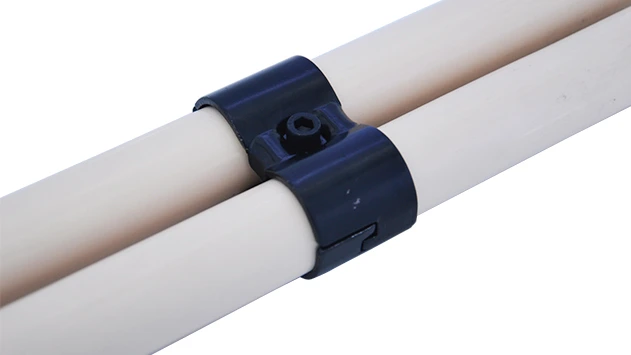
Parallel Lean Pipe Joint
Parallel lean pipe joint used for 2 pcs 28MM lean pipe connection in parallel direction to enhance frame structure, usually for heavy payload requirement for workbench. flow rack, hand trolley.
In today's fast-paced industrial and manufacturing landscapes, the term "dynamic workspace" has become more than just a buzzword—it's a necessity. As production demands shift, product lines evolve, and teams adapt to new workflows, the physical structures that support these operations must keep up. Rigid, one-size-fits-all setups are quickly becoming obsolete, replaced by flexible solutions that can pivot, reconfigure, and grow alongside the businesses they serve. At the heart of this transformation lies a seemingly unassuming component: the parallel lean pipe joint. Far more than a simple connector, this small but mighty part is redefining how workspaces are designed, built, and optimized for adaptability. In this article, we'll explore how parallel lean pipe joints enhance workspace flexibility, their real-world applications in setups like lean pipe workbenches and flow racks, and why they've become a cornerstone for businesses aiming to stay agile in an ever-changing market.
Understanding the Need for Adaptable Workspaces
Before diving into the specifics of parallel lean pipe joints, it's important to grasp why adaptability has become such a critical factor in workspace design. Consider a mid-sized electronics manufacturer that produces both consumer gadgets and industrial components. One month, they might need to scale up production of a new smartphone accessory, requiring longer assembly lines and additional storage. The next month, a sudden surge in demand for a specialized sensor could call for a compact, dedicated work area with customized tool placement. A static workspace—with fixed steel benches, welded racks, and immovable conveyor systems—would struggle to keep up. Reconfiguring such setups often involves costly downtime, hiring contractors for modifications, and even replacing entire structures, eating into profits and delaying time-to-market.
The same challenges apply to warehouses, logistics hubs, and even small workshops. E-commerce fulfillment centers, for example, face seasonal spikes that demand rapid expansion of picking zones, while automotive repair shops need to adjust their bays to accommodate different vehicle sizes and maintenance tasks. In each case, the ability to reconfigure the workspace quickly, without major overhauls, directly impacts efficiency, productivity, and bottom-line results. This is where modular solutions, and specifically parallel lean pipe joints, step in to bridge the gap between rigidity and adaptability.
What Are Parallel Lean Pipe Joints?
At their core, parallel lean pipe joints are specialized connectors designed to link lean pipes (also known as "lean tubes") in parallel configurations. Unlike traditional fixed joints that lock pipes into a static angle, parallel lean pipe joints offer rotational flexibility, allowing connected pipes to adjust relative to each other while maintaining structural integrity. Most are made from durable materials like zinc-plated steel or aluminum, with plastic or rubber coatings to prevent scratches and enhance grip. Their design typically includes a central rotating mechanism or a hinged structure that lets users pivot pipes horizontally or vertically, depending on the joint type, without compromising stability.
But what truly sets parallel lean pipe joints apart is their modularity. They're engineered to work seamlessly with standard lean pipes (often 28mm or 30mm in diameter) and a wide range of accessories—from clamps and brackets to roller tracks and caster wheels. This compatibility means they can be integrated into existing setups or used to build entirely new structures from the ground up, all without the need for welding, drilling, or specialized tools. For instance, a single parallel joint can connect two horizontal pipes to form the frame of a workbench, then be adjusted later to angle one pipe upward, creating a sloped surface for better material flow—all with a few simple twists by hand.

Key Features of Parallel Lean Pipe Joints
To understand why parallel lean pipe joints are so effective at enhancing adaptability, let's break down their key features:
- Rotational Flexibility: The defining trait of parallel lean pipe joints is their ability to rotate along one or more axes. This allows pipes to be positioned at variable angles—from 0° (fully parallel) to 90° or more—without disconnecting or replacing the joint. For example, in a flow rack, this flexibility lets users adjust the pitch of roller tracks to control how quickly materials slide down, accommodating both heavy components (which require a steeper angle) and delicate parts (which need a gentler slope).
- Tool-Free Adjustment: Most parallel joints are designed to be tightened or loosened by hand using a simple lever, knob, or hex key (often included with the joint). This eliminates the need for power tools or specialized training, putting reconfiguration in the hands of the workers who use the space daily. A team lead on an assembly line, for instance, can reposition a section of a lean pipe workbench in minutes to accommodate a taller operator or a new tool layout, without waiting for maintenance.
- High Load Capacity: Despite their flexibility, parallel lean pipe joints are surprisingly strong. High-quality models can support loads of up to 150kg or more per joint, making them suitable for heavy-duty applications like supporting tool cabinets on workbenches or holding stacked bins in flow racks. This strength comes from robust materials (like reinforced nylon or die-cast aluminum) and precision engineering that distributes weight evenly across connected pipes.
- Compatibility with Lean Systems: Parallel lean pipe joints are part of a larger ecosystem of lean manufacturing components. They work with standard lean pipes, aluminum profiles, and accessories like caster wheels, roller tracks, and panel mounts. This interoperability means businesses can mix and match components to create custom solutions. For example, a lean pipe workbench built with parallel joints can easily integrate with a roller track system for material feeding, or be mounted on casters to become a mobile workstation—all using the same base components.

Adaptability in Action: Real-World Applications
To see how these features translate into tangible benefits, let's look at two common applications where parallel lean pipe joints shine: lean pipe workbenches and flow racks. These setups are workhorses in manufacturing, warehousing, and assembly, and their adaptability directly impacts day-to-day operations.
1. Lean Pipe Workbenches: Customizable Workstations for Every Task
A lean pipe workbench is more than just a table—it's a central hub where assembly, testing, and packaging tasks unfold. Traditional workbenches, often made of fixed steel or wood, force workers to adapt to the bench's dimensions, leading to ergonomic issues (like awkward reaching) and inefficiencies (like tools stored far from the work surface). Parallel lean pipe joints transform this dynamic by making the bench adapt to the worker, not the other way around.
Consider a workbench used for assembling small electrical components. With parallel joints, the height of the bench can be adjusted by raising or lowering the supporting pipes—critical for ensuring workers of different heights can stand comfortably, reducing strain on backs and shoulders. The backboard, typically used for tool storage, can be angled using parallel joints to bring frequently used screwdrivers, pliers, and meters closer to the work surface. Need to add a shelf for bins of spare parts? Simply attach additional pipes to the bench frame using parallel joints, positioning the shelf at the ideal height for easy access. If the team shifts to assembling larger components later, the same joints allow the shelf to be moved higher or removed entirely, opening up space for the new task.
In one case study, a medical device manufacturer reported a 20% increase in assembly line productivity after reconfiguring their lean pipe workbenches with parallel joints. Workers could now adjust their stations in under five minutes to accommodate different device sizes, reducing time spent reaching for tools and minimizing errors. The company also noted a drop in worker fatigue-related absences, attributing it to the improved ergonomics enabled by the adjustable setups.
2. Flow Racks: Optimizing Material Flow with Adjustable Slopes
Flow racks are essential for "first-in, first-out" (FIFO) inventory management, allowing materials to slide from the back (loading end) to the front (picking end) as items are used. In traditional flow racks, the angle of the roller tracks is fixed during installation, limiting the types of materials that can be stored. A steep angle might work for lightweight plastic bins but could cause heavy metal parts to slide too quickly, risking damage. A shallow angle, on the other hand, might leave lighter items stuck, requiring manual intervention.
Parallel lean pipe joints solve this problem by letting users adjust the slope of roller tracks on the fly. Each track is mounted to the rack's frame using parallel joints, which can be loosened to tilt the track up or down. For example, a warehouse storing both empty cardboard boxes (lightweight) and filled tool cases (heavy) can set one section of the flow rack to a 5° angle for the boxes (ensuring they glide smoothly) and another section to a 2° angle for the tool cases (preventing them from sliding too fast). If the warehouse starts stocking a new type of part—say, fragile electronic components—the angle can be adjusted to 1° with a quick twist of the joint, eliminating the need to replace the entire track system.
This adaptability also reduces waste. In a traditional fixed rack, if a product line is discontinued, the rack might become obsolete because its angle isn't suitable for other items. With parallel joints, the same rack can be repurposed for new products by simply readjusting the tracks, extending its lifespan and reducing the need for new equipment purchases.
How Parallel Lean Pipe Joints Compare to Traditional Solutions
To fully appreciate the value of parallel lean pipe joints, it's helpful to compare them to the two most common alternatives: traditional fixed steel joints and aluminum profile systems. Each has its place, but for dynamic workspaces, parallel lean pipe joints often come out on top in key areas like cost, flexibility, and ease of use.
| Feature | Parallel Lean Pipe Joints | Traditional Fixed Steel Joints | Aluminum Profile Systems |
|---|---|---|---|
| Reconfiguration Time | 5–15 minutes (tool-free adjustment) | 4–8 hours (requires welding/cutting) | 30–60 minutes (needs hex keys/tools) |
| Initial Cost | Low (affordable materials, simple design) | Medium (steel is cheap, but labor for welding adds cost) | High (precision-machined aluminum profiles) |
| Long-Term Cost | Low (easily repurposed, minimal replacement) | High (frequent replacement/modification costs) | Medium (durable but less flexible than lean pipe) |
| Weight Capacity | High (up to 150kg per joint) | Very high (welded steel supports heavy loads) | High (aluminum profiles are strong but lighter than steel) |
| Ease of Use for Workers | High (tool-free, intuitive adjustment) | Low (requires professional modification) | Medium (tools needed, but manageable with training) |
As the table shows, parallel lean pipe joints excel in reconfiguration time and long-term cost, making them ideal for workspaces that need to adapt quickly. Traditional steel joints offer high weight capacity but at the cost of rigidity, while aluminum profiles, though durable, are pricier and require more time to adjust. For businesses prioritizing agility, the balance of speed, cost, and flexibility makes parallel lean pipe joints the clear choice.
Beyond Workbenches and Racks: Other Applications of Parallel Lean Pipe Joints
While lean pipe workbenches and flow racks are among the most common uses, parallel lean pipe joints are versatile enough to enhance adaptability in other workspace setups:
- Mobile Carts: Trolleys used to transport materials between workstations can be built with parallel joints, allowing the height of shelves or the angle of side rails to be adjusted. For example, a cart used to carry delicate circuit boards can have its rails angled inward to prevent items from sliding off, while the same cart can later be reconfigured with outward-angled rails to hold larger, bulkier boxes.
- Assembly Line Structures: In automotive or appliance manufacturing, parallel joints can connect sections of roller track, enabling the line to be curved, extended, or shortened as production needs change. A straight line for mass production can quickly become a U-shape for smaller batch runs, reducing worker movement and improving efficiency.
- Ergonomic Workstations: For tasks that require seated work, parallel joints allow the height of chairs, footrests, and keyboard trays to be adjusted individually, ensuring a comfortable fit for every team member. This level of customization is especially valuable in industries like aerospace, where precision work demands minimal physical strain.
Choosing the Right Parallel Lean Pipe Joints: Key Considerations
Not all parallel lean pipe joints are created equal, and selecting the right ones for your workspace is critical to maximizing adaptability. Here are a few factors to keep in mind:
Material Quality: Look for joints made from durable materials like reinforced nylon, die-cast aluminum, or zinc-plated steel. These materials resist corrosion, withstand repeated adjustments, and maintain their grip over time. Avoid plastic joints for heavy-duty applications, as they may warp or crack under stress.
Load Capacity: Check the manufacturer's specifications for load limits. If you're building a workbench that will hold heavy tools or equipment, opt for joints rated for higher weights (100kg+). For lighter applications like small parts storage, a lower capacity (50–75kg) may suffice.
Compatibility: Ensure the joints are designed to fit your existing lean pipes (most use 28mm or 30mm diameters). If you plan to integrate aluminum profiles or roller tracks, verify that the joint's connection points match these accessories—some joints come with universal brackets to fit multiple component types.
Ease of Adjustment: Test how smoothly the joint rotates and how securely it locks into place. A good joint should move freely when loosened but stay firm when tightened, with no wobbling or slipping under load. Avoid joints that require excessive force to adjust, as this can discourage workers from reconfiguring the space when needed.
The Future of Dynamic Workspaces: Why Parallel Lean Pipe Joints Will Remain Essential
As industries continue to embrace concepts like "just-in-time" manufacturing, small-batch production, and remote work collaboration, the demand for adaptable workspaces will only grow. Parallel lean pipe joints are well-positioned to meet this demand, thanks to their simplicity, affordability, and ability to evolve with changing needs. Unlike high-tech automation systems or complex modular setups, they don't require significant upfront investment or specialized expertise—making them accessible to businesses of all sizes, from startups to large corporations.
Looking ahead, we can expect to see even more innovations in parallel lean pipe joint design, such as integrated locking mechanisms for quicker adjustments, compatibility with smart sensors to monitor load limits, and eco-friendly materials to align with sustainability goals. But even as these advancements emerge, the core value of parallel lean pipe joints will remain the same: empowering businesses to build workspaces that don't just support their current operations, but grow and adapt alongside them.
Conclusion
In a world where change is the only constant, the ability to adapt is what separates thriving businesses from those left behind. Parallel lean pipe joints may seem like small components, but their impact on workspace flexibility is profound. By enabling quick, tool-free reconfiguration, supporting heavy loads, and integrating seamlessly with other lean system components like workbenches and flow racks, they turn static spaces into dynamic environments that can keep pace with shifting demands. Whether you're running a small workshop or a large manufacturing plant, investing in parallel lean pipe joints isn't just about building better structures—it's about building a more resilient, agile business. As the saying goes, "The best way to predict the future is to create it." With parallel lean pipe joints, you're not just creating a workspace—you're creating a future-ready foundation for success.