- Company Articles
- Products and Technology
- Product knowledge
- Parallel Lean Pipe Joints for Heavy-Duty Applications: What to Specify

Parallel Lean Pipe Joints for Heavy-Duty Applications: What to Specify
Related Product
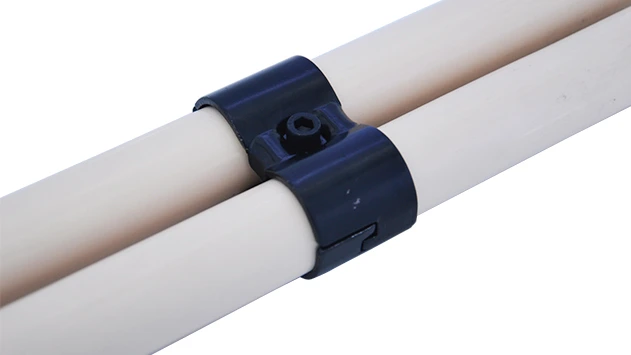
Parallel Lean Pipe Joint
Parallel lean pipe joint used for 2 pcs 28MM lean pipe connection in parallel direction to enhance frame structure, usually for heavy payload requirement for workbench. flow rack, hand trolley.
Walk into any busy manufacturing facility, and you'll see the heartbeat of production: assembly lines humming, workbenches stacked with tools, material racks loaded with components, and turnover trolleys gliding across the floor. Behind this orchestrated chaos lies a silent backbone—lean pipe systems. These modular structures, built from interconnected pipes and joints, are the unsung heroes of efficiency, adaptability, and organization. But when the going gets heavy—when workbenches bear the weight of industrial machinery, or material racks hold hundreds of pounds of parts—the real test begins. That's where parallel lean pipe joints step in. These unassuming connectors don't just hold pipes together; they ensure stability, durability, and safety in the most demanding environments. In this guide, we'll dive into what makes parallel lean pipe joints critical for heavy-duty applications, how to choose the right ones, and why materials like aluminum lean pipe and stainless steel pipe series matter.
What Are Parallel Lean Pipe Joints, Anyway?
At their core, parallel lean pipe joints are the linchpins of modular lean systems. They're designed to connect two or more lean pipes in parallel—meaning side-by-side—to form rigid, load-bearing structures. Unlike standard T-joints or elbow joints, which connect pipes at angles, parallel joints create a "double backbone" of support, distributing weight evenly across multiple pipes. Think of them as the difference between a single beam and a truss: the parallel design adds redundancy, making the structure far more resistant to bending or warping under heavy loads.
These joints aren't just about strength, though. They're built for flexibility, too. Most parallel lean pipe joints are adjustable, allowing operators to tweak pipe positions, add or remove sections, or reconfigure entire structures (like workbenches or flow racks) as production needs change. This modularity is the cornerstone of lean manufacturing—minimizing waste, maximizing space, and keeping operations agile. But in heavy-duty settings, "flexible" can't mean "flimsy." That's why specifying the right parallel joint is so critical.
Real-World Example: A mid-sized automotive parts plant in Ohio recently upgraded its assembly line workbenches. Previously, they used basic T-joints to support tooling and fixtures, but frequent bending and joint failure led to costly downtime. By switching to parallel lean pipe joints, they doubled the workbench's load capacity—from 300 lbs to over 600 lbs—while maintaining the ability to reconfigure the setup for new part models. The result? Zero joint failures in six months and a 15% boost in line efficiency.
Materials Matter: Aluminum Lean Pipe vs. Stainless Steel Pipe Series
When it comes to heavy-duty applications, the material of your parallel lean pipe joints (and the pipes they connect) is non-negotiable. Two materials dominate the industry: aluminum lean pipe and stainless steel pipe series. Each has its strengths, and choosing between them depends on your environment, load requirements, and long-term goals.
Aluminum Lean Pipe: Lightweight Strength for Demanding Environments
Aluminum lean pipe has become a favorite in industries like electronics, pharmaceuticals, and food processing—and for good reason. Despite being 30% lighter than steel, aluminum alloys (like those used in aluminum lean pipe ) offer impressive tensile strength, often exceeding 30,000 psi. This makes them ideal for heavy-duty setups where weight matters—such as mobile workbenches or turnover trolleys that need to be moved frequently.
Aluminum also shines in corrosion resistance. Unlike steel, it forms a natural oxide layer that protects against rust, making it perfect for humid environments or facilities that require regular cleaning (think food packaging lines or medical device assembly). Plus, aluminum's smooth finish is easy to sanitize, a must for industries with strict hygiene standards.
For parallel lean pipe joints made from aluminum, look for features like internal rotary aluminum joints or multi-angle fixed aluminum joints. These designs lock pipes securely in place while allowing minor adjustments, ensuring the structure stays stable even when supporting uneven loads (like a workbench with tools clustered on one side).
Stainless Steel Pipe Series: Uncompromising Durability for Extreme Loads
When the going gets really heavy—think automotive stamping plants, heavy machinery assembly, or mining equipment repair— stainless steel pipe series take center stage. Stainless steel's high carbon content and chromium alloying give it unmatched hardness and impact resistance. A 2.0mm stainless steel pipe, for example, can support over 1,000 lbs per linear foot when paired with heavy-duty parallel joints, making it the go-to for static structures like material racks or fixed workbenches.
Stainless steel also excels in harsh environments. It's resistant to chemicals, extreme temperatures, and abrasion—qualities that make it indispensable in oil refineries, construction sites, or metalworking shops where debris and corrosive fluids are common. However, this durability comes with a tradeoff: weight. Stainless steel is significantly heavier than aluminum, so it's best suited for stationary setups where mobility isn't a priority.
| Feature | Aluminum Lean Pipe Joints | Stainless Steel Pipe Series Joints |
|---|---|---|
| Load Capacity (per joint) | Up to 600 lbs | Up to 1,200 lbs |
| Weight (per linear foot) | 1.2 lbs | 2.8 lbs |
| Corrosion Resistance | Excellent (natural oxide layer) | Superior (chromium alloying) |
| Best For | Mobile workbenches, clean rooms, humid environments | Static material racks, extreme loads, chemical exposure |
| Cost | Moderate (higher upfront, lower long-term maintenance) | Higher upfront (but longer lifespan in harsh conditions) |

Key Specifications to Specify for Heavy-Duty Success
Choosing the right material is just the first step. To ensure your parallel lean pipe joints hold up under pressure, you'll need to dive into the specs. Here are the critical factors to consider:
1. Load Capacity: Don't Guess—Calculate
This is non-negotiable. Every parallel lean pipe joint has a maximum load rating, usually listed in pounds (lbs) or kilograms (kg). But don't just take the manufacturer's word for it—calculate the actual load your structure will bear. For example, a material rack B (3 row and 3 floor) might hold 50 lbs per bin, with 10 bins per shelf. That's 1,500 lbs total—so each joint in the rack's frame needs to support a share of that weight, plus a safety margin (we recommend 50% extra to account for shocks or uneven loading).
Look for joints with tested load ratings, not just marketing claims. Reputable suppliers will provide test reports showing how much weight the joint can handle before bending or failing. For stainless steel joints, check for tensile strength ratings above 70,000 psi; for aluminum, aim for 40,000 psi or higher.
2. Joint Design: Locking Mechanisms That Stay Put
A parallel lean pipe joint is only as good as its locking mechanism. Cheap joints use plastic or low-grade metal clamps that loosen over time, especially under vibration (like near a running conveyor). Instead, opt for joints with:
- Threaded bolts or cam locks: These create a mechanical grip that tightens under load, preventing slippage.
- Reinforced contact points: Look for joints with thickened walls at the pipe connection—this is where most stress occurs.
- Anti-rotation features: Some joints have tabs or keys that fit into grooves on the pipe, preventing twisting under torque (critical for workbenches with rotating tools).
3. Compatibility: Play Well With Others
Your parallel lean pipe joints don't exist in a vacuum—they need to work with other components like aluminum profile accessories , caster wheels, or roller tracks. Before buying, check that the joint's diameter matches your pipes (most lean pipes are 28mm or 30mm, but sizes vary). Also, ensure it's compatible with the accessories you'll use most: for example, if you're building a flow rack with roller tracks, the joint should have mounting points for roller track placon mounts or aluminum guide rails.
Pro Tip: If you're unsure about compatibility, ask your lean system supplier for a sample kit. Most will send a few joints, pipes, and accessories so you can test the fit and load capacity before placing a bulk order. It's a small investment that can save you from costly returns later.

Applications: Where Parallel Lean Pipe Joints Shine
Parallel lean pipe joints aren't one-trick ponies—they excel in a variety of heavy-duty setups. Here are the most common applications where their strength and flexibility make a real difference:
Workbenches: The Workhorses of the Factory Floor
From assembly stations to quality control desks, workbenches take a beating. A heavy-duty workbench (like workbench E (single deck-without caster) ) might support power tools, jigs, and even small machinery. Parallel lean pipe joints form the bench's frame, ensuring it doesn't sag in the middle or wobble during use. Pair them with aluminum honeycomb panels for a flat, rigid work surface, and you've got a setup that can handle 800+ lbs with ease.
Material Racks and Turnover Trolleys
Material racks, especially multi-tiered ones like material rack B (3 row and 3 floor), rely on parallel joints to support stacked bins of parts. In warehouses, turnover trolleys loaded with heavy components (like engine blocks or steel sheets) need joints that can handle dynamic loads—weight that shifts as the trolley moves. Stainless steel parallel joints with locking casters are ideal here, as they combine strength with mobility.
Conveyor Systems: Supporting the Flow of Production
Beneath every roller conveyor or belt conveyor is a frame built with lean pipes and joints. Parallel joints are critical here because conveyors vibrate constantly, and any looseness in the frame can throw the belt or rollers out of alignment. Look for joints with vibration-resistant locks and corrosion-resistant finishes (stainless steel is best for conveyors near washdown areas).
Choosing the Right Lean System Supplier: More Than Just a Vendor
Your parallel lean pipe joints are only as reliable as the supplier who makes them. A good lean system supplier isn't just a seller—they're a partner who understands your industry and can help you avoid costly mistakes. Here's what to look for:
1. Industry Experience
Avoid suppliers who sell "one-size-fits-all" joints. Instead, choose one with experience in your field. For example, a supplier who specializes in automotive manufacturing will know the unique demands of heavy machinery assembly, while one focused on electronics will understand ESD (electrostatic discharge) requirements for workbenches.
2. Customization Options
No two facilities are identical. Maybe you need a parallel joint with a longer mounting bracket for a custom workbench, or a stainless steel joint with a special coating for a chemical plant. A good supplier will offer custom machining or modifications, not just off-the-shelf parts.
3. After-Sales Support
Even the best joints can fail if installed wrong. Look for suppliers who provide installation guides, video tutorials, or on-site support. Some even offer training for your team on how to properly tighten joints, reconfigure structures, or spot early signs of wear.
Maintenance: Keeping Your Joints Strong for the Long Haul
Parallel lean pipe joints are tough, but they're not indestructible. With regular maintenance, you can extend their lifespan by 50% or more. Here's a quick checklist:
- Inspect monthly: Check for loose bolts, cracks in the joint body, or signs of corrosion. Tighten any loose hardware with a torque wrench (follow the supplier's specs—over-tightening can strip threads).
- Clean regularly: Wipe down aluminum joints with a mild detergent to remove grease or dust; for stainless steel, use a stainless steel cleaner to maintain the oxide layer.
- replace worn parts: If a joint's locking mechanism starts slipping, replace it immediately—don't wait for it to fail. Most suppliers offer replacement parts like bolts or clamps at a fraction of the cost of a new joint.
Conclusion: Invest in Strength, Reap the Rewards
Parallel lean pipe joints might not be the most glamorous part of your production line, but they're the foundation of efficiency, safety, and reliability. By specifying the right material (aluminum lean pipe for lightweight strength, stainless steel pipe series for extreme loads), prioritizing critical specs like load capacity and locking mechanisms, and partnering with a trusted lean system supplier, you'll build structures that stand up to heavy-duty demands—today, tomorrow, and for years to come.
Remember: in manufacturing, downtime is expensive. A failed joint can halt an assembly line, damage parts, or even cause injuries. But with the right parallel lean pipe joints, you'll minimize risk, maximize uptime, and keep your facility running stronger, longer.