- Company Articles
- Products and Technology
- Product knowledge
- Parallel Lean Pipe Joints for Modular Test Benches in Manufacturing

Parallel Lean Pipe Joints for Modular Test Benches in Manufacturing
Related Product
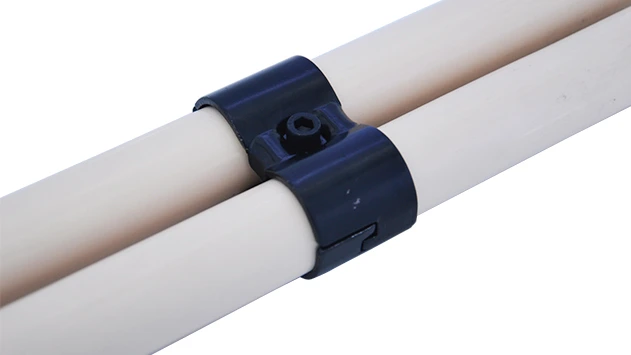
Parallel Lean Pipe Joint
Parallel lean pipe joint used for 2 pcs 28MM lean pipe connection in parallel direction to enhance frame structure, usually for heavy payload requirement for workbench. flow rack, hand trolley.
In the fast-paced world of manufacturing, where production lines shift, product specs evolve, and efficiency is non-negotiable, the tools we use to build and adapt workspaces matter more than ever. Test benches, the unsung heroes of quality control and product development, are a prime example. These workstations—where components are inspected, systems are calibrated, and prototypes are put through their paces—need to keep up with the chaos of modern manufacturing. Rigid, one-size-fits-all setups? They're relics of a slower era. Today, the name of the game is flexibility, and that's where modular test benches, powered by unsung components like parallel lean pipe joints, step in.
If you've ever walked through a manufacturing plant, you've probably seen lean pipe structures—those sleek, often silver or black pipes connected by simple joints, forming workbenches, racks, or trolleys. They look unassuming, but they're the backbone of lean manufacturing, designed to reduce waste and adapt on the fly. Now, imagine taking that adaptability and focusing it on the test bench: a space where precision meets practicality, where a single workstation might need to test a tiny circuit board one week and a bulky mechanical part the next. That's where parallel lean pipe joints become more than just connectors—they become the key to building test benches that grow, shrink, and reconfigure as your needs do.
What Are Parallel Lean Pipe Joints, Anyway?
Let's start with the basics. Lean pipe, also known as "flexible pipe" or "kitchen pipe" in some circles, is exactly what it sounds like: a lightweight, durable pipe (often made of steel with a plastic coating, or more recently, aluminum) used to build modular structures. The joints are the pieces that hold these pipes together, and parallel lean pipe joints are a specific type designed to connect two or more pipes in parallel. Think of them as the "elbows" or "T-joints" of the lean pipe world, but with a twist—they're built to keep pipes aligned side by side, creating stable, parallel frameworks that form the legs, shelves, or rails of a test bench.
Unlike traditional welded joints or even some fixed mechanical fasteners, parallel lean pipe joints don't require special tools or expertise to assemble. Most snap into place with a simple twist or bolt, letting you connect pipes in minutes. They're designed with modularity in mind: if you need to add a shelf, widen a work surface, or adjust the height of your test bench, you just loosen the joint, reposition the pipe, and tighten it back up. No welding, no drilling new holes, no waiting for a maintenance crew. For anyone who's ever had to delay a production run because a test bench couldn't keep up with a design change, this kind of flexibility is a game-changer.
Why Parallel Lean Pipe Joints Matter for Test Benches
Test benches aren't just tables with tools. They're precision environments where measurements need to be accurate, workflows need to be smooth, and safety needs to be prioritized. A poorly designed test bench can slow down inspections, introduce errors, or even damage sensitive components. Parallel lean pipe joints address these challenges in ways that traditional building materials—like wood, fixed steel, or even some aluminum profiles—can't match. Let's break down why they're so valuable:
1. Flexibility That Keeps Up With Change
Manufacturing isn't static. One month, you might be testing components for a compact consumer device; the next, you're scaling up to test parts for industrial machinery. Parallel lean pipe joints let you adjust your test bench's dimensions, add or remove shelves, or reconfigure the layout without starting from scratch. For example, if a new product is taller than the last, you can raise the upper shelf by simply adjusting the parallel joints on the legs. If you need to add a roller track (another modular component often paired with lean pipe systems) to slide heavy parts onto the bench, you can attach it using the same joints, no extra hardware required.
This flexibility isn't just about saving time—it's about saving money. Instead of buying a new test bench every time your needs change, you're reusing the same pipes and joints, only swapping out or adding components as needed. In an industry where margins are tight, that kind of cost efficiency adds up fast.
2. Durability Without the Bulk
Test benches take a beating. They're loaded with equipment—oscilloscopes, multimeters, torque wrenches—plus the parts being tested, which can range from lightweight circuit boards to heavy metal assemblies. Parallel lean pipe joints are built to handle this stress. Most are made from high-strength steel or aluminum, with reinforced designs that distribute weight evenly across the structure. Even better, the plastic coating on many lean pipes (or the anodized finish on aluminum ones) resists scratches, corrosion, and chemical spills—common hazards in manufacturing environments.
I once visited a automotive parts plant where a lean pipe test bench, held together with parallel joints, had been in use for over five years. It had been reconfigured at least a dozen times—from testing small sensors to larger engine components—and still looked and functioned like new. The plant manager joked that it was "the most reliable employee in the shop." That kind of longevity is hard to find with flimsier materials like particleboard or even some low-grade aluminum.
3. Compatibility With a World of Components
A test bench is only as good as the tools and accessories it can support. Parallel lean pipe joints don't work in isolation—they play well with a whole ecosystem of modular parts, making it easy to customize your setup. Need a flat work surface? Attach an aluminum honeycomb panel or a wooden top to the parallel pipes. Want to add casters so you can move the bench around the shop? Screw caster mounting plates into the joints at the base. Need to route cables or hoses? Use pipe clamps (another common lean pipe accessory) to secure them along the parallel rails.
This compatibility extends to specialized components, too. For example, if your test bench needs to handle ESD (electrostatic discharge) sensitive parts—like semiconductors or circuit boards—you can pair parallel lean pipe joints with ESD-safe workbench tops and grounding accessories. The joints themselves are often made from materials that conduct electricity, ensuring the entire structure is grounded and protecting sensitive components from static damage.
4. Quick Assembly, Even Quicker Reconfiguration
Time is money in manufacturing, and downtime for setup or reconfiguration is money lost. Parallel lean pipe joints are designed for speed. Most can be assembled by a single person with nothing more than a hex key or a wrench. Compare that to building a test bench with welded steel: you'd need a welder, a cutting torch, and hours (if not days) of work. With lean pipe joints, you can have a basic test bench up and running in an afternoon. And when you need to change it? That same bench can be torn down and rebuilt in a fraction of the time.
I worked with a small electronics manufacturer once that needed to test a new product line on short notice. Their existing test bench was too narrow, so they grabbed a few extra lean pipes, parallel joints, and a spare worktop. By the end of the day, they'd widened the bench by two feet, added a second shelf for tools, and were already running tests. No delays, no overtime, just a quick, easy reconfiguration.

Parallel Lean Pipe Joints vs. Traditional Joints: A Head-to-Head Comparison
To really understand the value of parallel lean pipe joints, it helps to see how they stack up against other common joint types used in test bench construction. Let's put them side by side with two alternatives: welded steel joints (traditional, fixed) and some rigid aluminum profile joints (common in modular systems but less flexible than lean pipe).
| Feature | Parallel Lean Pipe Joints | Welded Steel Joints | Rigid Aluminum Profile Joints |
|---|---|---|---|
| Flexibility | High: Reconfigurable in minutes; pipes can be moved or replaced easily. | Low: Fixed once welded; cannot be reconfigured without cutting/welding. | Medium: Some adjustability with bolts, but limited by profile slots. |
| Assembly Time | Fast: No special tools; assembled by hand in minutes/hours. | Slow: Requires welding equipment and skilled labor; takes days. | Moderate: Requires bolts and tools; takes hours. |
| Cost | Low to Medium: Inexpensive joints; reusable pipes reduce long-term costs. | High: Welding labor, materials, and disposal costs add up. | Medium to High: Aluminum profiles are pricier; joints often require specialized hardware. |
| Reusability | High: Pipes and joints can be disassembled and reused in new configurations. | Low: Welded structures are often scrapped when no longer needed. | Medium: Profiles can be reused, but holes may strip or hardware may wear out. |
| Compatibility | High: Works with lean pipe, aluminum profile, roller track, casters, and more. | Low: Limited to steel; hard to attach modular accessories. | Medium: Works with aluminum profile accessories, but less so with lean pipe components. |
As the table shows, parallel lean pipe joints excel in the areas that matter most for test benches: flexibility, speed, and cost-effectiveness. While welded steel might be stronger for extremely heavy loads and aluminum profiles might offer a sleeker look, neither can match the adaptability of lean pipe joints—especially when your test bench needs to evolve with your products.

Building a Modular Test Bench: Putting It All Together
So, how do you actually build a test bench using parallel lean pipe joints? It's easier than you might think. Let's walk through a basic example, using common components you'd find in any lean manufacturing supply catalog (including some of the keywords you might be familiar with, like lean pipe, aluminum profile, and workbench accessories).
Step 1: Plan Your Layout
Start by defining what you need your test bench to do. Will it hold heavy equipment? Do you need shelves for tools? Will you use a roller track to move parts onto the bench? Sketching a rough layout helps you determine how many pipes, joints, and accessories you'll need. For a standard test bench, you'll typically need:
- 4 vertical pipes for legs (length depends on desired height, usually 30–40 inches for a workbench).
- Horizontal pipes for the frame (2 for the front, 2 for the back, and cross-braces for stability).
- Parallel lean pipe joints to connect the horizontal and vertical pipes (one at each corner, plus additional joints for shelves or cross-braces).
- A worktop (plywood, aluminum honeycomb panel, or ESD-safe material).
- Optional accessories: Casters for mobility, roller track for sliding parts, or hooks for tools.
Step 2: Assemble the Frame
Start with the legs: Attach parallel lean pipe joints to the bottom of each vertical pipe to connect the horizontal base rails. This forms a rectangle—the "feet" of your test bench. If you're adding casters, mount them to the base rails using caster mounting plates (another modular accessory that pairs seamlessly with lean pipe joints). Next, attach the vertical pipes to the base frame using more parallel joints, then add the top horizontal rails to form the upper frame. For stability, add cross-braces diagonally between the vertical pipes—these can be connected using 45° or 90° lean pipe joints, which work with parallel joints to create rigid structures.
Step 3: Add Work Surfaces and Accessories
Once the frame is up, it's time to add the worktop. Most worktops can be secured to the upper horizontal rails using pipe clamps or brackets, which attach to the parallel joints. If you need shelves, use parallel joints to connect additional horizontal pipes between the legs at your desired height, then lay a secondary worktop or a sheet of plywood across them. For roller track (useful for moving heavy parts onto the bench), attach the track to the upper rails using roller track placon mounts—small brackets designed to connect roller track to lean pipe or aluminum profile frames.
Finally, add any finishing touches: ESD grounding straps if needed, tool hooks, or cable management clips. The beauty of this system is that you can always add more later. If next month you need a third shelf, just grab a few extra pipes and parallel joints, and you're done.
Real-World Applications: How Manufacturers Are Using Parallel Lean Pipe Joints
Theory is one thing, but real-world results are what matter. Let's look at a few examples of how manufacturers are using parallel lean pipe joints to build better test benches:
Case Study 1: Automotive Component Testing
A mid-sized automotive parts supplier was struggling with test bench bottlenecks. They produced a range of sensors, from small proximity sensors to larger pressure sensors, each requiring different test setups. Their old test benches were fixed steel structures, so they had one bench per sensor type—taking up valuable floor space and making it hard to scale production.
They switched to modular test benches built with lean pipe and parallel joints. Now, they have three base frames that they reconfigure daily: in the morning, they set up for small sensors using shorter pipes and narrow worktops; in the afternoon, they adjust the parallel joints to widen the frames and add taller shelves for larger sensors. They've reduced their test bench footprint by 40% and cut setup time between shifts from 2 hours to 30 minutes.
Case Study 2: Electronics Quality Control
A consumer electronics manufacturer needed ESD-safe test benches for inspecting circuit boards. They initially used wooden workbenches with ESD mats, but the mats were prone to wear, and the benches couldn't be adjusted to fit different board sizes. They switched to lean pipe test benches with parallel joints, using ESD-safe lean pipe (coated with conductive plastic) and aluminum honeycomb worktops. The parallel joints let them adjust the height of the shelves to match the size of the circuit boards, and they added roller track to slide boards from one test station to the next without touching them (reducing static risk). Best of all, when a new board design came in, they reconfigured the bench in 15 minutes instead of waiting for a custom bench to be built.
Choosing the Right Parallel Lean Pipe Joints for Your Needs
Not all parallel lean pipe joints are created equal. When shopping for joints, there are a few key factors to consider to ensure you get the right fit for your test bench:
Material
Most parallel lean pipe joints are made from steel (often zinc-plated for corrosion resistance) or aluminum. Steel joints are stronger and more durable, making them ideal for heavy-duty test benches. Aluminum joints are lighter, which is better if you need to move the bench frequently or if weight is a concern (e.g., in aerospace manufacturing). Some manufacturers also offer plastic-coated steel joints for ESD applications or environments where corrosion is a risk (like food processing or pharmaceutical testing).
Pipe Compatibility
Lean pipes come in different diameters (common sizes are 28mm and 30mm), and joints are designed to fit specific pipe sizes. Make sure the parallel joints you buy match the diameter of your lean pipe—using mismatched sizes can lead to instability or damage. Most suppliers will list the compatible pipe size in the product specs (e.g., "fits 28mm lean pipe").
Load Capacity
Check the joint's load rating to ensure it can support the weight of your test equipment, parts, and accessories. A typical parallel lean pipe joint can handle 50–100 kg per connection, but heavier-duty joints (often made from thicker steel) can support more. If you're building a bench for heavy machinery, opt for joints with higher load ratings to avoid sagging or failure.
Ease of Adjustment
Some parallel joints use bolts that require a wrench to tighten, while others have quick-release levers or cam locks for faster adjustments. If you anticipate reconfiguring your test bench often, quick-release joints will save you time. For more permanent setups, bolted joints may offer better stability.
The Future of Modular Test Benches: Where Parallel Lean Pipe Joints Are Headed
As manufacturing continues to evolve—with trends like Industry 4.0, automation, and mass customization driving change—modular test benches will only become more important. Parallel lean pipe joints are evolving, too, to keep up with these trends. Here's what we might see in the coming years:
Integration With Smart Technology
Imagine a test bench where the parallel lean pipe joints have built-in sensors that monitor load, temperature, or vibration. If a shelf is overloaded, the joint could send an alert to your phone. If the bench is moved out of calibration, sensors in the joints could trigger a warning. Some manufacturers are already experimenting with "smart" lean pipe systems, and parallel joints are likely to be a key part of this integration.
Sustainable Materials
Sustainability is no longer a buzzword—it's a business imperative. Look for parallel lean pipe joints made from recycled steel or aluminum, or from materials that are easier to recycle at the end of their life. Some suppliers are also developing joints with biodegradable plastic coatings, reducing environmental impact without sacrificing durability.
Even More Compatibility
As modular manufacturing systems become more common, parallel lean pipe joints will likely become compatible with a wider range of components—from 3D-printed custom parts to robotic arms. Imagine attaching a small robotic gripper directly to a parallel joint, letting the test bench automate simple tasks like moving parts. The possibilities are endless.
Final Thoughts: Building for the Future, One Joint at a Time
In the end, parallel lean pipe joints are more than just connectors—they're enablers. They enable manufacturers to build test benches that are as dynamic as their businesses, as flexible as their product lines, and as efficient as their teams. They turn the chaos of manufacturing into order, letting you adapt, grow, and innovate without being held back by rigid tools.
Whether you're a small shop just starting out or a large manufacturer looking to optimize your workflow, modular test benches built with parallel lean pipe joints offer a simple, cost-effective solution. They're proof that sometimes, the most powerful tools in manufacturing aren't the flashy machines or the high-tech software—they're the quiet, adaptable components that let you build better, faster, and smarter.
So the next time you walk through a manufacturing plant, take a closer look at those lean pipe structures. The parallel joints holding them together might not look like much, but they're building the future of manufacturing—one test bench, one reconfiguration, one innovation at a time.