- Company Articles
- Products and Technology
- Product knowledge
- Parallel Lean Pipe Joints for Turnover Carts: Enhancing Mobility & Strength

Parallel Lean Pipe Joints for Turnover Carts: Enhancing Mobility & Strength
Related Product
Parallel Lean Pipe Joint
Parallel lean pipe joint used for 2 pcs 28MM lean pipe connection in parallel direction to enhance frame structure, usually for heavy payload requirement for workbench. flow rack, hand trolley.
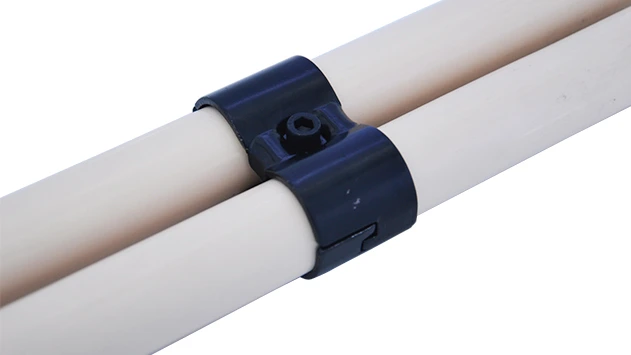
Walk through any manufacturing plant, warehouse, or assembly line, and you'll notice a quiet workhorse keeping operations moving: the turnover cart. These unassuming vehicles ferry components, tools, and finished products between stations, ensuring that production flows without bottlenecks. Yet, for something so critical, turnover carts are often taken for granted—until they fail. A wobbly frame, a stuck wheel, or a joint that loosens under pressure can bring a smooth workflow to a grinding halt, leading to delays, frustration, and even safety risks. The secret to a reliable turnover cart lies not in its size or color, but in its bones: the components that hold it together. Among these, parallel lean pipe joints stand out as unsung heroes, working in tandem with caster wheels, aluminum lean pipe, and other accessories to deliver the mobility and strength modern production demands.
In this article, we'll dive into how parallel lean pipe joints transform turnover carts from basic utility vehicles into precision tools of efficiency. We'll explore how these joints enhance structural integrity, why pairing them with high-quality caster wheels is non-negotiable for mobility, and how materials like aluminum lean pipe strike the perfect balance between lightweight design and heavy-duty performance. We'll also touch on the role of lean pipe and accessories in customizing carts to fit unique workflow needs, and share real-world insights into how upgrading these components can elevate productivity. Whether you're a plant manager looking to reduce downtime, a procurement specialist sourcing reliable equipment, or simply curious about the mechanics behind smooth operations, this guide will show you why the right components make all the difference.
The Backbone of Turnover Carts: Parallel Lean Pipe Joints
At first glance, a turnover cart might seem like little more than a frame on wheels. But look closer, and you'll see a network of connections holding it all together—none more important than the parallel lean pipe joint. These small but mighty components are the glue that binds the cart's structure, ensuring that pipes, shelves, and rails stay aligned even under heavy loads. Unlike generic connectors that prioritize cost over performance, parallel lean pipe joints are engineered for one primary goal: stability in parallel configurations.
So, what makes parallel lean pipe joints special? Let's break it down. Traditional pipe joints often focus on connecting pipes at angles (90 degrees, 45 degrees, etc.), which is essential for building frames but less effective for creating parallel supports—think of the horizontal rails that hold a cart's shelves or the vertical posts that bear its weight. Parallel joints are designed to secure two pipes side by side, distributing weight evenly across both instead of concentrating it on a single connection. This even distribution is a game-changer: it reduces stress on individual pipes, prevents bending or warping over time, and ensures that the cart remains rigid, even when loaded with heavy components like engine parts or electronic assemblies.
Take, for example, a turnover cart used in an automotive parts facility, tasked with carrying stacks of metal brackets. Without parallel joints, the horizontal rails supporting these brackets might sag in the middle, causing the load to shift or the cart to lean. But with parallel lean pipe joints securing two parallel rails, the weight is spread across both, keeping the structure flat and stable. Workers can push the cart with confidence, knowing it won't twist or wobble, even when fully loaded. This stability isn't just about convenience—it's about safety. A cart that stays balanced is less likely to tip, protecting both workers and the valuable parts they're transporting.
Another key feature of parallel lean pipe joints is their versatility. Unlike welded connections, which are fixed and hard to modify, these joints are typically bolt-on or snap-on, allowing for quick adjustments. Need to add an extra shelf to a cart? Swap out a shorter pipe for a longer one, secure it with parallel joints, and you're done. This flexibility is a cornerstone of lean manufacturing, where adaptability is critical. Production lines change, part sizes vary, and workflows evolve—your turnover carts should be able to keep up without requiring a complete overhaul. Parallel lean pipe joints make that possible, turning static equipment into dynamic tools that grow with your needs.
Durability is also baked into their design. Most parallel lean pipe joints are made from high-grade metals like aluminum or steel, with coatings that resist corrosion and wear. This is especially important in industrial environments, where carts are exposed to oil, coolant, dust, and frequent use. A joint that rusts or weakens over time isn't just a maintenance headache—it's a liability. By choosing joints built to withstand harsh conditions, you ensure that your turnover carts remain reliable for years, reducing the need for frequent replacements and lowering long-term costs.
Mobility Matters: Caster Wheels and the Art of Smooth Movement
A turnover cart is only as good as its ability to move—and that ability hinges on one component: the caster wheel. Even the sturdiest cart with the strongest parallel lean pipe joints will falter if its wheels can't roll smoothly, swivel easily, or lock securely. Mobility isn't just about speed; it's about precision. A cart that glides across the floor with minimal effort reduces worker fatigue, while one with reliable brakes prevents accidental movement during loading or unloading. When paired with a well-built frame, caster wheels turn a static structure into a tool that keeps production lines humming.
The first thing to consider when selecting caster wheels for turnover carts is load capacity. A cart designed to carry 500 pounds needs wheels rated for at least that weight—and preferably more, to account for unexpected overloads or unevenly distributed loads. Caster wheels are typically labeled with their maximum load capacity (e.g., 200 lbs per wheel), and it's critical to match this to the cart's intended use. Underestimating load needs can lead to wheels that flatten, bearings that seize, or axles that bend, turning a mobile cart into a stationary obstacle.
Wheel material is another factor that can't be overlooked. Different floor surfaces demand different wheel materials to ensure smooth movement and prevent damage. For example, polyurethane wheels are a popular choice for concrete or tile floors: they're soft enough to absorb shocks (reducing noise and vibration) but tough enough to resist cuts from debris. Rubber wheels, on the other hand, excel on smooth surfaces like warehouse epoxy, offering excellent traction without leaving marks. Nylon wheels, while harder, are ideal for heavy loads on rough floors, as they're less likely to get stuck on cracks or unevenness. Steel wheels, though durable, are best reserved for industrial settings with metal floors, as they can scratch softer surfaces. The key is to match the wheel material to your facility's floors to maximize both mobility and longevity.
Swivel capability is another feature that separates effective caster wheels from frustrating ones. Most turnover carts use swivel casters (often paired with two fixed casters for stability), which allow the cart to turn 360 degrees with minimal effort. This maneuverability is essential in tight spaces, like between assembly stations or around machinery. A cart with stiff swivel casters forces workers to exert extra effort, increasing fatigue and slowing down tasks. High-quality swivel casters use precision bearings and raceways to ensure smooth rotation, even under heavy loads. Some models also include a "total lock" feature, which locks both the wheel and the swivel mechanism, preventing the cart from moving or turning when parked—a must for safety during loading or when the cart is left unattended.
But even the best caster wheels are only as effective as the frame they're attached to. This is where parallel lean pipe joints come back into play. The joints secure the caster mounting plates to the cart's legs, ensuring that the wheels are aligned and stable. Misaligned casters—caused by loose or poorly fitting joints—lead to "crab walking," where the cart drifts to one side instead of moving straight. This not only makes the cart harder to push but also puts uneven stress on the wheels and axles, shortening their lifespan. By using parallel lean pipe joints to keep the frame square and the caster mounts secure, you ensure that the wheels work in harmony, delivering the smooth, straight movement that makes turnover carts so valuable.
In busy production environments, every second counts. A cart that requires extra force to push, gets stuck on uneven floors, or needs constant readjustment eats into valuable time that could be spent on more critical tasks. By investing in high-quality caster wheels and pairing them with sturdy parallel lean pipe joints, you're not just improving mobility—you're investing in your team's productivity and well-being. After all, a worker who doesn't have to struggle with a balky cart is a happier, more efficient worker.

Strength Without Compromise: Aluminum Lean Pipe and the Lightweight Advantage
When it comes to building turnover carts, material choice is a balancing act. You need something strong enough to support heavy loads, lightweight enough to be maneuverable, and durable enough to withstand daily use. For decades, steel was the go-to material, prized for its strength but burdened by its weight. Then came aluminum lean pipe—a game-changer that offers the best of both worlds. Aluminum lean pipe combines the structural integrity needed for industrial applications with a lightweight design that makes carts easier to push, assemble, and modify. When paired with parallel lean pipe joints, it creates a frame that's both tough and agile.
One of the most significant advantages of aluminum lean pipe is its weight-to-strength ratio. Aluminum is about one-third the weight of steel, but modern alloys (like those used in aluminum lean pipe) can match or exceed the strength of mild steel. This means a turnover cart built with aluminum lean pipe can carry the same load as a steel cart but with less effort from workers. Imagine pushing a cart loaded with 400 pounds of parts: a steel frame might weigh 80 pounds on its own, while an aluminum frame could weigh 30 pounds. That 50-pound difference translates to less strain on shoulders, backs, and arms, reducing the risk of repetitive motion injuries and making the cart accessible to more team members, regardless of physical strength.
Corrosion resistance is another standout feature of aluminum lean pipe. Unlike steel, which rusts when exposed to moisture, oil, or chemicals, aluminum forms a natural oxide layer that protects it from corrosion. This makes it ideal for environments where carts are exposed to liquids (like automotive or food processing plants) or high humidity (like warehouses in coastal areas). A steel cart might start showing rust after a few months in such conditions, weakening the frame and requiring frequent repainting or replacement. An aluminum cart, by contrast, stays looking and performing like new for years, even with minimal maintenance. This durability not only lowers long-term costs but also ensures that the cart remains safe to use, as corrosion weakens structural integrity over time.
Aluminum lean pipe is also incredibly easy to work with. Unlike steel, which requires welding or heavy tools to cut and shape, aluminum can be cut with a simple hacksaw, drilled with standard bits, and connected using parallel lean pipe joints without specialized equipment. This ease of assembly is a boon for facilities that need to customize carts on the fly. Whether you're building a cart from scratch or modifying an existing one, aluminum lean pipe simplifies the process, allowing your team to create tailored solutions without relying on external contractors. This speed and flexibility are critical in lean manufacturing, where reducing lead times and adapting to changes quickly can give your operation a competitive edge.
Aesthetically, aluminum lean pipe offers a clean, professional look that steel often lacks. Its smooth, silver finish resists scratches and dents, keeping carts looking neat even after heavy use. This might seem like a minor point, but a well-maintained workspace has been shown to boost morale and productivity. When workers see that their tools and equipment are cared for, they're more likely to take pride in their work—a win-win for any operation.
Of course, aluminum lean pipe isn't just for turnover carts. It's a versatile material used in everything from workbenches to flow racks, making it easy to create a cohesive, standardized system throughout your facility. Using the same material across different equipment simplifies maintenance, as parts are interchangeable, and training staff to assemble or repair equipment becomes easier. When paired with parallel lean pipe joints, aluminum lean pipe becomes the foundation of a modular, scalable system that grows with your business.

Beyond the Basics: Lean Pipe and Accessories That Elevate Functionality
A turnover cart's core components—parallel lean pipe joints, caster wheels, and aluminum lean pipe—form the foundation of its performance. But to truly tailor a cart to your needs, you need the right accessories. Lean pipe and accessories are the finishing touches that transform a generic cart into a tool designed for your specific workflow, whether that means adding shelves for small parts, installing rails to secure large items, or attaching hooks for tools. These extras might seem minor, but they can make a world of difference in how efficiently your cart operates.
Let's start with the basics: end caps and pipe covers. These simple accessories slide over the ends of aluminum lean pipe, preventing sharp edges from snagging on clothing, damaging parts, or causing injuries. In a busy production environment, where workers are constantly loading and unloading carts, exposed pipe ends are a hazard waiting to happen. End caps eliminate this risk, adding a layer of safety that's easy to overlook but impossible to regret. They also give carts a polished, professional look, hiding rough cuts or burrs and maintaining the clean aesthetic of aluminum lean pipe.
Next, consider pipe clamps and brackets. These accessories allow you to attach additional components to your cart, like shelves, bins, or tool holders. For example, a pipe clamp with a flat plate can secure a wooden or metal shelf to the cart's frame, creating extra storage space for small parts or documents. A bracket with a hook can hold a power tool, keeping it within easy reach during assembly. The beauty of these accessories is their modularity: you can mix and match them to create a cart that fits your exact needs, then reconfigure them later if those needs change. This flexibility is a hallmark of lean manufacturing, where waste (including wasted space or inefficient tool placement) is minimized.
For carts that transport irregularly shaped items, side rails and dividers are invaluable. Made from aluminum lean pipe or steel, these rails attach to the cart's frame using parallel lean pipe joints, creating a barrier that prevents items from sliding off during transport. Dividers, which split the cart's interior into sections, are ideal for organizing multiple types of parts (e.g., screws in one section, washers in another), reducing the time spent sorting through items at the next station. In warehouses, where turnover carts often double as temporary storage, dividers turn chaos into order, ensuring that nothing gets lost or misplaced.
Another accessory that boosts functionality is the swivel roller ball. These small, omnidirectional balls are often mounted on shelves or platforms, allowing items to glide easily from the cart to a workstation (or vice versa). For example, a cart with a swivel roller ball top makes unloading heavy boxes a breeze—simply push the box, and the balls do the work, reducing strain on workers' backs. Swivel roller balls come in various sizes (like 1 inch or 0.5 inch) and materials (plastic, stainless steel), making them suitable for different load weights and environments (e.g., stainless steel for cleanrooms or food-grade facilities).
Label holders are another unsung accessory that improves efficiency. By attaching a simple label holder to the cart, you can clearly mark its contents (e.g., "Front Axle Components" or "Quality Control Inspections"), reducing the time spent searching for the right cart. In large facilities with dozens of turnover carts, this small addition can save hours of productivity each week. Label holders are often made from durable plastic or aluminum, ensuring they withstand frequent handling and cleaning.
Finally, consider adjustable feet or leveling mounts. While caster wheels are essential for mobility, there are times when you need a cart to stay perfectly still—for example, when loading it with heavy parts or using it as a temporary work surface. Adjustable feet can be attached to the cart's frame (in addition to casters) and lowered to lift the wheels off the ground, stabilizing the cart. This is especially useful on uneven floors, where even locked casters might allow the cart to rock slightly. Leveling mounts ensure that the cart remains steady, preventing spills, damage to parts, or accidents.
The key to choosing lean pipe and accessories is to start with your workflow. What do you transport most often? How heavy are your loads? Do workers need to access items from the front, sides, or top of the cart? Answering these questions will help you select the accessories that add the most value. Remember, the goal isn't to add as many accessories as possible, but to add the right ones—those that solve specific problems and make the cart easier, safer, or more efficient to use. When paired with parallel lean pipe joints and aluminum lean pipe, these accessories create a turnover cart that's not just a tool, but a partner in productivity.
Real-World Impact: How Upgraded Components Transform Workflows
It's one thing to talk about the benefits of parallel lean pipe joints, caster wheels, aluminum lean pipe, and accessories in theory. It's another to see how they perform in real-world settings. Consider a mid-sized electronics manufacturing plant struggling with inefficient material transport. Before upgrading their turnover carts, the plant relied on old steel carts with welded frames, plastic wheels, and minimal customization. Workers complained about carts being too heavy to push, wheels that frequently got stuck on the factory floor's expansion joints, and frames that wobbled when loaded with circuit boards and delicate components. The result? Delays in moving parts from the warehouse to the assembly line, increased worker fatigue, and occasional damage to components—all of which ate into profits.
The plant's operations manager decided to invest in new turnover carts built with aluminum lean pipe, parallel lean pipe joints, high-quality caster wheels, and a suite of accessories. The transformation was immediate. The aluminum frames reduced cart weight by 40% compared to steel, making them easy for any worker to push, even when fully loaded. The parallel lean pipe joints ensured the frames stayed square and stable, eliminating the wobble that had damaged components. Polyurethane caster wheels glided over expansion joints and rough spots, reducing the effort needed to move carts by an estimated 60%. Accessories like dividers and label holders kept parts organized, cutting down on the time spent sorting items at assembly stations. Within the first month, the plant saw a 15% reduction in transport-related delays and a noticeable drop in worker complaints about fatigue.
Another example comes from a food processing facility that needed turnover carts capable of withstanding frequent washdowns. Their old steel carts rusted quickly, even with regular painting, and the welded joints trapped food particles, violating sanitation standards. Switching to aluminum lean pipe (which resists corrosion) and parallel lean pipe joints (which are easy to disassemble and clean) solved both problems. The carts now hold up to daily pressure washing, and the modular design allows workers to take them apart for deep cleaning, ensuring compliance with food safety regulations. The facility also added swivel roller balls to the cart tops, making it easier to slide heavy crates of ingredients on and off—reducing loading time by 25%.
These stories highlight a common theme: upgrading turnover cart components isn't just about improving the carts themselves—it's about improving the entire workflow. When carts move faster, workers spend less time transporting items and more time on value-added tasks. When carts are stable, fewer parts are damaged, reducing waste and rework. When carts are customizable, they adapt to changing needs, eliminating the need for expensive, one-off solutions. In short, the right components turn turnover carts from a necessary evil into a competitive advantage.
Choosing the Right Components: Key Considerations for Long-Term Success
Now that we've explored the benefits of parallel lean pipe joints, caster wheels, aluminum lean pipe, and accessories, you might be wondering how to choose the right components for your needs. With so many options on the market, it's easy to feel overwhelmed. The key is to start with your specific requirements, then evaluate components based on how well they meet those needs. Here are some critical factors to consider:
Load Capacity: Know Your Limits
The first step is to determine how much weight your turnover carts will need to carry—both regularly and in worst-case scenarios. This includes not just the weight of the items being transported, but also the cart's own weight. Once you have this number, select components rated for at least 20% more than your maximum load. This buffer ensures that components don't fail under stress and extends their lifespan. For example, if you need a cart to carry 400 pounds, choose parallel lean pipe joints rated for 480 pounds or more, and caster wheels with a similar margin of safety.
Environment: Match Components to Conditions
Consider the environment where your carts will operate. Do they need to resist corrosion (e.g., in wet or chemical-heavy areas)? Aluminum lean pipe and stainless steel parallel lean pipe joints are good choices here. Will they be exposed to extreme temperatures (e.g., freezers or foundries)? Look for caster wheels with heat- or cold-resistant materials. For cleanrooms or food processing facilities, choose components with smooth surfaces that are easy to sanitize, like aluminum lean pipe with polished finishes and swivel roller balls made from food-grade plastic.
| Component | Key Consideration | Example Scenario | Recommended Feature |
|---|---|---|---|
| Parallel Lean Pipe Joints | Load distribution | Cart carrying heavy, uneven loads | Dual-bolt design for secure attachment |
| Caster Wheels | Floor type | Epoxy-coated warehouse floors | Polyurethane wheels (quiet, non-marking) |
| Aluminum Lean Pipe | Environmental exposure | Food processing plant with washdowns | Anodized aluminum (corrosion-resistant) |
| Lean Pipe Accessories | Item organization | Cart for small electronic components | Divided bins and label holders |
Mobility Needs: Floor Type and Maneuverability
The type of flooring in your facility will influence your caster wheel choice. Smooth concrete or epoxy floors work well with polyurethane or rubber wheels, which offer good traction and minimal noise. Rough or uneven floors may require larger, harder wheels (like nylon or steel) to avoid getting stuck. If your carts need to navigate tight spaces, prioritize swivel casters with precision bearings for easy turning. And don't forget brakes—if carts will be used on inclines or need to stay stationary during loading, choose casters with reliable locking mechanisms.
Supplier Reliability: Quality Matters
Finally, choose a reputable supplier for your components. A cheap parallel lean pipe joint or caster wheel might save money upfront, but it will cost more in the long run when it fails prematurely. Look for suppliers with a track record of providing durable, high-quality lean pipe and accessories. Check reviews, ask for references, and inquire about warranty policies. A good supplier will also offer technical support, helping you select the right components for your needs and providing guidance on assembly and maintenance.
Conclusion: Building a Foundation for Efficiency
Turnover carts are the unsung heroes of production floors, quietly ensuring that materials, parts, and products move where they need to go, when they need to go there. Yet, their reliability depends on the components that often go unnoticed: parallel lean pipe joints that provide stability, caster wheels that enable smooth mobility, aluminum lean pipe that balances strength and weight, and lean pipe accessories that tailor functionality to specific needs. Together, these components transform basic carts into tools that drive efficiency, reduce waste, and improve worker satisfaction.
Investing in high-quality turnover cart components isn't just a purchase—it's an investment in your operation's future. By choosing parallel lean pipe joints that keep frames stable, caster wheels that glide with minimal effort, aluminum lean pipe that resists corrosion and reduces weight, and accessories that solve unique workflow challenges, you're creating a foundation for lean manufacturing success. You're reducing downtime, lowering maintenance costs, and making your workplace safer and more efficient.
As production demands grow and workflows evolve, the flexibility of these components will become even more valuable. Modular design means you can reconfigure carts as needs change, avoiding the expense of buying new equipment. Durable materials ensure that your investment lasts, providing returns for years to come. And happier, less fatigued workers are more productive, creative, and committed to your operation's success.
So, the next time you see a turnover cart gliding across the production floor, take a moment to appreciate the engineering behind it. The parallel lean pipe joints holding it together, the caster wheels turning effortlessly, the aluminum frame balancing strength and lightness—these are the details that make great operations run smoothly. And in the world of manufacturing, where every second and every cent counts, those details are everything.