- Company Articles
- Products and Technology
- Product knowledge
- Parallel Lean Pipe Joints in Clean Rooms: Anti-Corrosion & Contamination Control

Parallel Lean Pipe Joints in Clean Rooms: Anti-Corrosion & Contamination Control
Related Product
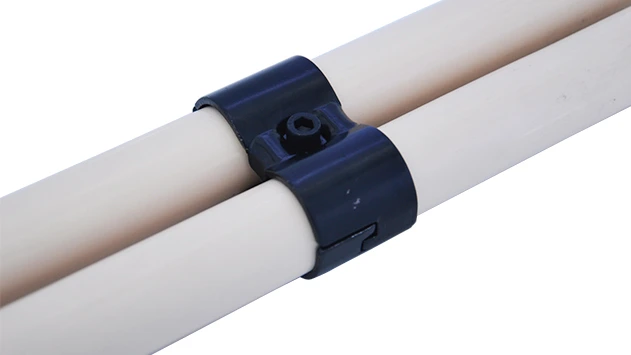
Parallel Lean Pipe Joint
Parallel lean pipe joint used for 2 pcs 28MM lean pipe connection in parallel direction to enhance frame structure, usually for heavy payload requirement for workbench. flow rack, hand trolley.
Walk into any modern clean room—whether in a pharmaceutical lab, semiconductor factory, or medical device plant—and you'll notice a carefully orchestrated environment. Every surface, tool, and piece of equipment is designed to minimize two invisible yet critical threats: contamination and corrosion. These threats don't just affect product quality; they can compromise patient safety, invalidate research results, or derail multi-million-dollar manufacturing runs. Among the unsung heroes of clean room infrastructure are parallel lean pipe joints. These small, modular connectors play a massive role in keeping operations smooth, sterile, and corrosion-free. Let's explore how they do it, and why materials like stainless steel pipe series and aluminum profile make all the difference in these high-stakes spaces.
The Clean Room Challenge: Why "Good Enough" Infrastructure Falls Short
Clean rooms aren't just "really clean rooms." They're controlled environments where air quality, temperature, humidity, and even static electricity are tightly regulated. For example, ISO 8 clean rooms (common in electronics manufacturing) allow no more than 352,000 particles per cubic meter—particles smaller than 0.5 micrometers (that's 1/100th the width of a human hair). In pharmaceutical Grade A clean rooms, the standard is even stricter: zero particles of that size. Any breach—whether a dust mote, a rust flake, or a static charge attracting debris—can have catastrophic consequences.
Corrosion, too, is a silent enemy. Many clean rooms use harsh disinfectants (like hydrogen peroxide vapor or alcohol-based cleaners) to maintain sterility. Over time, these chemicals can eat away at metal surfaces, creating pitted areas where bacteria or particles hide. Traditional metal joints or non-specialized connectors often fail here, developing crevices or rust that turn into contamination hotspots. Add in the humidity control required for many processes, and suddenly, the materials used in workbenches, racks, and conveyor systems become mission-critical.
This is where parallel lean pipe joints step in. Unlike rigid, one-size-fits-all connectors, these modular components are engineered for flexibility, but more importantly, for resilience. They're designed to stand up to the unique pressures of clean room life—resisting corrosion, preventing particle buildup, and integrating seamlessly with other contamination-control tools like ESD workstations and flow racks. Let's break down how they work.
What Are Parallel Lean Pipe Joints, Anyway?
If you're new to lean manufacturing or clean room design, "parallel lean pipe joints" might sound technical. Let's simplify: imagine building with a set of Tinkertoys, but for industrial use. Lean pipes (also called "lean tubes") are lightweight, durable tubes—often made of stainless steel, aluminum, or coated steel—that connect using modular joints. Parallel lean pipe joints, specifically, are designed to link two or more pipes in parallel alignment, creating stable frameworks for workbenches, material racks, or conveyor supports.
What makes them "lean"? They embody the principles of lean manufacturing: adaptability, efficiency, and waste reduction. Unlike welded or fixed structures, parallel lean pipe joints let teams reconfigure workstations or racks in minutes, not days. Need to adjust a flow rack to accommodate a new product size? Swap out a joint. Expand an ESD workstation for a larger assembly line? Add a few pipes and connectors. This flexibility is a game-changer in fast-paced clean room environments where processes evolve constantly.
But in clean rooms, flexibility alone isn't enough. These joints must also be warriors against corrosion and contamination. That's where material science and design engineering take center stage.

Material Matters: Stainless Steel Pipe Series vs. Aluminum Profile for Clean Room Resilience
The choice between stainless steel pipe series and aluminum profile for parallel lean pipe joints isn't arbitrary. It's a decision rooted in the specific challenges of your clean room—whether you prioritize maximum corrosion resistance, lightweight mobility, or cost-effectiveness. Let's compare these two heavyweights side by side:
| Feature | Stainless Steel Pipe Series | Aluminum Profile |
|---|---|---|
| Corrosion Resistance | Exceptional (316L grade resists acids, salts, and disinfectants) | High (anodized surfaces prevent oxidation; less resistant to strong alkalis) |
| Particle Trapping Risk | Low (smooth, non-porous surface; minimal crevices) | Very Low (anodized finish is ultra-smooth; no paint or coating to chip) |
| Weight | Heavier (sturdy but harder to reconfigure manually) | Lightweight (easier to adjust; reduces strain on clean room floors) |
| Static Control | Good (conductive; can be grounded for ESD workstations) | Excellent (aluminum is naturally conductive; ideal for static-sensitive environments) |
| Cleaning Compatibility | Compatible with most harsh disinfectants (no degradation) | Compatible with mild to moderate disinfectants (avoid prolonged exposure to strong acids) |
Stainless Steel Pipe Series: The Corrosion-Proof Workhorse
Stainless steel is a clean room staple for a reason. Its alloy composition—typically iron, chromium, and nickel—creates a passive oxide layer on the surface. This layer acts like a shield, repairing itself if scratched and preventing rust or corrosion, even when exposed to aggressive cleaners. For example, 316L stainless steel (a common grade in pharmaceutical clean rooms) includes molybdenum, which boosts resistance to chloride-based disinfectants—a must for environments where bleach or salt solutions are used.
Parallel lean pipe joints made from stainless steel pipe series excel in wet or high-humidity clean rooms. Think biotech labs where steam sterilization is routine, or food processing clean rooms where frequent washdowns are required. The smooth, non-porous surface of stainless steel joints leaves nowhere for bacteria or particles to hide. Wiping them down with a lint-free cloth and disinfectant is enough to maintain sterility—no need for harsh scrubbing that could damage the material.
Aluminum Profile: Lightweight and Low-Maintenance
Aluminum profile (extruded aluminum shapes) is another top choice for parallel lean pipe joints, especially in electronics or semiconductor clean rooms. Unlike stainless steel, aluminum is naturally lightweight, making reconfigurable workstations or mobile flow racks easy to move without heavy equipment. Its non-reactive nature also means it won't leach metals into the environment—a critical feature when handling sensitive components like microchips or lab samples.
Most aluminum profile joints are anodized—coated with a thin layer of aluminum oxide through an electrochemical process. This coating is harder than the base metal, scratch-resistant, and incredibly smooth. Unlike painted or coated steel, anodized aluminum won't chip or flake, eliminating a common source of particle contamination. It's also naturally conductive, which is why aluminum profile joints are a favorite for ESD workstations. By grounding the frame, they channel static electricity away from sensitive components, preventing electrostatic discharge (ESD) that could fry a circuit or attract dust.

Designing for Contamination Control: How Parallel Lean Pipe Joints Keep Particles at Bay
Even the best materials can fail if the design is flawed. Traditional pipe joints—think threaded connectors or bolted brackets—often have gaps, crevices, or rough edges where particles can settle. In a clean room, those tiny hiding spots are ticking time bombs. Parallel lean pipe joints solve this with thoughtful engineering:
No Crevices, No Traps
Look closely at a quality parallel lean pipe joint, and you'll notice its curved, seamless design. There are no sharp corners or threaded gaps. Instead, the joint wraps around the pipe with a tight, uniform fit, creating a smooth transition from pipe to connector. This eliminates "dead zones" where dust, bacteria, or chemical residues can accumulate. For example, in a pharmaceutical flow rack used to transport vials, a traditional joint with a crevice might trap a stray fiber, which later dislodges and falls into a vial—ruining an entire batch. A well-designed parallel lean pipe joint? No such risk.
Easy to Clean, Easy to Inspect
Clean room protocols demand regular, thorough cleaning. Parallel lean pipe joints are designed with this in mind. Their smooth surfaces and minimal components mean staff can wipe them down quickly with disinfectant wipes or spray bottles. Unlike welded structures, there's no need for special tools to reach hidden areas. Even better, their modularity makes inspection a breeze: if a joint looks worn or damaged, it can be swapped out in minutes, rather than requiring a full workstation teardown.
Static Control: A Hidden Benefit
Static electricity is a silent contaminant magnet. In electronics manufacturing, a static charge can attract dust particles like a magnet, which then settle on circuit boards and cause defects. ESD workstations (Electrostatic Discharge workstations) are designed to prevent this by grounding static charges. Parallel lean pipe joints, especially those made from aluminum profile or stainless steel, play a key role here. By conducting static away from the work surface and into the ground, they turn the entire workstation into a static shield. This integration is seamless—no extra wiring or bulky equipment needed. Just a grounded frame, connected via parallel joints, keeping sensitive components safe.
Integrating with Flow Racks and ESD Workstations: A Unified Clean Room System
Parallel lean pipe joints don't work in isolation. They're part of a larger ecosystem of clean room tools, and their ability to integrate with flow racks and ESD workstations is where their true value shines.
Flow Racks: Smooth Material Handling, Zero Contamination
Flow racks are the backbone of material transport in clean rooms, using gravity or rollers to move parts, samples, or products from one station to the next. But a flow rack is only as good as its frame. Wobbly or corroded joints can cause misalignment, leading to jams, spills, or particles dislodged from rough surfaces. Parallel lean pipe joints solve this with their rigidity and precision. By holding rollers or tracks in perfect parallel alignment, they ensure smooth, consistent movement—no jolts, no gaps, no trapped debris.
For example, in a medical device assembly line, a flow rack with stainless steel parallel joints might transport sterile surgical tools. The smooth, corrosion-resistant frame can withstand daily wipe-downs with alcohol, while the precise alignment prevents tools from getting stuck or scraping against the rack—both of which could generate particles. It's a small detail, but it ensures that every tool reaches the assembly station as sterile as when it left the autoclave.
ESD Workstations: Protecting Sensitive Electronics
In semiconductor or microelectronics clean rooms, static electricity is public enemy number one. A single ESD event can destroy a $10,000 microchip in milliseconds. ESD workstations are designed to neutralize this risk, and parallel lean pipe joints are the unsung heroes of their frames. By using conductive materials (aluminum profile or stainless steel), these joints create a continuous ground path from the work surface to the floor. Even if a technician builds up static charge, the workstation frame—connected via parallel joints—safely channels that charge away, protecting the chips below.
What's more, the modularity of parallel lean pipe joints lets teams customize ESD workstations for specific tasks. Need a shelf for static-shielding containers? Add a parallel joint and a few aluminum profile pipes. Want to mount an ESD-safe lamp overhead? Attach it to the frame with a compatible joint. This adaptability ensures the workstation grows with the job, without sacrificing static control.
Maintenance Matters: Keeping Parallel Lean Pipe Joints in Peak Condition
Even the most durable parallel lean pipe joints need care to perform their best in clean rooms. The good news? Maintenance is straightforward, thanks to their simple design and robust materials. Here's how to keep them contamination-free and corrosion-resistant:
Cleaning Protocols: Less Scrubbing, More Smart Wiping
Stick to your clean room's approved disinfectants, but avoid abrasive pads or brushes—they can scratch stainless steel or aluminum surfaces, creating new particle traps. Instead, use lint-free microfiber cloths or non-woven wipes. For stainless steel joints, a mild alkaline cleaner works well; for aluminum profile, stick to pH-neutral solutions to protect the anodized layer. Wipe in a single direction (not circular) to avoid spreading particles, and pay extra attention to the joint-pipe interface—though the design minimizes crevices, it's still a spot where residue can gather.
Regular Inspections: Catch Issues Early
Make joint inspection part of your clean room's routine checks. Look for signs of corrosion (rust spots on stainless steel, white "bloom" on aluminum), loose connections, or damage to the surface (scratches, dents). Tighten any loose joints with a torque wrench (avoid over-tightening—you don't want to strip threads or warp the pipe). If you notice corrosion, swap out the joint immediately—even small rust spots can spread and compromise sterility.
Replacement: When to Let Go
Parallel lean pipe joints are durable, but they're not indestructible. In high-use areas (like flow racks that see constant material movement), joints may wear over time. As a rule of thumb, replace stainless steel joints every 3–5 years (sooner if exposed to daily chemical cleaning). Aluminum profile joints can last longer—5–7 years—thanks to their anodized coating. When replacing, opt for the same material and design to maintain compatibility with your existing setup.
Real-World Impact: How Parallel Lean Pipe Joints Improve Clean Room Outcomes
Talk is cheap—let's look at real results. A leading pharmaceutical manufacturer recently upgraded its clean room flow racks from traditional welded steel to stainless steel parallel lean pipe joints. Within six months, they reported a 40% reduction in particle contamination incidents and a 25% decrease in cleaning time (thanks to the smooth, crevice-free joints). Similarly, a semiconductor plant switched to aluminum profile parallel joints for its ESD workstations and saw a 60% drop in ESD-related component failures. These aren't just numbers—they translate to millions in saved costs, faster production times, and safer products.
Another example: a medical device company struggled with rust on its workbench frames, caused by daily peroxide cleaning. By switching to 316L stainless steel parallel lean pipe joints, they eliminated rust entirely. Their quality control team noted that "the frames look brand-new after a year of use—no pitting, no flakes, just smooth, sterile surfaces." For a company making surgical implants, that's not just an improvement—it's a commitment to patient safety.
The Future of Clean Room Infrastructure: What's Next for Parallel Lean Pipe Joints?
As clean room standards grow stricter (think EU GMP Annex 1 updates or ISO 14644 revisions), the demand for smarter, more resilient infrastructure will only rise. Parallel lean pipe joints are evolving to meet this demand. Manufacturers are experimenting with antimicrobial coatings for stainless steel joints, adding silver ions to the oxide layer to inhibit bacterial growth. For aluminum profile, new anodization techniques are creating even smoother, more corrosion-resistant surfaces. There's also a push for "smart joints"—embedded sensors that monitor for looseness or corrosion, alerting staff before a failure occurs. Imagine a clean room where your flow rack joints send a notification to your tablet when they need tightening—predictive maintenance that prevents downtime.
Conclusion: Small Joints, Big Impact
Parallel lean pipe joints may be small, but their role in clean room integrity is enormous. By combining the flexibility of lean manufacturing with the resilience of stainless steel pipe series and aluminum profile, they solve two of the biggest challenges in controlled environments: corrosion and contamination. They're not just connectors—they're guardians of quality, safety, and efficiency.
The next time you walk into a clean room, take a moment to look at the workbenches, flow racks, and frames around you. Chances are, parallel lean pipe joints are holding them together—quietly, reliably, and without fanfare. In a world where the smallest particle can change everything, that's a job worth celebrating.