- Company Articles
- Products and Technology
- Product knowledge
- Parallel Lean Pipe Joints in Computer Peripheral Assembly Lines

Parallel Lean Pipe Joints in Computer Peripheral Assembly Lines
Related Product
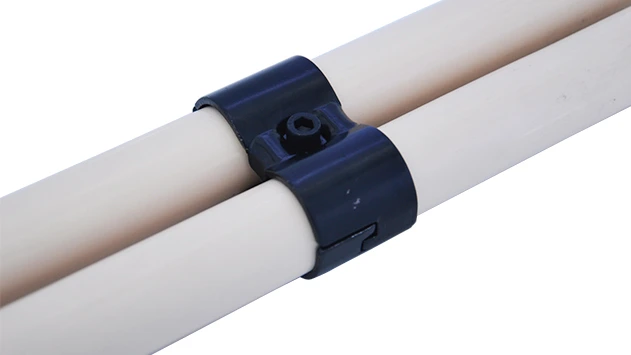
Parallel Lean Pipe Joint
Parallel lean pipe joint used for 2 pcs 28MM lean pipe connection in parallel direction to enhance frame structure, usually for heavy payload requirement for workbench. flow rack, hand trolley.
Walk into any computer peripheral assembly facility, and you'll be met with a symphony of precision: the soft hum of machinery, the gentle click of components slotting into place, and the rhythmic movement of workers who've turned repetition into an art form. From keyboards and mice to printers and webcams, these devices power our digital lives—but behind their seamless functionality lies an assembly line that's often anything but seamless. For years, manufacturers in this space have grappled with a universal challenge: how to balance speed, flexibility, and worker well-being in a world where product designs shift overnight and consumer demands grow more exacting by the day. Enter the unsung heroes of modern manufacturing: parallel lean pipe joints , and the ecosystem of tools they enable. In this deep dive, we'll explore how these unassuming connectors, paired with lean pipe workbenches , roller tracks , and other components, are redefining what's possible in computer peripheral assembly—one joint, one workbench, one smooth material flow at a time.
1. The Hidden Hurdles in Traditional Assembly Setups
Before we can appreciate the innovation of parallel lean pipe joints, it's critical to understand the pain points they solve. Traditional computer peripheral assembly lines often rely on rigid, fixed structures: heavy steel workbenches bolted to the floor, static material racks that require workers to stretch or bend to reach components, and conveyor systems that seem more likely to jam than to keep pace with production goals. Let's pull back the curtain on a typical day in an outdated facility to see why change was long overdue.
Consider Maria, a line worker responsible for assembling wireless mice. Her workstation is a bulky wooden bench with a fixed height—too low for her 5'10" frame, forcing her to hunch over 8 hours a day. To her left, a metal rack holds circuit boards, but the shelves are spaced so widely that she has to step down from her stool to grab the smallest components. To her right, a conveyor belt meant to deliver plastic casings often gets stuck when a casing misaligns, bringing the entire line to a halt for 10 minutes at a time. By mid-afternoon, her lower back aches, her productivity dips, and the team falls 15 units short of the daily quota. Sound familiar? This isn't just Maria's story—it's the reality for countless workers in facilities still clinging to inflexible setups.
The issues go beyond worker discomfort. Traditional systems lack adaptability, a fatal flaw in an industry where product lifecycles are shorter than ever. When a new mouse model with a slimmer design hits the drawing board, Maria's fixed workbench can't be adjusted to accommodate the smaller components. The material rack, built for the old casing size, now has wasted space, and the conveyor belt's width isn't optimized for the new parts. Retooling takes weeks, and costs spiral—all while competitors with more agile setups are already shipping the updated model.
Then there's the problem of "dead time"—moments when workers are idle, waiting for materials to arrive or for a jammed roller track to be fixed. In a study by the Manufacturing Performance Institute, computer peripheral facilities with traditional setups reported that up to 23% of productive hours are lost to such inefficiencies. That's nearly a quarter of the workday vanishing into thin air, not due to worker error, but because the tools they rely on are working against them.
2. Parallel Lean Pipe Joints: The Unsung Hero of Modern Assembly
What Are Parallel Lean Pipe Joints, Anyway?
At first glance, a parallel lean pipe joint might seem like little more than a metal connector—but that's part of its genius. These joints are designed to link lean pipes (hollow tubes typically made of steel with a plastic coating) in parallel configurations, creating sturdy yet adjustable frameworks. Unlike traditional welded or bolted connections, parallel lean pipe joints can be loosened, repositioned, and retightened in minutes, allowing for on-the-fly adjustments to workbenches, racks, and material flow systems. Think of them as the "Lego bricks" of manufacturing: simple, versatile, and infinitely reconfigurable.
But their real power lies in their ability to foster "lean manufacturing"—a philosophy centered on minimizing waste while maximizing value. In computer peripheral assembly, where precision and speed are paramount, parallel lean pipe joints enable just that: they eliminate the waste of rigid structures, the waste of worker motion, and the waste of downtime during retooling. They're not just tools; they're enablers of a more human-centric approach to manufacturing, where the line adapts to the worker, not the other way around.
How Parallel Lean Pipe Joints Integrate with Lean Pipe Workbenches
If parallel lean pipe joints are the connectors, then lean pipe workbenches are the canvas on which they shine. These workbenches, built using lean pipes and parallel joints, are the heart of the assembly line—where workers spend the majority of their day assembling, testing, and inspecting components. What makes them revolutionary? Their adjustability.
Let's revisit Maria, but this time in a facility equipped with lean pipe workbenches. Her workstation, built with parallel lean pipe joints, can be raised or lowered with a simple wrench, aligning perfectly with her elbow height to reduce strain. The surface is modular: she can add a tool rail above the bench using additional joints, keeping screwdrivers and tweezers within arm's reach, or attach a small shelf below for storing frequently used components. When the new slim mouse model arrives, the workbench's width can be narrowed by adjusting the parallel joints, and the height of the component bins can be tweaked to match the new part sizes—all in under an hour, not weeks.
But it's not just about adjustability. Lean pipe workbenches, thanks to parallel joints, are also lightweight yet surprisingly strong. A typical setup can support up to 500 pounds of equipment and components, ensuring stability even during high-volume production. And because they're built with standardized lean pipes and joints, replacement parts are easy to source—no more waiting for custom steel fabrication when a joint wears out.

3. Building Blocks of Efficiency: Key Components in Action
Parallel lean pipe joints don't work in isolation. They're part of a larger ecosystem of components that together transform assembly lines from rigid obstacles into dynamic, worker-friendly systems. Let's explore the key players in this ecosystem and how they collaborate to drive efficiency.
Roller Track: The Silent Conductor of Material Flow
Imagine a world where components glide effortlessly from one workstation to the next, no jams, no delays, no manual lifting. That's the promise of roller track systems, which use a series of rotating rollers to move materials along a path. In computer peripheral assembly, where small, delicate parts like microchips and buttons are constantly in transit, roller tracks are a game-changer—and they're made possible by the flexibility of parallel lean pipe joints.
Here's how it works: Roller tracks are mounted onto frames built with lean pipes and parallel joints, allowing for precise angle adjustments. For example, a slight downward slope ensures that circuit boards flow gently from the soldering station to the testing station, while a flat track with motorized rollers can move heavier items like printer casings. Because the frames are adjustable, the track's height and direction can be tweaked to align with each worker's workstation, reducing the need for bending or stretching.
Take the example of a webcam assembly line. The lens modules, delicate and prone to scratching, need to move from the inspection station to the final assembly station without jostling. A roller track with soft plastic rollers (often in yellow or grey, as seen in plastic roller track guide rails ) ensures smooth transport, while the track's height—adjusted via parallel lean pipe joints—keeps the modules at eye level for the next worker, minimizing handling and errors. In facilities using such systems, material transport time has been shown to decrease by up to 40%, freeing workers to focus on assembly rather than fetching parts.
Aluminum Profile: Strength Meets Flexibility
While lean pipes are the backbone of many setups, aluminum profiles (extruded aluminum rails with T-slots) add another layer of versatility—especially for heavier-duty applications. Aluminum profiles are lightweight yet incredibly strong, making them ideal for supporting larger workbenches or material racks. When paired with parallel lean pipe joints (or specialized aluminum joints), they create structures that are both rigid enough to handle heavy loads and flexible enough to reconfigure as needed.
In a keyboard assembly line, for instance, aluminum profiles might form the frame of a multi-tiered material rack. Each tier, adjusted using parallel joints, holds different components: keycaps on the top shelf, circuit boards on the middle, and rubber domes on the bottom. The T-slots in the aluminum profiles allow for easy attachment of bins, hooks, or even small tools, keeping everything organized and accessible. When the line switches to a mechanical keyboard with taller keycaps, the shelf heights can be adjusted in minutes, and additional hooks can be added to hold the new switch components—no need for a rack.
Aluminum profiles also excel in cleanroom environments, where computer peripherals like medical-grade webcams are assembled. Their smooth, non-porous surface is easy to sanitize, and their lightweight nature reduces the risk of damage to sensitive equipment during reconfiguration. It's this combination of strength, flexibility, and hygiene that makes aluminum profiles a staple in modern lean systems.
Caster Wheels: Mobility Without Compromise
What good is an adjustable workbench if it's stuck in one spot? That's where caster wheels come in. These small but mighty components attach to the base of lean pipe workbenches, material racks, and even roller track systems, turning stationary structures into mobile units. And when paired with parallel lean pipe joints, they unlock a new level of flexibility.
Consider a facility that assembles both wireless and wired mice on the same line. With caster wheels, the lean pipe workbench dedicated to wireless module installation can be rolled to the front of the line during the morning shift, then moved to the back in the afternoon when wired mice are prioritized. The parallel joints ensure that the workbench remains stable even when in motion, and locking caster wheels keep it securely in place once positioned. For workers like Maria, this means less time walking between stations and more time focused on assembly—a small change that adds up to big productivity gains.
Caster wheels also shine during maintenance or deep cleaning. Instead of working around a fixed workbench, the entire unit can be rolled aside, allowing for thorough floor cleaning or equipment repairs. In facilities that operate 24/7, this minimizes downtime, as cleaning crews can work on one section while production continues in another. It's mobility with a purpose: making the assembly line adapt to the needs of the business, not the other way around.

4. A Day in the Life: How These Components Transform Workflows
To truly understand the impact of parallel lean pipe joints and their components, let's walk through a hypothetical day at a modern computer peripheral assembly facility—one where Maria and her team now work with lean systems. This isn't just about numbers; it's about how these tools change the rhythm of work, the mood of the floor, and the pride workers take in their craft.
6:00 AM: Morning Setup—Quick Adjustments, No Stress
The first shift arrives to find the assembly line already humming, but not in the chaotic way of old. Today, they're switching from assembling standard keyboards to gaming keyboards with mechanical switches—a product that requires different components and a slightly different workflow. In the past, this would have meant hours of retooling, but with lean systems, it's a breeze.
Juan, the line supervisor, starts by adjusting the lean pipe workbenches. Using a hex key, he loosens the parallel lean pipe joints on each bench, raising the surface by 2 inches to accommodate the taller mechanical switches. Next, he repositions the roller track that delivers keycaps, tilting it slightly to ensure the larger, heavier keycaps don't jam. The aluminum profile material rack, which held standard keycaps yesterday, gets new dividers—snapped into the T-slots in seconds—to separate the gaming keycaps by color. By 6:30 AM, the line is ready, and workers are already clocking in, coffee in hand, without the usual morning stress of a delayed start.
10:00 AM: Midday Rush—Roller Track Keeping Pace
Production is in full swing, and the line is moving faster than ever. Maria, now working at her adjusted workbench, is assembling the keyboard frames. She reaches for a circuit board from the roller track to her left—it glides into place smoothly, thanks to the plastic roller track guide rails that keep it aligned. She snaps on the mechanical switches, then pushes the frame onto the next roller track, which sends it to the keycap station. There, Raj is attaching the RGB backlit keycaps, his workbench height adjusted to his shorter stature using the same parallel joints Maria's bench uses.
At one point, a new batch of switch components arrives—more than the current material rack can hold. Instead of stopping the line, Juan rolls over an extra lean pipe rack (fitted with caster wheels) and positions it next to the main rack. He connects the two with a short roller track, allowing workers to access the new components without leaving their stations. The entire process takes 5 minutes, and production never skips a beat. In the old facility, this would have required a worker to carry boxes of switches from the storage room, causing delays and increasing the risk of dropped parts.
3:00 PM: Quality Check—Workbench Ergonomics Paying Off
The quality control station is where finished keyboards are tested for functionality. With traditional fixed workbenches, QC inspectors often had to strain their necks to see the keyboard screens or reach across wide surfaces to plug in testing cables. Now, their lean pipe workbench is equipped with a tilting top (adjusted via parallel joints) that angles the keyboard toward them, reducing eye strain, and a shelf below for storing testing tools—no more bending to the floor.
Lina, the lead QC inspector, notes that error rates have dropped significantly since the switch to lean systems. "Before, I'd miss small defects because my back hurt from hunching over," she says. "Now, the workbench fits me, so I can focus on being thorough. We're catching issues earlier, which means fewer returns and happier customers."
5:00 PM: End-of-Shift Teardown—Easy Reconfiguration for Tomorrow
As the shift winds down, the team prepares for tomorrow's production run: wireless mice. Instead of leaving the gaming keyboard setup to slow down the morning crew, they break down the line in minutes. The parallel lean pipe joints are loosened, and the workbenches are folded (yes, folded!) into compact units, thanks to hinges attached to the aluminum profiles. The roller tracks are disconnected and stacked, and the caster-equipped racks are rolled into storage. The floor is clear, ready for cleaning, and the night shift—assembling printer components—can start setting up their own lean system without any overlap.
Maria heads home, her back no longer aching, and thinks about how different work is now. "I used to dread coming in because my body hurt so much," she says. "Now, the line works with me, not against me. I actually look forward to seeing what we'll build next."
5. The Data Speaks: Quantifiable Benefits of Lean Systems
It's one thing to talk about improved workflows and happier workers, but the real measure of success lies in the numbers. Let's compare key metrics from a traditional computer peripheral assembly line with one using parallel lean pipe joints, lean pipe workbenches, roller tracks, aluminum profiles, and caster wheels.
| Metric | Traditional Assembly Line | Lean Assembly Line (with Parallel Lean Pipe Joints) | Improvement |
|---|---|---|---|
| Setup Time for New Product | 48 hours | 2 hours | 96% |
| Worker Idle Time (per shift) | 2.5 hours | 0.5 hours | 80% |
| Defect Rate | 3.2% | 0.8% | 75% |
| Worker Absenteeism | 8% | 3% | 62.5% |
| Annual Retooling Costs | $120,000 | $15,000 | 87.5% |
These numbers tell a clear story: lean systems, powered by parallel lean pipe joints and their components, aren't just about making work easier—they're about making businesses more competitive. The 96% reduction in setup time alone allows facilities to bring new products to market faster, while the 75% drop in defects reduces waste and improves customer satisfaction. And when workers are less absent and more engaged, the entire operation runs smoother, with fewer disruptions and higher morale.
6. Beyond the Assembly Line: Future-Proofing with Lean Solutions
As computer peripherals grow more advanced—think foldable keyboards, AI-powered webcams, and haptic-feedback mice—the assembly lines that build them will need to evolve even faster. Parallel lean pipe joints and lean systems aren't just a solution for today; they're a way to future-proof manufacturing operations.
Consider the rise of customization. Today's consumers want peripherals that reflect their personal style—keyboards with custom keycap designs, mice with interchangeable grips, printers that match their home decor. Mass production alone can't meet this demand; manufacturers need flexible lines that can handle small batches of custom products without sacrificing efficiency. Lean systems excel here: with parallel lean pipe joints, a single assembly line can be reconfigured to build 10 different mouse designs in a single day, each with unique components and workflows.
Then there's the integration of automation. As cobots (collaborative robots) become more common in assembly lines, they need workspaces that can adapt to their size and movement. Lean pipe workbenches, with their adjustable heights and modular designs, provide the perfect platform for cobots to work alongside human workers. A cobot arm can be mounted to an aluminum profile frame, with its position fine-tuned using parallel joints to ensure it collaborates seamlessly with the worker next to it—no need for expensive custom mounting brackets.
Sustainability is another growing concern. Traditional manufacturing setups generate significant waste, from excess packaging to discarded fixed structures that can't be repurposed. Lean systems, by contrast, are inherently sustainable. Lean pipes and aluminum profiles are recyclable, and parallel lean pipe joints allow for endless reconfiguration, meaning components rarely end up in landfills. Even the roller tracks, with their replaceable plastic rollers, minimize waste—when a roller wears out, only the roller needs replacing, not the entire track.
7. Conclusion: The Human-Centric Revolution in Manufacturing
At the end of the day, the true impact of parallel lean pipe joints and lean systems isn't measured in metrics alone—it's measured in the lives of the workers who use them. When a workbench adjusts to fit a worker's body, when a roller track eliminates the need for heavy lifting, when a material rack reconfigures in minutes instead of days, something profound happens: work becomes less about enduring discomfort and more about creating value. Maria, Lina, Raj, and Juan aren't just assembling computer peripherals—they're building a future where manufacturing is agile, efficient, and, above all, human.
Parallel lean pipe joints may be small, but their influence is vast. They're a reminder that innovation in manufacturing doesn't always come from flashy new machines; sometimes, it comes from reimagining the basics—the connections that hold everything together. And in a world where computer peripherals are the silent partners in our digital lives, those connections matter more than we realize. After all, every smooth, reliable keyboard click or mouse movement starts with an assembly line that's built to flow—just like the people who make it all possible.