- Company Articles
- Products and Technology
- Product knowledge
- Parallel Lean Pipe Joints in Electronics Manufacturing: Static Control Considerations

Parallel Lean Pipe Joints in Electronics Manufacturing: Static Control Considerations
Related Product
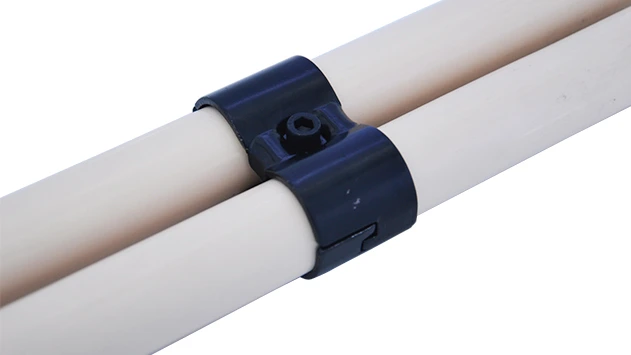
Parallel Lean Pipe Joint
Parallel lean pipe joint used for 2 pcs 28MM lean pipe connection in parallel direction to enhance frame structure, usually for heavy payload requirement for workbench. flow rack, hand trolley.
The Hidden Battle: Static Electricity in Electronics Manufacturing
Walk into any modern electronics manufacturing facility, and you'll witness a carefully choreographed dance of precision. Circuit boards glide along roller tracks, assemblers in grounded wrist straps hunch over ESD workstations, and modular structures—built from lean pipes and joints—hold tools, components, and. But beneath this efficiency lies an invisible adversary: static electricity. A single electrostatic discharge (ESD) can damage a microchip in milliseconds, turning a $50 component into scrap and derailing production schedules. For manufacturers, the cost of ignoring static control is steep: industry reports estimate ESD-related losses exceed $5 billion annually, from yield reductions to product failures in the field.
In this high-stakes environment, even the smallest components play a critical role. Enter the parallel lean pipe joint—a humble connector that does more than just hold structures together. When designed and integrated correctly, these joints become part of a facility's first line of defense against static, ensuring that workbenches, roller tracks, and ESD workstations maintain continuous electrical grounding. Let's dive into how parallel lean pipe joints shape static control in electronics manufacturing, and why materials like aluminum lean pipe are becoming the go-to choice for forward-thinking plants.
Lean Pipe Systems: The Backbone of Modern Manufacturing
Before we focus on the joints themselves, it's worth understanding the system they support. Lean pipe systems—often called "flexible lean tubes"—are modular frameworks used to build everything from workbenches and material racks to assembly lines. Composed of pipes, joints, and accessories, they're prized for their adaptability: a single structure can be reconfigured in hours to accommodate new products, workflow changes, or seasonal demand spikes. This flexibility is a cornerstone of lean manufacturing, where minimizing waste and maximizing efficiency are paramount.
Traditional lean pipe systems relied on steel pipes coated in plastic, paired with plastic or zinc-plated steel joints. While functional, these materials posed a hidden risk in electronics manufacturing: plastic coatings and non-conductive joints could interrupt grounding paths, turning structures into static generators rather than dissipaters. As manufacturers began prioritizing ESD protection, the focus shifted to materials and connectors that could balance flexibility with conductivity—enter aluminum lean pipe and parallel lean pipe joints.

Parallel Lean Pipe Joints: More Than Just Connectors
At first glance, a parallel lean pipe joint looks like a simple T-shaped or L-shaped connector, designed to join two or more pipes at parallel angles. But its role in static control is anything but simple. In ESD-sensitive environments, every joint must ensure that the entire structure—from the workbench surface to the roller track, down to the floor—maintains a continuous path to ground. A poorly designed joint, or one made from non-conductive materials, creates a "break" in this path, allowing static to build up and discharge unexpectedly.
Parallel joints are particularly critical because they're often used in high-stress areas: think the corners of a workbench, the supports for a roller track, or the cross-braces of a material rack. These are points where movement, vibration, or heavy loads could loosen connections over time. A quality parallel lean pipe joint addresses this with features like metal-to-metal contact (ensuring conductivity), secure locking mechanisms (preventing loosening), and compatibility with conductive pipes like aluminum lean pipe. When paired with grounded aluminum pipes, these joints create a "static highway" that safely channels any built-up charge away from sensitive components.

Why Static Control Matters: The Cost of a Single Spark
To appreciate the importance of parallel lean pipe joints in ESD protection, consider what happens when static goes unchecked. The triboelectric effect—static generated by friction between two materials—is unavoidable in manufacturing: plastic bins sliding on roller tracks, operators moving across floors, even the simple act of placing a circuit board on a workbench can generate charges up to 25,000 volts. While this might not feel like a shock to humans (we typically only feel discharges above 3,000 volts), modern microchips can be damaged by charges as low as 100 volts—too small to detect without specialized equipment.
The consequences of ESD damage aren't always immediate. "Latent" failures, where a component is weakened but continues to function, can lead to product failures months or years after shipping, eroding customer trust and increasing warranty costs. For manufacturers of medical devices, aerospace components, or automotive electronics, the stakes are even higher: a single ESD-damaged part could compromise safety.
This is why standards like ANSI/ESD S20.20 exist, outlining requirements for ESD-protected areas (EPAs) in electronics manufacturing. These standards mandate that all conductive materials in the EPA—including workbenches, tools, and material handling equipment—must be grounded. Parallel lean pipe joints, as part of these structures, are subject to the same requirements: they must have a surface resistance between 10^6 and 10^9 ohms (the sweet spot for dissipating static without creating a shock hazard) and maintain that resistance over time.
Materials Matter: Aluminum Lean Pipe vs. Traditional Options
The choice of pipe material is just as critical as the joint design. For decades, steel pipes coated in plastic were the norm, but their non-conductive coatings made them poor candidates for ESD workstations. Today, aluminum lean pipe has emerged as the gold standard, and for good reason. Let's compare aluminum lean pipe to traditional materials, and see why it pairs so well with parallel lean pipe joints for static control:
| Material | Conductivity (Surface Resistance) | Durability | Weight (per meter) | ESD Performance |
|---|---|---|---|---|
| Aluminum Lean Pipe | 10^4–10^6 ohms (excellent conductivity) | Resistant to corrosion; anodized finishes extend lifespan | 1.2–1.5 kg (lightweight, easy to handle) | Superior: forms continuous grounding paths with metal joints |
| Steel Pipe (Plastic-Coated) | >10^12 ohms (non-conductive) | Prone to rust if coating is damaged | 2.5–3.0 kg (heavier, harder to reconfigure) | Poor: plastic coating interrupts grounding; static builds up |
| Stainless Steel Pipe | 10^5–10^7 ohms (good conductivity) | Highly durable, corrosion-resistant | 2.8–3.2 kg (heavy, expensive) | Good, but weight limits flexibility; higher cost than aluminum |
Aluminum lean pipe stands out for its balance of conductivity, weight, and cost. Its natural conductivity means that even if the surface is slightly scratched (a common occurrence in busy factories), the underlying metal still provides a path to ground. When paired with parallel lean pipe joints made from conductive aluminum or brass, it creates a seamless ESD protection system that's both flexible and reliable.
Integrating Parallel Joints into ESD Workstations: Design Principles
An ESD workstation is the frontline of defense in electronics manufacturing. It's where operators handle sensitive components like microprocessors, capacitors, and semiconductors—parts that can be ruined by a single static discharge. Designing such a workstation with parallel lean pipe joints requires careful attention to grounding, material flow, and ergonomics.
Start with the frame: the workstation's skeleton, built from aluminum lean pipe and parallel joints. Every joint must be tightened to manufacturer specifications to ensure metal-to-metal contact—even a small gap can disrupt conductivity. Many manufacturers use torque wrenches during installation to avoid over-tightening (which can strip threads) or under-tightening (which creates resistance). Once assembled, the frame should be connected to a dedicated earth ground via a braided copper strap or grounding cable, with a resistance reading between 1 and 100 ohms (per ANSI/ESD S24.1).
Next, consider the work surface. Most ESD workstations use conductive mats or laminates, which are grounded to the frame via snap connectors. Here, parallel joints play a hidden role: they support the under-frame of the workbench, ensuring the surface remains level and the grounding connection stays intact, even when operators lean on the bench or place heavy tools on it. For added protection, some workstations include "ground verification" systems—LED indicators that light up if the frame's resistance exceeds safe levels, alerting operators to loose parallel joints or damaged pipes.
Roller Tracks and Static: Keeping Materials Moving Safely
Roller tracks are the arteries of electronics manufacturing, transporting components, PCBs, and assemblies between workstations. But they're also a common source of static: plastic rollers, in particular, can generate significant charge as materials slide over them. To prevent this, roller tracks must be integrated with the same ESD principles as workstations—and parallel lean pipe joints are key to this integration.
Modern roller tracks designed for ESD environments use conductive plastic or metal rollers, mounted on aluminum frames. These frames are connected to the main workstation or material rack via parallel lean pipe joints, ensuring the entire track system is grounded. For example, a roller track feeding into an ESD workstation might be supported by aluminum lean pipe legs, joined at the base with parallel joints that connect to the workstation's frame. This creates a continuous path from the roller track to the ground, dissipating any static generated by moving materials.
Maintenance matters, too. Over time, dirt, dust, or lubricants can build up on roller tracks or joints, increasing resistance. Regular cleaning with isopropyl alcohol (avoiding harsh chemicals that damage conductivity) and torque checks on parallel joints ensure the system remains effective. Some manufacturers even schedule monthly "static audits," using handheld meters to test resistance at joint points, roller surfaces, and grounding connections.
Case Study: Reducing ESD Failures with Aluminum Lean Pipe and Parallel Joints
Consider a mid-sized electronics manufacturer producing IoT sensors—a product line with PCBs containing delicate microcontrollers sensitive to ESD. The company was struggling with a 4.2% failure rate during final testing, with root-cause analysis pointing to static damage. Their existing workstations used steel pipes with plastic-coated joints, and roller tracks with non-conductive plastic rollers.
After consulting with an ESD specialist, the manufacturer decided to upgrade to aluminum lean pipe workstations with parallel brass joints, paired with conductive roller tracks. The new system included:
- Aluminum lean pipe frames with parallel joints, grounded via 10mm braided cables to earth ground.
- Conductive workbench mats (surface resistance: 10^6 ohms) connected to the frame via snap rivets.
- Roller tracks with stainless steel rollers, mounted on aluminum frames joined to the workstation via parallel lean pipe joints.
- Ground verification LEDs at each workstation, alerting operators to resistance >100 ohms.
Within three months, the failure rate dropped to 0.8%—a 81% reduction. The manufacturer estimated annual savings of $120,000 from reduced scrap, fewer reworks, and faster testing cycles. Operators also reported easier reconfiguration of workstations, thanks to the lightweight aluminum lean pipe and tool-free parallel joints, which cut changeover time from hours to minutes.
Best Practices for Implementing Parallel Lean Pipe Joints
Switching to aluminum lean pipe and parallel joints isn't just about purchasing new materials—it's about building a culture of static control. Here are five best practices to ensure success:
1. Train the Team on ESD Basics : Operators and maintenance staff should understand why parallel joints and grounding matter. Simple training sessions on static risks, how to check joint tightness, and what the ground verification LEDs mean can reduce human error.
2. Standardize Joint Torque and Installation : Create a checklist for installers, including torque values for parallel joints (typically 4–6 Nm for aluminum joints), grounding cable connections, and resistance testing. Consistency during installation prevents "weak links" in the grounding chain.
3. Label and Color-Code for ESD : Mark aluminum lean pipe structures with ESD warning labels, and use color-coded parallel joints (e.g., green) to distinguish conductive components from non-conductive ones (common in non-ESD areas like shipping). This reduces mix-ups during reconfiguration.
4. Schedule Regular Maintenance : Assign technicians to inspect parallel joints monthly for tightness, corrosion, or damage. Clean roller tracks and workbench surfaces weekly to remove dust buildup. Keep a log of resistance readings to spot trends (e.g., increasing resistance in a particular workstation's joints).
5. Partner with a Reputable Supplier : Not all parallel lean pipe joints are created equal. Choose suppliers who specialize in ESD components, provide material certifications (e.g., conductivity test reports), and offer technical support for system design. A good supplier will help you select the right joints, pipes, and accessories for your specific needs.
The Future: Smart Joints and Industry 4.0
As manufacturing evolves toward Industry 4.0, lean pipe systems are getting smarter—and parallel joints are no exception. Emerging technologies include "smart joints" embedded with RFID tags or sensors that monitor resistance in real time, sending alerts to maintenance teams if conductivity drops. Some prototypes even include Bluetooth connectivity, allowing operators to check joint status via a smartphone app.
Aluminum lean pipe is also evolving. Manufacturers are experimenting with composite materials—aluminum infused with carbon fiber for added strength, or conductive polymers for enhanced ESD protection. These innovations aim to make lean systems lighter, more durable, and even more conductive, further reducing the risk of static damage.
Conclusion: The Quiet Guardians of Electronics Manufacturing
In the fast-paced world of electronics manufacturing, it's easy to overlook the small components—the parallel lean pipe joints, the aluminum pipes, the roller tracks—that keep production running smoothly. But as we've explored, these "quiet guardians" play a vital role in protecting against static electricity, one of the industry's costliest enemies.
By prioritizing conductive materials like aluminum lean pipe, investing in quality parallel lean pipe joints, and integrating ESD principles into every aspect of workstation and roller track design, manufacturers can reduce failures, improve yields, and protect their bottom line. In the end, it's not just about building structures—it's about building trust: trust that every component, from the smallest joint to the largest workbench, is working together to keep sensitive electronics safe.
So the next time you walk through a manufacturing plant, take a moment to look at the lean pipe systems around you. Those parallel joints holding up the workbench or supporting the roller track? They're not just connectors. They're the unsung heroes of static control, ensuring that the devices we rely on—from smartphones to medical monitors—make it to market safe, reliable, and ready to perform.