- Company Articles
- Products and Technology
- Application Cases
- Parallel Lean Pipe Joints in Home Appliance Production Lines: Case Studies

Parallel Lean Pipe Joints in Home Appliance Production Lines: Case Studies
Related Product
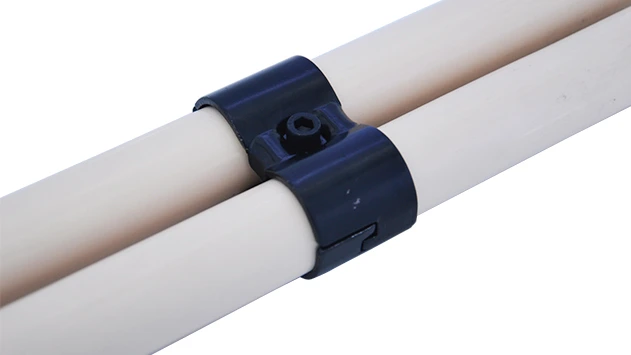
Parallel Lean Pipe Joint
Parallel lean pipe joint used for 2 pcs 28MM lean pipe connection in parallel direction to enhance frame structure, usually for heavy payload requirement for workbench. flow rack, hand trolley.
Walk into any home appliance factory, and you'll quickly notice a rhythm—a symphony of moving parts, workers collaborating, and machines humming. But behind that rhythm lies a critical challenge: how to keep up with consumer demands for smarter, more varied appliances while staying efficient, cost-effective, and adaptable. In an industry where product cycles shrink and customization grows, lean manufacturing isn't just a buzzword; it's the backbone of survival. And at the heart of many lean success stories? (unassuming) tools like lean pipes and their unsung heroes: parallel lean pipe joints.
For decades, lean pipes—lightweight, modular tubes—have helped manufacturers build everything from workbenches to material racks. But it's the joints that hold these systems together, and parallel lean pipe joints stand out for their ability to create stable, flexible structures that adapt as needs change. In this article, we'll dive into three real-world case studies from the home appliance sector, exploring how parallel lean pipe joints transformed production lines, made workers' days easier, and boosted bottom lines. These aren't just technical upgrades; they're stories of problem-solving, collaboration, and the human impact of good design.
Why Parallel Lean Pipe Joints Matter in Home Appliances
Before we jump into the case studies, let's clarify what makes parallel lean pipe joints so valuable. Unlike fixed joints, these connectors allow two or more lean pipes to run parallel to each other, creating sturdy frames for workbenches, flow racks, and conveyors. Their magic lies in versatility: they're easy to assemble by hand (no welding required), durable enough to handle heavy appliance parts, and reusable—so when a production line needs a makeover, you don't scrap the old setup; you reconfigure it. For home appliance makers, where a single line might switch from assembling 30-inch to 36-inch ovens overnight, that flexibility is gold.
"We used to spend days tearing down and rebuilding workbenches whenever we launched a new fridge model," says Maria Gonzalez, a production supervisor with 15 years in the industry. "Now, with parallel joints, my team can adjust a bench's height or add a shelf in 20 minutes. It's not just faster—it's less frustrating. Workers feel empowered when they can tweak their space to fit the job."
Case Study 1: Streamlining Fridge Assembly with Custom Workbenches
The Challenge: Bulky Parts, Strained Workers
A leading manufacturer of smart refrigerators faced a classic dilemma: their flagship fridge line was growing in popularity, but assembling the 200+ pound units was taking a toll. Workers strained to lift heavy door panels and compressor parts onto fixed-height workbenches, leading to fatigue and occasional delays. Worse, the one-size-fits-all benches didn't accommodate the team's diverse heights, increasing the risk of repetitive strain injuries. The production manager, Raj Patel, knew something had to change.
The Solution: Ergonomic Workbenches with Parallel Lean Pipe Joints
Raj partnered with a local lean pipe supplier to design custom workbenches. The key? Using parallel lean pipe joints to create adjustable frames. Here's how it worked:
- Height Adjustability: Parallel joints connected vertical lean pipes to horizontal supports, allowing workers to crank the bench surface up or down by 6 inches—no tools needed. This meant a 5'2" assembler and a 6'1" teammate could each set their ideal height.
- Integrated Material Racks: On either side of the workbench, parallel joints supported flow racks (using 38 aluminum roller track yellow) that fed parts like gaskets and screws directly to the assembler. The racks tilted slightly, so parts rolled forward as they were used, eliminating (bending over) to reach bins.
- Stability for Heavy Loads: Parallel joints distributed weight evenly across the frame, ensuring the bench didn't wobble even when holding a 300-pound fridge door. "We tested it with our heaviest components," Raj recalls. "The joints held tight—no squeaks, no shifting. That gave the team confidence."
The Results: Happier Workers, Faster Output
Within a month of installing the new workbenches, the changes were clear. Workers reported less shoulder and back pain, and Raj noticed fewer mid-shift breaks for stretching. Productivity ticked up too: assembly time per fridge dropped by 12%, and the line missed zero days due to injuries in the first quarter—down from 3 lost days the previous year.
"I used to go home with a stiff neck every night," says Mei Lin, an assembler with 8 years on the line. "Now I adjust my bench in the morning, and the parts roll right to me. It sounds small, but it's changed how I feel at the end of the day. I even stay a few minutes late to help clean up—never did that before!"

Case Study 2: Blending Speed and Flexibility in Washing Machine Lines
The Challenge: Chasing the "Model Mix" Whirlwind
A mid-sized washing machine manufacturer in Ohio had a different problem: model mix. With consumers demanding everything from compact, energy-efficient washers to large-capacity steam models, the factory switched between 7 models daily. Each changeover meant stopping the line for 2 hours to reconfigure conveyors and material racks—a killer for throughput. "We were losing 10 hours a week just in setup time," says production lead Jake Thompson. "Our customers were asking for faster deliveries, but we couldn't keep up."
The Solution: Modular Conveyors with Parallel Lean Pipe Joints
Jake's team turned to modular conveyors built with lean pipes and parallel joints. The goal? Create a system that could be reconfigured in minutes, not hours. Here's the breakdown:
- Quick-Connect Conveyors: The main assembly line used 40 steel roller track yellow wheel conveyors, but instead of bolting them to the floor, parallel lean pipe joints connected the conveyor frames to adjustable legs. Workers could unclip the joints, reposition the conveyor sections, and clip them back—all in under 15 minutes for a full model change.
- Mobile Turnover Trolleys: For parts that didn't fit on the main line, the team added turnover trolleys (using swivel roller balls 1 inch) with frames built from parallel-jointed lean pipes. The trolleys nested when not in use, saving space, and their caster wheels (flat swivel castor wheel with brake) locked securely next to the line during assembly.
- Tool-less Joints: The supplier provided parallel lean pipe joints with quick-release levers, so workers didn't need wrenches or screwdrivers. "We trained the night shift in 30 minutes," Jake laughs. "Even the new hires could reconfigure a section by their second week."
The Results: From 2 Hours to 20 Minutes
The impact was immediate. Changeover time plummeted from 2 hours to 20 minutes, adding 8+ productive hours to the week. The line could now run 3 more model changes daily, which helped the factory fulfill a rush order for 500 compact washers ahead of schedule. Perhaps most importantly, workers felt more in control. "Before, we'd just stand around during changeovers, waiting for the engineers to fix things," says assembly worker Tyrell Jackson. "Now we do the reconfiguring ourselves. It makes us feel like we're part of the solution, not just the problem."

Case Study 3: Small Space, Big Impact—A Blender Manufacturer's Win
The Challenge: Cramped Quarters, Chaotic Parts
Not all home appliance factories are sprawling complexes. Take GreenBlend, a startup making high-end blenders in a 10,000-square-foot facility. With limited floor space, their assembly area felt cramped: boxes of blender jars stacked to the ceiling, motors stored in plastic bins under tables, and cords snaking across the floor. "We were tripping over each other," says founder Lila Chen. "And every time we launched a new color (matte black, rose gold, etc.), we'd have to pile more parts somewhere, making the chaos worse."
The Solution: Vertical Space Optimization with Parallel Lean Pipe Joints
Lila's team needed to think vertically. They worked with a lean system supplier to design a compact setup using parallel lean pipe joints to build upward, not outward:
- Wall-Mounted Material Racks: Using parallel joints, they mounted 3-row, 3-floor material racks (Material Rack B) on the walls. Each shelf held a different blender component—blades on the top, bases on the middle, jars on the bottom—with plastic roller track guide rail grey to let jars slide out smoothly. "We freed up 30% of our floor space just by going vertical," Lila says.
- Overhead Conveyors: Above the assembly table, parallel joints supported a mini aluminum roller track yellow conveyor that carried completed blender bases to the testing station. No more carrying heavy bases across the room—they glided overhead, powered by gravity.
- Foldable Workbenches: For small-batch runs (like limited-edition colors), they built foldable workbenches using parallel joints. When not in use, the benches folded flat against the wall, taking up less than 6 inches of space.
The Results: A Factory That Breathes
Six months later, GreenBlend's factory feels like a different place. Workers no longer trip over boxes; instead, they grab parts from organized wall racks. The overhead conveyor reduced walking time by 40%, and the foldable benches let the team scale up small-batch production without expanding the facility. "Last month, we launched a holiday edition blender and assembled 200 units in a day—something we couldn't have done before," Lila says. "And the best part? My team doesn't dread coming to work anymore. The space feels calm, and calm workers make fewer mistakes."
| Industry Segment | Key Challenge | Solution Components | Key Outcomes |
|---|---|---|---|
| Refrigerator Manufacturing | Ergonomic strain, fixed workbench heights | Adjustable workbenches, parallel lean pipe joints, 38 aluminum roller track yellow | 12% faster assembly, 0 injury days (vs. 3 prior), reduced worker fatigue |
| Washing Machine Assembly | Long model changeover times (2 hours) | Modular conveyors, quick-release parallel joints, 40 steel roller track yellow wheel | Changeover time cut to 20 minutes, 8+ extra productive hours/week |
| Small Appliance (Blenders) | Limited space, disorganized parts storage | Wall-mounted material racks, overhead conveyors, foldable workbenches | 30% more floor space, 40% less walking time, improved small-batch scalability |
Beyond the Assembly Line: The Hidden Benefits of Parallel Lean Pipe Joints
What these case studies share isn't just about faster production or cost savings—it's about people. When Raj Patel's fridge assemblers adjust their workbench height, they're not just using a tool; they're taking ownership of their workspace. When Tyrell Jackson reconfigures a conveyor in 15 minutes, he's gaining confidence in his ability to adapt. And when Lila Chen's team assembles 200 blenders in a day, they're proving that small spaces don't have to limit big dreams.
Parallel lean pipe joints also offer sustainability benefits. Unlike welded steel structures, which end up in landfills when outdated, lean pipes and joints are reusable. Raj's team, for example, repurposed their old workbench pipes to build a new shipping station. "We saved $5,000 just by reusing materials," he notes. And because they're lightweight, lean pipes reduce shipping costs for suppliers, lowering the carbon footprint of the entire supply chain.
In the fast-paced world of home appliances, success hinges on the ability to pivot. Consumers want new features, new sizes, new colors—and they want them yesterday. Parallel lean pipe joints may seem simple, but they're a reminder that innovation often lives in the details: the joint that lets a workbench adjust, the roller track that feeds parts smoothly, the conveyor that reconfigures in minutes. These aren't just tools; they're enablers of resilience. And in an industry where the only constant is change, resilience is everything.
So the next time you unbox a new fridge, washer, or blender, take a moment to appreciate the unseen heroes: the lean pipes, the parallel joints, and the workers who use them to turn ideas into appliances that make our homes better. Because behind every great product is a great process—and great processes are built on tools that put people first.