- Company Articles
- Products and Technology
- Product knowledge
- Parallel Lean Pipe Joints in Mechanical Manufacturing: Precision & Stability

Parallel Lean Pipe Joints in Mechanical Manufacturing: Precision & Stability
Related Product
Parallel Lean Pipe Joint
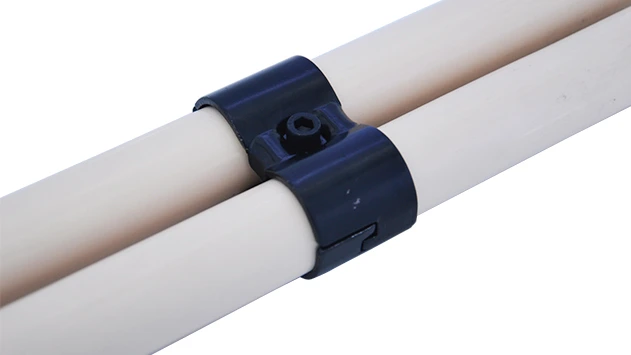
Parallel lean pipe joint used for 2 pcs 28MM lean pipe connection in parallel direction to enhance frame structure, usually for heavy payload requirement for workbench. flow rack, hand trolley.
Walk into any bustling mechanical manufacturing facility, and you'll quickly notice the unsung heroes keeping operations running smoothly: the structures that hold everything together. From the workbenches where assemblers piece together intricate components to the roller tracks that shuttle materials across the factory floor, stability and precision aren't just nice-to-haves—they're the backbone of efficiency. In recent years, one component has emerged as a game-changer in this space: the parallel lean pipe joint. More than just a connector, it's a bridge between the chaos of production and the order of lean manufacturing, ensuring that every workstation, every material flow path, and every assembly line operates with the kind of reliability that turns good factories into great ones.
What Are Parallel Lean Pipe Joints, Anyway?
Let's start with the basics. Parallel lean pipe joints are specialized connectors designed to link lean pipes (often aluminum or steel) in parallel configurations, creating sturdy, modular structures. Unlike traditional pipe joints that might focus solely on holding two pipes at a fixed angle, parallel joints are engineered to maintain consistent spacing and alignment between multiple pipes running side by side. Picture two aluminum pipes running horizontally, connected by a parallel joint that keeps them exactly 10cm apart—no wobbling, no shifting, no surprises. That precision might sound trivial, but in a factory where a millimeter of misalignment can throw off an entire assembly, it's everything.
These joints are part of a broader ecosystem of lean manufacturing tools, working hand-in-hand with lean pipes, aluminum profile accessories, and other components to build customizable solutions. Think of them as the "glue" that turns individual pipes into functional systems—whether that's a lean pipe workbench, a roller track for material handling, or a turnover trolley for transporting goods between stations. And because they're modular, they can be disassembled, reconfigured, and reused, aligning perfectly with the lean principle of eliminating waste through flexibility.
Precision: The Foundation of Flawless Assembly
Precision in manufacturing is like a well-tuned instrument: when every part is in harmony, the result is music to a production manager's ears. Parallel lean pipe joints excel here by ensuring that the structures they support are consistently aligned, both vertically and horizontally. Let's take a lean pipe workbench as an example. Imagine an assembler working on small electronic components—resistors, capacitors, tiny circuit boards. If the workbench surface is even slightly uneven, or if the shelf above sags under the weight of tools, that assembler might misplace a component, leading to defects, rework, or worse. With parallel lean pipe joints, the workbench's frame is built with exacting standards: pipes run parallel, joints lock into place with minimal tolerance, and the entire structure stays level, even under repeated use.
This precision extends beyond workbenches to systems like roller tracks. A roller track that's misaligned by just a few degrees can cause materials to jam, slowing down production and creating bottlenecks. Parallel joints ensure that the track's rails stay perfectly parallel, so boxes, bins, and components glide smoothly from point A to point B. In one automotive parts plant I visited, a switch to parallel lean pipe joints reduced track jams by 70% in the first month alone—saving hours of downtime and frustration for workers who'd previously spent half their shifts unclogging stuck bins.

Stability: When "Rock-Solid" Isn't Just a Metaphor
If precision is about alignment, stability is about endurance. Manufacturing floors are harsh environments: heavy loads, constant vibration from machinery, and the daily wear of workers leaning, pushing, and pulling on structures. A flimsy joint might hold up for a week, or a month, but under the relentless demands of production, it will loosen, bend, or fail—costing time, money, and even safety. Parallel lean pipe joints are built to withstand this punishment.
Their design distributes weight evenly across connected pipes, reducing stress on any single point. For example, a material rack B (3 row and 3 floor) loaded with metal parts can weigh hundreds of pounds. Traditional joints might start to creak or shift under that load, but parallel joints spread the weight across parallel pipes, turning a potential weak spot into a system of strength. Maintenance workers will tell you: these joints mean fewer emergency repairs, fewer replacements, and more time spent on proactive improvements rather than fixing what's broken.
Vibration resistance is another key factor. In factories with stamping machines or heavy equipment, constant shaking can rattle even the tightest connections. Parallel lean pipe joints, often made with durable plastics or reinforced aluminum, dampen these vibrations rather than amplifying them. I once spoke to a plant manager who described replacing old steel pipe joints with parallel aluminum ones on a high-speed assembly line; the result? A 40% reduction in tool misplacement, because the workbench no longer vibrated enough to jostle screwdrivers and wrenches off the shelf.

Why Aluminum Profile Matters: The Material Behind the Magic
While parallel lean pipe joints are the stars, they can't shine without the right supporting cast—and that's where aluminum profile comes in. Most modern lean pipe systems use aluminum pipes and accessories, and for good reason. Aluminum is lightweight, which makes assembling and reconfiguring structures a breeze (no more straining to lift heavy steel pipes). But don't let its lightness fool you: it's surprisingly strong, with a tensile strength that rivals many steels when alloyed properly.
Corrosion resistance is another win. Factories are often dusty, humid, or even exposed to oils and chemicals—environments where steel would rust and degrade over time. Aluminum, with its natural oxide layer, stays shiny and strong, even in less-than-ideal conditions. This longevity means fewer replacements, aligning with lean manufacturing's goal of reducing waste. Plus, aluminum's clean, modern look doesn't hurt; it turns functional structures into ones that workers take pride in, boosting morale in the process.
Perhaps most importantly, aluminum profile is designed for compatibility. Parallel lean pipe joints, aluminum guide rails, and roller track accessories all snap together with minimal effort, thanks to standardized sizing and T-slot designs. A worker with basic tools can assemble a lean pipe workbench in an hour, or reconfigure a roller track to fit a new production line in the afternoon. That kind of flexibility is gold in an industry where change is constant—whether it's a new product launch, a shift in demand, or a push to optimize workflow.
From Workbenches to Roller Tracks: Real-World Applications
Let's get concrete. Where do parallel lean pipe joints actually make a difference in the factory? The answer is: almost everywhere. Let's start with the lean pipe workbench—the most common application. A typical workbench might have a frame built from aluminum pipes connected by parallel joints, topped with a sturdy aluminum honeycomb panel. The parallel joints ensure the legs don't splay, the shelves don't sag, and the entire structure stays steady even when an assembler leans into a task. Add a few caster wheels (connected, of course, with reliable joints), and you've got a mobile workstation that can be rolled to wherever it's needed—no lifting required.
Then there's the roller track. Whether it's a plastic roller track guide rail (yellow, grey, or any color to match your facility's layout) or a steel roller track with ESD wheels for electronics manufacturing, the smooth flow of materials depends on the track's stability. Parallel lean pipe joints keep the track's rails aligned, so boxes don't get stuck, bins don't tip, and workers don't waste time pushing or pulling jammed loads. I visited a medical device plant last year where they'd installed a 20-meter roller track using parallel joints; the supervisor noted that material delivery times to the assembly line dropped by 30% because the track no longer needed constant monitoring for jams.
Even smaller components benefit. Take turnover trolleys and racks—those handy carts used to move parts between stations. A wobbly trolley can damage delicate components or cause workers to strain their backs. With parallel joints, the trolley's frame stays rigid, the shelves stay level, and the whole unit rolls smoothly, even when fully loaded. It's the kind of improvement that doesn't make headlines, but workers notice it every day in fewer aches and faster, safer material transport.
Parallel Joints and the Lean System: A Match Made in Manufacturing Heaven
Lean manufacturing isn't just a buzzword—it's a philosophy centered on eliminating waste, improving flow, and empowering workers. Parallel lean pipe joints fit into this philosophy like a puzzle piece, supporting three core lean principles: flexibility, durability, and efficiency.
Flexibility first. In a lean system, production lines need to adapt quickly to changing orders, new products, or process improvements. Parallel joints make reconfiguration a snap. Need to shorten a workbench? Disassemble the joints, remove a section of pipe, and reconnect—done. Want to add a new shelf to a material rack? Slide in a few more parallel joints and pipes, and you're good to go. This modularity eliminates the waste of building custom structures from scratch every time needs change.
Durability ties directly to waste reduction too. A joint that breaks or loosens frequently means downtime for repairs, replacement parts, and frustrated workers—all forms of waste. Parallel lean pipe joints, built to last, reduce these costs. One supplier I spoke to reported that their clients see a 50% drop in maintenance costs for lean structures after switching to parallel joints, simply because the joints don't fail as often.
Finally, efficiency. A stable, precise workspace reduces errors, speeds up tasks, and makes work easier for employees. When an assembler doesn't have to fight with a wobbly workbench or a stuck roller track, they can focus on what they do best: building quality products. Over time, those small efficiencies add up to big gains in productivity—and that's the heart of lean manufacturing.
Traditional vs. Parallel: A Side-by-Side Comparison
| Feature | Traditional Pipe Joints | Parallel Lean Pipe Joints |
|---|---|---|
| Alignment Precision | Often inconsistent; relies on manual measurement | Built-in spacing guides ensure consistent alignment |
| Stability Under Load | Prone to shifting or loosening with heavy weights | Distributes weight across parallel pipes, reducing stress |
| Installation Time | Longer; requires careful measuring and adjustment | Faster; snap-together design with minimal tools |
| Reconfigurability | Difficult; often requires cutting or replacing pipes | Easy; modular design allows quick disassembly/reassembly |
| Maintenance Needs | Frequent; joints loosen over time, requiring retightening | Minimal; durable materials resist wear and vibration |
Case Study: How One Electronics Plant Boosted Productivity with Parallel Joints
Let's put this all into perspective with a real-world example. A mid-sized electronics manufacturer in the Midwest was struggling with a common problem: their assembly workbenches and material racks were constantly needing repairs. The traditional steel pipe joints they'd used for years were loosening under the vibration of nearby machinery, leading to wobbly work surfaces and sagging shelves. Assemblers were complaining about eye strain from leaning over uneven workbenches, and material handlers were spending too much time fixing jammed roller tracks.
The plant manager decided to invest in a lean system upgrade, swapping out old steel structures for aluminum profile frames connected with parallel lean pipe joints. The results were striking: within three months, workbench-related defects dropped by 25%, as the stable surfaces reduced errors in component placement. Roller track jams decreased by 60%, cutting material transport time by nearly an hour per shift. Perhaps most importantly, employee feedback improved—workers reported less fatigue and more confidence in their tools and workspace.
"It's not just about the joints," the plant manager told me. "It's about how they make the whole system work better. When your tools and materials are reliable, your people can focus on making great products—not fighting the equipment."
The Bottom Line: Precision and Stability That Pay Off
At the end of the day, parallel lean pipe joints are more than just hardware—they're an investment in your factory's most valuable asset: its ability to operate efficiently, reliably, and safely. They turn flimsy structures into rock-solid foundations, misaligned tracks into smooth pathways, and frustrated workers into engaged contributors. In a world where manufacturing margins are tight and competition is fierce, that kind of precision and stability isn't just a luxury—it's the difference between keeping up and falling behind.
So the next time you walk through a factory, take a closer look at the workbenches, the roller tracks, and the racks. Chances are, if they're operating with the kind of quiet efficiency that defines top-tier manufacturing, there's a parallel lean pipe joint holding them together—quietly, steadily, and precisely doing its job. And that, in the end, is what great manufacturing is all about.