- Company Articles
- Products and Technology
- Product knowledge
- Parallel Lean Pipe Joints in Small-Batch Production: Flexibility Advantages

Parallel Lean Pipe Joints in Small-Batch Production: Flexibility Advantages
Related Product
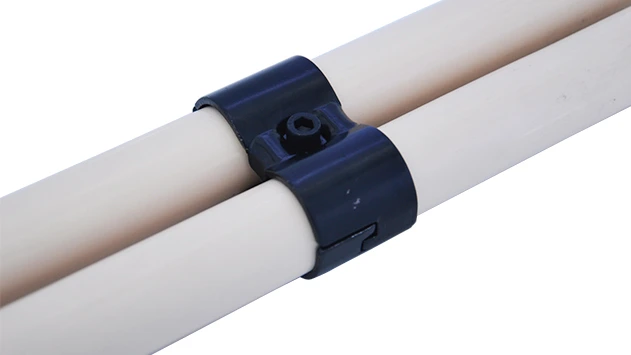
Parallel Lean Pipe Joint
Parallel lean pipe joint used for 2 pcs 28MM lean pipe connection in parallel direction to enhance frame structure, usually for heavy payload requirement for workbench. flow rack, hand trolley.
The Small-Batch Production Puzzle: Why Rigidity Kills Efficiency
Walk into any small-batch manufacturing facility—whether it's a custom electronics workshop, a boutique furniture maker, or a specialized auto parts producer—and you'll likely hear the same frustrations. "We need to switch from making Product A to Product B by Friday, but the production line is bolted down." "Our workbenches can't adjust to the new component sizes, so we're wasting hours rearranging tools." "The material racks are too rigid; we can't reconfigure them without calling in a welder." Sound familiar? For small-batch producers, the ability to pivot quickly isn't just a nice-to-have—it's the difference between meeting tight deadlines and losing clients.
Traditional production setups, built for mass manufacturing, are designed for stability, not change. Heavy steel frames, fixed workstations, and permanent material flow systems work when you're churning out the same product by the thousands. But when your order book is filled with short runs, custom designs, and frequent product switches, that rigidity becomes a liability. Every reconfiguration means downtime, extra labor costs, and missed opportunities. So, what's the solution? Enter lean manufacturing principles—and more specifically, the unsung hero of flexible production: parallel lean pipe joints.
Traditional production setups, built for mass manufacturing, are designed for stability, not change. Heavy steel frames, fixed workstations, and permanent material flow systems work when you're churning out the same product by the thousands. But when your order book is filled with short runs, custom designs, and frequent product switches, that rigidity becomes a liability. Every reconfiguration means downtime, extra labor costs, and missed opportunities. So, what's the solution? Enter lean manufacturing principles—and more specifically, the unsung hero of flexible production: parallel lean pipe joints.
What Are Parallel Lean Pipe Joints, Anyway?
If you're new to lean systems, let's start with the basics. Lean pipes—often made of aluminum, stainless steel, or coated steel—are lightweight, modular tubes used to build everything from workbenches and material racks to conveyors and assembly lines. They're the building blocks of lean manufacturing, designed to be easily assembled, disassembled, and reconfigured without specialized tools. And at the heart of this modularity? Joints.
Parallel lean pipe joints are a specific type of connector engineered to link two or more lean pipes in parallel, allowing for adjustable, multi-directional configurations. Unlike fixed-angle joints (which lock pipes at 90°, 45°, or 30°), parallel joints offer rotational flexibility—meaning you can swivel, tilt, or adjust the distance between pipes with minimal effort. Think of them as the "universal joint" of lean systems: they adapt to the shape you need, when you need it.
But why "parallel"? Because their design excels at creating stable, parallel structures—like the sides of a workbench, the rails of a flow rack, or the frames of a turnover trolley. Whether you're building a single-deck workbench for small-parts assembly or a multi-tier material rack for varying component sizes, parallel joints ensure that your structure stays sturdy while remaining adaptable. And in small-batch production, that adaptability is gold.
Parallel lean pipe joints are a specific type of connector engineered to link two or more lean pipes in parallel, allowing for adjustable, multi-directional configurations. Unlike fixed-angle joints (which lock pipes at 90°, 45°, or 30°), parallel joints offer rotational flexibility—meaning you can swivel, tilt, or adjust the distance between pipes with minimal effort. Think of them as the "universal joint" of lean systems: they adapt to the shape you need, when you need it.
But why "parallel"? Because their design excels at creating stable, parallel structures—like the sides of a workbench, the rails of a flow rack, or the frames of a turnover trolley. Whether you're building a single-deck workbench for small-parts assembly or a multi-tier material rack for varying component sizes, parallel joints ensure that your structure stays sturdy while remaining adaptable. And in small-batch production, that adaptability is gold.

The Flexibility Factor: How Parallel Joints Solve Small-Batch Woes
Let's cut to the chase: what makes parallel lean pipe joints so game-changing for small-batch producers? It all boils down to three key benefits: quick reconfiguration, modular scalability, and cost-effective adaptability. Let's break them down.
1. Reconfiguration in Minutes, Not Days
Traditional workbenches or material racks are often welded or bolted together. To adjust their height, width, or layout, you need power tools, extra labor, and sometimes even a professional contractor. With parallel lean pipe joints, reconfiguration is a one-person job. Most joints feature a simple clamping mechanism or internal rotary design—twist a lever, slide the pipe to the desired position, and lock it in place. Need to raise your workbench by 6 inches to accommodate taller components? Loosen the parallel joints, adjust the legs, and retighten. Want to add a third shelf to your material rack to hold new inventory? Slide in a new aluminum lean pipe, secure it with parallel joints, and you're done. No welding, no drilling, no downtime.
2. Modular Scalability: Start Small, Grow as Needed
Small-batch producers rarely have the budget for overbuilt, "future-proof" systems. You need to start with what you need today and expand as orders grow. Parallel lean pipe joints thrive here. Since they're compatible with standard lean pipe sizes (like 28mm aluminum lean pipe or 30mm stainless steel pipe), you can start with a basic workbench and add components over time. Need a longer roller track for material flow? Attach it to your existing setup with parallel joints. Want to add casters to make your workstation mobile? Swap out the fixed feet for caster wheels using the same joint system. It's like building with Lego blocks—each piece works with the next, so you never waste money on parts that become obsolete.
3. Cost-Effective Adaptability: Save on Labor and Materials
Every hour spent reconfiguring a rigid production line is an hour your team isn't building products. Parallel lean pipe joints slash that time from hours (or days) to minutes. A recent study by the Lean Manufacturing Institute found that facilities using modular lean systems with parallel joints reduced reconfiguration time by 78% compared to traditional setups. That translates to lower labor costs, faster order fulfillment, and happier clients. Plus, since lean pipes and joints are reusable, you're not throwing away expensive steel frames every time you need a new layout. A single set of parallel joints can be repurposed across workbenches, flow racks, and trolleys, making them a smart long-term investment.
1. Reconfiguration in Minutes, Not Days
Traditional workbenches or material racks are often welded or bolted together. To adjust their height, width, or layout, you need power tools, extra labor, and sometimes even a professional contractor. With parallel lean pipe joints, reconfiguration is a one-person job. Most joints feature a simple clamping mechanism or internal rotary design—twist a lever, slide the pipe to the desired position, and lock it in place. Need to raise your workbench by 6 inches to accommodate taller components? Loosen the parallel joints, adjust the legs, and retighten. Want to add a third shelf to your material rack to hold new inventory? Slide in a new aluminum lean pipe, secure it with parallel joints, and you're done. No welding, no drilling, no downtime.
2. Modular Scalability: Start Small, Grow as Needed
Small-batch producers rarely have the budget for overbuilt, "future-proof" systems. You need to start with what you need today and expand as orders grow. Parallel lean pipe joints thrive here. Since they're compatible with standard lean pipe sizes (like 28mm aluminum lean pipe or 30mm stainless steel pipe), you can start with a basic workbench and add components over time. Need a longer roller track for material flow? Attach it to your existing setup with parallel joints. Want to add casters to make your workstation mobile? Swap out the fixed feet for caster wheels using the same joint system. It's like building with Lego blocks—each piece works with the next, so you never waste money on parts that become obsolete.
3. Cost-Effective Adaptability: Save on Labor and Materials
Every hour spent reconfiguring a rigid production line is an hour your team isn't building products. Parallel lean pipe joints slash that time from hours (or days) to minutes. A recent study by the Lean Manufacturing Institute found that facilities using modular lean systems with parallel joints reduced reconfiguration time by 78% compared to traditional setups. That translates to lower labor costs, faster order fulfillment, and happier clients. Plus, since lean pipes and joints are reusable, you're not throwing away expensive steel frames every time you need a new layout. A single set of parallel joints can be repurposed across workbenches, flow racks, and trolleys, making them a smart long-term investment.

Beyond Joints: How Parallel Lean Pipe Systems Integrate with Key Components
Parallel lean pipe joints don't work in isolation—they're part of a larger ecosystem of lean components. To truly understand their impact, let's look at how they integrate with three staples of small-batch production: lean pipe workbenches, flow racks, and roller tracks.
Lean Pipe Workbenches: Your Adjustable Command Center
The workbench is the heart of any production line. It's where assembly happens, tools are stored, and components are organized. A fixed-height, fixed-layout workbench forces operators to adapt to the space; a flexible workbench adapts to the operator. Parallel lean pipe joints make the latter possible. Take the "Workbench E (Single Deck-Without Caster)" from many lean pipe suppliers—a basic model that, with parallel joints, becomes a chameleon. Need a wider surface for assembling large panels? Add two parallel aluminum pipes to extend the deck. Want to mount tool holders on the side? Use parallel joints to attach a vertical rail, then clip on hooks or bins. Even the height can be adjusted by swapping out leg pipes or using telescoping joints—critical for ergonomics, as operators of different heights can customize their workspace to avoid strain.
Flow Racks: Keeping Materials Moving, No Matter the Size
Material flow is the lifeblood of production. If components can't move smoothly from storage to assembly, bottlenecks form, and efficiency plummets. Flow racks—tilted racks with roller tracks that let materials "flow" to the picker—are a lean staple, but traditional designs are often fixed to specific bin sizes or weights. Parallel lean pipe joints change that. Consider "Material Rack B (3 Row and 3 Floor)," a common multi-tier flow rack. With parallel joints connecting the vertical and horizontal pipes, you can adjust the spacing between rows to fit taller bins or wider components. Need to tilt the roller track steeper to move heavier parts? Loosen the parallel joints holding the track, adjust the angle, and retighten. No need to buy a new rack—just reconfigure the one you have.
Roller Tracks: Smooth Transitions for Every Product
Roller tracks are the highways of material flow, using gravity or motorized rollers to move parts between workstations. But when you're switching between small, lightweight components and larger, heavier ones, a one-size-fits-all track won't cut it. Parallel lean pipe joints let you customize roller tracks on the fly. For example, "Plastic Roller Track Guide Rail Yellow" (a common lightweight option) can be mounted to aluminum profiles using parallel joints, allowing you to adjust the track width to fit different part sizes. If you need to switch to a heavier-duty track—like "40 Steel Roller Track Black ESD Wheel" for electrostatic-sensitive components—simply unclamp the old track from the parallel joints and attach the new one. It's seamless, and it ensures that your material flow keeps up with your product mix.
Lean Pipe Workbenches: Your Adjustable Command Center
The workbench is the heart of any production line. It's where assembly happens, tools are stored, and components are organized. A fixed-height, fixed-layout workbench forces operators to adapt to the space; a flexible workbench adapts to the operator. Parallel lean pipe joints make the latter possible. Take the "Workbench E (Single Deck-Without Caster)" from many lean pipe suppliers—a basic model that, with parallel joints, becomes a chameleon. Need a wider surface for assembling large panels? Add two parallel aluminum pipes to extend the deck. Want to mount tool holders on the side? Use parallel joints to attach a vertical rail, then clip on hooks or bins. Even the height can be adjusted by swapping out leg pipes or using telescoping joints—critical for ergonomics, as operators of different heights can customize their workspace to avoid strain.
Flow Racks: Keeping Materials Moving, No Matter the Size
Material flow is the lifeblood of production. If components can't move smoothly from storage to assembly, bottlenecks form, and efficiency plummets. Flow racks—tilted racks with roller tracks that let materials "flow" to the picker—are a lean staple, but traditional designs are often fixed to specific bin sizes or weights. Parallel lean pipe joints change that. Consider "Material Rack B (3 Row and 3 Floor)," a common multi-tier flow rack. With parallel joints connecting the vertical and horizontal pipes, you can adjust the spacing between rows to fit taller bins or wider components. Need to tilt the roller track steeper to move heavier parts? Loosen the parallel joints holding the track, adjust the angle, and retighten. No need to buy a new rack—just reconfigure the one you have.
Roller Tracks: Smooth Transitions for Every Product
Roller tracks are the highways of material flow, using gravity or motorized rollers to move parts between workstations. But when you're switching between small, lightweight components and larger, heavier ones, a one-size-fits-all track won't cut it. Parallel lean pipe joints let you customize roller tracks on the fly. For example, "Plastic Roller Track Guide Rail Yellow" (a common lightweight option) can be mounted to aluminum profiles using parallel joints, allowing you to adjust the track width to fit different part sizes. If you need to switch to a heavier-duty track—like "40 Steel Roller Track Black ESD Wheel" for electrostatic-sensitive components—simply unclamp the old track from the parallel joints and attach the new one. It's seamless, and it ensures that your material flow keeps up with your product mix.
| Feature | Traditional Fixed Systems | Parallel Lean Pipe Joint Systems |
|---|---|---|
| Reconfiguration Time | 4–8 hours (requires tools/welders) | 15–30 minutes (no tools needed) |
| Adaptability to Product Changes | Low (requires complete rebuilds for major changes) | High (adjustable for size, weight, and layout) |
| Cost Over Time | High (replacement costs for new setups) | Low (reusable components, minimal replacement) |
| Ergonomic Customization | Limited (fixed height/width) | High (adjustable for operator height, task needs) |
| Scalability | Low (difficult to add/remove components) | High (modular; add pipes/joints as needed) |
Case Study: How a Small Electronics Manufacturer Cut Changeover Time by 65% with Parallel Joints
Let's put this into real-world context. Take "TechFlex," a fictional (but representative) electronics manufacturer in Colorado that produces custom circuit boards for medical devices. Before adopting lean systems, TechFlex's production line was a maze of fixed steel workbenches, welded material racks, and permanent conveyor belts. Changeovers—switching from one circuit board model to another—took 8 hours, requiring the team to disassemble workbenches, reposition tools, and rewire conveyors. With clients demanding shorter lead times, TechFlex was losing bids to competitors with more agile setups.
In 2023, TechFlex partnered with a lean pipe supplier to overhaul its production floor. The centerpiece of the upgrade? Parallel lean pipe joints. They replaced their fixed workbenches with adjustable aluminum lean pipe workbenches, using parallel joints to connect the legs, frames, and tool rails. Their material racks were swapped for reconfigurable flow racks, with parallel joints allowing them to adjust shelf heights and roller track angles. Even their conveyor system was rebuilt with modular roller tracks attached via parallel joints, making it easy to extend or shorten the line as needed.
The results were striking. Changeover time dropped from 8 hours to just 2.8 hours—a 65% reduction. Operators could now adjust workbench heights in minutes, reconfigure flow racks to fit new component bins, and reposition roller tracks to accommodate different board sizes. Labor costs for reconfigurations fell by 40%, and employee satisfaction rose, as workers no longer had to struggle with rigid, uncomfortable workspaces. Most importantly, TechFlex started winning more bids, as they could promise faster turnaround times than their competitors still stuck with fixed systems.
In 2023, TechFlex partnered with a lean pipe supplier to overhaul its production floor. The centerpiece of the upgrade? Parallel lean pipe joints. They replaced their fixed workbenches with adjustable aluminum lean pipe workbenches, using parallel joints to connect the legs, frames, and tool rails. Their material racks were swapped for reconfigurable flow racks, with parallel joints allowing them to adjust shelf heights and roller track angles. Even their conveyor system was rebuilt with modular roller tracks attached via parallel joints, making it easy to extend or shorten the line as needed.
The results were striking. Changeover time dropped from 8 hours to just 2.8 hours—a 65% reduction. Operators could now adjust workbench heights in minutes, reconfigure flow racks to fit new component bins, and reposition roller tracks to accommodate different board sizes. Labor costs for reconfigurations fell by 40%, and employee satisfaction rose, as workers no longer had to struggle with rigid, uncomfortable workspaces. Most importantly, TechFlex started winning more bids, as they could promise faster turnaround times than their competitors still stuck with fixed systems.
Why Material Matters: Aluminum Lean Pipe and the Durability-Flexibility Balance
So far, we've focused on the "joints," but the pipes themselves play a critical role in flexibility. While steel lean pipes are strong, they're heavy—making reconfiguration more of a workout. Aluminum lean pipe, on the other hand, hits the sweet spot: lightweight enough to move easily, strong enough to support most small-batch production needs (think circuit boards, small mechanical parts, or even furniture components), and resistant to corrosion. When paired with parallel lean pipe joints, aluminum pipes become the ultimate flexible building material.
Aluminum's lightweight nature makes it easy for a single operator to lift and reposition pipes during reconfiguration—no need for a second person or a forklift. It's also compatible with a wide range of accessories, from plastic end caps (to prevent snags) to caster wheels (to make workbenches mobile). For example, adding casters to a workbench is as simple as attaching caster mounting plates to the parallel joints at the base of the legs—transforming a stationary workstation into a mobile one that can be rolled to different parts of the factory as needed.
Another advantage of aluminum is its compatibility with ESD (Electrostatic Discharge) coatings. In industries like electronics manufacturing, static electricity can damage sensitive components. Aluminum lean pipes with ESD coatings, paired with parallel joints that maintain the static-dissipative path, ensure that workbenches and racks meet ESD safety standards—critical for small-batch producers who can't afford costly component failures.
Aluminum's lightweight nature makes it easy for a single operator to lift and reposition pipes during reconfiguration—no need for a second person or a forklift. It's also compatible with a wide range of accessories, from plastic end caps (to prevent snags) to caster wheels (to make workbenches mobile). For example, adding casters to a workbench is as simple as attaching caster mounting plates to the parallel joints at the base of the legs—transforming a stationary workstation into a mobile one that can be rolled to different parts of the factory as needed.
Another advantage of aluminum is its compatibility with ESD (Electrostatic Discharge) coatings. In industries like electronics manufacturing, static electricity can damage sensitive components. Aluminum lean pipes with ESD coatings, paired with parallel joints that maintain the static-dissipative path, ensure that workbenches and racks meet ESD safety standards—critical for small-batch producers who can't afford costly component failures.
Choosing the Right Lean Pipe Supplier: More Than Just Parts
Okay, so you're sold on parallel lean pipe joints. Now what? The next step is finding a reliable lean pipe supplier—not just someone who sells parts, but a partner who understands your small-batch challenges. Here's what to look for:
1. Breadth of Inventory A good supplier should carry not just parallel joints and aluminum pipes, but the full ecosystem: roller tracks (like "Swivel Roller Balls 1 Inch" or "Plastic Roller Track Guide Rail Grey"), casters, workbench accessories, and ESD-compatible components. This ensures compatibility—you won't end up with joints that don't fit your pipes or tracks that won't attach to your racks.
2. Customization Support Small-batch production often means unique needs. A supplier who can help you design custom configurations—like a workbench with integrated tool storage or a flow rack with specialized roller tracks—will be invaluable. Look for suppliers with in-house design teams or online configuration tools to visualize your setup before you buy.
3. Fast Delivery When you need to reconfigure your line for a rush order, waiting weeks for parts isn't an option. Choose a supplier with local warehouses or fast shipping options to minimize downtime.
4. Education and Support Lean systems are only as good as your team's ability to use them. The best suppliers offer tutorials, installation guides, and even on-site training to ensure your operators know how to assemble, disassemble, and reconfigure your setup safely and efficiently.
1. Breadth of Inventory A good supplier should carry not just parallel joints and aluminum pipes, but the full ecosystem: roller tracks (like "Swivel Roller Balls 1 Inch" or "Plastic Roller Track Guide Rail Grey"), casters, workbench accessories, and ESD-compatible components. This ensures compatibility—you won't end up with joints that don't fit your pipes or tracks that won't attach to your racks.
2. Customization Support Small-batch production often means unique needs. A supplier who can help you design custom configurations—like a workbench with integrated tool storage or a flow rack with specialized roller tracks—will be invaluable. Look for suppliers with in-house design teams or online configuration tools to visualize your setup before you buy.
3. Fast Delivery When you need to reconfigure your line for a rush order, waiting weeks for parts isn't an option. Choose a supplier with local warehouses or fast shipping options to minimize downtime.
4. Education and Support Lean systems are only as good as your team's ability to use them. The best suppliers offer tutorials, installation guides, and even on-site training to ensure your operators know how to assemble, disassemble, and reconfigure your setup safely and efficiently.
The Future of Small-Batch Production: Lean, Flexible, and Ready to Pivot
The manufacturing landscape is changing. Consumer demand for customization is rising, and small-batch producers are stepping up to meet it. But to thrive, they need tools that match their agility. Parallel lean pipe joints, paired with aluminum lean pipes, reconfigurable workbenches, and modular flow racks, aren't just a trend—they're the foundation of the next generation of production.
Imagine a future where your production line adapts to your orders, not the other way around. Where a single operator can reconfigure a workbench in 10 minutes, a flow rack in 15, and a roller track in 5. Where you never have to say, "We can't do that because our setup is too rigid." That future is here, and it starts with the right joints.
So, if you're tired of fighting against your production line, it's time to consider parallel lean pipe joints. They're not just connectors—they're the key to unlocking the flexibility small-batch producers need to survive and thrive in today's fast-paced market. After all, in manufacturing, the only constant is change. Shouldn't your production line be able to change with it?
Imagine a future where your production line adapts to your orders, not the other way around. Where a single operator can reconfigure a workbench in 10 minutes, a flow rack in 15, and a roller track in 5. Where you never have to say, "We can't do that because our setup is too rigid." That future is here, and it starts with the right joints.
So, if you're tired of fighting against your production line, it's time to consider parallel lean pipe joints. They're not just connectors—they're the key to unlocking the flexibility small-batch producers need to survive and thrive in today's fast-paced market. After all, in manufacturing, the only constant is change. Shouldn't your production line be able to change with it?