- Company Articles
- Products and Technology
- Product knowledge
- Parallel Lean Pipe Joints in Warehousing: Optimizing Storage Racks

Parallel Lean Pipe Joints in Warehousing: Optimizing Storage Racks
Related Product
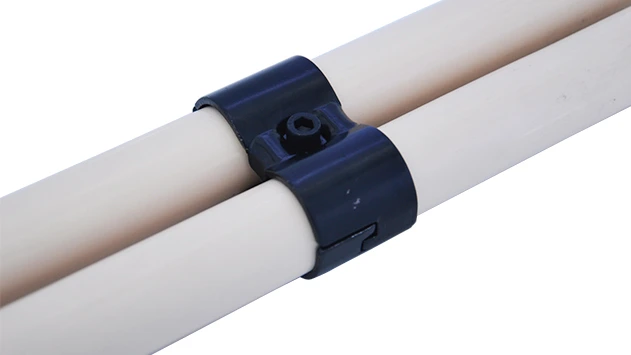
Parallel Lean Pipe Joint
Parallel lean pipe joint used for 2 pcs 28MM lean pipe connection in parallel direction to enhance frame structure, usually for heavy payload requirement for workbench. flow rack, hand trolley.
In the fast-paced world of supply chains and logistics, warehousing isn't just about storing goods—it's about creating a seamless flow that keeps operations running like a well-oiled machine. Yet, for many warehouses, the backbone of this flow—storage racks—often becomes a bottleneck. Fixed, rigid structures waste valuable space, struggle to adapt to changing inventory needs, and can even slow down picking and restocking processes. Enter parallel lean pipe joints: a quiet revolution in storage design that's redefining how warehouses optimize space, flexibility, and efficiency.
At first glance, a "joint" might seem like a small component, but in the context of lean manufacturing and modular warehousing, parallel lean pipe joints are the unsung heroes. They're the connective tissue that turns simple pipes, profiles, and accessories into customizable, adaptable storage racks that grow and change with your business. Whether you're running a small distribution center or a large-scale manufacturing facility, understanding how these unassuming components can transform your storage systems is key to staying competitive in today's dynamic market.
What Are Parallel Lean Pipe Joints, Anyway?
Let's start with the basics. Parallel lean pipe joints are specialized connectors designed to link lean pipes—typically made of aluminum, steel, or plastic-coated materials—in parallel configurations. Unlike traditional welded or fixed joints, these components are engineered for flexibility: they lock pipes together securely but can be easily loosened, adjusted, or disassembled when needs change. Think of them as the building blocks of a modular storage system, allowing you to create everything from simple shelving units to complex, multi-tiered racks without the need for welding, drilling, or specialized tools.
What makes them "parallel" is their ability to align pipes side by side, creating stable, evenly spaced frames. This design isn't just about aesthetics; it's about maximizing structural integrity while keeping the system lightweight. For example, a parallel joint might connect two aluminum lean pipes horizontally to form a shelf beam, or vertically to create adjustable uprights. The result? A rack that can be tweaked in minutes to accommodate taller boxes, wider pallets, or even shifted to a new location entirely.
These joints come in various materials, too—from durable plastic for light-duty use to galvanized steel or aluminum for heavier loads. Aluminum lean pipe joints, in particular, have grown in popularity for their corrosion resistance and lightweight properties, making them ideal for environments where moisture or frequent handling is a concern. Paired with aluminum profiles, they create systems that are both sturdy and easy to maneuver, a win-win for busy warehouses.
Why Parallel Lean Pipe Joints Are a Game-Changer for Storage Racks
Warehouses face a unique set of challenges: fluctuating inventory sizes, seasonal demand spikes, and the need to balance storage density with accessibility. Traditional storage racks—often welded steel or fixed wooden shelving—fail miserably at addressing these challenges. They're built to last "forever," but in reality, they become obsolete the moment your product line changes or your order volume shifts. Parallel lean pipe joints solve this by putting adaptability at the forefront. Here's how:
1. Flexibility That Keeps Up With Your Business
Imagine a scenario where your warehouse suddenly needs to store bulkier items for a seasonal promotion. With a traditional rack, you'd either cram the items in (risking damage) or invest in new, larger racks (wasting money on the old ones). With parallel lean pipe joints, you simply loosen the joints, adjust the pipe spacing, and tighten them back up. Need to add a shelf? Slide in a new crossbar. Want to lower the height to make picking easier? Shorten the uprights. It's like having a storage system that speaks your business's language—no translator needed.
2. Cost-Effective Over the Long Haul
At first glance, modular systems might seem pricier than off-the-shelf fixed racks. But here's the catch: fixed racks are a one-time expense that becomes a sunk cost when your needs change. Parallel lean pipe joints, on the other hand, are reusable. You can disassemble an old rack and rebuild it into something entirely new, reducing the need to buy new equipment every time your inventory shifts. Over time, this translates to significant savings—especially for small to mid-sized warehouses where budget constraints are tight.
3. Seamless Integration With Other Lean Tools
Parallel lean pipe joints don't exist in a vacuum. They're part of a broader ecosystem of lean warehousing tools, designed to work hand-in-hand with components like roller tracks, flow racks, and lean pipe workbenches. For example, you might build a storage rack using parallel joints and aluminum profiles, then attach roller tracks to the shelves to create a gravity-fed flow rack system. This setup ensures items are picked in FIFO (First-In, First-Out) order, reducing waste and speeding up order fulfillment. Or, connect the rack to a lean pipe workbench, creating a workstation where employees can access stored materials directly, eliminating time wasted walking back and forth.
4. Ergonomics That Boost Productivity
Warehouse work is physically demanding, and poorly designed storage can lead to fatigue, injuries, and high turnover. Parallel lean pipe joints let you design racks around your team, not the other way around. Need a lower shelf for heavy items to reduce lifting strain? Adjust the joint height. Want to angle a section of roller track to make sliding boxes easier? Use a swivel joint. By prioritizing ergonomics, these systems don't just optimize space—they optimize your most valuable asset: your people.
Case Study: From Chaos to Order—A Small Warehouse's Transformation
Consider the example of a regional electronics distributor with a 10,000 sq. ft. warehouse. Before switching to parallel lean pipe joints, their storage system was a hodgepodge of fixed wooden shelves and metal racks. "We were constantly rearranging—piling boxes on the floor when shelves filled up, or leaving empty gaps because a new product line didn't fit the old rack dimensions," says Maria, the warehouse manager. "Our pickers were spending 20% of their time just navigating around inefficiencies."
The solution? A modular system built with aluminum lean pipes, parallel lean pipe joints, and roller tracks. Within a week, Maria's team had assembled adjustable racks that could expand or contract based on inventory. They added flow racks with roller tracks for fast-moving items, ensuring FIFO rotation, and connected the racks to lean pipe workbenches where packers could access components directly. "The difference was night and day," Maria recalls. "We reduced pick times by 15%, freed up 15% more floor space, and even cut down on product damage because everything had a designated, secure spot."

How Parallel Lean Pipe Joints Stack Up Against Traditional Racks
Still on the fence? Let's break down the differences between traditional fixed racks and systems built with parallel lean pipe joints. The table below compares key features to help you see why modularity matters:
| Feature | Traditional Fixed Racks | Parallel Lean Pipe Joint Racks |
|---|---|---|
| Flexibility | Fixed dimensions; cannot be adjusted without cutting/welding. | 100% customizable—heights, widths, and depths adjusted in minutes. |
| Installation Time | Requires professional installers; takes days to weeks. | Assembled by in-house teams with basic tools; hours to days. |
| Cost Over Time | Low upfront cost, but high long-term expenses (replacement when needs change). | Slightly higher upfront cost, but reusable components reduce long-term spending. |
| Durability | Sturdy but prone to damage if overloaded; hard to repair. | Shock-resistant joints; damaged parts (e.g., a cracked roller track) can be replaced individually. |
| Adaptability to Growth | Requires purchasing new racks to expand. | Easily scaled by adding more pipes and joints; no need for full system replacement. |

Beyond the Joint: Building Your Perfect System
Parallel lean pipe joints are powerful on their own, but their true potential shines when paired with the right accessories and components. Here are a few key additions to consider when designing your system:
Aluminum Profiles and Pipes
Aluminum is the ideal partner for parallel joints. Lightweight yet strong, aluminum lean pipes and profiles resist rust and are easy to handle, making them perfect for both static and mobile racks. Look for anodized aluminum options for extra durability—they'll stand up to years of heavy use without chipping or fading.
Roller Tracks and Flow Racks
Pairing parallel joints with roller tracks transforms static shelves into dynamic flow systems. Roller track guide rails (available in yellow, grey, or aluminum) let items slide smoothly, reducing manual lifting. For example, a 3-row, 3-floor material rack built with parallel joints and roller tracks ensures items glide forward as the front one is removed—no more reaching to the back of deep shelves.
Casters and Mobile Bases
Add caster wheels to your rack system, and suddenly you've got mobile storage. This is a game-changer for warehouses that need to rearrange space for seasonal peaks or special projects. Look for swivel casters with brakes for stability when in use, and non-marking wheels to protect warehouse floors.
Lean Pipe Workbenches
Connect your storage racks directly to lean pipe workbenches to create a streamlined workflow. For example, a workbench with a built-in shelf supported by parallel joints can hold tools and materials, while a roller track from the adjacent rack feeds components directly to the workspace. It's efficiency personified.
Maintenance Tips: Keeping Your System in Top Shape
One of the biggest perks of parallel lean pipe joint systems is their low maintenance needs. Unlike traditional racks, which may require welding repairs or repainting, these modular setups are designed for easy upkeep. Here are a few tips to keep your system running smoothly:
- Check joints regularly: Tighten any loose joints with a hex key—especially after heavy use or moving the rack. Loose joints can compromise stability over time.
- Clean aluminum components: Wipe down aluminum pipes and profiles with a damp cloth to remove dust and debris. For stubborn grime, use a mild detergent—avoid harsh chemicals that can damage the finish.
- replace worn parts: Components like roller track wheels or caster bearings will wear out eventually. Keep a small stock of spare parts (e.g., swivel roller balls, plastic roller track guide rails) to swap out as needed.
- Inspect for corrosion: If using steel components, check for rust spots and treat them promptly with a rust inhibitor. Aluminum systems are corrosion-resistant, but keep an eye on joints for signs of wear.
Final Thoughts: Future-Proofing Your Warehouse
In a world where supply chains are more unpredictable than ever, adaptability isn't just a nice-to-have—it's a survival skill. Parallel lean pipe joints offer a way to build storage systems that grow with your business, rather than hold it back. They turn static warehouses into dynamic hubs where space is maximized, workflows are streamlined, and employees can focus on what they do best: keeping products moving.
Whether you're a small distributor or a large manufacturer, the question isn't whether you need a modular storage system—it's when you'll make the switch. As Maria, the electronics distributor, puts it: "We used to see storage as a necessary evil. Now? It's our secret weapon."
So, if you're tired of wrestling with rigid racks, wasting space, or watching your team struggle with inefficiencies, it might be time to give parallel lean pipe joints a closer look. Your warehouse (and your bottom line) will thank you.