- Company Articles
- Products and Technology
- Product knowledge
- Parallel Lean Pipe Joints: Key to Building Reconfigurable Material Handling Systems

Parallel Lean Pipe Joints: Key to Building Reconfigurable Material Handling Systems
Related Product
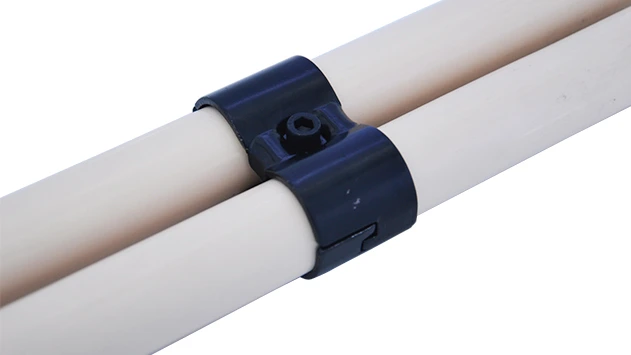
Parallel Lean Pipe Joint
Parallel lean pipe joint used for 2 pcs 28MM lean pipe connection in parallel direction to enhance frame structure, usually for heavy payload requirement for workbench. flow rack, hand trolley.
Walk into any modern manufacturing facility, and you'll notice a quiet revolution unfolding on the factory floor. Gone are the days of rigid, one-size-fits-all workbenches and fixed material racks that gather dust when production needs shift. Today's manufacturers are chasing agility— the ability to pivot quickly, adapt to new product lines, and eliminate waste at every turn. At the heart of this transformation lies a humble yet powerful component: the parallel lean pipe joint. Far more than just a connector, it's the unsung hero that turns static workspaces into dynamic, reconfigurable ecosystems. Let's dive into why these joints matter, how they work, and why they're becoming indispensable for businesses aiming to stay competitive in a fast-paced market.
The Problem with "Set It and Forget It" Material Handling
Traditional manufacturing setups often treat material handling systems as permanent fixtures. Welded steel workbenches, bolted-down conveyor lines, and fixed shelving—these structures were built to last, but "last" in manufacturing terms rarely aligns with the pace of innovation. A factory producing smartphones today might need to retool for wearables next quarter; a automotive parts supplier might shift from internal combustion components to electric vehicle parts overnight. When your workspace can't keep up, you're left with two options: sink money into custom fabrications that become obsolete in months, or waste precious time and labor disassembling and rebuilding from scratch.
This rigidity isn't just costly—it's a silent killer of productivity. Employees contort around awkwardly placed workbenches, materials get stuck in bottlenecks because conveyor lines can't be adjusted, and floor space becomes cluttered with unused racks that can't be repurposed. It's no wonder lean manufacturing principles, with their focus on flexibility and waste reduction, have become the gold standard. And lean systems, by design, demand components that can evolve with your needs. That's where lean pipe systems step in—and at their core? Parallel lean pipe joints.
Lean Pipes: The Foundation of Adaptive Workspaces
Before we zoom in on parallel joints, let's set the stage with lean pipes themselves. These are the building blocks of modern material handling, and they've come a long way from their early days as basic steel tubes. Today's lean pipes are engineered for versatility: think lightweight aluminum lean pipes that resist corrosion, stainless steel options for cleanroom environments, and even pe-coated lean pipes that add durability while reducing noise. What makes them special isn't just the material—it's their modularity. Unlike welded steel, lean pipes connect using joints, which means you can assemble, disassemble, and reassemble them like a high-stakes Lego set for grown-ups.
But here's the thing: not all joints are created equal. A 90-degree elbow joint is great for corners, and a three-way joint works for branching structures, but when it comes to building stable, parallel structures—like the sides of a workbench, the rails of a roller track, or the frames of a material rack—you need something specific. Enter the parallel lean pipe joint. This unassuming component is designed to hold two or more lean pipes in perfect parallel alignment, creating the sturdy, balanced frameworks that make reconfigurable systems possible.

Parallel Lean Pipe Joints: How They Work (and Why They're Game-Changers)
At first glance, a parallel lean pipe joint might look like a simple metal bracket, but its design is deceptively clever. Imagine two cylindrical sleeves connected by a rigid crossbar—each sleeve slides over a lean pipe, and a locking mechanism (usually a setscrew or a cam lever) tightens them in place. The magic is in the crossbar: it ensures the pipes stay exactly parallel, even under heavy loads. This might sound trivial, but in manufacturing, precision matters. A workbench with misaligned legs wobbles; a roller track with uneven rails jams; a material rack with skewed frames risks collapsing. Parallel joints eliminate these issues by turning chaos into order—quickly and without tools, in many cases.
Let's break down their superpowers:
- Tool-Free Assembly: Many modern parallel joints use cam levers or quick-release pins, so workers can adjust or reconfigure systems in minutes, not hours. No more hunting for wrenches or waiting for maintenance crews.
- Load-Bearing Strength: Despite their simplicity, these joints are tough. High-quality aluminum or steel parallel joints can support hundreds of kilograms, making them ideal for heavy-duty applications like automotive part assembly or warehouse material storage.
- Repeatable Precision: When you disassemble a structure and rebuild it, the parallel joints ensure pipes line up exactly as they did before. This consistency is critical for maintaining workflow efficiency—no more trial-and-error adjustments.
- Compatibility: Most parallel joints work with standard lean pipe diameters (28mm, 30mm, 40mm), so you can mix and match with existing systems. This interoperability saves costs by letting you reuse old pipes with new joints.
Consider a scenario: A electronics manufacturer needs to shift from assembling 10-inch tablets to 7-inch smart displays. Their old workbenches, with fixed shelving and rigid frames, are too deep for the smaller products, wasting space and forcing workers to stretch. With parallel lean pipe joints, they can disassemble the benches, shorten the side rails (using the same joints to realign the pipes), and reattach the shelves at a more ergonomic height. The whole process takes a morning instead of a week, and the workbenches are now perfectly tailored to the new product. That's the power of parallel alignment.

From Workbenches to Roller Tracks: Real-World Applications
Parallel lean pipe joints aren't just theoretical—they're the backbone of countless everyday manufacturing tools. Let's look at three places where they shine:
1. Workbenches: The Heart of the Assembly Line
A workbench is more than a table; it's a command center. Workers stand at them for hours, so stability and adjustability are non-negotiable. Parallel lean pipe joints form the legs and frame of the workbench, ensuring the top stays level and the structure doesn't sway. Add an aluminum honeycomb panel for the work surface, and you've got a lightweight, durable station that can be raised, lowered, or widened by simply adjusting the parallel joints. Even accessories like tool holders or monitor arms can be attached using parallel joints, keeping everything within arm's reach without cluttering the space.
2. Roller Tracks: Keeping Materials Flowing Smoothly
In any production line, materials need to move—from the warehouse to the assembly station, from one worker to the next, and finally to packaging. Roller tracks make this happen, using gravity or motors to slide bins, boxes, or components along a series of wheels. But for the track to work, the side rails (the ones that guide the materials) must be perfectly parallel. If they're even slightly out of alignment, boxes get stuck, slowing down the entire line. Parallel lean pipe joints hold these rails in place, ensuring a smooth, consistent flow. Pair them with roller track connectors and plastic roller track guide rails (yellow for visibility, grey for low-key environments), and you've got a system that adapts to different box sizes by simply adjusting the rail width via the joints.
3. Material Racks: Storing Smart, Not Just Storing
Warehouses and production floors are full of material racks, but traditional metal shelving is fixed—you can't change the height of the shelves or the width of the bays without cutting or welding. Lean pipe material racks, built with parallel joints, solve this. Need to store taller boxes? Loosen the parallel joints holding the shelf supports, slide them up, and retighten. Switching to smaller parts bins? Narrow the bays by moving the vertical pipes closer together, using the joints to keep them parallel. Even specialized racks, like those for automotive components or electronic parts, benefit from parallel joints—they ensure each shelf is level, preventing items from sliding off and reducing the risk of damage.
A Closer Look: Technical Specs of Parallel Lean Pipe Joints
Not all parallel joints are the same, and choosing the right one depends on your needs. Here's a breakdown of common types, their specs, and when to use them:
| Joint Type | Material | Compatible Pipe Diameter | Max Load Capacity (kg) | Finish | Best For |
|---|---|---|---|---|---|
| Standard Parallel Joint | Aluminum Alloy | 28mm, 30mm | 150 | Anodized Silver | General workbenches, light roller tracks |
| Heavy-Duty Parallel Joint | Carbon Steel (Chrome-Plated) | 30mm, 40mm | 300 | Chrome | Automotive assembly lines, warehouse racks |
| ESD-Safe Parallel Joint | Nylon-Reinforced Plastic | 25mm, 28mm | 100 | Black (ESD-Coated) | Electronics manufacturing, cleanrooms |
| Adjustable Spacing Parallel Joint | Aluminum + Stainless Steel | 20mm–40mm (variable) | 200 | Anodized Black | Custom-width roller tracks, modular workstations |
For example, if you're building a workbench for assembling delicate circuit boards, an ESD-safe parallel joint would prevent static electricity from damaging components. If you're constructing a roller track to move engine blocks, a heavy-duty steel joint ensures the rails don't bend under the weight. And if you need to frequently adjust the width of a material rack (say, for seasonal product changes), an adjustable spacing joint lets you tweak the distance between pipes without replacing the joint itself.
Beyond the Joint: Building a Complete Lean Ecosystem
Parallel lean pipe joints don't work alone—they're part of a larger ecosystem of lean components that turn individual pipes into functional systems. Let's explore some key partners:
Aluminum Profiles: Adding Strength and Versatility
Aluminum profiles (think T-slot extrusions) are often used alongside lean pipes to add rigidity. Parallel joints can connect lean pipes to aluminum profiles, creating hybrid structures that combine the flexibility of pipes with the strength of profiles. For example, a workbench might use lean pipes for the frame (connected via parallel joints) and aluminum profiles for the tabletop supports, ensuring the surface stays flat even under heavy tools.
Roller Track Accessories: Keeping the Flow Going
Roller tracks rely on parallel joints to keep their rails aligned, but they also need components like swivel roller balls (1 inch or 0.5 inch) for smooth material movement and plastic roller track guide rails (yellow or grey) to prevent items from slipping off. Parallel joints ensure the rails are spaced correctly for the roller balls, so bins glide instead of jamming.
Casters: Mobility Meets Stability
Add casters to a lean pipe frame, and suddenly your workbench or material rack becomes a mobile workstation. Parallel joints play a role here too—they keep the frame's legs parallel, ensuring the casters bear weight evenly and the structure doesn't tip when moved. Heavy-duty casters with brakes, paired with steel parallel joints, create stable, movable systems that can be repositioned as production needs change.
Why Parallel Joints Are Critical for Lean Manufacturing
Lean manufacturing is all about eliminating waste—waste of time, space, materials, and effort. Parallel lean pipe joints directly support this by enabling three key lean principles:
- Flexibility (Muda Elimination): Traditional fixed systems create "muda" (waste) by forcing workers to adapt to the workspace instead of the other way around. Parallel joints let you reshape the workspace to fit the task, reducing unnecessary movement and frustration.
- Standardization (Kaizen): Parallel joints ensure that every workbench, track, or rack is built to the same specifications, making training easier and reducing errors. When everyone uses the same joint type, reconfigurations become consistent and repeatable.
- Continuous Improvement (Kaizen): With parallel joints, testing new layouts is low-risk. If a new workbench design doesn't work, you can disassemble it and try again—no wasted materials, no permanent changes. This encourages teams to experiment and find better ways to work.
Consider a case study: A small appliance manufacturer was struggling with bottlenecks in their assembly line. Their fixed workbenches were too wide for the new, smaller blenders they were producing, so workers had to reach across extra space, slowing them down. By switching to lean pipe workbenches with parallel joints, they narrowed the benches by 30%, repositioned tools closer to workers, and saw a 20% increase in production speed—all in a single weekend.
Choosing the Right Parallel Lean Pipe Joint Supplier
Not all parallel lean pipe joints are created equal, and neither are suppliers. When shopping for these critical components, look for a supplier who offers:
- Quality Materials: Aluminum joints should be anodized to resist corrosion; steel joints should have a durable chrome or powder coating. Avoid cheap plastic joints that crack under stress.
- Testing Data: Ask for load capacity test results. A reputable supplier will have data proving their joints can handle the weights they claim.
- Customization Options: If you need non-standard pipe diameters or spacing, choose a supplier who can modify parallel joints to fit your needs.
- Technical Support: Reconfiguring systems can be tricky. A good supplier will offer design advice, CAD files, or even on-site consultations to help you build the best setup.
Remember, the cheapest joint might save you money upfront, but if it fails, you'll pay for it in downtime, repairs, and lost productivity. Investing in high-quality parallel joints from a trusted lean pipe supplier is an investment in your facility's long-term efficiency.
The Future of Material Handling: Parallel Joints and Industry 4.0
As manufacturing moves toward Industry 4.0—smart factories with connected systems and automation—parallel lean pipe joints are evolving too. Future iterations might include built-in sensors that monitor load weight or joint tightness, alerting maintenance teams before a failure occurs. Imagine a roller track that sends a notification to your phone when a parallel joint starts to loosen, preventing a costly jam. Or 3D-printed parallel joints customized to unique pipe shapes, opening up new design possibilities.
Even as technology advances, the core value of parallel lean pipe joints remains the same: they make change easy. In a world where product lifecycles shrink and customer demands shift overnight, that's not just a nice-to-have—it's survival. Whether you're a small workshop or a multinational manufacturer, the ability to reconfigure your material handling systems quickly and affordably will keep you agile, competitive, and ready for whatever comes next.
Conclusion: Parallel Joints—Small Components, Big Impact
Parallel lean pipe joints might not get the same attention as flashy robots or high-tech software, but they're the quiet workhorses of modern manufacturing. They turn lean pipes into powerful tools for adaptability, turning static factories into dynamic, responsive workspaces. From workbenches that adjust to workers' heights to roller tracks that keep materials flowing smoothly, these joints prove that sometimes the smallest components make the biggest difference.
So the next time you walk through a factory, take a closer look at the workbenches, racks, and tracks. Chances are, parallel lean pipe joints are holding them together—quietly, reliably, and ready to change at a moment's notice. In a world that never stops moving, that's the kind of flexibility that builds success.