- Company Articles
- Products and Technology
- Product knowledge
- Parallel Lean Pipe Joints: One Side Rotatory Advantages in High-Volume Production Environments

Parallel Lean Pipe Joints: One Side Rotatory Advantages in High-Volume Production Environments
Related Product
Parallel Lean Pipe Joint
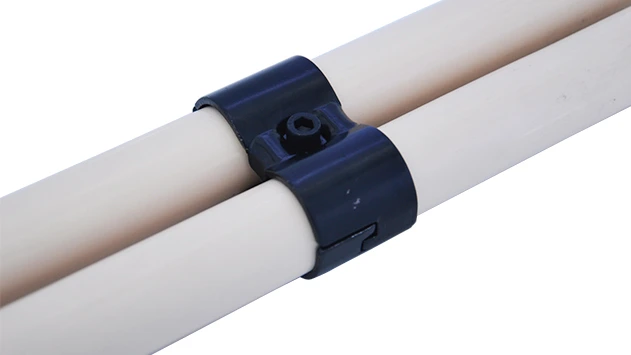
Parallel lean pipe joint used for 2 pcs 28MM lean pipe connection in parallel direction to enhance frame structure, usually for heavy payload requirement for workbench. flow rack, hand trolley.
How a small component transforms workflow efficiency, adaptability, and bottom-line results
The High-Volume Production Challenge: Speed vs. Flexibility
Walk into any high-volume production facility—whether it's an automotive assembly plant, a consumer electronics factory, or a medical device workshop—and you'll feel the energy: conveyor belts hum, workers move with purpose, and every second counts. In these environments, "efficient" isn't just a buzzword; it's the difference between meeting a rush order and missing a deadline, between keeping costs in check and watching profits shrink. But here's the catch: high volume often demands rigid, repetitive processes, and rigidity is the enemy of adaptability. When a product design changes, a new order requires a different layout, or a workstation needs to be reconfigured for a special project, downtime becomes expensive. That's where lean manufacturing steps in—and at the heart of lean systems lies a humble but powerful tool: the parallel lean pipe joint, specifically the one side rotatory variant.
If you've ever stood at a production assemble line and watched workers struggle to adjust a workbench or reposition a flow rack, you know the problem. Traditional fixed joints mean disassembling, re-drilling, or even replacing entire structures—wasting time, (manpower), and money. But what if you could pivot, rotate, or reangle a component in seconds, without tools or extra help? That's the promise of the one side rotatory parallel lean pipe joint. It's not just a piece of hardware; it's a solution to the age-old tension between speed and flexibility in manufacturing.
Understanding Lean Systems: Beyond the Buzzword
Before diving into the specifics of the one side rotatory joint, let's ground ourselves in what lean systems really are. Lean isn't just about cutting costs or reducing waste (though those are big wins). At its core, lean manufacturing is about creating value for the customer by streamlining processes, minimizing inefficiencies, and empowering teams to work smarter. It's about designing systems that adapt —because in today's fast-paced market, the only constant is change. A product line might need to scale up for the holiday season, then scale down for a lull. A workstation might need to accommodate a taller worker one shift and a shorter one the next. A flow rack might need to switch from holding small parts to larger components overnight. Lean systems make these transitions possible, and lean pipe components are the building blocks that make lean systems tangible.
Lean pipes—often made of aluminum, steel, or coated materials—are lightweight, durable, and infinitely configurable. They're the backbone of workbenches, flow racks, conveyors, and turnover trolleys. But pipes alone aren't enough; it's the joints that hold the system together and determine its flexibility. Fixed joints have their place, but in dynamic environments, they're limiting. That's where the parallel lean pipe joint one side rotatory shines. It's designed to balance stability with movement, letting you lock a structure in place when you need rigidity and unlock it when you need to adapt.

Anatomy of a Game-Changer: What Is a One Side Rotatory Parallel Lean Pipe Joint?
Let's get technical—without getting boring. A parallel lean pipe joint connects two or more lean pipes in a parallel configuration, ensuring they stay aligned and stable under load. The "one side rotatory" feature means one end of the joint can rotate 180 degrees (or more, depending on the design) while the other end remains fixed. Picture a hinge on a door: one side is anchored to the frame, the other moves with the door. Now imagine that hinge is strong enough to support hundreds of pounds, precise enough to lock into place at any angle, and simple enough for a single worker to adjust with a quick twist.
These joints are typically made from high-grade aluminum or steel, with a rotating mechanism that uses ball bearings or friction pads to ensure smooth movement without slippage. Many come with a locking lever or knob: flip the lever, rotate the pipe to the desired angle, flip the lever back, and it's secure. No wrenches, no screws, no hassle. This simplicity is key in production environments where every second of downtime costs money. For example, a lean pipe workbench used for assembling circuit boards might need its side shelves angled downward to feed parts into the assembly line in the morning, then angled upward in the afternoon to hold tools. With a one side rotatory joint, that adjustment takes 10 seconds. With a fixed joint? It might take 10 minutes (or more) of disassembling and reattaching.

5 Key Advantages in High-Volume Production
So, why should a production manager care about a single joint? Let's break down the real-world benefits that add up to significant bottom-line impact.
1. Reduced Downtime, Increased Uptime
In high-volume settings, downtime is the enemy. Even a 15-minute delay in reconfiguring a conveyor or workbench can throw off an entire shift's output. One side rotatory joints eliminate the need for disassembly. For example, a flow rack used to transport parts between stations might need its roller tracks adjusted to a steeper angle for heavier components. With a fixed joint, workers would have to unload the rack, remove the old joints, install new ones at the correct angle, and reload—easily 30 minutes of lost time. With a rotatory joint? Unload, rotate, lock, reload—done in 5 minutes. Multiply that by 10 reconfigurations a week, and you're saving hours of downtime annually.
2. Adaptability Without Compromise
Product lifecycles are shorter than ever. A smartphone manufacturer might release three new models in a year, each with slightly different component sizes. A lean system built with fixed joints would require new workbenches, new flow racks, new conveyors—costing tens of thousands of dollars. With one side rotatory joints, existing structures can be repurposed. A workbench that once held circuit boards for Model A can be adjusted to hold larger batteries for Model B. A conveyor that moved small parts can be reangled to handle bulkier components. This adaptability extends the life of your equipment and reduces capital expenditure on new structures.
3. Ergonomic Benefits for Workers
Happy workers are productive workers, and ergonomics play a huge role in job satisfaction. Fixed workstations often force workers into uncomfortable positions—reaching, bending, or stretching to access tools or parts. One side rotatory joints let workers adjust their workbenches to their height, preferred angle, or task. A taller worker can raise a shelf; a shorter one can lower it. A worker assembling delicate parts can angle a component toward them for better visibility. Over time, this reduces fatigue, lowers the risk of repetitive strain injuries, and boosts morale—all of which translate to higher productivity and lower turnover.
4. Consistency in Lean Processes
Lean systems thrive on consistency. Standardized workflows reduce errors and improve quality. One side rotatory joints make it easy to replicate optimal setups across shifts or stations. For example, if the morning shift finds that a 15-degree angle on a flow rack minimizes jams, they can lock that angle in place. The afternoon shift doesn't have to guess or readjust—they just use the same setting. This consistency is especially critical in industries like automotive or aerospace, where even minor variations can lead to defects.
5. Cost Savings Over Time
At first glance, one side rotatory joints might cost slightly more than fixed joints. But the long-term savings are undeniable. Think about it: less downtime means more units produced. Adaptable structures mean fewer new purchases. Reduced injuries mean lower workers' compensation costs. Even the cost of tools and replacement parts drops—no more buying extra screws or wrenches for disassembly. One manufacturer we worked with estimated saving $45,000 in the first year after switching to rotatory joints, just from reduced downtime and repurposed equipment alone.
Real-World Applications: Where Rotatory Joints Make the Biggest Difference
To see the impact, let's look at three common high-volume production scenarios where one side rotatory parallel lean pipe joints shine.
Scenario 1: Lean Pipe Workbenches in Electronics Assembly
Electronics assembly lines are a masterclass in precision and speed. Workers assemble tiny components—resistors, capacitors, microchips—onto circuit boards, often under magnification. A typical workbench has shelves for tools, bins for parts, and a conveyor to move boards to the next station. When a new board design requires different part bins or a taller tool shelf, fixed joints mean stopping production to rework the bench. With one side rotatory joints, workers can adjust shelves on the fly. For example, a shelf holding small screws can be rotated downward for easy access during assembly, then rotated upward to make space for a larger component tray when needed. This keeps the line moving and reduces the risk of errors from awkward reaching or misplaced tools.
Scenario 2: Flow Racks in Automotive Parts Distribution
Automotive plants move thousands of parts daily—from nuts and bolts to door panels and engines. Flow racks (also called gravity racks) use inclined roller tracks to let parts "flow" to the front, reducing the need for manual handling. But different parts have different weights and sizes: a lightweight plastic clip needs a gentle slope, while a heavy metal bracket needs a steeper angle to overcome friction. One side rotatory joints let workers adjust the slope of individual tracks without emptying the entire rack. During a model changeover, for example, a rack that once held sedan door handles can be reangled to hold SUV door handles—no tools, no disassembly, just a quick rotation. This flexibility is why major automakers like Toyota and Ford have adopted rotatory joints in their lean systems.
Scenario 3: Conveyors in Packaging Lines
Packaging lines are all about speed and variety. A single line might package cereal boxes in the morning, snack bars in the afternoon, and pet food bags in the evening—each with different sizes and weights. Conveyors need to adjust for height, angle, and speed. One side rotatory joints on conveyor supports let workers raise or lower sections to align with packaging machines, or angle chutes to prevent jams with irregularly shaped items. For example, a conveyor carrying tall cereal boxes might need a slight upward angle to keep them upright, while snack bars (shorter and lighter) need a downward angle to speed up flow. With rotatory joints, these adjustments take minutes, not hours—keeping the line running and meeting tight packaging deadlines.
How One Side Rotatory Joints Compare to Other Options
Not all joints are created equal. Let's compare the one side rotatory parallel lean pipe joint to two common alternatives: fixed joints and fully rotatory (both sides) joints.
| Feature | Fixed Joints | Fully Rotatory Joints (Both Sides) | One Side Rotatory Joints |
|---|---|---|---|
| Adjustability | None (requires disassembly) | High (both sides rotate) | Balanced (one side fixed, one side rotates) |
| Stability Under Load | High (no movement) | Medium (can shift if overloaded) | High (fixed side prevents instability) |
| Setup Time | Long (30–60 minutes per adjustment) | Short (5–10 minutes) | Short (1–5 minutes) |
| Cost | Lowest | Highest | Moderate (higher than fixed, lower than fully rotatory) |
| Best For | Static, never-changing layouts | Highly dynamic environments with frequent 360° adjustments | High-volume production with regular but limited adjustments (angles, heights) |
As the table shows, one side rotatory joints strike a sweet spot: they're more flexible than fixed joints but more stable than fully rotatory ones. For high-volume production, where stability during operation and quick adjustments between runs are both critical, they're often the ideal choice.
Maintenance Tips: Keeping Rotatory Joints in Top Shape
Like any tool, one side rotatory joints perform best with basic maintenance. Here's how to keep them working smoothly for years:
- Clean regularly: Production environments are dusty. Wipe joints with a dry cloth weekly to remove debris that can gum up the rotating mechanism.
- Lubricate sparingly: Every 3 months, apply a drop of light machine oil to the rotating pivot point. Avoid over-lubricating—excess oil attracts dust.
- Check for wear: Inspect locking levers and knobs monthly. If a lever feels loose or a joint slips under load, replace the locking mechanism (most suppliers sell replacement parts).
- Avoid overloading: Stick to the manufacturer's weight limits. Overloading can bend the joint or damage the rotating mechanism.
With proper care, these joints can last 5–7 years in high-use environments—far longer than the typical lifespan of fixed joints, which often need replacement after repeated disassembly.
The Bottom Line: Small Component, Big Impact
In the world of high-volume production, success is in the details. A faster conveyor, a more ergonomic chair, a better tool—each small improvement adds up to big results. The one side rotatory parallel lean pipe joint is one of those details. It doesn't grab headlines, but it transforms how teams work: reducing frustration, cutting downtime, and turning rigid systems into adaptable ones. It's a testament to what lean manufacturing is all about: finding smarter ways to create value, not just work harder.
So, the next time you walk through a production facility, take a closer look at the workbenches, flow racks, and conveyors. Chances are, the ones running most smoothly are held together by joints that move as fast as the teams using them. And if they're not? Maybe it's time to make a small change that delivers big returns.