Parallel Lean Pipe Joints: One Side Rotatory Models for Quick Changeover in Production
Related Product
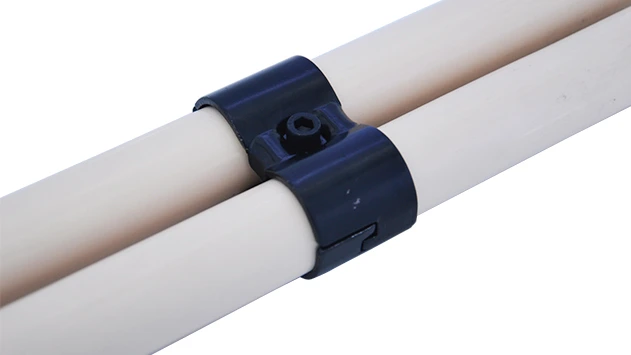
Parallel Lean Pipe Joint
Parallel lean pipe joint used for 2 pcs 28MM lean pipe connection in parallel direction to enhance frame structure, usually for heavy payload requirement for workbench. flow rack, hand trolley.
Parallel Lean Pipe Joint

Introduction: The Need for Speed in Modern Manufacturing

In today's manufacturing world, where customer preferences shift overnight and product life cycles shrink by the month, standing still is the fastest way to fall behind. Picture a typical production floor: assembly lines hum with activity, workers move in synchronized rhythms, and every conveyor belt, workbench, and material rack is optimized for the task at hand. But what happens when the task changes? When a new product design requires a wider workbench, or a seasonal order demands a reconfigured conveyor path? For many factories, the answer is all too familiar: downtime. Hours spent disassembling rigid structures, swapping out fixed components, and reconfiguring layouts—time that could have been spent producing goods, meeting deadlines, or innovating.

This is where lean manufacturing principles step in, and at the heart of lean systems lies a simple yet powerful tool: the lean pipe. But lean pipes alone aren't enough. It's the joints that connect them—the unsung heroes of flexibility—that determine whether a production line can adapt in minutes or hours. Among these, parallel lean pipe joints with one side rotatory models have emerged as game-changers, turning rigid workspaces into dynamic, adaptable environments that keep pace with the demands of modern manufacturing.

Understanding Lean Systems and the Role of Lean Pipes

Before diving into the specifics of joints, let's ground ourselves in what lean systems are all about. At its core, lean manufacturing is about eliminating waste—whether that's wasted time, materials, or effort—and creating value for the customer. It's a philosophy that started with Toyota's famous "Toyota Production System" and has since spread to factories worldwide, from small workshops to global giants.

Lean pipes, often made of aluminum, steel, or plastic-coated steel, are the building blocks of these systems. Lightweight yet durable, they're designed to be easy to assemble, disassemble, and reconfigure. Think of them as the "Lego bricks" of manufacturing: simple on their own, but when combined with the right joints and accessories, they can form everything from workbenches and material racks to conveyors and turnover trolleys. Unlike traditional fixed structures (welded steel frames, bolted shelves), lean pipe systems are modular, meaning you can add, remove, or rearrange components without specialized tools or extensive training.

But here's the catch: not all joints are created equal. Fixed joints, for example, lock pipes into place at rigid angles, great for stability but terrible for changeability. Swivel joints offer rotation but may lack the strength for heavy loads. This is where parallel lean pipe joints come into play—and more specifically, those with one side rotatory capabilities. They bridge the gap between stability and flexibility, making them indispensable for production lines that can't afford to stay static.

Parallel Lean Pipe Joints: The Backbone of Flexible Layouts

Parallel lean pipe joints are designed to connect two or more lean pipes in parallel, creating structures like the sides of a workbench, the rails of a conveyor, or the frames of a material rack. What makes them unique is their ability to maintain alignment between pipes while allowing for adjustability. In traditional setups, if you wanted to widen a workbench, you'd have to loosen every fixed joint, adjust the pipes, and retighten—assuming the holes lined up, which they often didn't. With parallel joints, the process is streamlined, but it's the "one side rotatory" feature that truly revolutionizes changeover times.

Let's break it down: a one side rotatory parallel joint has two ends. One end is fixed, anchoring the joint to a stable structure (like the leg of a workbench), while the other end can rotate 360 degrees. This rotation isn't just for show—it allows the connected pipe to pivot, tilt, or shift position without disconnecting the joint entirely. Imagine adjusting a camera on a tripod: you loosen the mount, reposition the camera, and tighten it again. These joints work similarly, but for industrial pipes carrying tools, materials, or even heavy components.

The magic lies in their simplicity. Most models use a friction-based locking mechanism: twist a knob or flip a lever to release the rotation, adjust the pipe to the desired angle, and lock it back in place. No wrenches, no screws, no hassle. This tool-free design is a game-changer for workers on the floor, who can now make adjustments on the fly without waiting for maintenance teams or specialized equipment.

Design and Mechanics: How One Side Rotatory Joints Work

To truly appreciate these joints, let's peek under the hood at their design. Most one side rotatory parallel lean pipe joints are made from high-grade aluminum or stainless steel, chosen for their strength-to-weight ratio and resistance to corrosion—critical in factories where moisture, oils, or chemicals are present. The fixed end typically features a clamp or collar that grips the lean pipe tightly, often with rubberized inserts to prevent slippage. The rotatory end, on the other hand, has a ball-and-socket or hinge-like mechanism that allows smooth rotation.

Take, for example, the internal rotatory aluminum joint, a common type in this category. Its fixed end attaches to a vertical lean pipe (say, the leg of a workbench), while the rotatory end connects to a horizontal pipe (the shelf support). When unlocked, the horizontal pipe can swing up, down, left, or right, letting workers adjust shelf height or angle to accommodate taller materials or new tooling. Once in position, a simple turn of the locking nut creates enough friction to hold the pipe steady, even under heavy loads—up to 150 kg in some models, depending on the material and joint size.

Another key feature is compatibility. These joints are designed to work with standard lean pipe sizes (often 28mm or 30mm in diameter), meaning they can integrate seamlessly with existing lean systems. Whether you're using aluminum lean pipes, stainless steel series, or even plastic-coated options, one side rotatory joints fit right in, making upgrades easy without replacing your entire setup.

Why Quick Changeover Matters: The Benefits of Rotatory Joints

So, what's the big deal about quick changeover, anyway? Let's do the math. Suppose a factory runs two shifts a day, 250 days a year, and each changeover takes 2 hours. That's 250 x 2 = 500 hours of downtime annually—over 20 full days lost to rearranging equipment. Now, if one side rotatory joints cut that changeover time to 30 minutes, that's 500 x (0.5/2) = 125 hours saved—nearly 5 days back on the production clock. Multiply that by the hourly cost of labor, equipment, and lost output, and the savings add up fast.

But the benefits go beyond time and money. Here are three ways these joints transform production floors:

1. Reduced Labor Fatigue and Errors : Disassembling fixed joints is physically taxing—think of workers kneeling, wrenching, and straining to loosen tight bolts. Over time, this leads to fatigue, injuries, and mistakes (like over-tightening, which warps pipes, or under-tightening, which creates unstable structures). With rotatory joints, adjustments are as easy as turning a knob, reducing strain and human error.

2. Improved Adaptability to Small Batches : Today's customers want customization, and that means smaller production runs. A factory making 10 different smartphone cases, for example, might need to reconfigure its assembly line 10 times a day. Fixed joints would make this impossible; one side rotatory joints make it routine. Workers can adjust workbench heights for different case sizes or tilt conveyor tracks to handle varying weights—all between batches.

3. Enhanced Safety : Rigid structures that are frequently disassembled and reassembled become weak points over time. Bolts loosen, pipes bend, and joints wear out, creating safety hazards. Rotatory joints reduce the need for disassembly, keeping structures intact and stable. Plus, tool-free adjustments mean fewer loose parts (like nuts or wrenches) lying around the floor, lowering trip risks.

Real-World Applications: Workbenches and Conveyors

To see these joints in action, let's look at two common production tools: workbenches and conveyors—both of which rely heavily on parallel pipe structures and are frequent targets for changeovers.

Workbenches: From Static to Dynamic : A standard assembly workbench might have a flat surface, a shelf below for tools, and a rack above for parts. But when a new product requires a taller shelf (to fit larger components) or a tilted surface (to reduce neck strain for workers), fixed joints force a complete overhaul. With one side rotatory parallel joints, the transformation is seamless. The shelf supports, connected via rotatory joints, can pivot upward to increase height, and the work surface itself (mounted on parallel pipes) can tilt to a 15-degree angle—all in under 10 minutes.

Take the "Workbench E (single deck-without caster)" from many lean pipe suppliers. Originally designed for light assembly, it becomes a multi-purpose station with rotatory joints. Add a tilting top, adjustable shelves, or even a side extension for extra workspace—no disassembly required. "We used to have separate workbenches for each product line," says Jake, a foreman at a small appliance factory. "Now, with these joints, one bench does the job of three. We just adjust it between shifts, and we're good to go."

Conveyors: Smooth Transitions for Changing Loads : Conveyors are the arteries of production lines, moving materials from point A to B. But when a product's size or weight changes—say, from small circuit boards to larger battery packs—the conveyor's roller track angle or height may need adjustment. Fixed joints would require cutting and reattaching pipes; rotatory joints let workers pivot the roller track to a steeper incline (for heavier items) or a gentler slope (for delicate parts) in minutes.

Consider roller track systems, which use parallel pipes to support the rollers. With one side rotatory joints, the entire track can be tilted, ensuring materials glide smoothly without jamming. For example, a plastic roller track guide rail (yellow or grey, depending on the application) mounted on parallel pipes can be adjusted to match the height of an adjacent workbench, eliminating the need for workers to lift materials between stations—a small change that reduces ergonomic strain and speeds up flow.

One Side Rotatory vs. Fixed Joints: A Comparison

Still not convinced these joints are worth the switch? Let's put them head-to-head with traditional fixed joints in a side-by-side comparison:

Feature One Side Rotatory Parallel Joint Fixed Parallel Joint
Adjustability 360° rotation on one side; tool-free angle/height changes Fixed angle (e.g., 90°, 45°); no rotation
Changeover Time 5–15 minutes (typical for workbench reconfiguration) 60–90 minutes (requires disassembly/reassembly)
Tool Requirements None (knob/lever lock) Wrenches, screwdrivers, or hex keys
Load Capacity 100–200 kg (aluminum/stainless steel models) 150–300 kg (higher, but rigid)
Best For Dynamic lines with frequent product changes (e.g., electronics, consumer goods) Static lines with stable, long-running processes (e.g., heavy machinery, bulk packaging)
Long-Term Durability High (fewer disassembly cycles reduce wear) Medium (repeated disassembly weakens joints over time)

The takeaway? Fixed joints still have a place in manufacturing—for lines that rarely change. But for anyone prioritizing flexibility, one side rotatory parallel joints are the clear winner.

Case Study: How One Factory Cut Changeover Time by 75%

Case Study: Precision Parts Co. (Automotive Components Manufacturer)

Precision Parts Co. makes small metal components for car engines, with over 50 different part numbers and production runs as short as 100 units. Their biggest pain point? Changeover times for their assembly workbenches and material racks, which averaged 2.5 hours per switch. "We were losing so much time that we had to run overtime just to keep up with orders," says Mike, their operations manager. "Workers hated the changeovers—they were tedious, and we were constantly finding loose bolts or misaligned shelves afterward."

In 2023, Mike's team decided to upgrade to lean pipe systems with parallel one side rotatory joints. They started with three workbenches and two material racks, focusing on their most frequently changed lines. The results were immediate: changeover time dropped from 2.5 hours to 40 minutes. "The first time we reconfigured a workbench, the team stood around waiting for the 'real' work to start," Mike laughs. "They couldn't believe it was done that fast."

Over six months, Precision Parts expanded the joints to all 12 of their workbenches and 8 material racks. Total annual downtime from changeovers fell from 625 hours to 156 hours, saving them over $120,000 in labor and lost output. "We even started taking on smaller orders we used to turn down, because we knew we could adjust the line quickly," Mike adds. "These joints didn't just save us time—they opened up new business opportunities."

Choosing the Right Supplier: What to Look For

Not all parallel lean pipe joints are created equal, and neither are the suppliers who sell them. When shopping for one side rotatory models, keep these factors in mind:

Material Quality : Look for joints made from anodized aluminum or stainless steel—these resist rust, corrosion, and wear better than plastic or low-grade steel. Aluminum is lighter, making adjustments easier, while stainless steel offers higher load capacity for heavy-duty applications.

Locking Mechanism : Avoid joints with flimsy plastic knobs; opt for metal levers or knobs with rubber grips for better traction. The locking mechanism should hold firm under vibration (common on production floors) to prevent accidental movement.

Compatibility : Ensure the joints fit your existing lean pipes (check diameter and wall thickness). Most suppliers list compatible pipe sizes, but when in doubt, ask for a sample to test.

Technical Support : A good lean pipe supplier doesn't just sell parts—they offer guidance. Look for suppliers who provide assembly guides, video tutorials, or even on-site training to help your team get the most out of the joints.

Remember, the cheapest joint isn't always the best. A poorly made joint might save you $5 today but cost you hours of downtime tomorrow when it jams or breaks. Invest in quality, and you'll see the returns in faster changeovers and fewer headaches.

Conclusion: Flexibility as a Competitive Edge

In the end, manufacturing isn't just about making products—it's about making them efficiently, adaptably, and sustainably. Parallel lean pipe joints with one side rotatory models embody this philosophy, turning rigid production lines into flexible ecosystems that can pivot with the market, reduce waste, and keep workers happy and productive.

Whether you're running a small workshop or a large factory, the message is clear: downtime is the enemy, and flexibility is your greatest weapon. By investing in tools like one side rotatory joints, you're not just upgrading your equipment—you're future-proofing your business. After all, in a world that never stops changing, the only way to stay ahead is to adapt faster than everyone else.

So, the next time you walk your production floor, take a look at those workbenches, conveyors, and material racks. Are they holding you back with fixed joints and endless downtime? Or could they be the key to your next breakthrough—all thanks to a simple, rotating joint?


Get In Touch with us

Hey there! Your message matters! It'll go straight into our CRM system. Expect a one-on-one reply from our CS within 7×24 hours. We value your feedback. Fill in the box and share your thoughts!