- Company Articles
- Products and Technology
- Product knowledge
- Parallel Lean Pipe Joints: Reducing Downtime in Production Reconfigurations

Parallel Lean Pipe Joints: Reducing Downtime in Production Reconfigurations
Related Product
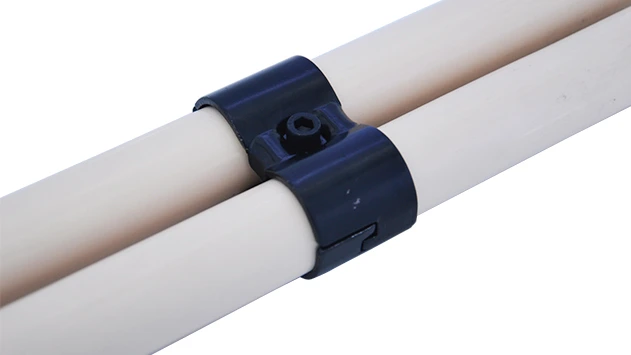
Parallel Lean Pipe Joint
Parallel lean pipe joint used for 2 pcs 28MM lean pipe connection in parallel direction to enhance frame structure, usually for heavy payload requirement for workbench. flow rack, hand trolley.
In today's fast-paced manufacturing landscape, the ability to adapt quickly isn't just a competitive advantage—it's a necessity. Production lines shift between products, seasonal demands fluctuate, and new technologies require workflow adjustments. Yet, one of the biggest hurdles manufacturers face isn't keeping up with demand—it's the downtime that comes with reconfiguring workstations, material racks, or roller tracks. Every minute a line sits idle translates to lost revenue, missed deadlines, and frustrated teams. This is where parallel lean pipe joints step in: a simple, innovative solution designed to slash reconfiguration time and keep your operations running smoothly.
Whether you're rearranging a workbench to accommodate a new assembly process, reconfiguring a material rack to handle larger components, or adjusting a roller track to speed up material flow, the tools you use to build and modify these structures matter. Traditional methods—think welding, bolted joints, or custom-fabricated metal frames—are slow, rigid, and often require specialized tools. They're built for permanence, not adaptability. Parallel lean pipe joints, by contrast, are engineered for flexibility. They're the unsung heroes of lean manufacturing, turning once time-consuming reconfigurations into quick, tool-light tasks that keep your team focused on what matters: production.
What Are Parallel Lean Pipe Joints, Anyway?
Let's start with the basics. Parallel lean pipe joints are modular connectors designed to link lean pipes—lightweight, durable tubes made from materials like aluminum, stainless steel, or PE-coated steel—into sturdy, customizable structures. Unlike traditional joints that lock pipes into fixed angles or require permanent bonding (hello, welding), parallel lean pipe joints are all about adaptability. They feature a unique design that allows pipes to be connected in parallel or at adjustable angles, often with nothing more than a hex key or a simple wrench.
Picture this: a joint with multiple connection points, each engineered to grip a lean pipe securely. Some models rotate, letting you adjust angles on the fly. Others lock into place with a quick twist, ensuring stability once set. Many are made from aluminum or reinforced plastic, striking a balance between strength and lightweight maneuverability. And because they're part of a broader lean system, they play well with other components—aluminum profile for added rigidity, roller track for smooth material movement, and even casters for mobile workstations. In short, they're the building blocks of a production line that can change as quickly as your needs do.
How Parallel Lean Pipe Joints Cut Downtime (and Why It Matters)
Downtime isn't just an inconvenience—it's costly. According to industry estimates, unplanned downtime can cost manufacturers anywhere from $50,000 to $250,000 per hour, depending on the industry. Even planned reconfigurations, if dragged out, eat into profits. Parallel lean pipe joints address this by focusing on three key principles: speed, reusability, and compatibility.
Speed: From Hours to Minutes
Traditional reconfigurations often involve disassembling old structures (think cutting welded joints or removing dozens of bolts), modifying pipes or frames, and then reassembling with new welds or hardware. That's a multi-hour process, even for small changes. Parallel lean pipe joints eliminate most of that hassle. Since they don't require welding or drilling, you can take apart a workstation, adjust the pipe lengths, and reconnect the joints in a fraction of the time. A recent case study from a automotive parts manufacturer found that reconfiguring a material rack using traditional bolted joints took 2.5 hours; with parallel lean pipe joints, the same task took just 20 minutes. That's a 87% reduction in downtime—time that could be spent assembling parts instead of rearranging metal.
Reusability: Build, Break Down, Rebuild
One of the biggest wastes in manufacturing is single-use infrastructure. A custom-welded frame might work for one product, but when that product is phased out, the frame often ends up in the scrap heap. Parallel lean pipe joints, however, are designed to be reused. Disassemble a workbench today, and tomorrow those same joints can help build a turnover trolley or a roller track. This not only reduces waste (a core tenet of lean manufacturing) but also cuts down on the time and cost of sourcing new materials for each reconfiguration. It's like having a set of building blocks that never run out—just rearrange them for the next project.
Compatibility: Play Nice with Others
A reconfiguration rarely involves just one component. You might need to add a roller track to a workbench, attach casters to a material rack, or integrate aluminum profile for extra support. Parallel lean pipe joints are designed to play well with this ecosystem. Need to connect a lean pipe to an aluminum profile? There's a joint for that. Want to add a roller track connector to a parallel setup? No problem. This compatibility means you're not stuck with a one-trick pony—your structures can evolve to include new tools, materials, or workflows without starting from scratch.

Traditional vs. Parallel: A Side-by-Side Comparison
Still not convinced? Let's put parallel lean pipe joints head-to-head with traditional reconfiguration methods. The table below breaks down key features to show why parallel joints are a game-changer for reducing downtime:
| Feature | Traditional Joints (Welded/Bolted) | Parallel Lean Pipe Joints |
|---|---|---|
| Assembly/Reconfiguration Time | 2–8 hours (requires disassembly, welding, or bolt tightening) | 15–30 minutes (simple tool adjustments; no permanent bonding) |
| Tools Required | Welder, drill, wrench set, cutting tools | Hex key or basic wrench (often included with joints) |
| Reusability | Low (welded joints are permanent; bolts strip or wear out) | High (easily disassembled and reused across projects) |
| Compatibility | Limited (works only with specific pipe sizes or custom parts) | Broad (integrates with lean pipe, aluminum profile, roller track, and accessories) |
| Cost Over Time | High (labor, replacement parts, downtime) | Low (reduced labor, reusable parts, minimal downtime) |

Beyond Downtime: The Ripple Effects of Smarter Reconfigurations
Reducing downtime is the headline benefit, but parallel lean pipe joints deliver advantages that ripple through your entire operation. Let's explore a few:
Worker Empowerment
Traditional reconfigurations often require specialized workers—like welders or maintenance technicians—to handle the heavy lifting. With parallel lean pipe joints, your assembly line workers can make adjustments themselves. No special training, no waiting for the maintenance team. This not only speeds things up but also gives your frontline team more control over their workspace, boosting morale and ownership. Imagine a team lead noticing a bottleneck in material flow and being able to adjust the roller track angle in 10 minutes—no paperwork, no delays, just problem-solving.
Scalability Without the Headache
As your business grows, so do your needs. Maybe you need to add a second workbench to a line, expand a material rack from 3 rows to 5, or add casters to a stationary structure for mobility. With parallel lean pipe joints, scaling up is as simple as adding more pipes and joints. No need to order custom parts or redesign from scratch. This scalability is especially valuable for small to mid-sized manufacturers that need to pivot quickly without big capital investments.
Supporting Lean Manufacturing Principles
At their core, parallel lean pipe joints embody the spirit of lean manufacturing: eliminating waste. Waste comes in many forms—downtime, excess inventory, unnecessary motion. By making reconfigurations fast and flexible, parallel joints reduce downtime waste. By enabling reusable structures, they cut down on material waste. And by letting workers adjust their workstations for ergonomics, they reduce motion waste. It's a win-win for your bottom line and your commitment to continuous improvement.
Real-World Impact: A Case Study
Let's ground this in a real example. Consider a mid-sized electronics manufacturer that produces both smartphones and tablets. Their production lines need to switch between products every two weeks, which involves reconfiguring assembly workbenches, material racks (like material rack B with 3 rows and 3 floors), and roller tracks to accommodate different component sizes. Before adopting parallel lean pipe joints, this switch took 6 hours: the team had to disassemble bolted workbenches, cut and reweld metal frames for the material racks, and adjust roller tracks with traditional clamps.
After switching to parallel lean pipe joints, the process changed dramatically. The workbenches—now built with aluminum lean pipe and parallel joints—could be adjusted by loosening a few keys and repositioning the pipes. The material rack, which once required welding new supports, now used parallel joints to add or remove rows in minutes. Even the roller track adjustments, which involved swapping out plastic roller track guide rails (yellow for smartphones, grey for tablets), were faster thanks to roller track placon mounts that connected seamlessly with the parallel joint system. Total reconfiguration time? Just 1 hour. Over a year, that translated to 52 hours of saved downtime—time that could be used to produce an additional 2,600 units. For a company with a $50 profit margin per unit, that's $130,000 in extra revenue—all from a simple switch to smarter joints.
Considerations for Getting Started
If you're ready to explore parallel lean pipe joints, here are a few tips to ensure success:
- Start small: Test parallel joints on a single workstation or material rack before overhauling your entire line. This lets your team get comfortable with the system and see results quickly.
- Invest in quality: Look for joints made from durable materials like aluminum or stainless steel, and check that they're compatible with your existing lean pipe, aluminum profile, or roller track. A reputable lean pipe supplier can help you find the right fit.
- Train your team: While parallel joints are simple to use, a quick 15-minute training session on proper assembly and safety (e.g., ensuring joints are tightened securely) goes a long way.
- Plan for the future: Think about how your needs might change in 6 months or a year. Choose joints that can grow with you—ones that work with casters for mobility, or roller track connectors for expanded material flow.
Final Thoughts: Flexibility as Your Competitive Edge
In a world where customer demands shift overnight and production schedules change by the hour, flexibility isn't optional—it's survival. Parallel lean pipe joints might seem like small components, but they're powerful tools for unlocking that flexibility. By slashing reconfiguration time, reducing downtime, and empowering your team to adapt quickly, they transform your production line from a rigid system into a dynamic, responsive asset.
So, the next time you're staring down a reconfiguration, ask yourself: Is this taking longer than it should? Could parallel lean pipe joints turn hours of downtime into minutes of productivity? For most manufacturers, the answer is a resounding yes. After all, in manufacturing, the only constant is change—and with parallel lean pipe joints, you'll be ready for it.