- Company Articles
- Products and Technology
- Product knowledge
- Parallel Lean Pipe Joints: Why They're Essential for Flexible Workstations

Parallel Lean Pipe Joints: Why They're Essential for Flexible Workstations
Related Product
Parallel Lean Pipe Joint
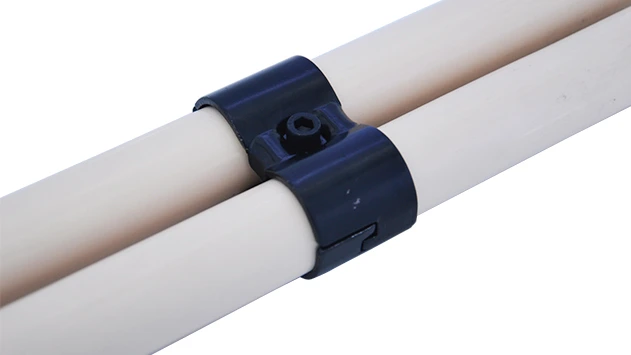
Parallel lean pipe joint used for 2 pcs 28MM lean pipe connection in parallel direction to enhance frame structure, usually for heavy payload requirement for workbench. flow rack, hand trolley.
In today's fast-paced manufacturing and warehouse environments, adaptability isn't just a buzzword—it's the backbone of efficiency. As production lines shift to meet changing consumer demands, and warehouses scale to handle growing inventory, the need for workstations that can evolve with these changes has never been clearer. Rigid, one-size-fits-all setups slow down operations, create bottlenecks, and leave teams struggling to keep up. This is where flexible solutions, rooted in lean principles, step in—and at the heart of this flexibility lies a component that often goes unnoticed but plays a critical role: the parallel lean pipe joint.
Lean systems have long been celebrated for their ability to streamline processes, reduce waste, and boost productivity. But what makes these systems truly "lean" is their modularity—the ability to break down, reconfigure, and rebuild components as needs change. Parallel lean pipe joints are the unsung heroes of this modularity. They're the connectors that turn simple lean pipes into dynamic workstations, turnover trolleys, and material racks, allowing teams to adapt on the fly without overhauling entire setups. In this article, we'll dive into why parallel lean pipe joints are indispensable for modern flexible workstations, exploring their design, benefits, applications, and how they fit into the broader landscape of lean manufacturing.
What Are Parallel Lean Pipe Joints?
Before we unpack their importance, let's start with the basics: What exactly is a parallel lean pipe joint? At its core, it's a specialized connector designed to join two or more lean pipes in a parallel configuration, creating stable, adjustable structures. Unlike fixed-angle joints (which lock pipes at 90° or 45°), parallel joints allow pipes to run alongside each other while maintaining a consistent distance, making them ideal for building frames, shelves, and work surfaces that need to stay level and evenly spaced.
These joints are typically made from durable materials like galvanized steel, stainless steel, or aluminum, often coated with plastic (such as PE, or polyethylene) to resist corrosion and reduce noise during assembly. Their design is deceptively simple: a central body with clamping mechanisms that grip the lean pipes, secured by bolts or levers that can be tightened or loosened by hand or with basic tools. This simplicity is key—no welding, no complex machinery, just a tool-free (or minimal-tool) assembly process that even new team members can master quickly.
But don't let their simplicity fool you. Parallel lean pipe joints are engineered to handle significant weight, with load capacities ranging from 50kg to over 200kg per joint, depending on the material and design. This strength, combined with their flexibility, makes them a cornerstone of lean system setups, whether you're building a lightweight assembly bench or a heavy-duty material rack.
Key Features and Benefits of Parallel Lean Pipe Joints
So, what sets parallel lean pipe joints apart from other connectors? Let's break down their most impactful features and the benefits they bring to workstations and workflows.
1. Unmatched Flexibility in Configuration
The defining feature of parallel lean pipe joints is their ability to adapt. Unlike fixed joints that lock pipes into rigid angles, parallel joints let you adjust the distance between pipes, add or remove sections, or reposition entire structures with minimal effort. Need to widen a workbench to fit a larger component? Loosen the joints, slide the pipes, and retighten. Want to add a second shelf to a material rack? Attach new pipes using parallel joints and secure them in place. This flexibility means your workstation isn't tied to a single purpose—it can evolve as your products, team, or processes change.
2. Quick Assembly and Disassembly
Time is money in manufacturing, and parallel lean pipe joints save plenty of both. Traditional workstations often require welding, drilling, or custom fabrication, which can take hours (or days) to set up. With parallel joints, assembly is a matter of sliding pipes into the connectors and tightening a few bolts. Most teams can build a basic workbench in under an hour, and disassembly is just as fast—no cutting or prying required. This speed is a game-changer during production line reconfigurations or facility relocations, where downtime must be minimized.
3. Compatibility with Lean Pipe Ecosystems
Parallel lean pipe joints don't work in isolation—they're part of a broader ecosystem of lean pipe accessories. Whether you need to add casters for mobility, roller tracks for material flow, or aluminum profile panels for work surfaces, these joints play well with others. They're designed to fit standard lean pipe sizes (often 28mm or 30mm diameter for steel pipes, or 40mm for aluminum profiles), ensuring you can mix and match components from different suppliers without compatibility issues. This interoperability reduces the need for custom parts, keeping costs low and inventory manageable.
4. Cost-Effective and Sustainable
Lean manufacturing is all about reducing waste, and parallel lean pipe joints align perfectly with this goal. Unlike fixed structures that end up in landfills when they're no longer needed, these joints and the lean pipes they connect are reusable. A workstation that's retired from one production line can be disassembled and rebuilt into a turnover trolley or material rack for another. This reusability cuts down on capital expenses for new equipment and reduces environmental impact—a win-win for your budget and your sustainability goals.
5. Ergonomic Design for Worker Well-Being
Happy, healthy workers are productive workers, and parallel lean pipe joints contribute to better ergonomics in the workplace. By allowing easy height and width adjustments, they let teams tailor workstations to individual needs. A taller worker can raise a bench to avoid hunching, while a shorter team member can lower it for comfort. This adaptability reduces strain on backs, shoulders, and wrists, lowering the risk of workplace injuries and boosting overall morale. When workstations fit the people using them, everyone wins.

Practical Applications: Where Parallel Lean Pipe Joints Shine
Parallel lean pipe joints aren't just theoretical—they're workhorses in real-world settings. Let's explore some of the most common applications where these joints make a tangible difference.
1. Lean Pipe Workstations
Workstations are the heart of any production line, and parallel lean pipe joints are the key to making them truly flexible. Whether it's a single-deck assembly bench (like the "Workbench E (single deck-without caster)" from many suppliers) or a multi-tiered station with tool racks and material bins, parallel joints ensure the structure can adapt to changing tasks. For example, in electronics manufacturing, where components vary in size, a workstation built with parallel joints can be widened to accommodate larger circuit boards or narrowed for smaller parts—all without replacing the entire setup.
2. Turnover Trolleys and Racks
Material handling is a critical part of warehouse and manufacturing operations, and turnover trolleys and racks need to be both sturdy and adaptable. Parallel lean pipe joints excel here, allowing teams to build trolleys with adjustable shelves, foldable sides, or removable racks. A "Material Rack B (3 row and 3 floor)" might start as a static storage unit but, with the addition of casters and parallel joints, can be transformed into a mobile cart for transporting goods across the facility. The joints keep shelves level and stable, even when the trolley is in motion, preventing spills and damage to inventory.
3. Flow Racks and Roller Tracks
Flow racks and roller tracks rely on gravity to move materials smoothly from one workstation to the next, and parallel lean pipe joints ensure these systems stay aligned. By holding roller tracks (like the "Plastic Roller Track Guide Rail Yellow" or "Aluminum Guide Rail A") parallel and evenly spaced, the joints prevent jams and ensure consistent flow. In a distribution center, for example, a flow rack built with parallel joints can be adjusted to handle different package sizes—wider tracks for boxes, narrower ones for envelopes—without compromising the system's efficiency.
4. Production Line Frames and Enclosures
From automotive assembly to food packaging, production lines need frames that can support conveyor belts, lighting, and safety guards. Parallel lean pipe joints provide the stability required for these heavy-duty applications while allowing for quick modifications. If a new machine is added to the line, the frame can be extended using parallel joints and additional lean pipes, avoiding the need for expensive custom fabrication. This adaptability ensures production lines can scale with demand without major disruptions.

How Parallel Lean Pipe Joints Compare to Other Connectors
To truly appreciate the value of parallel lean pipe joints, it helps to see how they stack up against other common connectors. Below is a comparison table highlighting key differences between parallel joints, 90° fixed joints, and three-way joints.
| Feature | Parallel Lean Pipe Joints | 90° Fixed Joints | Three-Way Joints |
|---|---|---|---|
| Flexibility | High—adjustable spacing, reconfigurable angles | Low—locks pipes at 90°; no adjustment | Medium—connects three pipes at fixed angles (e.g., 90°/180°) |
| Assembly Time | Fast—tool-free or minimal tools required | Fast, but permanent once tightened | Moderate—requires aligning three pipes |
| Load Capacity | High (50–200kg per joint, depending on material) | Very high (best for static, heavy loads) | Medium (suitable for light to medium loads) |
| Reusability | Excellent—easily disassembled and reused | Poor—difficult to reposition without damage | Good—can be reused but limited by fixed angles |
| Best For | Flexible workstations, mobile trolleys, adjustable racks | Static structures, permanent frames | Branching structures (e.g., corner shelves, tool racks) |
*Load capacities are approximate and vary by manufacturer and material (e.g., steel vs. aluminum).
Tips for Installing Parallel Lean Pipe Joints
Installing parallel lean pipe joints is straightforward, but a few best practices can ensure your structure is safe, stable, and long-lasting. Here's a step-by-step guide to get you started:
1. Gather Your Materials and Tools
Before you begin, make sure you have all the necessary components: lean pipes (steel, aluminum, or PE-coated), parallel lean pipe joints, and any accessories (e.g., end caps, pipe clamps). You'll also need basic tools—most joints require only a hex key or adjustable wrench, though some may need a screwdriver for plastic-coated models.
2. Plan Your Structure
Sketch out your design first, noting the length of pipes, number of joints, and placement of accessories like casters or shelves. This helps avoid mistakes and ensures you have enough materials. For example, a simple workbench might require four vertical pipes, two horizontal pipes (top and bottom), and eight parallel joints (two per corner).
3. Assemble in Stages
Start with the base frame. Slide the parallel joints onto the ends of the horizontal pipes, then attach the vertical pipes. Tighten the joints just enough to hold the structure in place—you can fully secure them later. This "loose fit" approach makes it easier to adjust angles and spacing before finalizing.
4. Check for Level and Stability
Once the basic frame is assembled, use a level to ensure it's even. If one side is higher than the other, loosen the joints and adjust the pipe lengths until the structure is stable. For mobile trolleys, add casters last, ensuring they're evenly spaced to prevent tipping.
5. Tighten Joints Securely
After adjusting, fully tighten all joints. Be careful not to over-tighten—this can strip threads or crack plastic coatings. A good rule of thumb: tighten until the joint is firm, then give it a quarter-turn more. Test the structure by gently shaking it; if it wobbles, check for loose joints and retighten.
6. Add Accessories
Finally, attach accessories like shelves, tool hooks, or roller tracks using additional parallel joints or compatible connectors. For example, to add a shelf to a workbench, use parallel joints to secure two horizontal pipes between the vertical legs, then place a plywood or aluminum honeycomb panel on top.
Case Study: How a Electronics Manufacturer Boosted Efficiency with Parallel Lean Pipe Joints
To see the impact of parallel lean pipe joints in action, let's look at a real-world example. A mid-sized electronics manufacturer in the Midwest was struggling with rigid workstations that couldn't keep up with their diverse product line. Their assembly lines were filled with fixed benches, and switching from assembling smartphones to tablets required hours of reconfiguring—if it was possible at all. This led to downtime, frustrated workers, and missed deadlines.
The solution? They invested in a lean system built around parallel lean pipe joints. Over a weekend, the team disassembled their old workstations and rebuilt them using lean pipes, parallel joints, and adjustable shelves. The results were immediate:
- Faster changeovers: Switching between product lines went from 4 hours to 30 minutes. By loosening parallel joints, the team could adjust bench width and height in minutes, no tools required.
- Reduced waste: Old, unused workstations were disassembled, and their pipes and joints were repurposed into turnover trolleys and material racks, saving $15,000 on new equipment.
- Happier workers: Adjustable benches reduced ergonomic complaints by 40%. One assembler noted, "I can finally set the bench to my height instead of hunching over all day—it makes a huge difference."
Within six months, the manufacturer saw a 25% increase in production output and a 15% drop in workplace injuries. All because of a simple shift to flexible structures built with parallel lean pipe joints.
The Future of Flexible Workstations: Why Parallel Lean Pipe Joints Will Only Grow in Importance
As manufacturing and warehousing continue to evolve—with trends like small-batch production, e-commerce fulfillment, and human-robot collaboration—flexibility will only become more critical. Parallel lean pipe joints are perfectly positioned to meet this demand, thanks to their adaptability, cost-effectiveness, and compatibility with new technologies.
For example, as more facilities adopt collaborative robots (cobots), workstations will need to accommodate both human workers and machines. Parallel lean pipe joints allow teams to add robot mounts, safety barriers, or sensor holders to existing structures, integrating new tech without overhauling the entire line. Similarly, in e-commerce warehouses, where order volumes fluctuate seasonally, mobile racks built with parallel joints can be quickly reconfigured to handle peak demand, then scaled back during slower periods.
Sustainability is another driver. With businesses under increasing pressure to reduce waste, the reusability of lean pipe systems (powered by parallel joints) aligns with circular economy goals. Instead of buying new workstations every time needs change, companies can reuse existing components, cutting down on raw material use and landfill waste.
Conclusion: Investing in Flexibility with Parallel Lean Pipe Joints
In a world where change is constant, flexibility isn't just an advantage—it's a necessity. Parallel lean pipe joints may seem like small components, but they're the building blocks of workstations that can adapt, grow, and evolve with your business. From reducing downtime during reconfigurations to lowering costs through reusability, these joints deliver tangible benefits that impact your bottom line and your team's well-being.
Whether you're building a single workbench or overhauling an entire production line, don't overlook the power of parallel lean pipe joints. They're not just connectors—they're the key to creating a workplace that works for you, today and tomorrow.