- Company Articles
- Products and Technology
- Product knowledge
- Parallel Lean Pipe Joints with One Side Rotatory: Key to Reducing Production Line Costs

Parallel Lean Pipe Joints with One Side Rotatory: Key to Reducing Production Line Costs
Related Product
Parallel Lean Pipe Joint
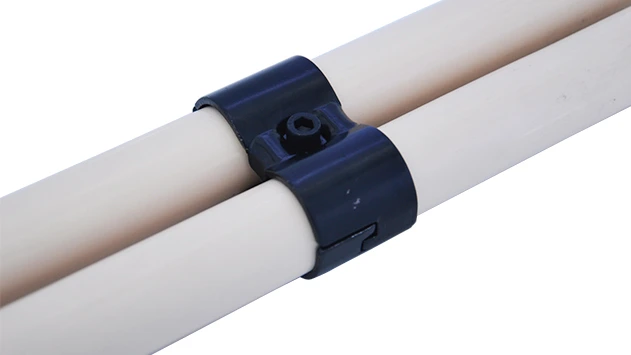
Parallel lean pipe joint used for 2 pcs 28MM lean pipe connection in parallel direction to enhance frame structure, usually for heavy payload requirement for workbench. flow rack, hand trolley.
In today's fast-paced manufacturing world, every second counts. Whether you're running a small electronics assembly line or a large automotive plant, the pressure to cut costs, boost efficiency, and adapt to changing demands is constant. You've probably felt it: the frustration of a production line that can't keep up with a new product design, the wasted hours reconfiguring workbenches, or the sinking feeling of watching profits shrink because your setup is too rigid to handle quick changes. What if the solution to these headaches wasn't a complete overhaul of your facility, but something as small as the joints holding your equipment together? Enter the parallel lean pipe joint with one side rotatory—a component that's quietly revolutionizing how manufacturers build, adapt, and optimize their production lines.
The Hidden Cost of Rigid Production Lines
Let's start with a scenario many production managers know all too well. Imagine (oops, scratch that—let's consider ) a mid-sized factory that assembles smartphone components. Last quarter, they were cranking out 5,000 units a day of their best-selling model. This quarter, demand shifts: customers want a new, slimmer version with different internal parts. The old workbenches, built with fixed steel joints, are too low for the new assembly process. The material racks, with static shelves, can't accommodate the bulkier component boxes. The roller tracks, set at a fixed angle, now cause jams with the lighter parts. To adapt, the team has to: order new steel pipes, hire contractors to cut and weld, shut down the line for two days, and pray the new setup works. By the time they're back up, they've lost 10,000 units of production, spent $15,000 on materials and labor, and missed the initial surge in demand for the new model. Sound familiar?
This isn't just bad luck—it's the cost of rigidity. Traditional production line setups rely on fixed joints: welded steel, bolted brackets, or glued connections. They're strong, sure, but they're also permanent. When your needs change, those joints become liabilities. Reconfiguring means disassembling, replacing parts, and starting from scratch. And it's not just the obvious costs like labor and materials; it's the downtime, the missed deadlines, and the opportunity cost of not being able to pivot quickly. Over time, these "hidden" costs add up to tens of thousands of dollars—money that could be invested in growth, better tools, or higher wages for your team.
Introducing Parallel Lean Pipe Joints with One Side Rotatory: Flexibility in a Small Package
So, what if your joints didn't fight change—they embraced it? That's the idea behind parallel lean pipe joints with one side rotatory. These aren't your grandfather's pipe fittings. They're engineered with a simple but genius design: one side of the joint stays fixed to the pipe, while the other rotates 180 degrees (or more, depending on the model) around a smooth, lubricated axis. This means you can pivot sections of your lean pipe structure—whether it's a workbench, a material rack, or a roller track—without unscrewing a single bolt, cutting a single pipe, or calling in a welder. It's like having a production line that bends instead of breaks when you need to adjust.
Let's break down the basics. A standard parallel lean pipe joint connects two pipes in a straight line or at a fixed angle (like 90 degrees). The one side rotatory version? It adds a hinge-like mechanism to one end. Picture this: you're building a lean pipe workbench. With a traditional joint, the legs are fixed at 90 degrees to the tabletop—if you need the bench higher, you have to swap out the legs for longer pipes. With a one side rotatory joint, you can loosen a locking lever, rotate the leg upward (or downward) to the exact height you need, and lock it back in place. Done. No new parts, no tools beyond a hex key, no downtime. That's the power of rotational flexibility.
These joints are typically made from high-grade aluminum or chrome-plated steel, which means they're lightweight (easier to handle during setup) and resistant to corrosion (important for factories with humidity or chemical exposure). They're designed to work with standard lean pipes—those 28mm or 30mm diameter tubes you already use for workbenches, racks, and trolleys. And because they're part of the lean system ecosystem, they play nice with other components: aluminum profiles, roller tracks, casters, and even ESD workbench surfaces for static-sensitive environments. In short, they're not a replacement for your existing setup—they're an upgrade that makes your current equipment smarter and more adaptable.

How One Side Rotatory Joints Solve Key Pain Points
Let's get specific: how exactly do these joints cut costs and boost efficiency? Let's count the ways.
1. Reconfiguration in Minutes, Not Days Remember that smartphone factory example? With one side rotatory joints, adjusting the workbench height wouldn't take two days—it'd take two minutes per bench. Loosen the lock, rotate the legs to the new height, tighten, and you're back to assembling. The roller tracks? A quick twist to adjust the angle, and the lighter parts glide through without jams. Material racks? Rotate the shelves to accommodate taller boxes, no disassembly needed. According to a 2024 study by the Lean Manufacturing Association, factories using rotatory joints reduced reconfiguration time by an average of 78% compared to fixed-joint setups. For a line that reconfigures 10 times a year, that's hundreds of hours saved—hours that can be spent producing, not rebuilding.
2. No More Wasted Parts (or Money) Traditional reconfigurations often mean throwing away old pipes and joints—they're cut, welded, or bent beyond reuse. With rotatory joints, your pipes stay intact. You're not buying new steel or aluminum every time you adjust; you're just reusing what you already have. A small electronics manufacturer in Ohio reported saving $42,000 in material costs over two years by switching to rotatory joints—simply by eliminating the need to replace pipes during reconfigurations.
3. Labor Savings (Your Team Deserves Better Than Bolt-Tightening) How much time does your team spend on "setup work" versus actual production? If you're like most factories, it's too much. Fixed joints require skilled labor: welders, pipe fitters, or trained technicians with power tools. Rotatory joints? Any team member with basic training can adjust them. A single operator can reconfigure a 20-foot roller track in 30 minutes—no special skills, no heavy equipment. That frees up your skilled workers to focus on tasks that actually add value, like quality control or process optimization.
4. Durability That Outlasts Traditional Joints You might be thinking: "If they rotate, they must wear out faster, right?" Wrong. These joints are built with precision bearings and high-strength locking mechanisms. The chrome-plated steel versions can handle up to 500kg of load per joint, and the aluminum models (lighter but still tough) top out at 300kg. And because they're designed for repeated rotation—think 10,000+ adjustments—they're less likely to loosen or break than fixed joints, which often fail at the weld or bolt points after one or two reconfigurations. In fact, manufacturers like to say: "A rotatory joint doesn't die from use—it dies from neglect." (Pro tip: A little annual lubrication goes a long way.)

Traditional vs. Rotatory Joints: A Side-by-Side Comparison
| Feature | Traditional Fixed Joints | Parallel Lean Pipe Joints with One Side Rotatory |
|---|---|---|
| Reconfiguration Time | 4–8 hours (requires disassembly/welding) | 5–15 minutes (tool-free rotation) |
| Tools Needed | Welder, pipe cutter, wrench, drill | Hex key (included with joint) or hand-tightened lever |
| Cost per Reconfiguration | $500–$2,000 (materials + labor) | $0–$50 (occasional lubrication) |
| Load Capacity | 500–800kg (but weakens after reconfiguration) | 300–500kg (consistent, even after 100+ adjustments) |
| Lifespan | 2–3 years (fails at weld/bolt points) | 5–7 years (bearings and locks last with minimal maintenance) |
| Flexibility | Fixed angle/height (no adjustment possible) | 180° rotation (adjustable angle/height on the fly) |
Real-World Applications: Where These Joints Shine
Okay, so rotatory joints sound great on paper—but how do they work in the real world? Let's look at three common scenarios where they've made a measurable difference.
1. Lean Pipe Workbenches: From One-Size-Fits-All to Custom-Fit
Workbenches are the backbone of any assembly line, but they're also one of the most frustrating to adjust. A team of assemblers might need different heights: a 5'2" operator vs. a 6'1" operator, or a bench for standing work vs. seated work. With fixed joints, you'd need two separate benches. With one side rotatory joints? One bench, infinitely adjustable. A furniture manufacturer in North Carolina recently switched all their workbenches to rotatory joints. Now, operators can tweak the height by 2–3 inches in seconds, reducing back strain and cutting assembly errors by 12% (fewer mistakes when workers are comfortable). Plus, when they launch a new product line, they reconfigure the same benches instead of buying new ones—saving $18,000 in workbench costs alone last year.
2. Roller Tracks: Smoother Flow, Fewer Jams
Roller tracks are the arteries of material handling—they move parts from station to station, keeping the line flowing. But if the angle is off, parts slow down, get stuck, or even fall off. Traditional roller tracks are set at a fixed angle during installation, which works until you switch to lighter or heavier parts. A food packaging plant in Texas was struggling with this: their roller tracks, set at 5 degrees for glass jars, kept jamming when they switched to plastic bottles (which are lighter and need a steeper angle). With rotatory joints, they can adjust the track angle from 3° to 10° in minutes. Now, plastic bottles glide smoothly, and they've cut line stoppages due to jams by 90%. No more sending a maintenance worker to "fix" the track with a hammer (yes, that was their old solution).
3. Material Racks: Adapting to the Chaos of Inventory
Material racks are another pain point. One week, you're storing small circuit boards in shallow bins; the next, bulky power supplies that need taller shelves. Fixed racks force you to either overcrowd (risking damage) or leave empty space (wasting floor area). A medical device manufacturer in California solved this with rotatory-jointed racks. Their shelves, connected with one side rotatory joints, can tilt up to 45° to create taller vertical space, or flatten to hold shallow bins. They've reduced the number of racks needed by 30%, freeing up 200 square feet of floor space for a new testing station. And when a sudden order for a large medical device came in, they reconfigured three racks in 45 minutes instead of waiting a week for new shelving.
Case Study: How a Car Parts Supplier Cut Costs by $75,000 in One Year
The Challenge: A mid-sized supplier of brake components for electric vehicles was struggling with frequent reconfigurations. As EV designs evolved, their production line needed to switch between 10 different brake caliper models monthly. Each switch required retooling workbenches, adjusting roller tracks, and rebuilding material racks—costing $8,000 and 40 hours of downtime per change.
The Solution: They replaced all fixed joints with parallel lean pipe joints with one side rotatory, paired with aluminum profiles for added stability. They also upgraded to ESD workbenches (to protect sensitive electronic components in newer calipers) and adjustable roller tracks.
The Results: Reconfiguration time dropped from 40 hours to 6 hours per model change. Material costs for retooling fell from $8,000 to $500 (mostly lubrication and minor wear parts). Over 12 months, they saved $75,000 in labor and materials, eliminated 480 hours of downtime, and increased on-time deliveries by 15%. "It's like night and day," said their production manager. "We used to dread model changes; now we barely notice them."
Beyond the Joint: Building a Complete Lean System
Don't get us wrong—one side rotatory joints are powerful, but they're not magic. To maximize their impact, they need to be part of a broader lean system. That means pairing them with the right components: high-quality lean pipes (aluminum or chrome-plated steel), durable roller tracks, ergonomic workbenches, and reliable casters. Think of it like a puzzle: the rotatory joint is a key piece, but it works best when the other pieces (pipes, profiles, tracks) are designed to work with it.
For example, aluminum profiles are a great complement. They're lightweight, strong, and have T-slots that let you attach accessories (like tool holders or bins) without drilling. When combined with rotatory joints, you can build modular workstations that adjust in height, width, and layout—all while keeping accessories securely attached. A manufacturer of solar panels in Arizona did this: they built a "super workstation" with aluminum profiles, rotatory joints, and an ESD workbench top. It adjusts for panel size (from small residential to large commercial), has built-in tool rails, and even tilts to 30° for easier access to the back of the panels. Productivity per operator is up 25%.
And let's not forget about suppliers. A great joint is only as good as the company that makes it. Look for a lean pipe supplier that specializes in flexible systems—one that offers not just joints, but the full ecosystem (pipes, profiles, tracks, accessories). They should provide technical support, like CAD drawings for custom setups, and stand behind their products with warranties. A cheap, low-quality joint might save you $5 today, but it'll cost you $500 tomorrow when it jams during a reconfiguration.
Maintenance and Longevity: Getting the Most Out of Your Investment
Rotatory joints are low-maintenance, but they're not no-maintenance. To keep them working smoothly for 5–7 years, follow these simple tips:
Lubricate Regularly: The rotational mechanism relies on smooth bearings. Every 3–6 months (more if your factory is dusty or humid), apply a small amount of lithium-based grease to the joint's pivot point. A little goes a long way—too much grease attracts dust, which can gum up the works.
Check the Locking Mechanism: After each adjustment, make sure the lock is tight. Over time, levers or bolts can loosen, which reduces load capacity. A quick tug on the joint will tell you if it's secure—if it wiggles, tighten the lock.
Clean Debris: Wipe down the joint with a dry cloth occasionally to remove dust, oil, or coolant. This prevents corrosion and keeps the rotation smooth.
replace Wear Parts Proactively: If you notice the joint is sticking, or the lock isn't holding as well, don't wait for it to fail. Most suppliers sell replacement bearings or locking levers for a fraction of the cost of a new joint. A 10-minute repair now saves hours of downtime later.
Why This Matters: The Bottom Line for Your Factory
At the end of the day, parallel lean pipe joints with one side rotatory aren't just about "better joints"—they're about giving your factory the freedom to adapt. In a world where customer demands change overnight, where product lifecycles get shorter, and where every dollar counts, flexibility isn't a luxury—it's survival. These joints let you do more with less: less time, less money, less stress. They turn your production line from a fixed asset into a dynamic tool that grows with your business.
So, what's the next step? If you're tired of rigid setups, wasted downtime, and rising reconfiguration costs, start small. Pick one problem area—a workbench, a roller track, or a material rack—and swap out the fixed joints for rotatory ones. Measure the time saved, the costs cut, and the headaches avoided. We're willing to bet you'll be hooked. And when you are, you can expand—one joint at a time—until your entire line is as flexible as your team's ambition.
In the end, manufacturing isn't just about making products—it's about making progress. And with the right tools (even small ones like rotatory joints), progress becomes a whole lot easier.