- Company Articles
- Products and Technology
- Product knowledge
- Parallel Rotatory Lean Pipe Joint Chrome for Custom Lean Solutions: Design Tips

Parallel Rotatory Lean Pipe Joint Chrome for Custom Lean Solutions: Design Tips
Related Product
Parallel Rotatory Lean Pipe Joint
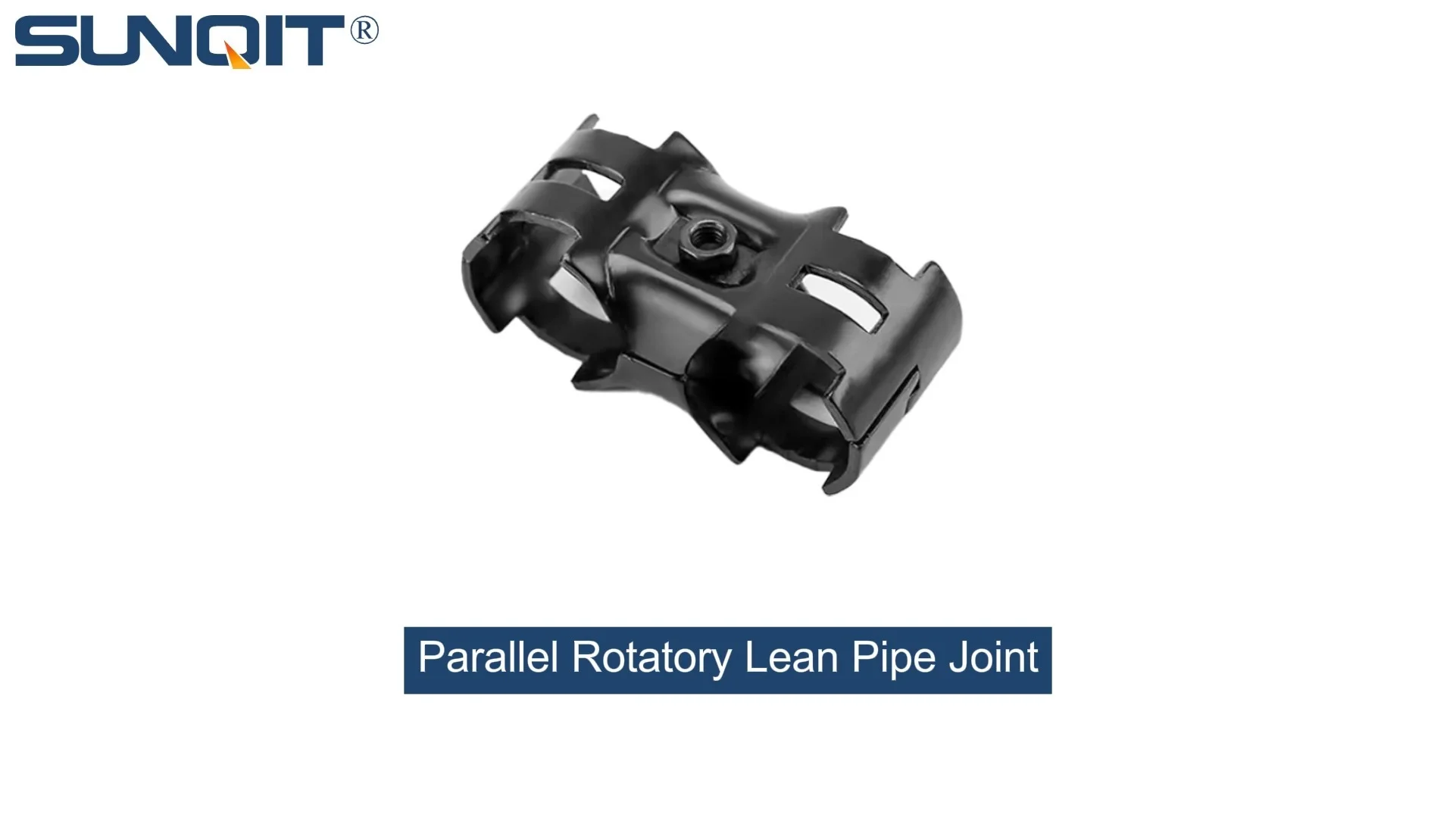
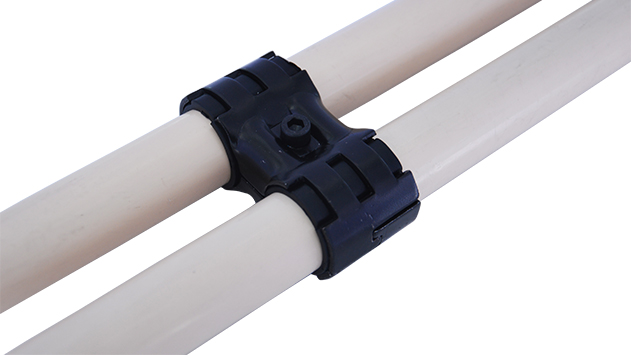
Parallel rotatory lean pipe joint, for 2 pcs pipe conenction in parallel direction with rotatory function.
Introduction: The Heart of Adaptable Lean Manufacturing
In the fast-paced world of manufacturing, where efficiency and flexibility can make or break a production line, lean solutions have become more than just a buzzword—they're a lifeline. Custom lean setups, tailored to a facility's unique workflows, are the secret sauce behind smoother operations, reduced waste, and happier teams. But here's the thing: even the best lean strategies fall flat without the right building blocks. That's where components like the Parallel Rotatory Lean Pipe Joint Chrome come into play. It's not just a connector; it's the unsung hero that turns rigid structures into adaptable, workflow-friendly systems.
Whether you're designing a lean pipe workbench for assembly lines, a flow rack for material handling, or integrating roller track for seamless product movement, the right joints can transform how your team works. In this guide, we'll dive deep into the world of custom lean solutions, focusing on how the Parallel Rotatory Lean Pipe Joint Chrome can elevate your designs. We'll share practical tips, real-world insights, and key considerations to ensure your next project isn't just functional—it's future-proof.
Understanding the Parallel Rotatory Lean Pipe Joint Chrome: More Than Just a Connector
Before we jump into design tips, let's get to know the star of the show: the Parallel Rotatory Lean Pipe Joint Chrome. At first glance, it might look like any other industrial joint, but its unique features set it apart. Crafted with a durable chrome finish, it's built to withstand the wear and tear of busy factories—think daily adjustments, heavy loads, and constant movement. But what really makes it shine is its rotational capability. Unlike fixed joints that lock pipes into static angles, this joint allows parallel pipes to rotate smoothly relative to each other, opening up a world of design possibilities.
Imagine a scenario where your assembly line needs to switch between two product sizes. With a fixed joint, you'd be stuck disassembling and rebuilding parts of your lean pipe workbench. But with the Parallel Rotatory Lean Pipe Joint Chrome? A quick twist adjusts the angle, and you're back to work. It's this flexibility that makes it a favorite among manufacturers who prioritize agility. Plus, its compatibility with standard lean pipes, aluminum profiles, and even roller track systems means it can fit into almost any existing setup—no need for a complete overhaul.
Core Design Principles for Custom Lean Solutions
Great lean design isn't just about slapping together pipes and joints. It's about aligning every component with your workflow goals. Here are the four principles that should guide your use of the Parallel Rotatory Lean Pipe Joint Chrome:
1. Flexibility: Design for Change
Manufacturing needs evolve—new products, updated processes, seasonal demand spikes. Your lean structures should evolve with them. The Parallel Rotatory Lean Pipe Joint Chrome excels here because it lets you reconfigure on the fly. When planning your design, ask: How might this workflow change in 6 months? A year? Build in rotational joints at key pivot points, like the corners of a flow rack or the edges of a workbench, so adjustments are quick and painless.
2. Modularity: Build in Blocks
Modularity is the backbone of lean systems. Instead of designing one massive, fixed structure, break your setup into smaller, interchangeable modules. For example, if you're creating a material handling area, use the Parallel Rotatory Lean Pipe Joint Chrome to connect roller track sections that can be added or removed as needed. This way, if a section gets damaged or outdated, you only replace the module—not the entire system. It's cost-effective and reduces downtime.
3. Ergonomics: Put People First
A lean system that ignores operator comfort is a system destined to fail. Fatigue, strain, and awkward movements lead to slower work and higher error rates. The rotational feature of the Parallel Rotatory Lean Pipe Joint Chrome can be a game-changer here. For instance, on a lean pipe workbench, rotating joints can adjust the height of tool holders or material bins to match each operator's arm length. Or, on a flow rack, rotating roller track sections can tilt materials toward the worker, reducing bending and reaching. Remember: the best lean solutions make work easier for people, not harder.
4. Efficiency: Minimize Waste, Maximize Flow
At its core, lean is about eliminating waste—whether that's time, space, or materials. The Parallel Rotatory Lean Pipe Joint Chrome helps here by optimizing material flow. Think about a roller track system feeding parts to an assembly line. If the track is fixed at a rigid angle, parts might jam or move too slowly. But with rotational joints, you can fine-tune the slope, ensuring a steady, uninterrupted flow. It's these small adjustments that add up to big efficiency gains over time.

Practical Design Tips: Making the Most of Your Parallel Rotatory Lean Pipe Joint Chrome
Now that we've covered the principles, let's get into the nitty-gritty. Here are actionable tips to help you design custom lean solutions that leverage the full potential of the Parallel Rotatory Lean Pipe Joint Chrome.
Tip 1: Map Your Workflow Before You Build
It's tempting to start assembling right away, but skipping workflow mapping is a recipe for frustration. Grab a whiteboard (or a digital tool) and sketch out how materials move through your space. Where do bottlenecks currently exist? Which areas need frequent reconfiguration? For example, if your team often switches between manual assembly and automated processes, mark those transition points as prime spots for rotational joints.
Let's say you're designing a flow rack for a electronics manufacturing plant. The rack needs to hold circuit boards, which come in two sizes: small (for smartphones) and large (for tablets). By mapping the workflow, you realize the small boards are accessed 3x more often. Solution? Use the Parallel Rotatory Lean Pipe Joint Chrome to mount the small-board shelves on rotating brackets. This way, operators can swing the shelves closer during peak production, then rotate them back to make space for large boards when needed. No more wasted motion, no more clutter.
Tip 2: Prioritize Material Compatibility
The Parallel Rotatory Lean Pipe Joint Chrome is versatile, but it's not a one-size-fits-all solution. To avoid costly mistakes, check that it's compatible with your existing (or planned) materials. For example, if you're using aluminum profiles for a lightweight workbench, ensure the joint's clamping mechanism fits the profile's T-slot design. Similarly, if you're integrating roller track, confirm the joint can support the track's weight when rotated to different angles.
A common pitfall? Overlooking load capacity. Rotational joints distribute weight differently than fixed ones, especially when rotated to extreme angles. Always check the manufacturer's specs—most Parallel Rotatory Lean Pipe Joint Chrome models can handle 50-100 kg per joint, but that drops if you're rotating heavy loads repeatedly. When in doubt, add extra joints for support, or pair rotational joints with fixed ones in high-stress areas (like the base of a workbench).
Tip 3: Fine-Tune Rotational Angles for Ergonomics
The rotational feature isn't just for reconfiguration—it's for making workstations more comfortable. Studies show that ergonomic setups reduce operator fatigue by up to 40%, so don't underestimate its impact. When designing a lean pipe workbench, for example, use the joint to adjust the angle of tool trays. A 15-degree tilt might seem small, but it can mean the difference between an operator straining to reach a screwdriver and grabbing it effortlessly.
Here's a pro move: Involve your operators in the design process. They're the ones using the workbench or flow rack daily, so they'll have insights you might miss. One manufacturer we worked with discovered that their assembly line workers preferred the left side of their workbench to rotate outward by 30 degrees—this let them rest their arms while soldering, reducing wrist strain. A simple adjustment, made possible by the Parallel Rotatory Lean Pipe Joint Chrome, led to a 20% drop in reported injuries.
Tip 4: Plan for Scalability
Your lean solution should grow with your business, not hold it back. The Parallel Rotatory Lean Pipe Joint Chrome makes scalability easy, but you need to plan for it. Start small, but leave room to expand. For example, if you're building a roller track conveyor for a warehouse, install extra rotational joints along the track's length. Later, when you need to add a side branch for a new shipping station, you can simply rotate the joints to connect the new track section—no drilling, no welding, no downtime.
Another example: A food packaging plant started with a single lean pipe workbench for labeling jars. As demand grew, they needed a second workbench. Because they'd used rotational joints at the original bench's corners, they were able to attach an extension arm (using the same joints) and mount the new bench perpendicular to the first. Now, two operators can work side-by-side, with the rotational joints allowing them to adjust their work areas independently. Scalability achieved—without replacing the original setup.
Case Study: How a Automotive Supplier Cut Changeover Time by 60% with Rotational Joints
The Challenge: A mid-sized automotive parts supplier was struggling with changeover times between producing brake calipers for sedans and SUVs. Their existing flow rack was built with fixed joints, so switching between the two caliper sizes required 2 hours of disassembly and reconfiguration—time that could have been spent manufacturing.
The Solution: They redesigned the flow rack using Parallel Rotatory Lean Pipe Joint Chrome at key points. The rack's shelves were mounted on rotating brackets, and the dividers between bins were attached with rotational joints. For sedan calipers (smaller, lighter), the shelves rotated to a 10-degree downward slope, letting parts glide to the front. For SUV calipers (larger, heavier), operators rotated the shelves to a flatter 5-degree slope to prevent jamming. The dividers could also be rotated outward to widen bins for SUV parts, then back in for sedans.
The Result: Changeover time dropped from 2 hours to 40 minutes—a 60% reduction. Operators no longer had to tools to adjust the rack; a quick twist of the rotational joints did the trick. Plus, the chrome finish made cleaning easier (oil and grease wiped off without staining), improving workplace hygiene. The supplier estimated saving over 200 production hours in the first year alone.

Common Mistakes to Avoid
Even with the best tools, missteps happen. Here are three mistakes to steer clear of when using the Parallel Rotatory Lean Pipe Joint Chrome:
- Overloading the Joint: It's easy to assume "rotational" means "indestructible," but exceeding the weight limit can lead to joint failure. Always factor in the total load (materials + structure) when planning rotations. If in doubt, add a fixed support joint nearby.
- Ignoring Locking Mechanisms: Some rotational joints have locking pins to hold angles in place. Forgetting to lock them can lead to unexpected movement during operation—dangerous for both workers and products. Train your team to check locks after adjustments.
- Overcomplicating the Design: Rotational joints add flexibility, but too many can make a structure wobbly or confusing to use. Stick to 1-2 rotational joints per "module" (e.g., per shelf, per workbench section) unless your workflow truly demands more.
Choosing the Right Joint: A Quick Comparison
Not sure if the Parallel Rotatory Lean Pipe Joint Chrome is right for your project? Here's how it stacks up against other common joint types:
| Joint Type | Key Features | Best For | Limitations |
|---|---|---|---|
| Fixed Lean Pipe Joint | Non-rotational, rigid angle locking | Static structures (e.g., permanent storage racks) | No adjustability; requires disassembly for changes |
| Swivel Joint (Non-Parallel) | Rotates 360° but not parallel to pipes | Corner connections (e.g., workbench legs) | Limited parallel pipe movement; bulkier design |
| Parallel Rotatory Lean Pipe Joint Chrome | Parallel pipe rotation, chrome finish, T-slot compatible | Dynamic workflows (e.g., adjustable flow racks, multi-use workbenches) | Slightly higher cost than fixed joints; requires periodic lubrication for smooth rotation |
As you can see, the Parallel Rotatory Lean Pipe Joint Chrome is the clear choice when adaptability and parallel movement are priorities. For static setups, fixed joints might suffice—but for lean systems that need to keep up with change, rotational is the way to go.
Conclusion: Your Turn to Build Smarter
The Parallel Rotatory Lean Pipe Joint Chrome isn't just a component—it's a tool for building lean solutions that grow with your business, adapt to your team's needs, and keep workflows efficient. By mapping your workflow, prioritizing compatibility, fine-tuning ergonomics, and planning for scalability, you can transform even the most rigid processes into models of flexibility.
Remember, the best lean designs aren't about perfection—they're about progress. Start small: pick one workflow that's been causing headaches (a cluttered workbench, a slow-moving flow rack) and try integrating a few rotational joints. See how it feels, get feedback from your team, and iterate. Before long, you'll wonder how you ever worked without them.
So go ahead—grab your pipes, your joints, and your vision for a more efficient workspace. The Parallel Rotatory Lean Pipe Joint Chrome is ready to help you build something that doesn't just work for today, but adapts for tomorrow. Your team (and your bottom line) will thank you.