- Company Articles
- Products and Technology
- Application Cases
- Parallel Rotatory Lean Pipe Joint Chrome in 3C Assembly: Application Examples

Parallel Rotatory Lean Pipe Joint Chrome in 3C Assembly: Application Examples
Related Product
Parallel Rotatory Lean Pipe Joint
Parallel rotatory lean pipe joint, for 2 pcs pipe conenction in parallel direction with rotatory function.
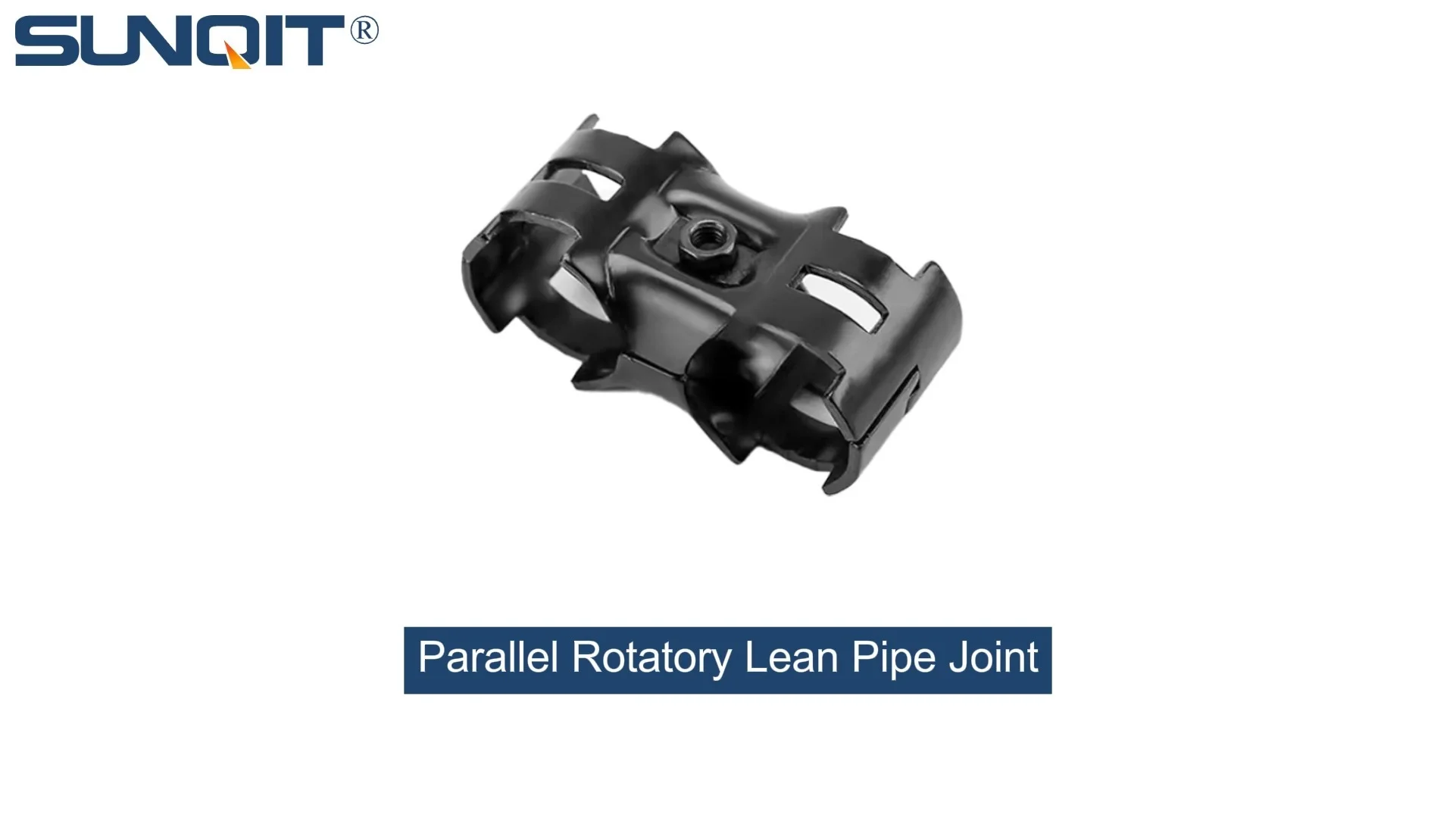
In the fast-paced world of 3C manufacturing—where "3C" stands for computers, communications, and consumer electronics—every second counts. Production lines churn out smartphones, laptops, and wearables at breakneck speeds, with teams racing to meet tight deadlines while maintaining pinpoint precision. But here's the catch: rigidity kills efficiency. Traditional assembly setups, with fixed workbenches and inflexible material racks, often struggle to keep up with frequent product design changes, custom orders, and the need for quick reconfiguration. That's where lean manufacturing systems step in, and at the heart of many of these systems lies a small but mighty component: the parallel rotatory lean pipe joint chrome.
You might not notice it at first glance, but this unassuming joint is a workhorse in modern 3C factories. Its chrome-plated finish gleams under factory lights, and its ability to rotate smoothly while locking securely in place makes it a favorite among production managers and line workers alike. In this article, we'll dive into real-world applications of the parallel rotatory lean pipe joint chrome, exploring how it transforms lean pipe workbenches, flow racks, ESD workstations, and roller track systems into adaptable, high-performance tools that keep 3C assembly lines running like well-oiled machines.
Understanding the Parallel Rotatory Lean Pipe Joint Chrome
Before we jump into applications, let's take a moment to appreciate what makes this joint special. Unlike fixed lean pipe joints, which lock pipes into static angles, the parallel rotatory version offers 360-degree rotation along its axis, with built-in locking mechanisms that let users set and secure angles in seconds. Its chrome coating isn't just for show—it resists corrosion, withstands the wear and tear of daily use, and ensures compatibility with ESD (electrostatic discharge) systems, a critical feature when handling sensitive electronic components like microchips and circuit boards.
Made from high-grade steel, the joint is designed to handle the weight of tools, components, and even heavy equipment, with a load capacity that often exceeds 50kg per joint. But what truly sets it apart is its versatility. It pairs seamlessly with standard lean pipes, aluminum profiles, and roller tracks, making it a modular solution that integrates into existing systems without requiring a complete overhaul. For 3C manufacturers, this means lower costs, faster setup times, and the freedom to tweak layouts on the fly—no more waiting for maintenance teams to disassemble and rebuild workstations when a new product model rolls out.
Application 1: Lean Pipe Workbench Reconfiguration for Mixed-Model Assembly
Walk into any 3C assembly plant, and you'll likely find rows of lean pipe workbenches where technicians assemble everything from smartphone motherboards to smartwatch casings. These workbenches need to be sturdy enough to support tools like soldering irons and microscopes, yet flexible enough to adapt when production switches from, say, a 6.7-inch phone to a 5.4-inch model. That's where the parallel rotatory lean pipe joint chrome shines.
The Challenge: Adapting to Frequent Product Changes
Consider a scenario at a mid-sized 3C factory that produces both budget and premium smartphone models. The budget model uses a plastic casing, requiring simple hand tools, while the premium model has a glass back and metal frame, demanding precision torque wrenches and anti-static tweezers. In the past, the factory used fixed lean pipe workbenches: one set for budget phones, another for premium. But with product launches happening every 3–6 months, this setup wasted space and forced teams to shuffle between stations, slowing down production.
The Solution: Rotatory Joints for On-the-Fly Adjustments
By retrofitting existing lean pipe workbenches with parallel rotatory lean pipe joints chrome, the factory eliminated the need for separate stations. Here's how it works: The workbench's upper shelf, which holds tools and component bins, is supported by a network of lean pipes connected via rotatory joints. When switching from budget to premium assembly, a technician can simply unlock the joints, rotate the shelf to a 45-degree angle (clearing space for larger tools), and lock it back in place. No tools, no disassembly—just a quick twist and click.
Even better, the joint's rotation allows for height adjustment. Shorter workers can lower the shelf to elbow height, while taller ones can raise it, reducing strain and cutting down on ergonomic injuries. "Before, I'd spend 10 minutes moving tools from one bench to another when we switched models," says Maria, a senior assembly technician at the factory. "Now, I adjust the shelf in 30 seconds and get back to work. It's like having a custom workbench for every job."
| Feature | Traditional Fixed Joint Workbench | Parallel Rotatory Joint Workbench |
|---|---|---|
| Reconfiguration Time | 30–60 minutes (requires tools/disassembly) | 30–60 seconds (tool-free rotation/locking) |
| ESD Compatibility | Limited (fixed joints may disrupt grounding) | High (chrome coating maintains ESD continuity) |
| Ergonomic Adjustment | None (fixed height/angle) | Full (360° rotation, height/angle customization) |
| Cost Over Time | Higher (needs multiple benches for different tasks) | Lower (single bench adapts to multiple tasks) |
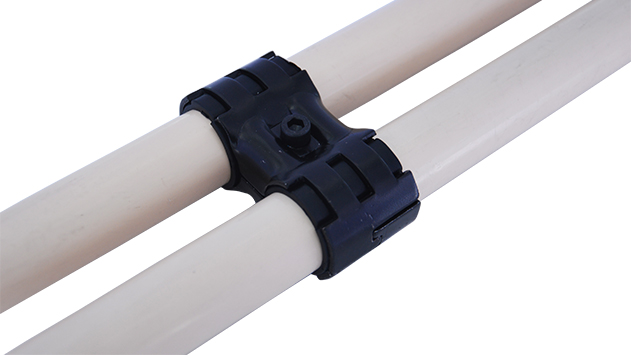
Application 2: Flow Rack Optimization for Smooth Material Handling
In 3C assembly, material flow is the lifeblood of productivity. Components—from tiny screws to LCD screens—need to move from storage to assembly lines quickly and without damage. Flow racks, with their sloped roller tracks, are designed to do just that, using gravity to feed components to workers. But traditional flow racks have a flaw: their roller tracks are set at a fixed angle, which works well for some components but causes jams or slowdowns for others. Enter the parallel rotatory lean pipe joint chrome, which lets teams adjust track angles in seconds to match the size, weight, and fragility of the parts being moved.
The Challenge: Jams and Slowdowns with Mixed Components
A 3C factory producing smart home devices recently faced this issue. Their flow rack held two types of components: small, lightweight plastic sensors and heavier metal battery packs. The fixed 5-degree angle worked for the sensors, but the battery packs—being denser—slid too quickly, sometimes colliding at the bottom and damaging their casings. Conversely, when the team tried a shallower 2-degree angle for the batteries, the sensors moved too slowly, leading to line stoppages as workers waited for parts.
The Solution: Rotatory Joints for Angle Customization
By replacing the fixed joints on the flow rack's support legs with parallel rotatory lean pipe joints chrome, the factory solved both problems. Now, each section of the flow rack can be adjusted independently: the sensor track is set to 5 degrees for smooth, steady flow, while the battery track is tilted to 3 degrees, slowing the packs just enough to prevent collisions. The joints lock securely, so even with constant vibration from nearby machinery, the angles stay consistent.
The team also uses the joints to create "buffer zones" during peak production. When demand spikes for a particular device, they rotate sections of the flow rack to connect with adjacent roller tracks, diverting components to additional assembly lines without building new racks. "We used to have to build temporary racks out of plywood when orders increased," says Raj, the plant's material handling supervisor. "Now, we just rotate the joints and lock them—no nails, no sawdust, no wasted time."

Application 3: ESD Workstation Stability for Sensitive Electronics
ESD protection is non-negotiable in 3C assembly. A single static discharge can fry a $500 microchip or render a smartphone motherboard useless. ESD workstations are designed to ground static electricity, but their effectiveness depends on continuity—every part of the workstation, from the to the tool holders, must be electrically connected to the ground. Fixed joints can sometimes disrupt this continuity if they loosen over time, but the parallel rotatory lean pipe joint chrome, with its chrome plating and tight locking mechanism, ensures a constant, reliable ground.
The Challenge: Static Damage in High-Volume Production
A laptop manufacturer was struggling with a 2% defect rate due to static damage, despite using ESD workstations. Upon investigation, they found that the fixed joints on their workbench shelves were loosening after repeated use, creating tiny gaps in the ESD pathway. When workers adjusted the shelves manually, the gaps grew, allowing static to build up and discharge onto components.
The Solution: Rotatory Joints for Secure ESD Continuity
Switching to parallel rotatory lean pipe joints chrome eliminated the gaps. The joint's locking mechanism lean pipes, maintaining a metal-to-metal connection that conducts static safely to the ground. Even when workers rotate the shelves to access tools or reposition components, the joint stays tight, ensuring continuity isn't broken. The factory's defect rate dropped to 0.5% within a month, saving thousands of dollars in wasted parts.
"Static damage used to keep me up at night," says Tom, the factory's quality control manager. "We'd test a batch of motherboards, and 10% would fail for no apparent reason. After installing the rotatory joints, those failures vanished. It's not just about adjustability—it's about reliability. The joints never loosen, so the ESD system never fails."

Application 4: Roller Track Alignment for Seamless Material Flow
Roller tracks are the highways of 3C assembly lines, carrying PCBs (printed circuit boards), screens, and casings from one station to the next. But when tracks are misaligned—even by a few degrees—components can jam, causing line stoppages and damaged parts. Traditional roller tracks are bolted into place, making realignment a tedious process. The parallel rotatory lean pipe joint chrome simplifies this by allowing precise angle adjustments, ensuring tracks stay aligned even as the factory floor shifts with temperature and humidity changes.
The Challenge: Misalignment in Long-Distance Tracks
A tablet manufacturer with a 50-meter-long assembly line faced chronic jams in their roller track system. The track ran the length of the factory, but over time, the concrete floor had settled slightly, causing small dips and bumps. Fixed joints couldn't compensate, so components would get stuck, requiring workers to stop the line and free them—costing up to 2 hours of production time per day.
The Solution: Rotatory Joints for Micro-Adjustments
By installing parallel rotatory lean pipe joints chrome at 3-meter intervals along the track, the manufacturer gained the ability to make micro-adjustments. Each joint can rotate by 1-degree increments, letting maintenance teams "smooth out" the track by raising or lowering sections to compensate for floor irregularities. The joints are marked with degree indicators, so adjustments are consistent and repeatable.
The results were dramatic: jams dropped by 90%, and the line now runs continuously for 8-hour shifts without stoppages. "We used to have a dedicated team just for unjamming tracks," says Lisa, the production line manager. "Now, one technician checks the joints once a week and makes tweaks—if needed. It's like having a self-correcting track system."
Why Choose Parallel Rotatory Lean Pipe Joint Chrome for 3C Assembly?
At this point, it's clear that the parallel rotatory lean pipe joint chrome isn't just a component—it's a catalyst for efficiency in 3C manufacturing. Its ability to adapt to changing needs, enhance ESD protection, and simplify maintenance makes it a must-have for any lean system. But don't just take our word for it. Consider these key benefits:
- Cost Savings: Reduces the need for multiple fixed setups, cutting down on material and storage costs. Reconfiguration takes minutes, not hours, so labor costs drop too.
- Durability: Chrome plating resists rust and wear, even in humid factory environments. Many manufacturers report joints lasting 5+ years with minimal maintenance.
- Safety: Tool-free adjustments mean fewer accidents from loose bolts or sharp edges. ESD compatibility protects workers and components alike.
- Sustainability: Lean systems built with rotatory joints are reusable and recyclable, aligning with 3C brands' goals to reduce waste.
Conclusion: The Small Joint That Makes a Big Difference
In the world of 3C assembly, where innovation is constant and deadlines are tight, adaptability isn't a luxury—it's a necessity. The parallel rotatory lean pipe joint chrome embodies this adaptability, turning ordinary lean pipe workbenches, flow racks, ESD workstations, and roller tracks into dynamic tools that grow and change with your needs. It's a reminder that sometimes, the most impactful solutions come in small packages.
Whether you're assembling the latest smartphone, a cutting-edge laptop, or a next-gen wearable, this joint works behind the scenes to keep your line moving, your workers comfortable, and your components safe. So the next time you walk through a 3C factory, take a closer look at those shiny chrome joints—they're not just connecting pipes. They're connecting your team to faster production, better quality, and a more profitable future.