- Company Articles
- Products and Technology
- Application Cases
- Parallel Rotatory Lean Pipe Joint Chrome in Automotive Manufacturing: Use Cases

Parallel Rotatory Lean Pipe Joint Chrome in Automotive Manufacturing: Use Cases
Related Product
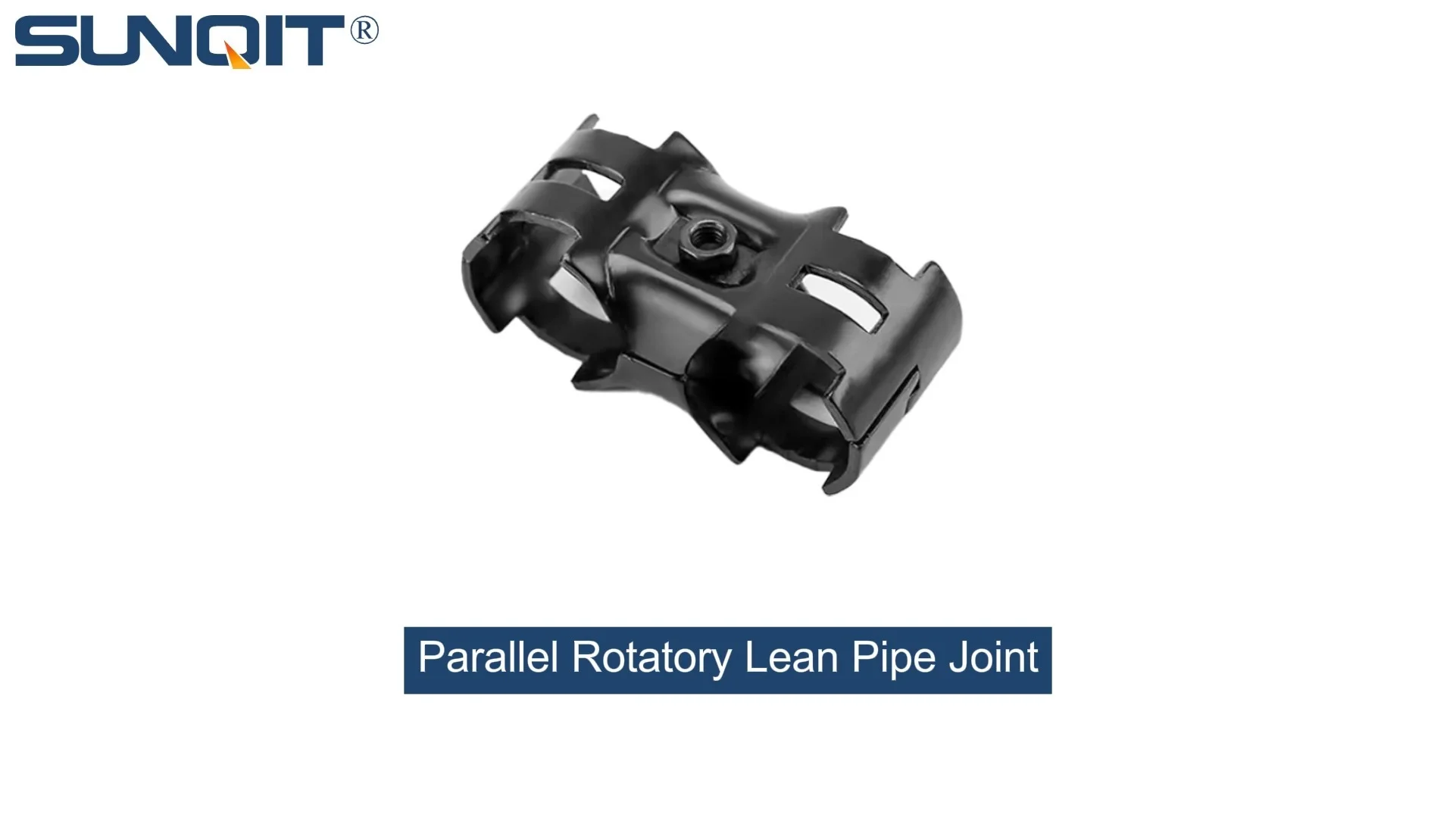
Parallel Rotatory Lean Pipe Joint
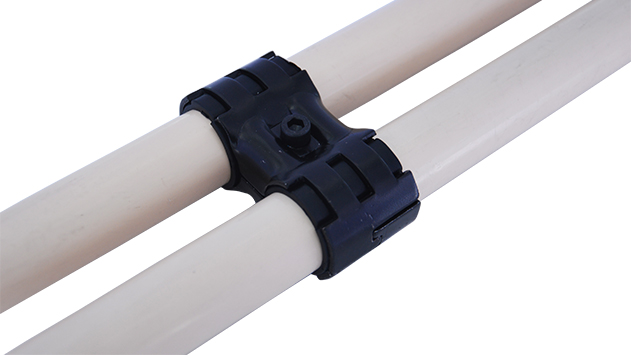
Parallel rotatory lean pipe joint, for 2 pcs pipe conenction in parallel direction with rotatory function.
In the fast-paced world of automotive manufacturing, where every second counts and adaptability can make or break production targets, the quest for efficiency is never-ending. Today's factories aren't just about assembling cars—they're about building systems that can pivot with market demands, reduce waste, and empower workers to do their best. This is where lean systems take center stage, and at the heart of these systems lie modular components designed to flex, endure, and evolve. Among these components, one stands out for its ability to transform rigidity into agility: the parallel rotatory lean pipe joint chrome. More than just a connector, it's a bridge between standardization and customization, a small but mighty tool that's quietly revolutionizing how automotive plants design, build, and reimagine their workflows.
In this article, we'll dive into the real-world impact of the parallel rotatory lean pipe joint chrome, exploring how it solves everyday challenges in automotive manufacturing. From assembly line workbenches that need to adapt to new car models overnight to material flow racks that keep parts moving smoothly, this joint isn't just a part of the process—it's the reason the process works better. We'll break down its design, its benefits, and most importantly, the use cases where it truly shines, proving that even the smallest components can drive big change in one of the world's most demanding industries.
What Makes the Parallel Rotatory Lean Pipe Joint Chrome Unique?
Before we jump into the use cases, let's take a moment to understand what sets this joint apart. At first glance, it might look like just another metal connector, but a closer look reveals why it's become a favorite among lean manufacturing engineers. The parallel rotatory lean pipe joint chrome is designed to connect lean pipes (often aluminum or steel) in a way that balances strength with flexibility. Its chrome plating isn't just for shine—it adds a layer of corrosion resistance, critical in factories where oil, coolant, and humidity are part of the daily environment. But the real magic is in its rotation: unlike fixed joints that lock pipes into rigid angles, this joint allows for 360-degree rotation along its axis, with smooth, controlled movement that lets workers adjust configurations on the fly.
Pair it with aluminum profiles or basic aluminum tubes, and you've got a modular system that can be built, disassembled, and rebuilt in hours, not days. Think of it as the LEGO brick of automotive manufacturing—simple, versatile, and infinitely combinable. Whether you're building a workbench, a flow rack, or a turnover trolley, this joint turns static structures into dynamic tools that grow with your needs.
Use Case 1: Adaptive Assembly Line Workbenches
Walk through any automotive assembly plant, and you'll notice one thing: no two workstations are exactly alike. One might be assembling dashboard electronics, another door hinges, another engine sensors. Each task demands different tools, different part orientations, and different worker postures. Traditional workbenches, built with fixed steel frames and welded joints, are a nightmare here. If a new car model requires a taller workstation or a different angle for tool access, you're looking at hours (or days) of rework—taking the station offline and eating into production time.
Enter the parallel rotatory lean pipe joint chrome. At a mid-sized automotive plant in Michigan, for example, the assembly line for electric vehicle (EV) batteries was struggling with this exact issue. As battery designs evolved, the workbench needed to accommodate larger battery packs, but also smaller, more delicate components for hybrid models. The plant's engineering team decided to rebuild their workbenches using lean pipes, aluminum profiles, and—you guessed it—parallel rotatory chrome joints. The results were striking.
Workers could now adjust the height of the bench surface by rotating the joints to loosen the pipes, sliding them up or down, and locking them back in place—all in under two minutes. Need to add a side shelf for tools? Attach a short lean pipe to the joint, rotate it into position, and secure. Want to integrate a roller track to slide battery cells into place? The joint's rotation allowed the roller track to be angled slightly downward, ensuring smooth, gravity-fed movement without jams. "Before, if we needed to switch from a standard battery to a high-capacity one, we'd have to swap out the entire bench top," says Maria, a lead assembler at the plant. "Now, I can adjust it myself during my break. It's like having a custom workstation every day."
The impact wasn't just on flexibility. The chrome plating meant the joints held up to the frequent adjustments and occasional spills of battery coolant, while the aluminum profiles kept the benches lightweight enough to reposition with a caster wheel upgrade (another easy add-on, thanks to the joint's compatibility with caster accessories). Over six months, the plant reported a 22% reduction in workstation downtime and a 15% increase in worker satisfaction—proof that small changes to how we build our tools can have a big impact on how we use them.
Use Case 2: Material Flow Racks with Precision Roller Tracks
In automotive manufacturing, materials don't just sit—they move. From the warehouse to the assembly line, from one station to the next, parts like screws, brackets, and wiring harnesses need to flow smoothly to keep production on track. Flow racks, equipped with roller tracks, are the backbone of this movement. But here's the problem: traditional flow racks use fixed-angle roller tracks. If the angle is off by even a few degrees, parts either move too slowly (causing bottlenecks) or too fast (slamming into the end and getting damaged). And if you need to change the type of part—say, from small plastic clips to heavier metal brackets—you're stuck with a rack that's optimized for the old part, not the new one.
A tier-one automotive supplier in Ohio, which supplies door panels to major automakers, faced this issue head-on. Their flow racks, built with standard steel joints, couldn't adjust roller track angles, leading to frequent jams with larger, heavier door panels. The team tried shimming the racks to change angles, but the shims slipped, causing inconsistent flow and occasional part damage. That's when they turned to lean systems and parallel rotatory lean pipe joints chrome.
By rebuilding the flow racks with lean pipes and parallel rotatory joints, the supplier gained precise control over roller track angles. Each joint could be rotated to tilt the track by 1°, 2°, or even 5°, depending on the part weight. For lightweight plastic door liners, a gentle 2° angle worked best. For metal-reinforced panels, a steeper 4° angle ensured smooth movement without slamming. The joints' chrome plating also meant they didn't rust, even in the humid warehouse environment, and the rotation mechanism stayed smooth after thousands of adjustments.
But the real game-changer was compatibility. The supplier could now mix and match roller track types—using plastic roller track guide rails (yellow for high-visibility, grey for standard use) and aluminum guide rails—all connected via the same parallel rotatory joints. When a new door panel design required a wider track, they simply added an extra lean pipe section using the joint, no welding or drilling needed. "We used to have a separate rack for every part type," says Jake, the warehouse manager. "Now, one rack can handle six different panels. We've cut our rack footprint by 40% and reduced part damage by almost 30%."

Use Case 3: Turnover Trolleys That Navigate Tight Spaces
Not all material movement happens on fixed racks—sometimes, parts need to go where the racks can't. Turnover trolleys are the workhorses here, ferrying parts from the warehouse to the line, or between stations. But automotive plants are tight spaces: narrow aisles, low ceilings, and equipment everywhere. Trolleys with fixed frames often get stuck, or worse, damage walls or machinery when operators have to maneuver them sharply.
A European automotive plant in Germany, specializing in luxury car interiors, was struggling with this. Their trolleys, built with rigid steel frames, were too wide to fit through the narrow aisles between assembly stations for leather seat production. Workers had to either carry parts by hand (risking injury) or take long detours, adding 10-15 minutes to each trip. The solution? Trolleys built with lean pipes, caster wheels, and parallel rotatory lean pipe joint chrome.
The key was the joint's ability to fold. The plant's engineering team designed a trolley with side rails that could be rotated inward using the parallel rotatory joints, reducing the trolley's width by 12 inches when needed. When moving through wide warehouse aisles, the rails stayed out, maximizing storage space. When squeezing through narrow assembly lines, a quick rotation of the joints folded the rails in, making the trolley slim enough to glide through. The chrome joints held up to the daily folding and unfolding, while the aluminum profiles kept the trolley light enough for one worker to push, even when fully loaded with leather rolls and foam padding.
"Before, I'd have to ask a coworker to help me maneuver the trolley around corners," says Klaus, a material handler at the plant. "Now, I can fold the sides myself, zip through the aisles, and unfold them once I'm at the station. It's cut my trip time in half, easy." The plant also added swivel roller balls (1 inch) to the trolley shelves, allowing parts to slide off smoothly onto the assembly line—another upgrade made possible by the joint's ability to attach accessories without modification.

Traditional Joints vs. Parallel Rotatory Lean Pipe Joint Chrome: A Quick Comparison
| Feature | Traditional Fixed Joints | Parallel Rotatory Lean Pipe Joint Chrome |
|---|---|---|
| Flexibility | Fixed angles; no adjustment possible without tools/dismantling | 360° rotation; adjust angles/heights in minutes, no special tools |
| Durability | Prone to rust (unplated steel); welded joints weaken over time | Chrome plating resists corrosion; mechanical joints maintain strength with use |
| Assembly Time | Hours (welding, drilling, cutting) | Minutes (snap-and-lock design; no welding) |
| Compatibility | Limited to specific pipe sizes/accessories | Works with lean pipes, aluminum profiles, roller tracks, caster wheels, and more |
| Cost Over Time | High (frequent replacements, downtime for rework) | Low (reusable, adaptable, minimal downtime) |
Use Case 4: ESD Workstations for Sensitive Electronics
Modern cars are rolling computers. From infotainment systems to autonomous driving sensors, electronics are everywhere—and they're delicate. Static electricity, even a small spark, can fry a $500 sensor or a $2,000 ECU (Engine Control Unit). That's why ESD (Electrostatic Discharge) workstations are non-negotiable in automotive manufacturing. But ESD workstations have their own challenges: they need to ground workers and parts, but they also need to adapt to different electronic components, which come in all shapes and sizes.
A California-based EV manufacturer was struggling with ESD workstations that were both rigid and expensive. Their original setups used fixed metal frames with ESD mats, but when a new sensor required a taller shelf or a different angle for testing, the frames couldn't adjust. The company was forced to buy new workstations for each component type, driving up costs and cluttering the factory floor.
The solution? ESD workstations built with lean pipes, ESD-compliant aluminum profiles, and parallel rotatory lean pipe joint chrome. The joints allowed the team to adjust shelf heights, add grounding straps at optimal angles, and even rotate small tool holders to keep ESD wristbands within easy reach. Since the joints were made of metal (chrome-plated steel), they also conducted static electricity, adding an extra layer of grounding protection—something plastic joints can't do.
"We used to have three separate workstations for sensors, ECUs, and wiring harnesses," says Raj, an electronics assembly supervisor at the plant. "Now, we have one workstation per team, and they adjust it as needed. If we're testing a new ECU, we raise the shelf to eye level. If we're handling small sensors, we lower it to waist height to avoid dropping them. The joints make it so easy—no tools, no downtime, just a quick twist and lock." The plant saw a 40% reduction in ESD-related component failures and a 30% decrease in workstation costs, proving that even specialized environments can benefit from modular, adaptable design.
The Ripple Effect: Beyond the Assembly Line
The impact of the parallel rotatory lean pipe joint chrome goes beyond the specific use cases we've covered. It's about changing how automotive plants think about their infrastructure. When you can build, adjust, and rebuild structures in minutes instead of days, you're not just saving time—you're fostering a culture of innovation. Workers feel empowered to suggest improvements ("What if we angle the roller track this way?"), and engineers can prototype new layouts without investing in permanent infrastructure.
Durability is another hidden benefit. Chrome plating resists rust and wear, meaning these joints last for years, even in harsh factory environments. And because they're reusable, they reduce waste—no more cutting up old steel frames and sending them to the scrapyard when a process changes. It's lean manufacturing at its core: maximize value, minimize waste, and respect people.
Conclusion: Small Joints, Big Impact
In the grand scheme of automotive manufacturing—with its robots, conveyor belts, and million-dollar machines—it's easy to overlook the small components. But as we've seen, the parallel rotatory lean pipe joint chrome is proof that size doesn't matter. It's a reminder that the most powerful innovations often happen at the margins, solving the everyday problems that slow workers down, drive up costs, and stifle adaptability.
Whether it's making an assembly line workbench adjust to a new car model, a flow rack handle heavier parts, or a trolley squeeze through a narrow aisle, this joint turns "can't" into "can." It's a tool that doesn't just build structures—it builds resilience, allowing automotive plants to thrive in an industry where change is the only constant.
So the next time you walk through a factory, take a closer look at those lean pipe structures. Chances are, there's a parallel rotatory lean pipe joint chrome holding them together—quietly, reliably, and always ready for whatever comes next.