- Company Articles
- Products and Technology
- Product knowledge
- Parallel Rotatory Lean Pipe Joint Chrome in Computer Peripheral Production Lines

Parallel Rotatory Lean Pipe Joint Chrome in Computer Peripheral Production Lines
Related Product
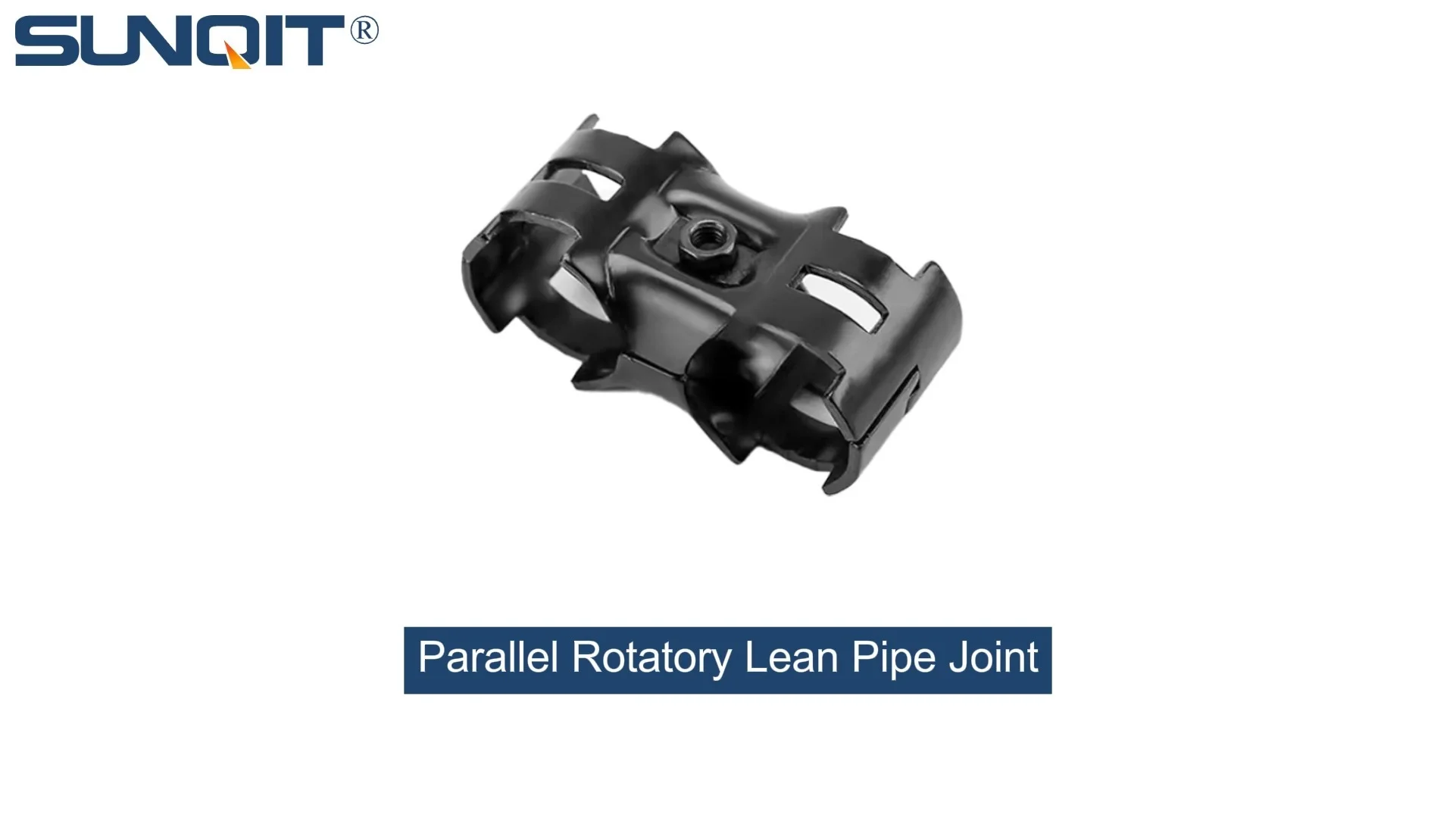
Parallel Rotatory Lean Pipe Joint
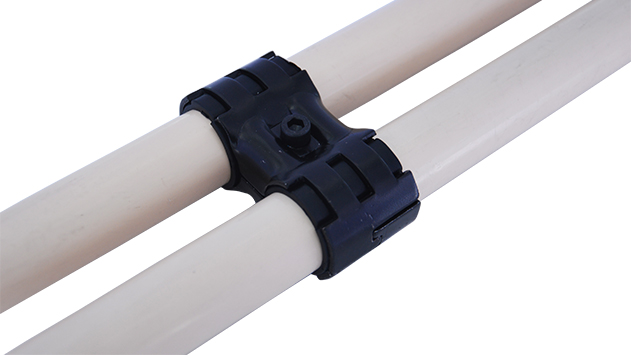
Parallel rotatory lean pipe joint, for 2 pcs pipe conenction in parallel direction with rotatory function.
In the fast-paced world of computer peripheral manufacturing, where every second counts and precision is non-negotiable, the difference between a smooth, efficient production line and a bottleneck-ridden one often comes down to the smallest components. Think about it: when you're assembling hundreds of keyboards, mice, or monitors each hour, the last thing you need is a workstation that can't adapt to shifting tasks, a material handling track that jams, or a joint that requires a wrench and 10 minutes of downtime to adjust. This is where the unsung heroes of lean manufacturing step in—components like the parallel rotatory lean pipe joint chrome . It's not flashy, but in the hands of a skilled production team, it becomes the quiet engine driving flexibility, speed, and reliability on the factory floor.
Computer peripherals might seem simple compared to the laptops or desktops they connect to, but their production demands a unique blend of agility and consistency. A single facility might switch between assembling wireless gaming mice in the morning, ergonomic keyboards in the afternoon, and touchpad modules by evening—each with different part sizes, assembly steps, and tool requirements. Traditional fixed workbenches and rigid material flow systems struggle here, often leading to wasted time, frustrated workers, and delayed orders. Lean manufacturing, with its focus on eliminating waste and maximizing adaptability, has become the backbone of modern production, and at the heart of that system lie modular components designed to evolve with the task at hand. Today, we're diving deep into one such component: the parallel rotatory lean pipe joint chrome, exploring how it transforms production lines, integrates with tools like lean pipe workbenches and roller tracks , and why it's become a go-to choice for manufacturers aiming to stay ahead in a competitive market.
The Backbone of Lean Manufacturing: Why Modularity Matters in Peripheral Production
Before we zoom in on the joint itself, let's take a step back to understand the context. Lean manufacturing isn't just a buzzword—it's a philosophy that has reshaped how products are made, from cars to computer mice. At its core, lean is about creating more value with less waste, and in the world of computer peripherals, "waste" can take many forms: time spent reconfiguring workstations, parts getting stuck on inflexible roller tracks, or workers straining to reach tools because a bench isn't angled correctly. Modular systems, built from components like lean pipes, joints, and aluminum profiles, address these issues by letting teams build, adjust, and rebuild production setups quickly—without welding, heavy machinery, or specialized skills.
Imagine a typical day at a peripheral factory. The morning shift is assembling wireless keyboards: small PCBs, tiny switches, and delicate keycaps that need precise alignment. The workbench needs to be low enough for seated workers, with a smooth surface to prevent static damage (hello, esd workstations ). By afternoon, the same line switches to gaming mice with bulkier shells and integrated RGB lights. Now, the workbench might need a steeper incline to give workers better visibility of the internal components, and the roller track feeding parts to the bench needs to handle heavier plastic molds without jamming. In a rigid system, this switch could take hours—dismantling the old setup, rebuilding the new one, testing for stability. With modular lean components? It might take 20 minutes. The difference? Joints that can rotate, lock, and release with minimal effort, like the parallel rotatory lean pipe joint chrome.
But why chrome-plated? In production environments, durability is non-negotiable. Peripheral factories are busy places: parts slide across workbenches, tools are set down roughly, cleaning crews wipe surfaces daily. A joint made from cheap plastic or uncoated metal would wear out quickly, leading to wobbly workbenches, misaligned roller tracks, and safety hazards. Chrome plating adds a hard, corrosion-resistant layer that stands up to daily wear and tear, ensuring the joint maintains its strength and precision even after months of use. It also adds a smooth finish, reducing friction during rotation—so adjusting the angle of a workbench or repositioning a roller track support is as easy as a quick twist, not a struggle with rusted or stuck parts.
Meet the Workhorse: What Makes the Parallel Rotatory Lean Pipe Joint Chrome Unique?
Let's get up close with the star of the show. The parallel rotatory lean pipe joint chrome is a small but mighty connector designed to link lean pipes (hollow steel or aluminum tubes) in parallel configurations—think the horizontal supports under a workbench, the side rails of a roller track, or the cross-braces of a material rack. What sets it apart from standard fixed joints is its ability to rotate along a central axis, allowing the connected pipes to pivot relative to each other while staying parallel. Picture two pipes running side by side: with a fixed joint, they're locked in place, but with a parallel rotatory joint, you can angle them up or down together, like tilting a tabletop, without breaking the connection.
But this isn't just a "fancy hinge." The joint is engineered for precision. Most models offer a rotation range of 0–180 degrees, with detents (small notches) at common angles (15°, 30°, 45°, etc.) to lock the position in place. This means workers don't have to guess if the workbench is level or the roller track is at the optimal incline—they can feel and hear the joint click into position, ensuring consistency across shifts. The chrome plating, as mentioned, adds durability, but it also plays a role in conductivity, which is critical for esd workstations . Static electricity is the enemy of electronics manufacturing; even a small discharge can fry a keyboard's circuit board or a mouse's sensor. Chrome, being a metal, helps ground static charges, preventing them from building up on the workbench surface and damaging sensitive components.
Installation is another area where this joint shines. Unlike aluminum profile connectors, which often require T-slot nuts and hex keys, or welded joints, which are permanent, the parallel rotatory lean pipe joint chrome attaches with simple set screws. A worker can tighten or loosen the joint with a standard Allen wrench in seconds, making on-the-fly adjustments possible. This is a game-changer during high-pressure production runs: if a roller track starts sending parts too quickly (risking damage) or too slowly (causing backups), a supervisor can tweak the angle of the track's support rails using the rotatory joints, balancing speed and safety without stopping the line.
Compatibility is key, too. Lean pipe systems are only as versatile as their components, and this joint plays well with others. It works with standard 28mm lean pipes (the industry standard), as well as aluminum profiles (with adapters), making it easy to integrate into existing setups. Whether a factory is using old steel lean pipes or newer aluminum ones, the parallel rotatory joint can bridge the gap, extending the life of existing equipment while adding new flexibility. This compatibility also reduces costs: instead of replacing entire workstations when needs change, teams can swap out joints and reconfigure pipes, saving on materials and labor.
From Workbench to Roller Track: Real-World Applications in Peripheral Production
Enough theory—let's look at how this joint actually performs on the factory floor. We'll explore three common scenarios where the parallel rotatory lean pipe joint chrome proves its worth: lean pipe workbenches, roller tracks, and ESD workstations. Each application highlights a different strength of the joint, from adjustability to durability to static protection.
1. Lean Pipe Workbenches: Adapting to Every Task
The lean pipe workbench is the center of activity in peripheral assembly. It's where workers spend most of their day, assembling parts, testing functionality, and preparing products for packaging. But "one size fits all" doesn't work here. A workbench for assembling keyboard switches (small, repetitive motions) needs a flat, stable surface at elbow height. A bench for soldering USB ports onto PCBAs (precision work requiring magnification) might need a tilted surface to reduce neck strain. A bench for final testing (plugging in devices and checking for defects) could benefit from a lower, angled shelf for tools and a higher platform for the testing monitor.
This is where the parallel rotatory joint comes in. The sides and supports of a modular lean pipe workbench are often built from parallel pipes connected by these joints. Need to tilt the work surface? Loosen the joints on the side rails, adjust to the desired angle, lock them in place. Need to raise the height for taller workers? Rotate the vertical supports (connected via parallel joints) to extend or retract the legs (using telescoping pipes). Even adding accessories—like tool holders, part bins, or monitor arms—is easier with rotatory joints: position the accessory exactly where the worker needs it, lock the joint, and get back to production.
Consider a real example: a factory assembling mechanical keyboards, where each keycap must be pressed onto its switch with uniform force to avoid sticking. Early in the process, the keycaps are sorted into bins on the workbench, requiring a flat surface. Later, during assembly, the PCB is mounted at a 30° angle to let workers see the switch stems clearly. With a fixed workbench, this would require two separate stations, wasting space and forcing workers to move between them. With a modular bench using parallel rotatory joints, the same surface can switch from flat to 30° in under a minute, consolidating tasks and reducing movement waste.
2. Roller Tracks: Controlling the Flow of Materials
Material flow is the lifeblood of any production line. Parts need to move smoothly from storage to assembly to testing, and roller tracks are the arteries that carry them. But not all parts move the same way: a lightweight keycap tray glides easily, while a heavy mouse shell mold needs a steeper incline to gain momentum. A misaligned or inflexible roller track can cause jams, scratches, or even broken parts—all costly delays.
Roller tracks are typically supported by a frame of lean pipes, with cross-braces and side rails to keep the track stable. Parallel rotatory joints connect these rails, allowing the entire track to be tilted up or down to adjust the speed of parts. For example, during the morning shift assembling small components (like mouse feet), the track might be set to a gentle 5° incline, letting parts roll slowly enough for workers to pick and place without rushing. In the afternoon, when moving bulkier keyboard shells, the angle can be increased to 10°, ensuring parts keep up with the faster assembly pace.
The detent locking system in the joint is crucial here. Workers don't have time to measure angles with a protractor—they need to trust that the track will stay at the set incline, even as parts bump against it. The notches in the joint prevent slippage, so once locked, the track angle remains consistent shift after shift. And if a new part is introduced with different weight or size? A quick adjustment with the Allen wrench, and the track is recalibrated—no need for new supports or custom fabrication.
3. ESD Workstations: Protecting Sensitive Electronics
Computer peripherals, especially those with circuit boards (like keyboards, mice, and trackpads), are highly sensitive to electrostatic discharge (ESD). A single static shock can destroy a $5 sensor or a $20 PCB, turning a good product into scrap. That's why ESD workstations are non-negotiable, and they require components that don't just support the work but actively prevent static buildup.
Here, the parallel rotatory lean pipe joint chrome's metal construction becomes an asset. Unlike plastic joints, which can insulate static charges, chrome-plated metal joints conduct electricity, helping to ground the workstation. When paired with ESD-safe workbench tops (usually conductive rubber or wood) and grounded floor mats, the joint ensures any static generated by workers (from moving chairs, rubbing clothes, etc.) is safely dissipated to the earth, protecting the parts below. The rotatory feature doesn't compromise this protection, either—even when adjusted, the metal-to-metal contact in the joint maintains the ground path, so static protection remains active during reconfigurations.
For example, a factory assembling wireless mouse sensors (extremely ESD-sensitive) might have ESD workstations with adjustable angles to let workers inspect the tiny components under a microscope. The parallel rotatory joints allow tilting the work surface without breaking the ground connection, ensuring the sensor remains protected even as the bench is repositioned for optimal viewing.

How It Stacks Up: Comparing the Parallel Rotatory Joint to Alternatives
To truly appreciate the value of the parallel rotatory lean pipe joint chrome, it helps to see how it compares to other common connectors in the market. Below is a table breaking down key features against two alternatives: fixed lean pipe joints (the traditional option) and aluminum profile connectors (a popular modern alternative).
| Feature | Parallel Rotatory Lean Pipe Joint Chrome | Fixed Lean Pipe Joint | Aluminum Profile Connector |
|---|---|---|---|
| Rotation Range | 0–180°, with detent locking at common angles | 0° (permanently fixed) | 0–90° (limited, requires T-slot adjustment) |
| Installation Time | 2–3 minutes (set screws, no special tools) | 5–7 minutes (tightening lock nuts) | 10–15 minutes (T-slot nuts, hex keys, alignment) |
| Load Capacity | Up to 150kg per joint (when locked) | Up to 200kg (fixed rigidity) | Up to 180kg (depends on profile size) |
| ESD Compatibility | High (metal construction grounds static) | Medium (metal, but fixed position limits reconfiguration) | Medium (aluminum conducts, but adapters may disrupt grounding) |
| Durability | High (chrome plating resists corrosion/wear) | High (fixed, but no moving parts to wear) | Medium (aluminum prone to scratches/dents) |
| Cost per Unit | Moderate ($8–$12 USD) | Low ($3–$5 USD) | High ($15–$25 USD) |
| Best For | Dynamic production lines with frequent reconfigurations | Static setups with consistent, long-term tasks | Heavy-duty, precision applications (e.g., CNC machining) |
As the table shows, the parallel rotatory joint strikes a balance between flexibility, durability, and cost that's hard to beat for computer peripheral production. Fixed joints are cheaper but lack adjustability, making them better for set-it-and-forget-it tasks (like packaging stations). Aluminum profile connectors offer precision but are expensive and slow to install, ideal for heavy machinery but overkill for lightweight peripheral assembly. The parallel rotatory joint, with its quick adjustments, ESD safety, and mid-range cost, hits the sweet spot for lines that need to adapt without breaking the bank.

The Bottom Line: ROI for the Factory Floor
At the end of the day, every production decision comes down to return on investment (ROI). Does the parallel rotatory lean pipe joint chrome justify its cost? Let's crunch the numbers. A typical lean pipe workbench uses 8–12 joints; upgrading from fixed to rotatory joints adds roughly $50–$100 per bench. A roller track system might use 15–20 joints, adding $120–$200. For a small factory with 10 workbenches and 5 roller tracks, the total upgrade cost could be around $1,500–$2,500. That might seem steep upfront, but the savings quickly add up.
Consider changeover time: switching between product lines with fixed joints might take 2 hours per line, with 10 changeovers per month. At an average labor cost of $25/hour, that's 20 hours × $25 = $500/month in labor waste. With rotatory joints, changeover time drops to 30 minutes per line, cutting labor waste to 5 hours × $25 = $125/month—a savings of $375/month, or $4,500/year. That alone covers the initial investment in under 6 months.
Then there's reduced scrap. Inflexible workbenches and roller tracks lead to more errors: parts dropped because workers can't reach, components damaged by misaligned tracks, or static-damaged PCBs from non-ESD setups. A 1% reduction in scrap (common after upgrading to adjustable ESD workstations) on a line producing 10,000 keyboards/month (average cost per keyboard: $15) saves $1,500/month, or $18,000/year. Suddenly, that $2,500 investment looks tiny compared to the annual savings.
Worker satisfaction is harder to quantify, but it's no less important. Frustration from struggling with rigid setups leads to higher turnover, which costs time and money in hiring and training. When workers can adjust their workbenches to fit their height, angle, and workflow, morale improves, and productivity follows. It's a ripple effect: happier workers stay longer, get better at their jobs, and contribute to a smoother, more efficient line.
Case Study: XYZ Peripherals Cuts Changeover Time by 65% with Rotatory Joints
XYZ Peripherals, a mid-sized manufacturer in Vietnam, was struggling to keep up with demand for its wireless keyboards. The factory ran two shifts, but switching between standard and ergonomic keyboard assembly required 2.5 hours of downtime per changeover—time that could have been used producing 500+ units. Workers complained about the fixed workbenches straining their backs, and the rigid roller tracks often jammed, damaging 2–3% of keycap sets.
In early 2024, XYZ upgraded 12 lean pipe workbenches and 8 roller tracks with parallel rotatory lean pipe joint chrome. The results were immediate: changeover time dropped to 45 minutes (a 65% reduction), scrap rates fell to 0.5%, and worker turnover decreased by 20% in the first quarter. By the end of the year, the factory had increased monthly output by 15% without adding shifts, and the ROI on the joint upgrade was 7x.
Looking Ahead: The Future of Lean Manufacturing in Peripherals
As computer peripherals grow more sophisticated—think haptic feedback mice, mechanical keyboards with customizable switches, and AI-powered webcams—the demand for flexible production systems will only increase. Factories won't just need to switch between products; they'll need to accommodate smaller batch sizes, custom orders, and rapid prototyping. Modular components like the parallel rotatory lean pipe joint chrome will be critical here, enabling "micro-lean" systems that can adapt to runs of 10 units as easily as 10,000.
We're already seeing innovations in joint design, too. Some manufacturers are adding digital angle indicators to rotatory joints, letting workers dial in precise angles (e.g., 23.5° for a specific PCB) and save presets for common tasks. Others are integrating IoT sensors to monitor joint wear, alerting maintenance teams when a joint needs lubrication or replacement before it fails. These advancements will make the joint even more valuable, turning it from a passive component into an active part of smart manufacturing systems.
Sustainability is another trend shaping the industry. Lean manufacturing and sustainability go hand in hand—reducing waste, reusing components, and extending equipment life all cut down on environmental impact. The parallel rotatory joint supports this by enabling factories to reuse existing lean pipes and workbenches instead of replacing them with new systems. Chrome plating, when sourced from responsible suppliers, is also more eco-friendly than alternatives like plastic coatings, which can leach chemicals into landfills. As consumers demand greener products, manufacturers will increasingly look to modular, durable components as a way to reduce their carbon footprint.
In the end, the parallel rotatory lean pipe joint chrome is more than just a connector—it's a symbol of how the smallest innovations can drive big change. In a world where computer peripherals are evolving faster than ever, the ability to adapt quickly, efficiently, and safely isn't just a competitive advantage; it's survival. For manufacturers willing to invest in these unsung heroes of the production line, the future looks bright—and flexible.
So the next time you type on your keyboard or click your mouse, take a moment to appreciate the invisible work happening behind the scenes. Somewhere, in a factory far away, a parallel rotatory lean pipe joint chrome is hard at work, ensuring your peripheral was built with the care, precision, and adaptability that modern manufacturing demands. It may not have a brand name or a flashy design, but in the world of lean production, it's a rockstar.