- Company Articles
- Products and Technology
- Product knowledge
- Parallel Rotatory Lean Pipe Joint Chrome in Lean Warehousing: Space Optimization

Parallel Rotatory Lean Pipe Joint Chrome in Lean Warehousing: Space Optimization
Related Product
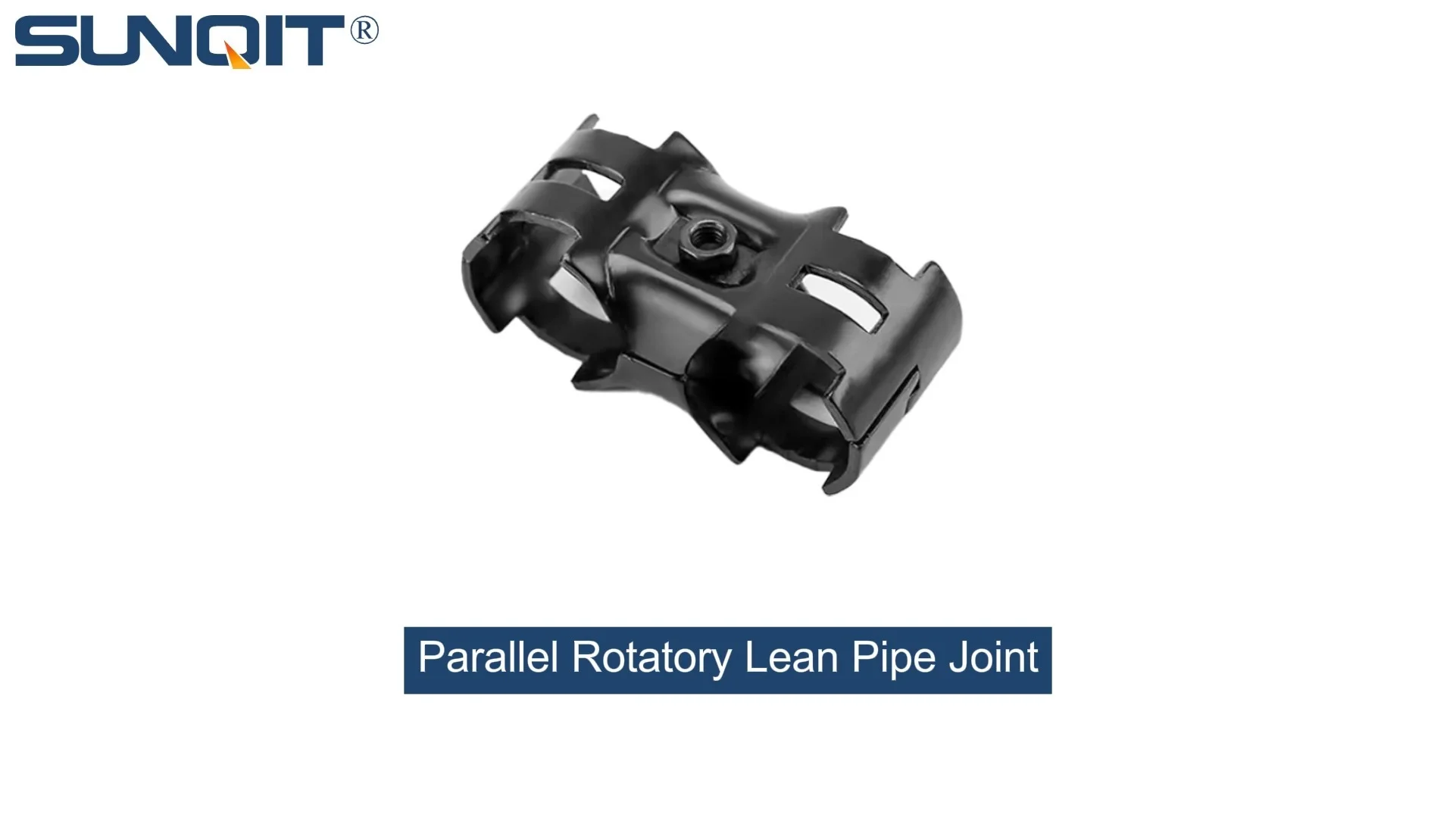
Parallel Rotatory Lean Pipe Joint
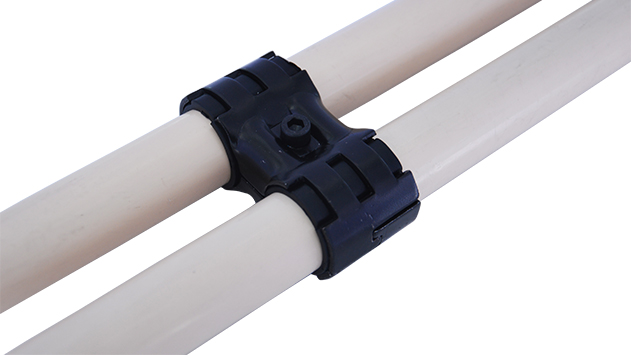
Parallel rotatory lean pipe joint, for 2 pcs pipe conenction in parallel direction with rotatory function.
The Battle for Space in Modern Warehouses
Walk into any busy warehouse today, and you'll likely be met with a familiar sight: stacks of inventory reaching toward the ceiling, workers navigating narrow aisles with carts, and the constant hum of machinery moving goods from point A to point B. In the age of e-commerce and just-in-time manufacturing, warehouses aren't just storage spaces—they're critical hubs where efficiency directly impacts customer satisfaction and bottom-line results. Yet, one challenge remains universal across industries: space. As demand grows, and product lines expand, the pressure to do more with less square footage has never been higher. This is where lean warehousing steps in, and at the heart of lean principles lies a often-overlooked component that's quietly revolutionizing how we use space: the parallel rotatory lean pipe joint chrome.
Lean warehousing isn't just about cutting costs—it's about eliminating waste, streamlining workflows, and creating systems that adapt to change. Traditional warehouse setups, with fixed racks, rigid workbenches, and inflexible material handling equipment, often trap operations in a cycle of inefficiency. A rack that works for one product might become obsolete when a new SKU arrives; a workbench that's perfectly positioned for morning shifts might hinder afternoon processes. These rigidities don't just waste space—they slow down productivity, increase labor fatigue, and limit a facility's ability to scale.
Enter the parallel rotatory lean pipe joint chrome. This unassuming yet innovative connector is changing the game by turning static infrastructure into dynamic, reconfigurable systems. Whether you're building a lean pipe workbench, a flow rack, or a roller track, this joint offers a level of flexibility that traditional fixed joints simply can't match. In this article, we'll dive deep into how this small but mighty component is transforming lean warehousing, optimizing space, and helping operations stay agile in an ever-changing market.
Lean warehousing isn't just about cutting costs—it's about eliminating waste, streamlining workflows, and creating systems that adapt to change. Traditional warehouse setups, with fixed racks, rigid workbenches, and inflexible material handling equipment, often trap operations in a cycle of inefficiency. A rack that works for one product might become obsolete when a new SKU arrives; a workbench that's perfectly positioned for morning shifts might hinder afternoon processes. These rigidities don't just waste space—they slow down productivity, increase labor fatigue, and limit a facility's ability to scale.
Enter the parallel rotatory lean pipe joint chrome. This unassuming yet innovative connector is changing the game by turning static infrastructure into dynamic, reconfigurable systems. Whether you're building a lean pipe workbench, a flow rack, or a roller track, this joint offers a level of flexibility that traditional fixed joints simply can't match. In this article, we'll dive deep into how this small but mighty component is transforming lean warehousing, optimizing space, and helping operations stay agile in an ever-changing market.
Understanding Lean Warehousing: Beyond Just "Cutting Costs"
Before we explore the specifics of the parallel rotatory lean pipe joint chrome, let's take a moment to ground ourselves in what lean warehousing truly means. At its core, lean is a philosophy born from the Toyota Production System, focused on identifying and eliminating seven types of waste: overproduction, waiting, transportation, processing, inventory, motion, and defects. In a warehouse context, this translates to designing spaces where every square inch serves a purpose, every movement adds value, and every piece of equipment adapts to the task at hand.
Space waste is a silent killer in warehouses. It manifests in many forms: unused vertical space, wide aisles that could be narrowed, fixed workstations that take up more room than necessary, or flow racks that can't be adjusted to accommodate different product sizes. Over time, these inefficiencies compound. A warehouse that's 10% underutilized might not seem like a big deal, but when multiplied by monthly rent, labor costs, and lost throughput, it becomes a significant drain on resources.
The key to solving this? Flexibility. Lean warehousing demands infrastructure that can evolve with changing needs. A flow rack that can be reconfigured to hold smaller boxes during peak season, a lean pipe workbench that adjusts height for ergonomic packing, or a roller track that adapts to different material weights—these are the tools that turn wasted space into productive capacity. And that's where the parallel rotatory lean pipe joint chrome comes into play. By enabling quick, tool-free adjustments, this joint transforms static structures into modular systems that grow and shrink with your operations.
Space waste is a silent killer in warehouses. It manifests in many forms: unused vertical space, wide aisles that could be narrowed, fixed workstations that take up more room than necessary, or flow racks that can't be adjusted to accommodate different product sizes. Over time, these inefficiencies compound. A warehouse that's 10% underutilized might not seem like a big deal, but when multiplied by monthly rent, labor costs, and lost throughput, it becomes a significant drain on resources.
The key to solving this? Flexibility. Lean warehousing demands infrastructure that can evolve with changing needs. A flow rack that can be reconfigured to hold smaller boxes during peak season, a lean pipe workbench that adjusts height for ergonomic packing, or a roller track that adapts to different material weights—these are the tools that turn wasted space into productive capacity. And that's where the parallel rotatory lean pipe joint chrome comes into play. By enabling quick, tool-free adjustments, this joint transforms static structures into modular systems that grow and shrink with your operations.
The Unsung Hero: Parallel Rotatory Lean Pipe Joint Chrome
Let's start with the basics: what exactly is a parallel rotatory lean pipe joint chrome? In simple terms, it's a connector designed to join lean pipes (hollow tubes used in lean manufacturing and warehousing) at adjustable angles, with a chrome-plated finish for durability and corrosion resistance. Unlike fixed joints, which lock pipes into a single position (like 90 degrees or 45 degrees), the parallel rotatory joint allows for 360-degree rotation around its axis, letting users adjust the angle of connected pipes on the fly.
At first glance, this might seem like a minor feature, but its impact is profound. Imagine building a workbench where the shelves can tilt to accommodate sloped storage, or a flow rack where the height of each level can be (fine-tuned) to fit taller boxes without disassembling the entire structure. The parallel rotatory joint makes this possible. Its design includes a rotating collar that secures the pipe in place once the desired angle is set, ensuring stability even under heavy loads. The chrome plating adds an extra layer of protection, making it suitable for use in environments where moisture or chemicals might otherwise corrode standard steel joints.
But what sets this joint apart from other adjustable connectors? For one, its parallel rotation mechanism. Unlike some joints that only pivot in one direction, the parallel rotatory design allows pipes to rotate in sync, maintaining alignment even as angles change. This is critical for applications like roller tracks, where misalignment can cause jams or slow down material flow. Additionally, installation is tool-free—most models feature a hand-tightened screw or lever, meaning workers can reconfigure structures without stopping to hunt for wrenches or screwdrivers. In a fast-paced warehouse, every minute saved on reconfiguration translates to more time spent on value-adding tasks.
At first glance, this might seem like a minor feature, but its impact is profound. Imagine building a workbench where the shelves can tilt to accommodate sloped storage, or a flow rack where the height of each level can be (fine-tuned) to fit taller boxes without disassembling the entire structure. The parallel rotatory joint makes this possible. Its design includes a rotating collar that secures the pipe in place once the desired angle is set, ensuring stability even under heavy loads. The chrome plating adds an extra layer of protection, making it suitable for use in environments where moisture or chemicals might otherwise corrode standard steel joints.
But what sets this joint apart from other adjustable connectors? For one, its parallel rotation mechanism. Unlike some joints that only pivot in one direction, the parallel rotatory design allows pipes to rotate in sync, maintaining alignment even as angles change. This is critical for applications like roller tracks, where misalignment can cause jams or slow down material flow. Additionally, installation is tool-free—most models feature a hand-tightened screw or lever, meaning workers can reconfigure structures without stopping to hunt for wrenches or screwdrivers. In a fast-paced warehouse, every minute saved on reconfiguration translates to more time spent on value-adding tasks.

How It Works: The Mechanics of Flexibility
To truly appreciate the parallel rotatory lean pipe joint chrome, let's break down its mechanics. The joint consists of three main parts: a base plate, a rotating collar, and a locking mechanism. The base plate attaches to one lean pipe, while the rotating collar slides over another pipe, allowing it to spin freely relative to the base. Once the desired angle is achieved, the locking mechanism—usually a hex screw or a cam lever—is tightened, clamping the collar in place and preventing further rotation.
The beauty of this design lies in its simplicity. There are no complex gears or springs, just a robust metal construction that can withstand the wear and tear of daily warehouse use. The chrome plating not only resists rust but also reduces friction during rotation, making adjustments smooth and effortless. Most models are compatible with standard lean pipe sizes (like 28mm or 30mm diameter), meaning they can integrate with existing lean systems without requiring a complete overhaul.
Load capacity is another key consideration. A joint is only useful if it can support the weight of the materials it's holding. High-quality parallel rotatory joints are tested to handle loads up to 200kg per joint, making them suitable for everything from lightweight electronics components to heavier automotive parts. This durability ensures that even when reconfigured repeatedly, the joint maintains its structural integrity, reducing the risk of equipment failure and workplace accidents.
The beauty of this design lies in its simplicity. There are no complex gears or springs, just a robust metal construction that can withstand the wear and tear of daily warehouse use. The chrome plating not only resists rust but also reduces friction during rotation, making adjustments smooth and effortless. Most models are compatible with standard lean pipe sizes (like 28mm or 30mm diameter), meaning they can integrate with existing lean systems without requiring a complete overhaul.
Load capacity is another key consideration. A joint is only useful if it can support the weight of the materials it's holding. High-quality parallel rotatory joints are tested to handle loads up to 200kg per joint, making them suitable for everything from lightweight electronics components to heavier automotive parts. This durability ensures that even when reconfigured repeatedly, the joint maintains its structural integrity, reducing the risk of equipment failure and workplace accidents.

Synergy with Key Components: Building a Lean Ecosystem
The parallel rotatory lean pipe joint chrome doesn't work in isolation—it's part of a larger ecosystem of lean warehousing components. When paired with lean pipe workbenches, flow racks, and roller tracks, it creates a system where every element works together to optimize space. Let's explore how this synergy plays out in real-world applications.
Lean Pipe Workbenches: Ergonomics Meets Space Savings
A typical warehouse workbench is a static structure: a flat surface supported by fixed legs, with shelves bolted into place. It works for basic tasks, but it's a one-size-fits-all solution in a world where tasks vary. Enter the lean pipe workbench built with parallel rotatory joints. By using these joints to connect the workbench legs and shelves, operators can adjust the height of the surface to match the worker (reducing back strain), tilt the shelves to prevent items from sliding off, or even fold down unused sections to free up floor space during slow periods.
For example, a packing station during peak season might need three shelves for boxes, tape dispensers, and labels. During slower months, when orders are fewer, those extra shelves just take up space. With parallel rotatory joints, workers can simply rotate the shelves upward, locking them against the back of the workbench to create a slimmer profile. This not only saves square footage but also makes the workbench more versatile—one station can now handle packing, quality control, and even temporary storage, eliminating the need for multiple dedicated workbenches.
Flow Racks: Adapting to Product Variability
Flow racks are a staple in lean warehousing, designed to use gravity to move products from the back (loading) to the front (picking), reducing the need for manual handling. But traditional flow racks have a flaw: their levels are fixed. If you switch from storing small cosmetic boxes to larger electronics packaging, you might find that the existing levels are too short or too close together, wasting vertical space.
Parallel rotatory joints solve this by allowing the angle and height of flow rack levels to be adjusted. By loosening the joint, workers can tilt the roller track to a steeper angle for heavier products (ensuring they flow smoothly) or a shallower angle for lighter items (preventing them from sliding too quickly). They can also raise or lower entire sections to accommodate taller boxes, turning unused vertical space into functional storage. In one case study, a electronics warehouse reported a 15% increase in storage capacity after retrofitting their flow racks with parallel rotatory joints, simply by optimizing the height and angle of each level to fit their diverse product line.
Roller Tracks: Smoothing Material Flow Across the Warehouse
Roller tracks are the arteries of a warehouse, moving materials from receiving to shipping, or from production lines to assembly stations. But like flow racks, traditional roller tracks are often fixed in place, limiting how they can be routed. A track that works for straight-line movement might need to navigate around a new workstation, but rerouting it would require cutting and reattaching sections—a time-consuming and costly process.
With parallel rotatory joints, roller tracks become modular. Workers can pivot sections to create curves, adjust the height to connect with different workbenches, or even disassemble and reassemble the track in a new location within hours. This flexibility is a game-changer for facilities that frequently reconfigure their layouts to accommodate new machinery or seasonal demand. For instance, a beverage distributor might need to reroute roller tracks during the holiday season to prioritize faster-moving products, then revert to the original layout in January—all without calling in contractors or halting operations for days.
Lean Pipe Workbenches: Ergonomics Meets Space Savings
A typical warehouse workbench is a static structure: a flat surface supported by fixed legs, with shelves bolted into place. It works for basic tasks, but it's a one-size-fits-all solution in a world where tasks vary. Enter the lean pipe workbench built with parallel rotatory joints. By using these joints to connect the workbench legs and shelves, operators can adjust the height of the surface to match the worker (reducing back strain), tilt the shelves to prevent items from sliding off, or even fold down unused sections to free up floor space during slow periods.
For example, a packing station during peak season might need three shelves for boxes, tape dispensers, and labels. During slower months, when orders are fewer, those extra shelves just take up space. With parallel rotatory joints, workers can simply rotate the shelves upward, locking them against the back of the workbench to create a slimmer profile. This not only saves square footage but also makes the workbench more versatile—one station can now handle packing, quality control, and even temporary storage, eliminating the need for multiple dedicated workbenches.
Flow Racks: Adapting to Product Variability
Flow racks are a staple in lean warehousing, designed to use gravity to move products from the back (loading) to the front (picking), reducing the need for manual handling. But traditional flow racks have a flaw: their levels are fixed. If you switch from storing small cosmetic boxes to larger electronics packaging, you might find that the existing levels are too short or too close together, wasting vertical space.
Parallel rotatory joints solve this by allowing the angle and height of flow rack levels to be adjusted. By loosening the joint, workers can tilt the roller track to a steeper angle for heavier products (ensuring they flow smoothly) or a shallower angle for lighter items (preventing them from sliding too quickly). They can also raise or lower entire sections to accommodate taller boxes, turning unused vertical space into functional storage. In one case study, a electronics warehouse reported a 15% increase in storage capacity after retrofitting their flow racks with parallel rotatory joints, simply by optimizing the height and angle of each level to fit their diverse product line.
Roller Tracks: Smoothing Material Flow Across the Warehouse
Roller tracks are the arteries of a warehouse, moving materials from receiving to shipping, or from production lines to assembly stations. But like flow racks, traditional roller tracks are often fixed in place, limiting how they can be routed. A track that works for straight-line movement might need to navigate around a new workstation, but rerouting it would require cutting and reattaching sections—a time-consuming and costly process.
With parallel rotatory joints, roller tracks become modular. Workers can pivot sections to create curves, adjust the height to connect with different workbenches, or even disassemble and reassemble the track in a new location within hours. This flexibility is a game-changer for facilities that frequently reconfigure their layouts to accommodate new machinery or seasonal demand. For instance, a beverage distributor might need to reroute roller tracks during the holiday season to prioritize faster-moving products, then revert to the original layout in January—all without calling in contractors or halting operations for days.
Comparing Traditional vs. Parallel Rotatory Joints: A Clear Advantage
To better understand the impact of parallel rotatory lean pipe joint chrome, let's compare it to traditional fixed joints in key areas that matter most for space optimization and efficiency:
As the table shows, the parallel rotatory joint outperforms traditional fixed joints in every category that impacts space optimization and operational efficiency. Its ability to adapt on the fly turns static infrastructure into a dynamic asset that grows with your business.
| Feature | Traditional Fixed Joints | Parallel Rotatory Lean Pipe Joint Chrome |
|---|---|---|
| Flexibility | Locked into a single angle; cannot be adjusted without disassembly. | 360-degree rotation allows for infinite angle adjustments; no disassembly needed. |
| Space Utilization | Static structures often leave gaps or unused vertical space. | Adjustable angles and heights maximize use of available space, including vertical areas. |
| Installation Time | Requires tools and precise alignment; can take hours to build a single structure. | Tool-free installation; structures can be assembled or modified in minutes. |
| Reconfiguration Ease | Requires disassembling and rebuilding; often results in wasted materials. | Quick adjustments with minimal effort; no waste, as components can be reused. |
| Durability | Prone to wear at fixed points; corrosion risk in humid environments. | Chrome plating resists corrosion; rotating mechanism distributes wear evenly, extending lifespan. |
Case Study: A Mid-Sized Automotive Parts Warehouse
Let's put this into context with a real-world example. A mid-sized automotive parts warehouse in the Midwest was struggling with space constraints. Their facility, at 50,000 square feet, was designed for their original product line of 200 SKUs, but over five years, that number had grown to 500. Racks were overflowing, aisles were narrowed to unsafe widths, and workers were spending extra time searching for parts due to disorganized storage.
The warehouse manager decided to invest in lean principles, starting with retrofitting their lean pipe workbenches, flow racks, and roller tracks with parallel rotatory lean pipe joint chrome. Here's what happened:
- Workbenches: By adjusting shelf angles and heights, they reduced the footprint of each workbench by 20%, freeing up space for three new packing stations.
- Flow Racks: Reconfiguring levels to fit taller and shorter parts increased storage capacity by 12%, eliminating the need for a costly warehouse expansion.
- Roller Tracks: Pivoting sections to navigate around new shelving cut material movement time by 10%, as workers no longer had to detour around fixed obstacles.
After six months, the warehouse reported a 25% improvement in order fulfillment speed and a 30% reduction in workplace injuries related to overcrowding. Most importantly, they avoided a $500,000 expansion by simply optimizing their existing space with parallel rotatory joints.
Beyond Space: Additional Benefits of the Parallel Rotatory Joint
While space optimization is the headline benefit of parallel rotatory lean pipe joint chrome, its impact extends far beyond square footage. Let's explore some of the other ways this joint enhances lean warehousing operations:
Cost Savings: Reconfigurable infrastructure means less money spent on new equipment. Instead of buying a new workbench when your needs change, you can adapt the one you have. Over time, this reduces capital expenditure and lowers the total cost of ownership for warehouse equipment.
Time Efficiency: Tool-free adjustments mean less downtime during reconfigurations. A team that once took a full day to rebuild a flow rack can now do it in an hour, keeping operations running smoothly.
Employee Satisfaction: Ergonomic adjustments (like height-adjustable workbenches) reduce fatigue and injuries, leading to happier, more productive workers. When employees can customize their workspace to fit their needs, morale and retention improve.
Sustainability: By reusing existing components instead of replacing them, parallel rotatory joints reduce waste and support eco-friendly operations. Chrome plating also extends the life of the joint, meaning fewer replacements and less material in landfills.
Cost Savings: Reconfigurable infrastructure means less money spent on new equipment. Instead of buying a new workbench when your needs change, you can adapt the one you have. Over time, this reduces capital expenditure and lowers the total cost of ownership for warehouse equipment.
Time Efficiency: Tool-free adjustments mean less downtime during reconfigurations. A team that once took a full day to rebuild a flow rack can now do it in an hour, keeping operations running smoothly.
Employee Satisfaction: Ergonomic adjustments (like height-adjustable workbenches) reduce fatigue and injuries, leading to happier, more productive workers. When employees can customize their workspace to fit their needs, morale and retention improve.
Sustainability: By reusing existing components instead of replacing them, parallel rotatory joints reduce waste and support eco-friendly operations. Chrome plating also extends the life of the joint, meaning fewer replacements and less material in landfills.
Choosing the Right Supplier: Quality Matters
Not all parallel rotatory lean pipe joints are created equal. To maximize the benefits, it's crucial to choose a reputable supplier that prioritizes quality and compatibility. Look for joints made from high-grade steel with a thick chrome plating to ensure durability. Check load capacity ratings to ensure they can handle your warehouse's specific needs (heavier products require sturdier joints). Also, verify compatibility with your existing lean pipes—most suppliers offer joints for standard sizes, but it's always best to confirm.
A good supplier will also provide technical support, helping you design custom configurations for your unique space challenges. Whether you need help calculating the optimal angle for a flow rack or determining how many joints are required for a roller track, their expertise can save you time and ensure you get the most out of your investment.
A good supplier will also provide technical support, helping you design custom configurations for your unique space challenges. Whether you need help calculating the optimal angle for a flow rack or determining how many joints are required for a roller track, their expertise can save you time and ensure you get the most out of your investment.
Conclusion: Future-Proofing Your Warehouse with Flexible Solutions
In the fast-paced world of warehousing, space is more than just a commodity—it's a strategic asset. The parallel rotatory lean pipe joint chrome may be a small component, but its ability to transform static infrastructure into dynamic, reconfigurable systems makes it a cornerstone of modern lean warehousing. By optimizing space, improving efficiency, and reducing costs, this joint helps warehouses stay agile, competitive, and ready to adapt to whatever the future brings.
Whether you're running a small distribution center or a large manufacturing facility, the message is clear: flexibility is key. Traditional fixed joints belong to a bygone era of warehousing—one where change was slow and space was abundant. Today, success depends on your ability to do more with less, and the parallel rotatory lean pipe joint chrome is your partner in that mission.
So, take a look at your warehouse. Are your workbenches, flow racks, and roller tracks working as hard as they could be? Could a little flexibility unlock hidden space and productivity? The answer is likely yes—and it all starts with a simple, chrome-plated joint that's ready to rotate into action.
Whether you're running a small distribution center or a large manufacturing facility, the message is clear: flexibility is key. Traditional fixed joints belong to a bygone era of warehousing—one where change was slow and space was abundant. Today, success depends on your ability to do more with less, and the parallel rotatory lean pipe joint chrome is your partner in that mission.
So, take a look at your warehouse. Are your workbenches, flow racks, and roller tracks working as hard as they could be? Could a little flexibility unlock hidden space and productivity? The answer is likely yes—and it all starts with a simple, chrome-plated joint that's ready to rotate into action.