
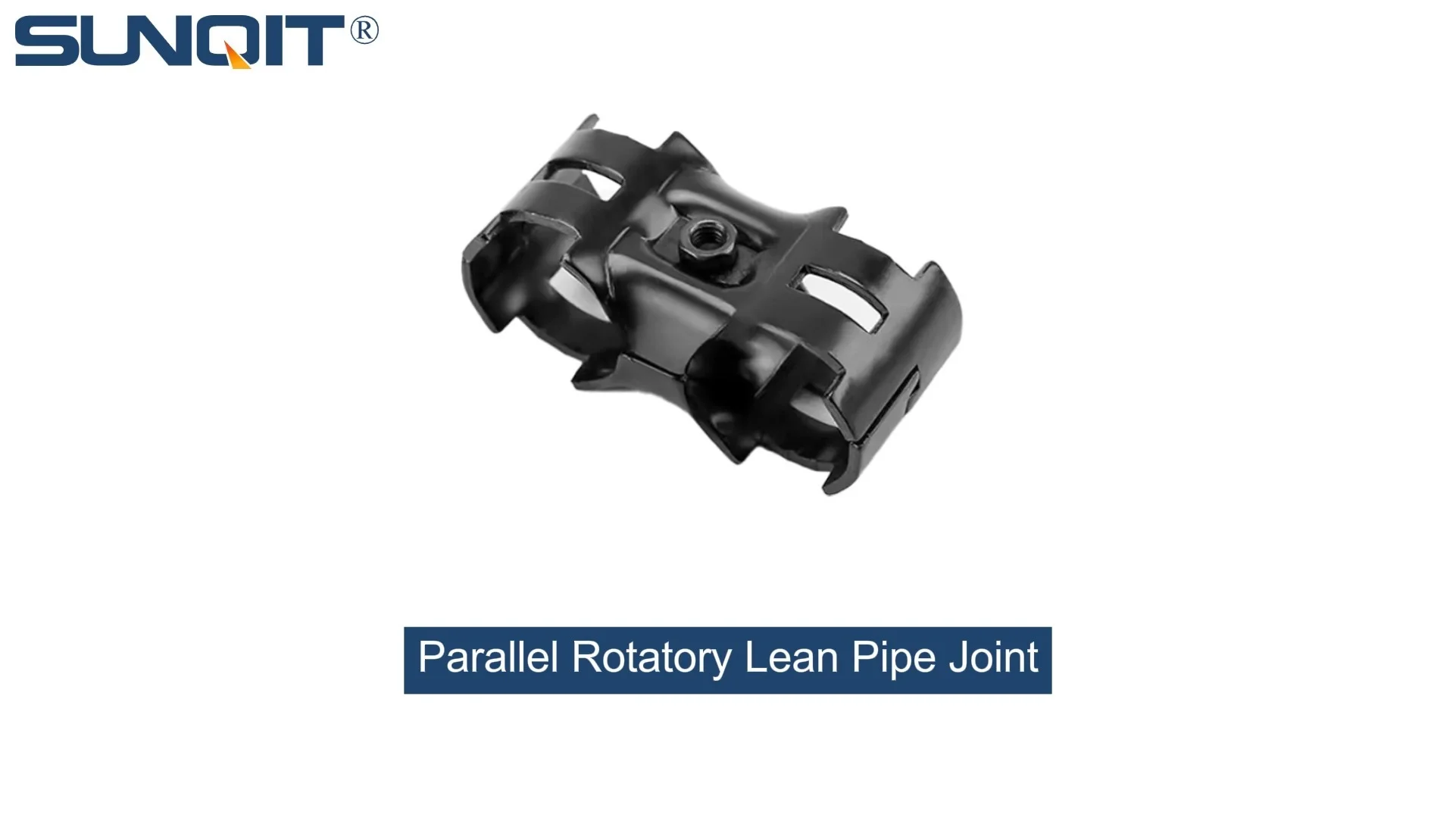
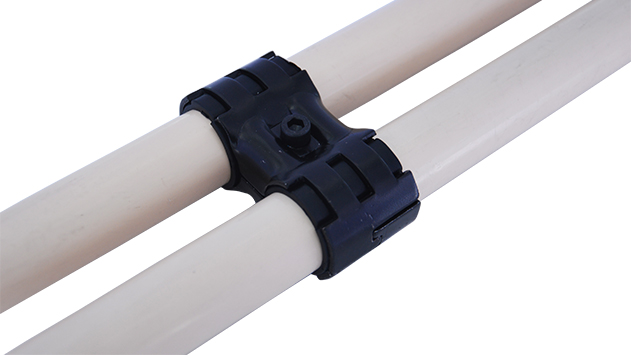
Walk into any modern manufacturing plant, and you'll spot the unsung heroes of efficiency: modular workbenches, flow racks, and material trolleys built with lean pipes and joints. These structures adapt to shifting production needs, keeping workflows smooth and teams productive. Among the many components that make this flexibility possible, the parallel rotatory lean pipe joint chrome stands out. Small in size but big in impact, this joint connects lean pipes while allowing controlled rotation—think of it as the "hinge" that lets your workbench adjust angles or your flow rack reorient for better access. But not all joints are created equal. Choosing the wrong one can lead to wobbly structures, frequent breakdowns, or even safety risks. To help you make an informed decision, let's break down the critical specifications you need to check before hitting "buy."
1. Material Quality: The Backbone of Longevity
At its core, a parallel rotatory lean pipe joint chrome is only as strong as the materials it's made from. Most joints start with a base metal—typically low-carbon steel for affordability or stainless steel for corrosion resistance—then get a chrome plating for durability and a sleek finish. Here's what to focus on:
Base Metal Grade: Low-carbon steel (like Q235) is common for general use, offering decent strength at a lower cost. But if your facility deals with moisture, chemicals, or strict hygiene standards (think food processing or pharmaceuticals), opt for stainless steel (304 or 316 grade). Stainless steel resists rust and bacterial growth, though it comes at a premium. Ask suppliers for material certificates to confirm the grade—subpar joints often use recycled or untested steel that bends or cracks under stress.
Chrome Plating Thickness: The chrome layer isn't just for shine; it protects the base metal from scratches and corrosion. A quality joint will have a plating thickness of at least 8 microns (µm). Thinner plating (below 5µm) chips easily, exposing the steel to rust. To check, use a plating thickness gauge (suppliers should provide test reports). Also, inspect the finish: uneven plating, bubbles, or discoloration are red flags for poor quality control.
2. Rotational Mechanism: Smooth Movement, No Sticking
The "rotatory" in the joint's name is its defining feature. A well-designed mechanism allows smooth, consistent rotation without sticking or sudden jolts—critical for applications like adjustable workbenches or tiltable flow racks. Here's how to evaluate it:
Range of Motion: Most parallel rotatory joints offer 180° rotation (from 0° to 180°), but some high-end models go up to 360°. Consider your needs: a workbench might only need 90° tilt, while a material trolley could benefit from full rotation. Test the joint by hand—rotation should feel fluid, with no "dead spots" or grinding noises. Avoid joints that require excessive force to move; they'll slow down operators over time.
Locking Functionality: If you need the joint to stay in a fixed position (e.g., a workbench set at a 45° angle), check for a locking mechanism. Common types include friction locks (twist to tighten) or spring-loaded pins (click into preset angles). Test the lock repeatedly: it should hold firmly under light pressure and release smoothly. A loose lock defeats the purpose—imagine a flow rack suddenly tilting mid-operation because the joint slipped.
3. Load Capacity: Don't Skimp on Strength
Every joint has a maximum load it can support, and exceeding this is a recipe for disaster. Load capacity is measured in two ways: static load (weight when stationary, like a workbench holding tools) and dynamic load (weight when moving, like a trolley being pushed). Here's what to verify:
Static Load Rating: For workbenches or fixed flow racks, static load is king. A standard parallel rotatory joint should handle at least 50kg static load per joint. Heavy-duty models (used in automotive or aerospace) can go up to 150kg. Ask for test reports—reputable suppliers test joints by applying gradual weight until failure, then rate them at 50% of that breaking point for safety.
Dynamic Load Rating: For mobile structures (trolleys, rotating material racks), dynamic load matters more. A joint rated for 30kg dynamic load can safely support that weight while the structure is moving. Ignore this, and you risk the joint bending or snapping when operators push a loaded trolley across the factory floor.

4. Compatibility: Fits Your Lean Pipes and Accessories
Lean systems thrive on modularity, so your joint must play well with existing components—especially lean pipes and accessories like connectors, casters, or roller tracks. Mismatched parts lead to wobbly structures and wasted money. Key checks:
Lean Pipe Diameter: Most lean pipes are 28mm or 30mm in diameter (OD). Ensure the joint's inner diameter matches your pipes—too loose, and the structure; too tight, and assembly becomes a struggle. Some suppliers offer adjustable joints (with set screws) to fit multiple pipe sizes, which is handy if you mix pipe types.
Accessory Compatibility: If you're adding extras like caster wheels or roller tracks, check if the joint has mounting points or threads that align with these accessories. For example, a joint with M8 threads can connect to standard caster brackets, while one with no threads might require custom adapters (adding cost and complexity).

5. Corrosion Resistance: Surviving Harsh Environments
Factories are tough on equipment—humidity, oil, cleaning chemicals, and even sweat can eat away at metal over time. A joint's ability to resist corrosion directly impacts its lifespan. Here's how to assess it:
Salt Spray Test Results: The gold standard for corrosion testing is the salt spray test (per ASTM B117). Suppliers should provide results showing how long the joint withstood exposure to saltwater mist. For general use, 48 hours without red rust is acceptable. For coastal or high-moisture areas, aim for 96 hours or more. Avoid joints with no test data—they're likely to rust within months in humid conditions.
ESD Safety (If Needed): In electronics manufacturing, static electricity can damage sensitive components. Some joints come with ESD-safe chrome plating (treated to dissipate static) or black ESD wheels. If your facility requires ESD compliance, verify the joint's surface resistance (should be between 10⁶ and 10¹¹ ohms) with a resistance meter.
6. Key Specifications at a Glance
| Specification | Why It Matters | What to Check | Example Benchmark |
|---|---|---|---|
| Chrome Plating Thickness | Protects against scratches and rust | Plating gauge reading; even finish | ≥8 microns (µm) |
| Rotational Range | Determines adjustability of structures | Hand rotation test; no sticking | 180° (standard) or 360° (premium) |
| Static Load Capacity | Safety for stationary structures | Supplier test reports | ≥50kg per joint |
| Salt Spray Resistance | Durability in humid/coastal areas | ASTM B117 test results | ≥48 hours (no red rust) |
| Pipe Diameter Fit | Stability of the entire structure | Gap between joint and pipe (≤0.5mm) | Matches 28mm/30mm lean pipes |
7. Choosing the Right Lean Pipe Supplier
Even the best specs mean nothing if your supplier cuts corners. A reliable lean pipe supplier will prioritize quality control, transparency, and customer support. Here's what to ask before ordering:
Quality Control Process: Do they inspect every batch for plating thickness, load capacity, and rotation smoothness? Reputable suppliers will share photos of their QC lab or third-party test reports. Avoid suppliers who can't provide evidence of testing—chances are, they're reselling generic, untested products.
Lead Times and Inventory: Modular lean systems often require quick replacements. Ask about stock levels for common joints—delays of 4–6 weeks can halt production. Some suppliers offer just-in-time (JIT) delivery for bulk orders, which helps manage inventory costs.
After-Sales Support: What if a joint fails within a month? A good supplier will offer a warranty (typically 12–24 months) and replace defective parts without hassle. They should also provide technical help—e.g., guidance on matching joints to flow racks or workbenches. Poor after-sales service means you're on your own if issues arise.
Conclusion: Invest in Quality, Avoid Downtime
The parallel rotatory lean pipe joint chrome might seem like a small part of your lean system , but its impact is huge. A cheap, poorly made joint can lead to wobbly workbenches, stuck flow racks, and even workplace injuries—costing far more in repairs and downtime than the savings from buying budget parts.
By focusing on material quality, rotational smoothness, load capacity, and supplier reliability, you'll ensure your lean structures stay strong, flexible, and efficient for years. Remember: the best joint is the one you never notice—quietly doing its job so your team can focus on what matters most: producing great products.