- Company Articles
- Products and Technology
- Product knowledge
- Parallel Rotatory Lean Pipe Joint Chrome: Reducing Assembly Line Downtime

Parallel Rotatory Lean Pipe Joint Chrome: Reducing Assembly Line Downtime
Related Product
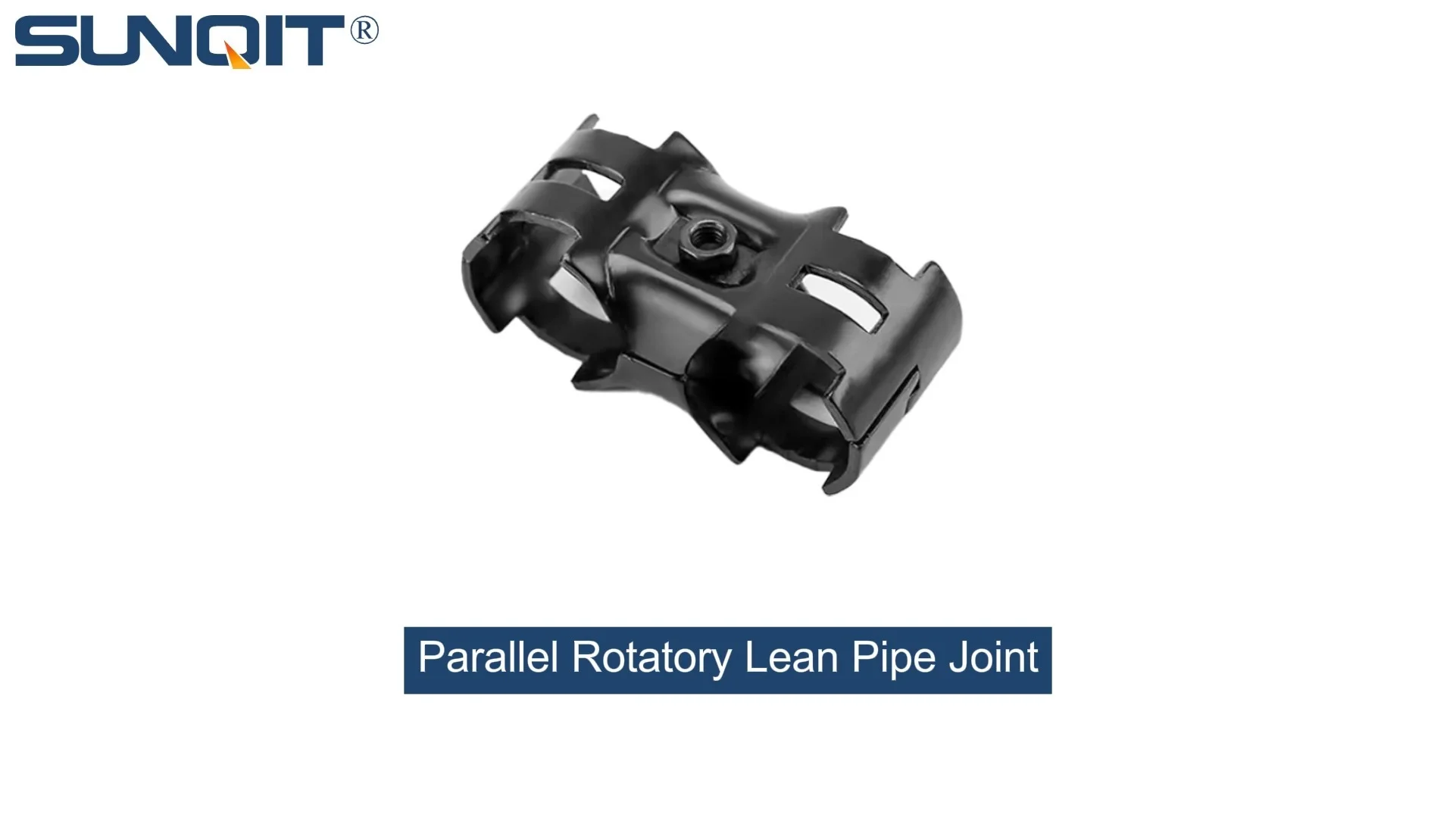
Parallel Rotatory Lean Pipe Joint
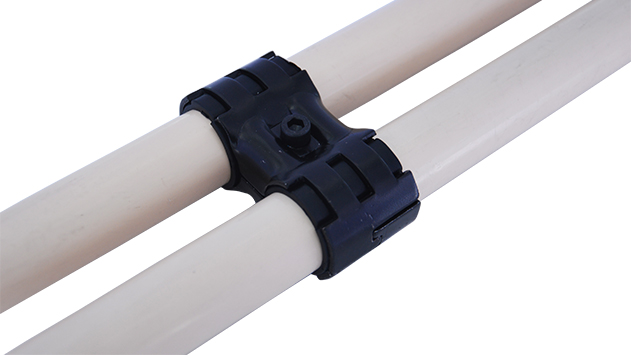
Parallel rotatory lean pipe joint, for 2 pcs pipe conenction in parallel direction with rotatory function.
In the hum of a busy manufacturing plant, where conveyor belts hum and workers move with synchronized precision, there's an invisible enemy that haunts production managers: downtime. It's the unplanned pause when a workbench needs reconfiguration, the hours lost adjusting a flow rack to fit a new product, or the delays caused by a stuck conveyor roller. For a mid-sized electronics factory churning out 500 units per hour, even 30 minutes of downtime can cost upwards of $10,000 in lost revenue. For larger operations, that number climbs into the six figures. Yet, despite its high cost, downtime is often dismissed as "just part of the job"—a necessary evil when adapting to shifting production needs. But what if it didn't have to be that way?
Enter the Parallel Rotatory Lean Pipe Joint Chrome —a small but mighty component that's quietly revolutionizing how factories build, adapt, and maintain their assembly lines. Far more than a simple connector, this joint is a linchpin in modern lean systems, designed to cut through the inefficiencies that lead to downtime. In this article, we'll dive into why traditional assembly line setups fall short, how the parallel rotatory joint addresses those gaps, and real-world stories of factories that have slashed downtime by 40% or more after integrating this unassuming yet powerful tool. Whether you're running a automotive parts plant or a consumer electronics workshop, understanding this joint could be the key to unlocking smoother workflows, happier workers, and a healthier bottom line.
The Hidden Cost of Rigid Assembly Lines
To appreciate the impact of the parallel rotatory joint, we first need to understand the problem it solves: rigidity. For decades, assembly lines were built to last—permanent structures bolted to the floor, with workbenches, flow racks, and conveyors designed for a single product. But in today's market, "permanent" is a risky word. Consumer demands shift overnight, new regulations require design tweaks, and product lifecycles shrink from years to months. A smartphone factory, for example, might roll out three new models in a year, each with different component sizes and assembly steps. A car parts plant could switch from gas to electric motor components, requiring entirely new workbench layouts.
When assembly lines can't keep up with these changes, downtime follows. Let's take a typical scenario: A medical device manufacturer gets a rush order for a new pacemaker model, which is 15% smaller than the previous version. Their existing flow rack—built with fixed steel joints—was designed to hold the larger pacemaker casings. To fit the new size, workers need to: 1) Unbolt the entire rack from the floor, 2) Disassemble the frame by removing dozens of nuts and bolts, 3) Cut new steel pipes to the correct length (if they have the tools on hand), 4) Reassemble the rack with the new dimensions, and 5) Bolt it back down. This process, which involves multiple workers and often a maintenance crew, can take 4–6 hours. For a line producing 200 units per hour, that's 800–1,200 units lost—plus the labor cost of the crew. And this isn't a one-time event; it repeats every time the product changes.
Worse, rigid systems breed frustration. Workers often avoid reconfiguring setups unless absolutely necessary, leading to makeshift workarounds: stacking boxes to raise a conveyor, using zip ties to hold pipes in place, or working in awkward positions to adapt to ill-fitting workbenches. These "solutions" don't just slow down production—they increase the risk of errors and injuries. A 2023 study by the Manufacturing Performance Institute found that 68% of factory injuries stem from workers compensating for poorly designed workspaces, many of which are the result of rigid, unadaptable equipment.
"We used to schedule 'reconfiguration days' every quarter, where we'd shut down entire lines to rebuild workbenches and flow racks," says Mark Chen, production manager at a California-based circuit board plant. "Those days cost us $50,000 each, and we'd still end up with last-minute changes that forced us to stop production again. It felt like we were always playing catch-up."
Lean Systems: The Promise of Flexibility—But Only with the Right Tools
This is where lean systems come in. Born from the Toyota Production System, lean manufacturing is all about eliminating waste—whether that's excess inventory, unnecessary movement, or, yes, downtime. At its core, lean is about building systems that adapt —quickly, efficiently, and without sacrificing stability. But here's the catch: Lean systems rely on tools that can keep up with their philosophy. For years, factories invested in lean principles but stuck with outdated hardware, like the fixed steel joints mentioned earlier. It's like trying to run a marathon in hiking boots—you can do it, but you won't get far, and you'll probably trip.
The backbone of any lean assembly line is its modular components: pipes, joints, workbenches, and racks that can be rearranged like building blocks. Traditional lean pipe systems (often called "Kanban pipes") used basic plastic-coated steel pipes and fixed joints, which were a step up from welded steel but still fell short. These joints required tools to adjust, often loosened over time, and corroded in humid or chemical-heavy environments. They were a Band-Aid for rigidity, not a cure.
Enter aluminum and chrome-plated components. Over the past decade, manufacturers began shifting to aluminum pipes and joints for their lightweight strength, but it's the parallel rotatory lean pipe joint chrome that's truly unlocked lean's potential. Unlike fixed joints, this design allows for 360-degree rotation and tool-free adjustments, turning static workbenches into dynamic workstations and rigid flow racks into adaptable material handlers. It's not just a better joint—it's a fundamental shift in how factories think about their assembly lines: from "build once" to "build, adapt, repeat."
Inside the Parallel Rotatory Lean Pipe Joint Chrome: Engineering for Adaptability
Let's get technical—without the jargon. The parallel rotatory joint is a deceptively simple device, but its design is packed with features that address the pain points of traditional connectors. At first glance, it looks like a sleek chrome cylinder with two or more pipe sockets, but inside, there's a clever mechanism that balances flexibility with stability.
First, the chrome plating. It's not just for shine—though it does make the joint stand out on a factory floor. Chrome is corrosion-resistant, which matters in environments where oil, coolant, or cleaning chemicals are present. A study by the Material Handling Institute found that uncoated steel joints in automotive plants corroded within 18 months, leading to stiff rotation and eventual failure. Chrome-plated joints, by contrast, maintain smooth movement for 5+ years, even in high-moisture settings. That durability alone reduces downtime from joint replacements.
Then there's the rotation mechanism. Traditional joints lock pipes at fixed angles (90 degrees, 45 degrees, etc.), requiring workers to disassemble and rebuild if they need a different angle. The parallel rotatory joint uses a spring-loaded ball bearing system: twist the joint to rotate the pipes freely, then release to lock them in place. No wrenches, no bolts, no hassle. This might sound small, but consider this: Adjusting the height of a lean pipe workbench with traditional joints takes 20 minutes (and a wrench). With a parallel rotatory joint? 2 minutes. Multiply that by 10 workbenches per line, and you've saved 3 hours of labor per adjustment.
The joint's compatibility is another win. It works with standard 28mm lean pipes (steel or aluminum), as well as aluminum profiles and even some stainless steel pipe series. This means factories don't have to replace their entire existing setup to upgrade—they can swap out old joints for new ones and keep using their pipes, saving on costs. For example, a food packaging plant that previously used plastic-coated steel pipes can retrofit their flow racks with parallel rotatory joints without buying new pipes, cutting the upgrade cost by 60%.
Finally, there's the load capacity. Don't let the "lean" label fool you—these joints are tough. A single parallel rotatory joint can support up to 150kg of weight, which is more than enough for most assembly line applications (think: circuit boards, small engine parts, or medical devices). For heavier loads, like automotive transmissions, manufacturers can use reinforced versions with double ball bearings, supporting up to 300kg. This versatility means the joint works everywhere from light electronics to heavy machinery lines.
| Feature | Traditional Fixed Joints | Parallel Rotatory Lean Pipe Joint Chrome |
|---|---|---|
| Adjustment Time | 15–20 minutes per joint (with tools) | 30 seconds–2 minutes per joint (tool-free) |
| Corrosion Resistance | Low (rusts in humid/chemical environments) | High (chrome plating prevents corrosion for 5+ years) |
| Weight Capacity | Up to 80kg (standard steel) | Up to 300kg (reinforced version) |
| Compatibility | Limited to specific pipe sizes | Works with 28mm lean pipes, aluminum profiles, stainless steel pipe series |
| Cost Over 5 Years* | $240 (replacement + labor) | $80 (no replacement needed + lower labor) |
*Based on average usage in a mid-sized factory (100 joints, adjusted monthly)

From Workbench to Warehouse: Real-World Applications
To see the parallel rotatory joint in action, let's walk through three common assembly line setups and how the joint transforms them. These aren't hypothetical—they're based on case studies from factories that switched to the joint and tracked their downtime reduction.
1. Lean Pipe Workbenches: Adapting to Worker and Product Needs
Workbenches are the heart of any assembly line—where workers spend 8+ hours a day assembling, testing, or packaging products. But one size doesn't fit all. A 5'2" worker and a 6'4" worker need different bench heights to avoid back strain. A product with small components (like microchips) needs a lower bench for precision, while a larger product (like power tools) needs a higher bench to avoid bending. Traditional workbenches force workers to adapt to the bench; with parallel rotatory joints, the bench adapts to the worker.
Take a furniture manufacturer in North Carolina that produces office chairs. Their assembly line has 12 workbenches, each used by two workers per shift. Before upgrading, the benches had fixed heights, and workers often used phone books or crates to adjust their seating. Ergonomic complaints were common, and reconfiguring a bench's height took 45 minutes (involving a maintenance crew). After installing parallel rotatory joints, workers can adjust their bench height in 30 seconds by twisting the joint and locking it at the desired level. The result? A 35% drop in ergonomic injuries and zero downtime for height adjustments. Plus, when the factory introduced a new chair model with a wider base, workers reconfigured the bench's width in 10 minutes instead of 2 hours, keeping production on track.
2. Flow Racks: Speeding Up Material Handling
Flow racks are the arteries of assembly lines, feeding components to workers via gravity-fed roller tracks. But when component sizes change, the roller tracks need to be repositioned to guide parts correctly. A cosmetics factory in France learned this the hard way: When they launched a new line of skincare bottles (shorter but wider than their previous bottles), the existing flow racks' roller tracks were too narrow, causing bottles to jam. Fixing it took 3 hours per rack (8 racks total), leading to a full day of downtime.
After switching to flow racks with parallel rotatory joints, the same adjustment takes 20 minutes per rack. Here's why: The roller tracks are mounted on aluminum profiles connected by parallel rotatory joints. Workers simply twist the joints to widen the track spacing, lock them, and the rack is ready. No disassembly, no tools, no delays. During a recent product launch, the factory reconfigured all 8 racks in under 3 hours, keeping the line running at 90% capacity instead of shutting down. "We used to dread product launches because of the downtime," says the plant manager. "Now, we look forward to them—we know we can adapt without breaking a sweat."
3. Conveyor Systems: Minimizing Bottlenecks
Conveyors are the workhorses of large-scale production, moving parts from station to station. But when a conveyor's angle is off—even by a few degrees—parts can slide off, jam, or slow down, creating bottlenecks. Traditional conveyors are bolted at fixed angles, requiring a maintenance crew to adjust them. A automotive parts plant in Michigan had this problem with their transmission component conveyor: During a heat wave, the steel frame expanded, tilting the conveyor by 2 degrees and causing parts to jam every 15 minutes. Fixing it took 2 hours (and a lot of cursing), during which the line produced zero units.
Today, their conveyor uses parallel rotatory joints at the support legs. When the frame expands, workers can adjust the angle in 5 minutes by rotating the joints and locking them. During the next heat wave, the line slowed for 10 minutes total (to adjust the joints) and kept running. "It's like having a conveyor that can 'breathe' with the environment," the maintenance supervisor jokes. "No more emergency shutdowns over a tiny tilt."
"The best part? It's not just the maintenance team using the joints. Line workers can make adjustments themselves now. They know their work better than anyone, so why wait for us? It's empowered them, and that's reduced our workload by 40%." — Maintenance Supervisor, Michigan Automotive Plant

Beyond Downtime: The Ripple Effects of a Flexible Assembly Line
Downtime reduction is the most measurable benefit of parallel rotatory joints, but it's far from the only one. Factories that switch to these joints often report a cascade of positive changes that extend beyond the assembly line.
Happier, more productive workers: Nothing kills morale like waiting around for a workbench to be adjusted or struggling with a poorly fitting setup. When workers can adapt their workspace in minutes, they feel valued and in control. A survey of 500 factory workers after a joint upgrade found that 82% reported higher job satisfaction, and 76% said they felt more productive. Happy workers are also less likely to quit—critical in an industry with a 30% annual turnover rate.
Faster response to customer demands: In today's "now economy," customers expect quick turnarounds. A factory that can reconfigure a line in hours instead of days can take on rush orders and beat competitors. A consumer electronics manufacturer in Taiwan used this to their advantage: When a major retailer requested a custom phone case design with a 2-week deadline, the factory reconfigured their flow racks and workbenches in 4 hours, started production the same day, and delivered on time. The retailer was so impressed, they doubled their order.
Lower long-term costs: While parallel rotatory joints cost more upfront than traditional joints ($15–$25 vs. $5–$10), their durability and flexibility save money over time. A 5-year cost analysis by a manufacturing consulting firm found that factories using the joints saved $12,000 per line annually on: labor for adjustments, replacement parts for corroded joints, and downtime-related revenue loss. That's a 300% return on investment.
Choosing the Right Lean Pipe Supplier: Why Quality Matters
Not all parallel rotatory joints are created equal. As the joint's popularity has grown, cheaper knockoffs have flooded the market—made with thin chrome plating, weak plastic components, or imprecise rotation mechanisms. These joints might save money upfront, but they fail quickly, leading to more downtime (and frustration) than the traditional joints they replaced.
So, what should you look for in a lean pipe supplier? Here are three non-negotiables:
1. Material testing reports: A reputable supplier will provide test results showing the joint's load capacity, corrosion resistance, and rotation cycles (how many times it can rotate before wearing out). Look for joints that can handle at least 10,000 rotations without losing stability.
2. Compatibility guarantees: The supplier should confirm the joint works with your existing pipes (steel, aluminum, etc.) and accessories (rollers, casters, etc.). Avoid suppliers who say "it fits everything"—precision matters.
3. On-site support: Upgrading to new joints can be intimidating. A good supplier will send a technician to train your team on installation and adjustment, and offer 24/7 support for questions.
Remember: The goal is to reduce downtime, not trade one problem (rigid joints) for another (faulty joints). Investing in a quality supplier might cost a bit more, but it's the difference between a 40% downtime reduction and a 10% increase.
The Future of Lean Manufacturing: Where Parallel Rotatory Joints Lead
As factories move toward "lights-out" automation and Industry 4.0, the need for flexible assembly lines will only grow. Robots and AI can handle repetitive tasks, but they still need adaptable workspaces to switch between products. Parallel rotatory joints are already evolving to meet this need—some suppliers now offer smart joints with sensors that track rotation cycles and send alerts when maintenance is needed, preventing downtime before it starts.
But even without smart features, the joint's impact is clear. It's a reminder that sometimes the biggest innovations in manufacturing aren't flashy robots or complex software—they're simple, well-designed tools that solve a universal problem. Downtime will never be eliminated entirely, but with parallel rotatory lean pipe joint chrome, it can be reduced to a minor annoyance instead of a major cost center.
So, the next time you walk through a factory and see a workbench being adjusted in minutes, a flow rack reconfigured without tools, or a conveyor adapting to a new product—take a closer look. Chances are, there's a parallel rotatory joint at work, quietly keeping the line moving, the workers happy, and the bottom line healthy. And in manufacturing, that's nothing short of revolutionary.