- Company Articles
- Products and Technology
- Product knowledge
- Parallel Rotatory Lean Pipe Joint Chrome: Supporting Reusable Lean Systems

Parallel Rotatory Lean Pipe Joint Chrome: Supporting Reusable Lean Systems
Related Product
Parallel Rotatory Lean Pipe Joint
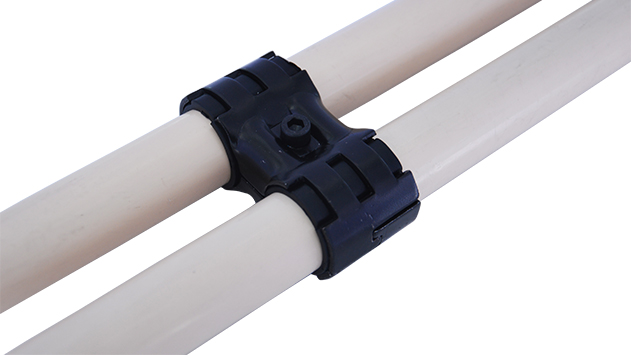
Parallel rotatory lean pipe joint, for 2 pcs pipe conenction in parallel direction with rotatory function.
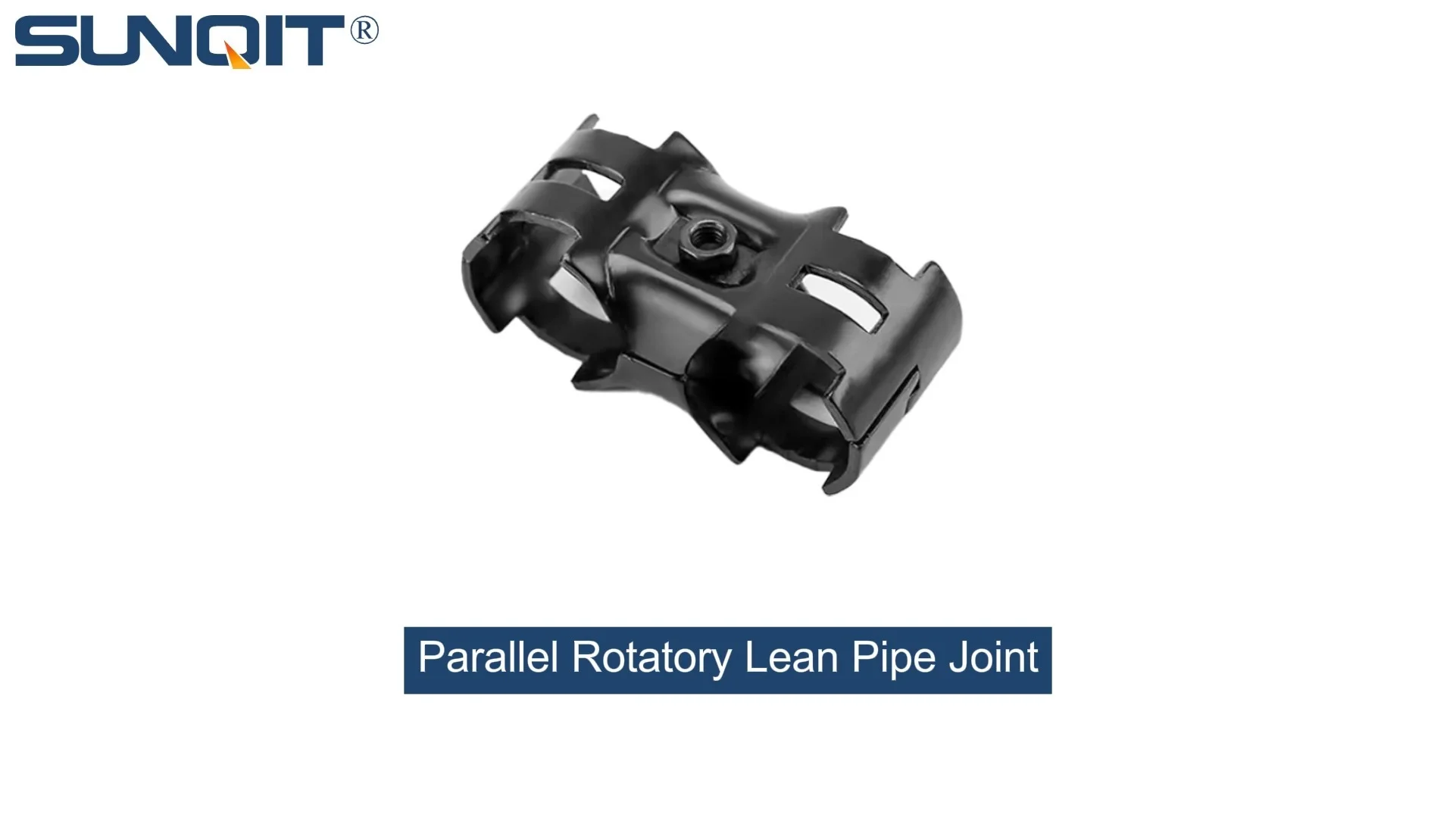
In the fast-paced world of manufacturing, where every second counts and adaptability is key, the difference between a smooth, efficient operation and a frustrating, stagnant one often comes down to the tools we use. For years, production managers, facility engineers, and frontline workers have grappled with rigid, one-size-fits-all systems that resist change—systems that make even the smallest workflow adjustments feel like a Herculean task. But what if there was a component that could turn that rigidity into flexibility? A simple yet ingenious part that lets you reimagine your production line, workbench, or material rack without starting from scratch? Enter the Parallel Rotatory Lean Pipe Joint Chrome —a quiet hero in the world of lean manufacturing that's changing how we build, adapt, and reuse our workspaces.
Lean systems are all about eliminating waste, maximizing value, and fostering continuous improvement. But too often, the very structures designed to support lean principles end up becoming obstacles themselves. Welded metal frames that can't be adjusted, fixed shelves that can't be repositioned, and joints that break when you try to disassemble them—these are the hidden drains on productivity that eat into your team's time and your company's bottom line. The Parallel Rotatory Lean Pipe Joint Chrome isn't just another piece of hardware; it's a bridge between the ideals of lean management and the messy reality of day-to-day operations. It's the tool that lets your lean system act like a lean system—agile, reusable, and ready to evolve with your needs.
The Problem with Rigid Systems: Why Flexibility Matters More Than Ever
Let's start with a scenario many of us have lived through (or heard about from a colleague over coffee). Picture a small electronics assembly plant. Their production line has been chugging along for months, building a popular smartphone model. Then, overnight, the design changes: a new battery component requires a wider workspace on the lean pipe workbench . The existing setup? A fixed steel frame with welded joints, built specifically for the old model. To accommodate the new battery, the team needs to move a shelf up by 6 inches and add a side rail to hold tools. Sounds simple, right? But with welded joints, it's not. The maintenance crew spends two days cutting the old frame, welding new supports, and repainting to prevent rust. Production is delayed, overtime costs pile up, and the team is frustrated—all because the system couldn't bend to meet a small, inevitable change.
This isn't just a hypothetical. In a 2023 survey by the Manufacturing Innovation Forum, 68% of production managers cited "inability to quickly reconfigure workspaces" as a top barrier to meeting shifting customer demands. Rigid systems don't just waste time during reconfigurations; they also discourage experimentation. When changing a workbench setup takes days (and a team of contractors), why bother trying to optimize a process? The result? Stagnant workflows, missed opportunities for improvement, and a workforce that feels disconnected from the systems they use daily.
The root of the problem? Traditional joints. Most fixed joints—whether welded, bolted, or glued—are designed for permanence, not adaptability. They're strong, sure, but strength without flexibility is a liability in a world where product lifecycles shrink, customer demands shift, and continuous improvement is non-negotiable. What if, instead of fighting against your workspace, you could collaborate with it? What if reconfiguring a lean pipe workbench took minutes, not days? That's where the Parallel Rotatory Lean Pipe Joint Chrome comes in.
Meet the Parallel Rotatory Lean Pipe Joint Chrome: A Closer Look at Its Design
At first glance, the Parallel Rotatory Lean Pipe Joint Chrome might seem unassuming. It's a small, cylindrical component, typically made of high-grade steel with a sleek chrome plating that catches the light. But don't let its size fool you—this joint is engineered to solve the very problems we've been discussing. Let's break down what makes it special, starting with its core features:
1. 360-Degree Rotation: Freedom to Adjust Without Limits
The "rotatory" in its name says it all. Unlike fixed joints that lock pipes into a single angle, this joint allows for smooth, 360-degree rotation around its axis. Imagine building a material rack where the shelves can pivot to accommodate taller boxes, or a workbench where the side rails can swing out of the way when a larger component needs to be placed. With traditional joints, that would mean unscrewing, drilling new holes, and hoping the measurements are right. With the Parallel Rotatory Joint, it's as simple as loosening a locking nut, rotating the pipe to the desired angle, and tightening it back down. No tools required (in most cases), no guesswork, and no damage to the pipe or joint.
2. Chrome Plating: Durability That Stands the Test of Time
Chrome isn't just for looks (though it does add a professional, clean finish that resists smudges and fingerprints). Chrome plating creates a hard, corrosion-resistant barrier that protects the underlying steel from moisture, oil, and the wear and tear of daily use. In busy factories where spills happen, humidity fluctuates, or metal-on-metal contact is common, this is a game-changer. Traditional painted joints chip; raw steel rusts. But a chrome-plated joint? It keeps its integrity, even after years of disassembly, reassembly, and exposure to harsh conditions. That durability is key to reusability—if a joint breaks after one use, it's not "reusable" at all.
3. Parallel Design: Stability Without Sacrificing Movement
The "parallel" aspect of the joint refers to its ability to maintain stability even when rotated. Unlike some swivel joints that wobble or weaken at extreme angles, the Parallel Rotatory Lean Pipe Joint Chrome is engineered to distribute weight evenly, whether it's holding a light tool tray or a heavy stack of materials. This is thanks to its precision-machined internal components—a ball-bearing system that ensures smooth rotation while keeping the pipe securely in place once locked. For workers who rely on stable work surfaces, this means no more wobbly shelves or shaky tables, even after multiple reconfigurations.
4. Compatibility: Works Seamlessly with Your Existing Setup
One of the biggest fears when adopting new components is whether they'll play nice with what you already have. Will you need to replace all your pipes? Buy special tools? The Parallel Rotatory Lean Pipe Joint Chrome is designed to be a team player. It works with standard lean pipes (including aluminum profile and steel lean tubes), as well as most common pipe diameters (typically 28mm or 30mm, though custom sizes are available). This means you don't have to scrap your current lean system to upgrade—you can start small, replacing a few key joints, and expand from there. It's a low-risk, high-reward way to dip your toes into flexible manufacturing.
Real-World Example: Maria, a production supervisor at a mid-sized automotive parts plant, recently faced a challenge: her team needed to switch from assembling sedan door handles to SUV door handles, which are 2 inches wider. The existing lean pipe workbench had fixed side rails that were too narrow for the new parts. In the past, this would have meant ordering a new workbench (a 3-week lead time) or having the maintenance team cut and reweld the rails (taking 8 hours of downtime). Instead, Maria's team used Parallel Rotatory Lean Pipe Joint Chrome to reposition the rails. They loosened the joints, rotated the rails outward by 4 inches, and locked them in place. Total time? 15 minutes. "It felt like magic," Maria said. "We didn't miss a single production run, and the team was thrilled they could solve the problem themselves without waiting for outside help."
Beyond the Joint: Building a Reusable Lean System
The Parallel Rotatory Lean Pipe Joint Chrome is powerful on its own, but its true potential shines when it's part of a larger ecosystem of reusable components. Lean systems aren't just about individual parts—they're about how those parts work together to create a cohesive, adaptable workspace. Let's explore how this joint integrates with other key components to build a truly reusable lean system.
1. Lean Pipe Workbench: The Heart of the Operation
The lean pipe workbench is where the magic happens—where assembly, inspection, and packaging tasks come to life. But a workbench is only as good as its ability to adapt to the task at hand. With Parallel Rotatory Joints, your workbench becomes a chameleon. Need to add a shelf for tools? Rotate a joint and attach a new pipe. Want to lower the height for a seated operator? Adjust the legs using the joints. Even accessories like LED task lights, anti-fatigue mats, or ESD (electrostatic discharge) mats can be easily mounted and repositioned. The result? A workbench that grows with your team, not against them.
What's more, when a project ends or a product line is retired, you don't have to throw the workbench away. Disassemble it, sort the pipes and joints, and rebuild it for the next project. This reusability cuts down on waste (no more sending old workbenches to the scrapyard) and reduces procurement costs (no need to buy new benches for every new task).
2. Aluminum Profile: Lightweight Strength for Modern Workspaces
While traditional steel lean pipes are strong, they can be heavy, making reconfiguration a two-person job. That's where aluminum profile comes in. Aluminum is lightweight yet surprisingly durable, and when paired with Parallel Rotatory Lean Pipe Joint Chrome, it creates a system that's easy to move, adjust, and repurpose. Aluminum profiles also offer built-in T-slots, which let you attach accessories (like bins, hooks, or monitors) without drilling holes—another win for flexibility. Whether you're building a lightweight assembly line for small electronics or a sturdy rack for heavy machinery parts, the combination of aluminum profile and chrome rotatory joints gives you the best of both worlds: strength and agility.
3. Roller Track: Streamlining Material Flow
Material handling is another area where rigidity can derail lean goals. Fixed conveyor belts or static shelves force workers to walk back and forth, wasting steps and energy. Roller track systems—when paired with flexible joints—solve this by creating gravity-fed pathways that move materials directly to the point of use. Parallel Rotatory Lean Pipe Joint Chrome makes it easy to adjust the angle of the roller track (to speed up or slow down material flow) or reposition the track entirely (to accommodate a new workflow). For example, if a production line shifts from a linear layout to a U-shape, the roller track can be disassembled and rebuilt in hours, not days. It's material flow that adapts to your process, not the other way around.
| Component | Traditional Fixed System | Reusable System with Parallel Rotatory Joints |
|---|---|---|
| Assembly Time (Workbench) | 4-6 hours (requires tools/welding) | 30-60 minutes (tool-free assembly) |
| Reconfiguration Time | 8+ hours (often requires disassembly/rebuilding) | 15-30 minutes (adjust joints and re-lock) |
| Reusability Rate | 20-30% (parts often damaged during disassembly) | 90%+ (joints and pipes remain intact after multiple uses) |
| Cost Over 5 Years | Higher (replacement parts, downtime, labor) | 30-40% lower (fewer replacements, minimal downtime) |
| Worker Satisfaction | Lower (frustration with rigid setups) | Higher (empowerment to adjust workspaces) |

The Ripple Effect: How Reusable Systems Boost Morale and Bottom Lines
It's easy to focus on the tangible benefits of the Parallel Rotatory Lean Pipe Joint Chrome—faster assembly, lower costs, less waste. But there's an intangible benefit that might be even more valuable: the impact on your team. When workers can adjust their workspaces to fit their needs, something powerful happens: they feel seen, heard, and empowered. A study by the Manufacturing Performance Institute found that facilities with adaptable workspaces reported 22% higher employee engagement scores than those with fixed setups. Why? Because flexibility gives workers a sense of ownership over their environment. If a tool shelf is in the way, they don't have to file a request and wait a week—they can move it themselves. If a workbench is too high, they can lower it. This sense of autonomy translates to higher motivation, better problem-solving, and a culture of continuous improvement that starts from the ground up.
Then there's the bottom line. Let's do the math: Suppose your facility has 10 lean pipe workbenches, each costing $500 to replace. In a traditional setup, you might replace them every 2 years due to wear and tear or changing needs—total cost: $25,000 over 10 years. With a reusable system using Parallel Rotatory Joints, you might replace 10% of the joints (not the entire bench) every 5 years, and reuse the pipes indefinitely. Total cost? Around $5,000 over 10 years. That's a 80% savings—before even factoring in the cost of downtime during reconfigurations. For larger facilities with dozens of workbenches, racks, and conveyor systems, the savings can run into the six figures.
Waste reduction is another key factor. The EPA estimates that manufacturing facilities generate over 7.6 million tons of metal waste annually from discarded equipment and fixtures. Reusable systems cut that waste dramatically by keeping pipes, joints, and profiles in circulation instead of sending them to landfills. For companies committed to sustainability goals (and facing increasing pressure from customers and regulators to reduce their carbon footprint), this isn't just a nice-to-have—it's a business imperative. The Parallel Rotatory Lean Pipe Joint Chrome isn't just good for your budget; it's good for the planet, too.

Choosing the Right Supplier: What to Look For
Not all Parallel Rotatory Lean Pipe Joints are created equal. To get the most out of your investment, it's important to choose a supplier who understands both the technical specifications and the real-world needs of lean manufacturing. Here are a few key qualities to look for:
- Quality Materials: Look for joints made from high-grade steel with thick chrome plating (at least 0.0005 inches) to ensure durability and corrosion resistance. Avoid cheap, thin-plated joints that will chip or rust after a few uses.
- Testing and Certification: Reputable suppliers will test their joints for load capacity, rotation smoothness, and wear resistance. Ask for test reports or certifications to ensure the joint can handle your specific workload (e.g., 50kg, 100kg, or more).
- Range of Sizes: Your facility might use different pipe diameters for different applications. Choose a supplier that offers joints in multiple sizes to avoid compatibility issues.
- Customer Support: Even the best products need backup. Look for suppliers who offer technical support, replacement parts, and guidance on system design. A supplier who takes the time to understand your workflow is worth their weight in chrome-plated joints.
Remember, the cheapest joint isn't always the best value. A slightly higher upfront cost for a quality joint will pay off in the long run with fewer replacements, less downtime, and a more reliable system.
The Future of Lean Manufacturing: Where Flexibility Meets Innovation
As manufacturing continues to evolve—with trends like small-batch production, customization, and Industry 4.0—flexibility will only become more critical. The days of building a production line and running it unchanged for a decade are gone. Today's factories need to pivot quickly, adapt to new technologies, and empower workers to drive improvement. The Parallel Rotatory Lean Pipe Joint Chrome is more than a tool for today; it's a foundation for tomorrow. It's compatible with emerging technologies like IoT sensors (which can be mounted using the same joints) and works with modular components that can be upgraded as new innovations hit the market.
Imagine a future where your entire production floor is a living, breathing system—one that adjusts to new orders overnight, adapts to worker feedback in hours, and grows with your business without constant reinvestment. That future isn't as far off as it sounds, and it starts with small, smart choices: choosing reusable over disposable, flexible over rigid, and empowering your team over limiting them. The Parallel Rotatory Lean Pipe Joint Chrome is a small part of that future, but it's a powerful one. It's proof that even the simplest components can have a profound impact on how we work, create, and innovate.
Final Thoughts: Building a Lean System That Grows With You
At the end of the day, lean manufacturing isn't just about processes—it's about people. It's about creating environments where workers can do their best, where waste is eliminated not out of necessity, but out of ingenuity, and where every tool, every joint, and every workbench serves the goal of making better products, faster. The Parallel Rotatory Lean Pipe Joint Chrome embodies that philosophy. It's a reminder that the best solutions are often the simplest: a joint that rotates, a system that adapts, and a workspace that works for your team, not against them.
So, the next time you walk through your facility, take a look at your workbenches, your racks, your conveyor systems. Are they holding you back, or lifting you up? Are they rigid relics of the past, or flexible foundations for the future? With the Parallel Rotatory Lean Pipe Joint Chrome, you don't have to settle for rigid. You can build a lean system that's reusable, adaptable, and ready to take on whatever comes next. After all, in manufacturing, as in life, the most successful systems aren't the ones that stay the same—they're the ones that know how to change.