- Company Articles
- Products and Technology
- Product knowledge
- Parallel Rotatory Lean Pipe Joint Chrome vs Fixed Joints: Flexibility Comparison

Parallel Rotatory Lean Pipe Joint Chrome vs Fixed Joints: Flexibility Comparison
Related Product
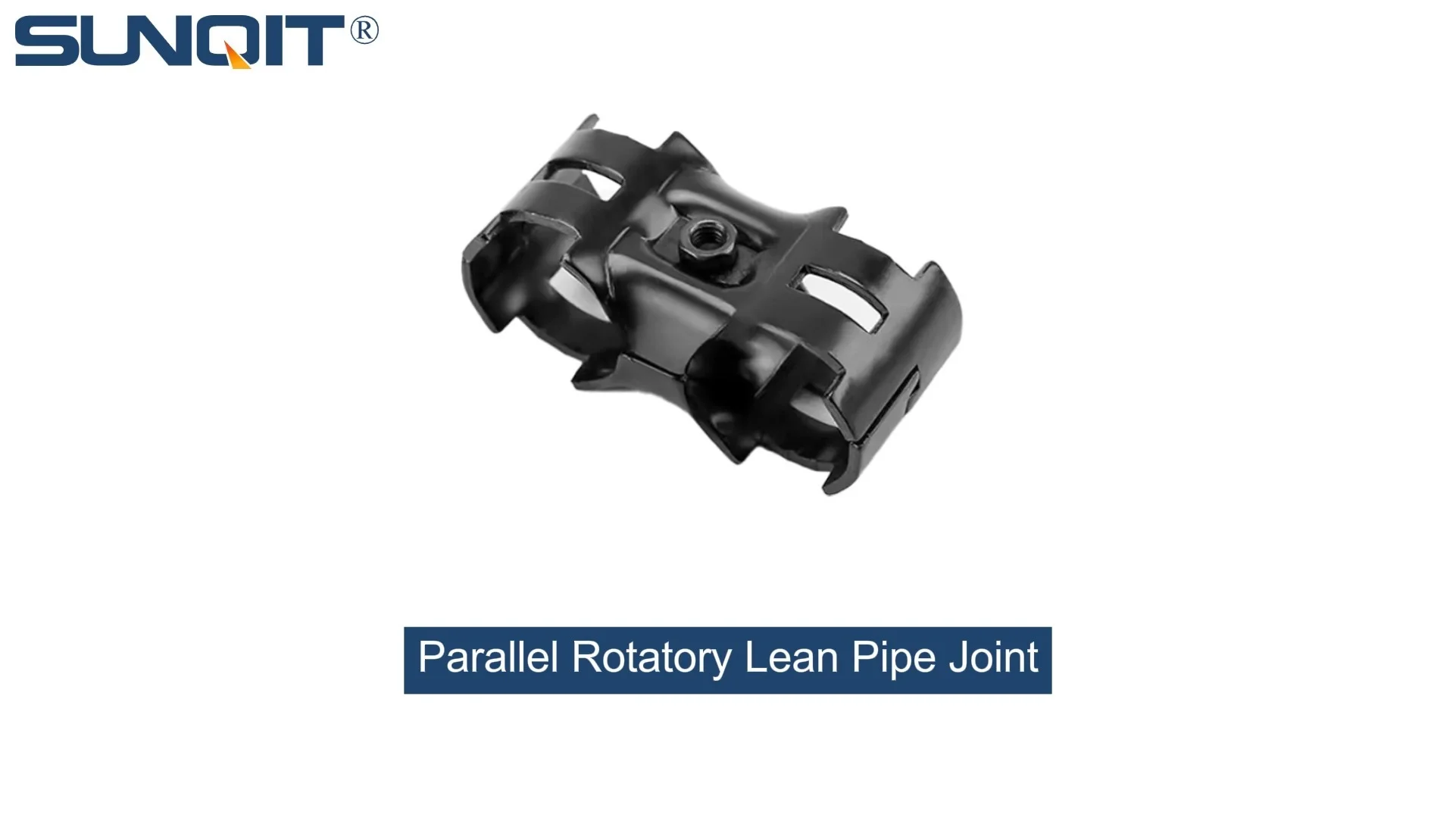
Parallel Rotatory Lean Pipe Joint
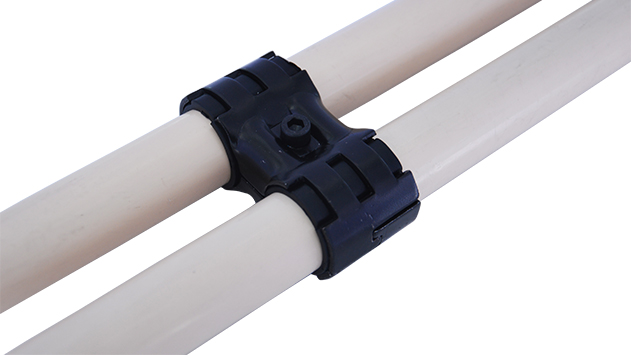
Parallel rotatory lean pipe joint, for 2 pcs pipe conenction in parallel direction with rotatory function.
In the world of lean manufacturing, where efficiency and adaptability are the cornerstones of success, even the smallest components play a pivotal role. Every nut, bolt, and connector contributes to the seamless flow of production, and none more so than the humble lean pipe joint . These unassuming pieces are the backbone of any lean system, holding together workbenches, material racks, and conveyor lines that keep factories and workshops running. But not all joints are created equal. Today, we're diving into a head-to-head comparison between two heavyweights in the industry: the parallel rotatory lean pipe joint chrome and the traditional fixed lean pipe joint. By the end, you'll understand how the right choice can transform a rigid workspace into a dynamic, responsive environment that grows with your needs.
The Unsung Heroes of Lean Systems: Why Joints Matter
Before we jump into the specifics, let's take a moment to appreciate why lean pipe joints are so critical. Imagine walking into a bustling manufacturing facility. Rows of workbenches line the floor, each holding tools, components, and half-assembled products. Material racks tower nearby, stocked with parts ready to be picked. Conveyors hum as they move items from one station to the next. What holds all these structures together? Lean pipe joints. They're the invisible glue that turns simple aluminum or steel pipes into functional, custom-built solutions.
In lean manufacturing, the goal is to eliminate waste—whether it's time, space, or effort. A well-designed workspace minimizes unnecessary movement, reduces setup time, and adapts quickly to changing production demands. This is where the flexibility of your joints comes into play. Fixed joints, as the name suggests, lock pipes into a static position. They're sturdy and reliable, but once installed, they're hard to modify. On the other hand, parallel rotatory lean pipe joints chrome add a layer of movement, allowing pipes to rotate, pivot, and reposition with minimal effort. It's the difference between a one-size-fits-all t-shirt and a tailored suit—both cover the basics, but one adapts to your unique shape.
Design Deep Dive: What Sets Them Apart?
Let's start with the basics: design. A fixed lean pipe joint is straightforward. It typically consists of a metal or plastic connector with pre-drilled holes that align with the lean pipe. You slide the pipe into the joint, tighten a screw or bolt, and that's it—the joint holds the pipe at a fixed angle (often 90°, 45°, or 180°). It's simple, no-nonsense, and has been a staple in factories for decades. Think of it as the "set it and forget it" option.
Now, the parallel rotatory lean pipe joint chrome is a different beast. At first glance, it might look similar to a fixed joint, but hidden within is a clever rotating mechanism. The chrome plating isn't just for show—it adds durability and a smooth finish that resists scratches and corrosion. The real magic, though, is in the rotation. Unlike fixed joints, which lock into place, these joints allow the connected pipes to swivel along a parallel axis. Some models offer 180° rotation, while others can pivot 360°, giving you near-unlimited flexibility in how you arrange your structure.
Take a closer look at the internal components: a parallel rotatory joint often features a central bearing or bushing that reduces friction, making rotation smooth and effortless. The chrome coating ensures that even after repeated use, the joint won't seize up or become stiff. Fixed joints, by contrast, rely on friction and pressure to hold pipes in place—great for stability, but terrible for adjustability. If you've ever tried to reposition a fixed-joint structure, you know the drill: grab a wrench, loosen the bolts, adjust the angle, retighten, and hope it stays put. With a parallel rotatory joint, it's as simple as lifting, rotating, and locking into the new position—no tools required.
Flexibility in Action: When Adaptability Saves the Day
Let's paint a scenario to illustrate the difference. Suppose you run a small electronics assembly line. One week, you're producing smartphones—small, lightweight components that require a compact workbench with tool holders close at hand. The next week, you switch to tablets, which are larger and need more surface area. With a workbench built using fixed lean pipe joints, adapting to this change would be a headache. You'd need to disassemble parts of the bench, re-drill holes, and reassemble the pipes at new angles. This could take hours, during which production grinds to a halt.
Now, imagine the same workbench with parallel rotatory lean pipe joint chrome. The shelves that held smartphone tools? A quick twist, and they rotate out of the way to make room for the larger tablet components. The side racks for holding cables? Swivel them 90° to free up space. Need to adjust the height of the work surface to accommodate a taller worker? Rotate the legs to the desired angle and lock them in. What would have taken hours with fixed joints now takes minutes. Your team stays productive, and you meet the new production deadline without breaking a sweat.
This isn't just about speed—it's about empowering your team. Workers on the floor know their needs best. A fixed setup forces them to adapt to the workspace; a flexible setup adapts to them. When employees can adjust their workbench to their height, reposition tool holders for easier access, or rearrange material racks to reduce reaching, they're happier, more comfortable, and less prone to fatigue. Over time, this translates to fewer errors, higher morale, and better overall productivity.

Installation and Setup: Time is Money
Installing a lean system shouldn't feel like solving a Rubik's Cube. Let's compare the setup process for fixed and parallel rotatory joints. With fixed joints, precision is key. You need to measure angles carefully, ensure pipes are cut to exact lengths, and align holes perfectly before tightening. A small miscalculation can throw off the entire structure, leading to wobbly workbenches or uneven material racks. If you're not a DIY expert, you might even need to call in a professional, adding to the cost and time.
Parallel rotatory lean pipe joint chrome simplifies this process dramatically. Most models are designed for tool-less assembly—no wrenches, no drills, no headaches. The rotating mechanism allows for on-the-fly adjustments, so you don't have to get measurements perfect on the first try. For example, if you're building a material rack and realize the shelves are too close together, you can simply rotate the joints to raise one shelf higher. This trial-and-error approach is a game-changer for small businesses or teams without dedicated maintenance staff. It puts the power to build and modify in the hands of the people who use the workspace every day.
Another advantage? Portability. Fixed-joint structures are often permanent fixtures—once bolted together, moving them requires disassembly. Parallel rotatory joints, however, make it easier to break down and reassemble structures if you need to relocate them. Maybe you're expanding to a new facility, or rearranging the floor plan for a more efficient workflow. With rotatory joints, you can take apart your workbench, move it to the new location, and have it up and running in an hour. Fixed joints would require you to start from scratch, wasting valuable time and materials.

Durability and Maintenance: Long-Term Performance
Critics of parallel rotatory joints often argue that moving parts mean more points of failure. It's a fair concern—after all, any mechanism with bearings or rotating components could, in theory, wear out faster than a solid fixed joint. But modern parallel rotatory lean pipe joint chrome is built to withstand the rigors of industrial use. The chrome plating isn't just for aesthetics; it's a protective layer that resists rust, corrosion, and scratches. The internal bearings are made from high-quality materials like stainless steel or hardened plastic, designed to handle thousands of rotations without losing smoothness.
Fixed joints, while sturdy, aren't immune to issues either. Over time, the bolts or screws that hold them in place can loosen due to vibrations from nearby machinery. This leads to wobbly structures that need frequent tightening. If a fixed joint is damaged—say, a thread strips or a plastic component cracks—you often have to replace the entire joint. With parallel rotatory joints, many manufacturers offer replaceable parts, like bearings or locking mechanisms, making repairs cheaper and easier.
Maintenance-wise, both types are relatively low-effort, but parallel rotatory joints do require a little extra care. Every few months, a quick spray of lubricant on the rotating parts will keep them moving smoothly. Fixed joints, on the other hand, might need periodic checks to ensure bolts are tight. The trade-off is clear: a few minutes of lubrication every quarter versus hours of disassembly and reassembly when you need to reconfigure your workspace.
Cost Considerations: Short-Term vs. Long-Term Value
Let's talk numbers. Fixed lean pipe joints are generally cheaper upfront. You can pick up a basic fixed joint for a few dollars, while a parallel rotatory lean pipe joint chrome might cost two to three times as much. For budget-conscious businesses, this price difference can be tempting—why spend more if you don't think you'll need the flexibility?
But here's the catch: lean manufacturing is all about long-term efficiency. The initial savings from fixed joints can quickly disappear when you factor in the cost of reconfiguration. Let's say you need to modify a workbench twice a year. Each modification takes two workers two hours at $25 per hour—that's $200 per modification, or $400 per year. Over five years, that's $2,000. Now, if a parallel rotatory joint costs $10 more than a fixed joint, and you use 20 joints per workbench, the upfront difference is $200. In just one year, you've recouped that cost in labor savings alone. Add in the value of reduced downtime and increased productivity, and the rotatory joint becomes the clear financial winner.
Another angle: scalability. As your business grows, your workspace needs will evolve. A startup might begin with a single workbench, but in a year, they could need half a dozen. With fixed joints, each new workbench is a separate, static investment. With parallel rotatory joints, you can repurpose components from old structures to build new ones. That old material rack? Take it apart, rotate the joints, and turn it into a new conveyor support. The savings add up quickly, making rotatory joints a smarter investment for businesses with an eye on growth.
A Side-by-Side Comparison: Key Features at a Glance
| Feature | Parallel Rotatory Lean Pipe Joint Chrome | Fixed Lean Pipe Joint |
|---|---|---|
| Adjustability | 180°–360° rotation; tool-less reconfiguration | Fixed angles (90°, 45°, 180°); requires tools to reconfigure |
| Installation Time | Fast (10–15 minutes for a basic workbench) | Slow (30–45 minutes for a basic workbench) |
| Durability | High (chrome plating resists corrosion; replaceable bearings) | High (sturdy but prone to loosening bolts) |
| Maintenance | Minimal (occasional lubrication of rotating parts) | Minimal (periodic bolt tightening) |
| Upfront Cost | Higher ($8–$15 per joint) | Lower ($3–$8 per joint) |
| Long-Term Value | Excellent (saves on reconfiguration labor and downtime) | Limited (costly to modify; static investment) |
| Best For | Dynamic workspaces, small-batch production, R&D labs | Static setups, heavy machinery, permanent assembly lines |
Real-World Impact: A Case Study in Adaptability
Case Study: XYZ Electronics Transforms Production with Rotatory Joints
To put this into perspective, let's look at XYZ Electronics, a mid-sized manufacturer of consumer gadgets. A year ago, their production floor was filled with workbenches built using fixed lean pipe joints. While functional, the setup was rigid. When they introduced a new product line—a larger tablet—they struggled to adapt. The existing workbenches were too small, and reconfiguring them took an entire weekend, causing production delays.
Frustrated, the plant manager decided to test parallel rotatory lean pipe joint chrome on a single workbench. The results were immediate. Workers could now rotate shelves to make space for larger components, adjust the height of tool holders to reduce reaching, and even pivot the entire work surface to collaborate with nearby stations. What used to take two hours to set up for a new product now took 15 minutes. Encouraged, XYZ Electronics replaced all their fixed joints with rotatory ones over the next month.
Six months later, the impact was clear: production downtime due to reconfiguration dropped by 80%, worker satisfaction scores increased by 35%, and the company saved over $20,000 in labor costs. The plant manager noted, "We used to see workbenches as permanent fixtures. Now, they're living tools that adapt to our needs. It's like night and day."
Choosing the Right Joint for Your Needs
So, which joint is right for you? It ultimately comes down to your workspace's needs. If you're running a high-volume production line with the same setup day in and day out—say, assembling the same car part for years—fixed joints might be sufficient. They're cheap, reliable, and require little maintenance. But if your business thrives on flexibility—small batch sizes, frequent product changes, or a focus on innovation—parallel rotatory lean pipe joint chrome is the way to go.
Don't forget to consider your team, too. Workers are the ones who interact with these structures daily. Ask them what frustrates them about the current setup. Do they wish they could adjust their workbench height? Reposition shelves for easier access? If the answer is yes, rotatory joints will make their jobs easier, leading to higher productivity and lower turnover. After all, a happy team is a productive team.
Finally, think about the future. Industries are evolving faster than ever, and today's cutting-edge product could be tomorrow's obsolete model. Your workspace needs to keep up. Parallel rotatory joints aren't just a purchase—they're an investment in adaptability, ensuring that your facility can pivot quickly when the next opportunity or challenge arises.
Conclusion: Beyond Joints—Building a Leaner, More Human Workspace
At the end of the day, the choice between parallel rotatory lean pipe joint chrome and fixed joints is about more than mechanics—it's about creating a workspace that respects the people who use it. Lean manufacturing isn't just about eliminating waste; it's about empowering workers to do their best work with the tools they need. Rotatory joints turn static structures into dynamic allies, giving teams the flexibility to innovate, adapt, and thrive.
So, the next time you're planning a workspace upgrade, don't overlook the humble lean pipe joint. It might seem like a small detail, but it's the difference between a workspace that holds you back and one that propels you forward. Whether you're building a new workbench, redesigning a production line, or simply looking to squeeze more efficiency out of your current setup, remember: the right joint can turn a good workspace into a great one. And in the world of lean manufacturing, great is what separates the leaders from the rest.
In the end, it's clear that parallel rotatory lean pipe joint chrome isn't just a better joint—it's a better way to work. It's time to stop building workspaces that adapt to joints, and start building joints that adapt to workspaces. Your team, your productivity, and your bottom line will thank you.