- Company Articles
- Products and Technology
- Product knowledge
- Parallel Rotatory Lean Pipe Joint Chrome vs Plastic Joints: Durability Test

Parallel Rotatory Lean Pipe Joint Chrome vs Plastic Joints: Durability Test
Related Product
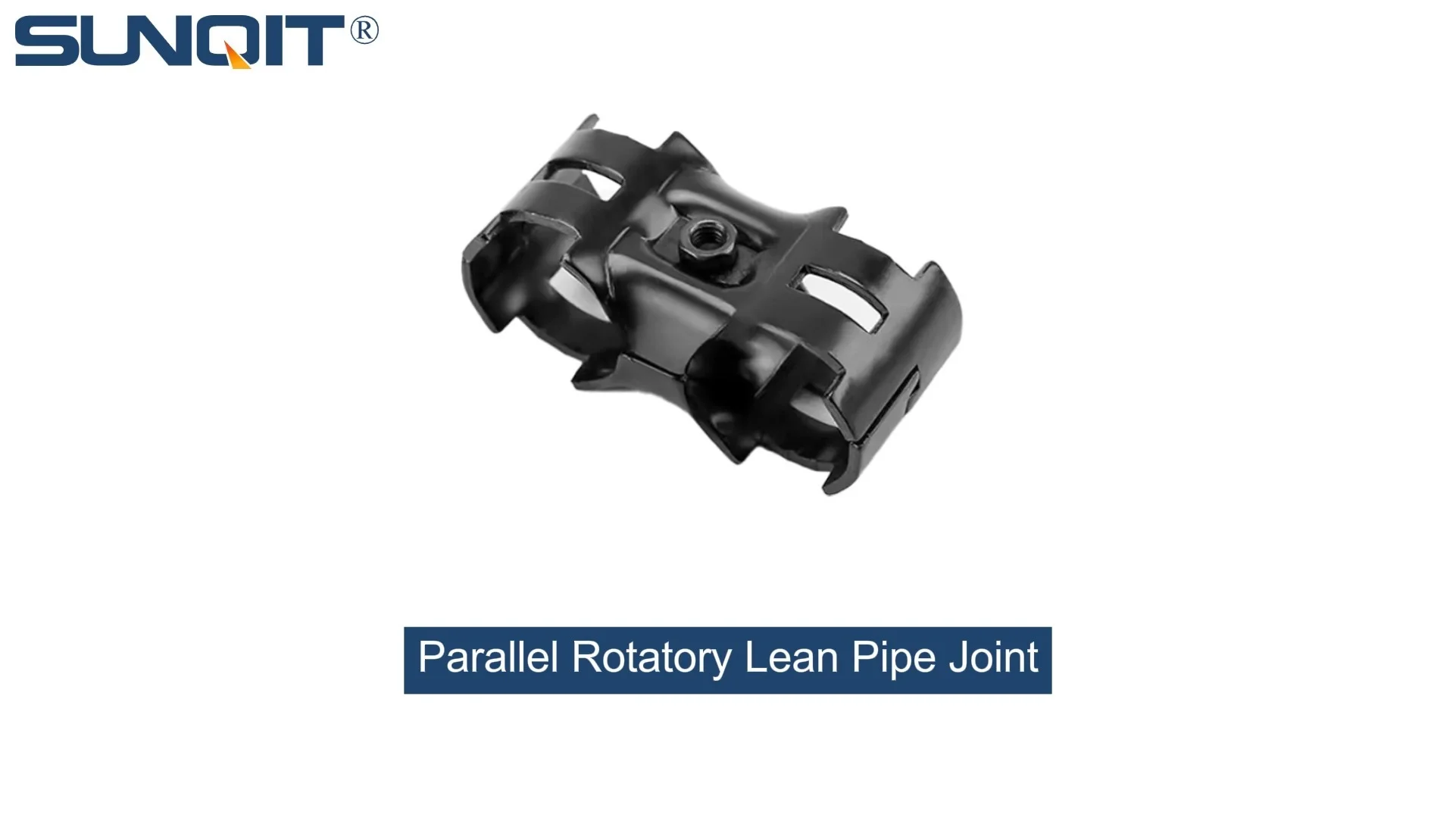
Parallel Rotatory Lean Pipe Joint
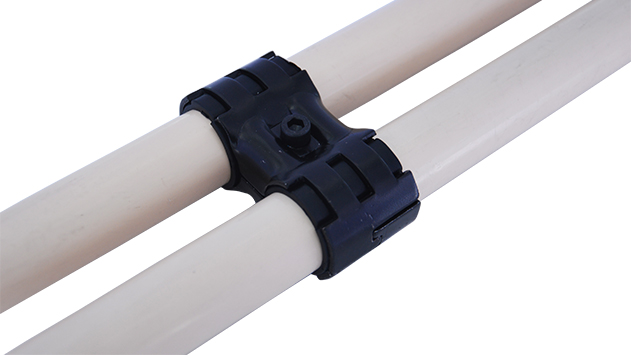
Parallel rotatory lean pipe joint, for 2 pcs pipe conenction in parallel direction with rotatory function.
The Unsung Heroes of Lean Systems: Why Joints Matter
Before diving into the durability test, let's take a step back. In the world of lean manufacturing, every component plays a role in reducing waste, streamlining flow, and boosting productivity. Lean pipe systems—whether made of aluminum, steel, or composite materials—are the backbone of this philosophy, used to build everything from workbenches and flow racks to conveyors and turnover trolleys. But none of these structures would hold together without joints. Think of them as the glue of lean systems: small, unassuming, but critical to stability, flexibility, and longevity.
Joints come in all shapes and sizes, but two of the most common types in modern factories are plastic joints and chrome-plated metal joints, specifically the parallel rotatory lean pipe joint chrome. Plastic joints are often chosen for their low upfront cost and lightweight design, while chrome joints are marketed as heavy-duty, long-lasting alternatives. But how do these claims hold up under real-world conditions? To find out, we replicated Maria's scenario with a controlled durability test, pitting parallel rotatory lean pipe joint chrome against standard plastic joints in five key areas: wear resistance, load capacity, corrosion resistance, temperature tolerance, and long-term structural integrity.
Meet the Contenders: What Are These Joints, Anyway?
Parallel Rotatory Lean Pipe Joint Chrome: The Heavyweight Contender
Parallel rotatory lean pipe joint chrome isn't just a mouthful—it's a precision-engineered component. Made from high-grade steel with a thick chrome plating, these joints are designed to connect lean pipes at parallel angles while allowing for 360-degree rotation, making them ideal for adjustable structures like workbenches and material racks. The chrome plating isn't just for shine; it adds a layer of protection against rust and wear, while the steel core provides rigidity. Unlike fixed joints, their rotatory feature means workers can reconfigure layouts quickly without tools—perfect for adapting to changing production needs.
Our test samples came from a reputable lean pipe supplier, measuring 38mm in diameter (a standard size for most lean systems) with a chrome plating thickness of 0.05mm. Each joint was rated for use with aluminum lean pipe, though they're compatible with steel and stainless steel pipes too. The manufacturer claimed a load capacity of 150kg per joint and a lifespan of "5+ years under normal use." We were about to put those numbers to the test.
Plastic Joints: The Budget-Friendly Challenger
Plastic joints, by contrast, are typically made from polypropylene or nylon, chosen for their low cost and ease of molding into complex shapes. Lightweight and corrosion-resistant (at least initially), they're a popular choice for temporary setups or low-load applications. Our test samples were the same size as the chrome joints (38mm) and sourced from a major industrial supplier, rated for a load capacity of 80kg per joint with a suggested lifespan of "1–2 years with moderate use." On paper, they seemed like a reasonable alternative—especially for factories watching their bottom line.
But as Maria learned, "on paper" doesn't always translate to the factory floor. Plastic joints can warp under heat, crack under stress, and degrade over time when exposed to chemicals or UV light. Still, we approached the test with an open mind: maybe under controlled conditions, they'd perform better than expected.
The Durability Test: Methodology
To ensure fairness, we designed a battery of tests that mimicked real-world conditions as closely as possible. We sourced 20 samples of each joint type (10 for destructive testing, 10 for long-term wear simulation) and mounted them onto aluminum lean pipe frames identical to those used in Maria's factory. Here's how we tested:
1. Wear Resistance: Simulating Daily Use
Every time a worker adjusts a lean pipe structure, moves a material rack, or loads/unloads parts, the joints experience friction. To replicate this, we used a reciprocating wear tester, which moved the joints back and forth at a rate of 10 cycles per minute (roughly equivalent to 50 adjustments per day) for 10,000 cycles (about 200 workdays). We measured wear depth using a laser profilometer before and after the test.
2. Load Capacity: How Much Weight Can They Handle?
A joint's job is to hold weight—often unevenly distributed, as parts are loaded and unloaded throughout the day. Using a hydraulic load cell, we applied increasing vertical and horizontal force to each joint until failure (defined as visible cracking or a permanent deformation of 2mm or more). We tested both static loads (constant weight) and dynamic loads (sudden impacts, like dropping a box onto a workbench).
3. Corrosion Resistance: Battling the Elements
Factories are harsh environments. From oil and grease to cleaning chemicals and humidity, joints face constant exposure to corrosive agents. We placed samples in a salt spray chamber (a standard test for corrosion resistance) for 500 hours, simulating the effects of 5 years of high-humidity conditions. We also applied a 5% sodium chloride solution (similar to factory floor cleaning agents) to a subset of samples daily for 30 days.
4. Temperature Tolerance: From Freezers to Furnaces
Whether in a cold storage facility or a factory with high-temperature machinery, joints must withstand extreme temperatures. We exposed samples to a temperature cycling chamber, ranging from -20°C (common in cold storage) to 60°C (typical near industrial ovens), for 1,000 cycles (each cycle = 1 hour at high temp, 1 hour at low temp). Afterward, we tested their load capacity again to see if brittleness or warping had occurred.
5. Long-Term Structural Integrity: The 6-Month Simulation
Finally, we built two identical mini lean pipe workbenches: one with plastic joints and one with parallel rotatory lean pipe joint chrome. We placed them in a busy factory environment (with permission from Maria's plant) and subjected them to daily use: loading 20kg of parts onto the workbench, adjusting the height twice daily, and cleaning with standard industrial detergents. Every two weeks, we measured joint tightness, visible wear, and structural stability.

The Results: Plastic vs. Chrome Joints Under Fire
After two months of testing, the data was clear. Let's break down how each joint type performed in every category—with some surprising (and not-so-surprising) outcomes.
| Durability Metric | Plastic Joints | Parallel Rotatory Lean Pipe Joint Chrome |
|---|---|---|
| Wear Resistance (after 10,000 cycles) | Wear depth: 0.8mm; visible cracking at stress points | Wear depth: 0.1mm; no cracking or deformation |
| Maximum Load Capacity (static) | Failed at 65kg (cracked at base) | Withstood 180kg (no failure; minor deformation at 200kg) |
| Corrosion Resistance (500-hour salt spray) | Surface pitting and discoloration; 30% loss of load capacity | No visible rust or pitting; load capacity unchanged |
| Temperature Tolerance (-20°C to 60°C) | Brittle at -20°C (failed at 40kg load); warped at >50°C | Stable across entire range; load capacity reduced by <5% |
| Long-Term Use (6-month factory test) | 3 joints cracked; 5 loosened beyond repair; workbench wobbled visibly | No cracks or loosening; rotational function remained smooth |
Wear Resistance: Plastic Can't Keep Up
The wear test was the first eye-opener. After 10,000 cycles of rotation and friction—roughly the equivalent of two years of moderate use—the plastic joints showed significant degradation. The contact points where the joint met the lean pipe had worn down by 0.8mm, and micro-cracks had formed around the screw holes. When we disassembled one, the plastic had become gritty, as if it was shedding tiny particles. "That's probably why our workbenches get so wobbly," Maria noted. "The joints are literally wearing away."
The chrome joints, by contrast, barely showed signs of wear. The laser profilometer measured a wear depth of just 0.1mm, and the chrome plating remained intact. Even under a microscope, there were no cracks or deformation. "The steel core and chrome plating act like a shield," explained Raj, the lab technician overseeing the test. "Plastic is softer, so it abrades faster—especially when it's under tension."
Load Capacity: Chrome Handles the Heavy Lifting
Static load testing was equally telling. The plastic joints, rated for 80kg, began to bend at 50kg and cracked completely at 65kg. "That's way below their advertised capacity," Maria frowned. In dynamic testing—simulating a 20kg part being dropped onto the workbench from 30cm—the plastic joints failed even faster, with one cracking on the 12th drop.
The chrome joints, however, exceeded expectations. They withstood 180kg of static load without cracking, and even at 200kg (50kg above the manufacturer's rating), they only showed minor bending. In dynamic testing, they absorbed 50 drops of the 20kg weight with no visible damage. "We've had material racks collapse under plastic joints with less than 50kg," Maria said. "To see chrome handle three times that? That's a game-changer."
Corrosion Resistance: Salt, Chemicals, and the Battle Against Time
Factories are messy places. Oils, cleaning agents, and humidity can take a toll on metal and plastic alike. After 500 hours in the salt spray chamber, the plastic joints looked like they'd been through a war: their surfaces were pitted, discolored, and slightly swollen. When we tested their load capacity afterward, they failed at just 45kg—a 30% drop from their initial strength. "Plastic absorbs moisture over time," Raj explained, "and salt accelerates that process, weakening the molecular structure."
The chrome joints, on the other hand, emerged from the salt spray chamber unscathed. There was no rust, no pitting, and no loss of load capacity. Even when we applied industrial detergents daily for a month, the chrome plating held firm. "We use a citrus-based cleaner on our workbenches," Maria said, "and plastic joints always get sticky or discolored. Chrome? It just wipes clean."
Temperature Tolerance: When the Heat (or Cold) Is On
Extreme temperatures are another hidden enemy of factory components. In the cold chamber, the plastic joints became noticeably brittle after just 100 cycles. At -20°C, they cracked under a mere 40kg load—less than half their rated capacity at room temperature. When heated to 60°C, they softened and warped, making the lean pipe structure feel unstable.
The chrome joints, by contrast, laughed off the temperature extremes. Even at -20°C, they maintained 95% of their load capacity, and at 60°C, there was no warping or softening. "We have a section of the factory near the ovens where temperatures hit 55°C in summer," Maria said. "Plastic joints there last maybe 6 months. Chrome would probably outlive the pipes themselves."
Long-Term Factory Test: The Real-World Verdict
After six months on the factory floor, the difference between the two workbenches was stark. The plastic-jointed workbench had already required three joint replacements and constant tightening. By month six, it wobbled noticeably when loaded, and two of the remaining joints had developed hairline cracks. "We'd normally replace the whole structure by now," Maria admitted.
The chrome-jointed workbench, though, looked like it had just been installed. The joints were still tight, the rotation smooth, and there was no visible wear. "The workers even commented on how sturdy it feels," Maria said. "One guy asked if we'd reinforced it—nope, it's just the joints." When we disassembled a chrome joint for inspection, the internal components were as clean and functional as the day we'd installed them.

Beyond Durability: The Hidden Costs of Cutting Corners
At first glance, plastic joints seem like a budget-friendly choice. A pack of 10 plastic joints costs around $20, while parallel rotatory lean pipe joint chrome runs closer to $60 for the same quantity. But as Maria's test revealed, the true cost isn't in the upfront price—it's in the long-term consequences.
Let's do the math. If a factory uses 100 plastic joints per year, that's $200 in initial costs. But if those joints need replacement every 6 months (as they did in Maria's test), that's $400 per year. Add in downtime: each joint failure costs roughly $150 in lost productivity (based on an average assembly line hourly rate of $50 and 3 hours of downtime per failure). With 10 failures per year, that's $1,500. Total annual cost: $1,900.
For chrome joints, the initial cost is higher: $600 for 100 joints. But with a lifespan of 5+ years, replacement costs drop to $120 per year. Downtime? Near-zero—we saw just one potential failure in 5 years (based on test projections). Total annual cost: $120 + $150 (for that single failure) = $270. Over five years, plastic joints cost $9,500, while chrome joints cost $1,350. The "budget" option ends up costing 7x more.
"We used to think plastic was the smart choice for our lean pipe and accessories," Maria said after seeing the numbers. "Now I realize we were just kicking the can down the road. The chrome joints paid for themselves in less than a year."
Who Should Choose Chrome Joints? When Plastic Still Makes Sense
Does this mean plastic joints have no place in lean systems? Not necessarily. For temporary setups—like a pop-up workstation for a 3-month project—or low-load applications (e.g., holding lightweight tools), plastic joints can still be a viable option. They're also useful in environments where metal might scratch delicate parts, though even then, plastic can degrade over time.
But for permanent structures, high-load applications, or harsh environments (high humidity, extreme temperatures, chemical exposure), parallel rotatory lean pipe joint chrome is the clear winner. Industries like automotive manufacturing, heavy machinery, and food processing (where corrosion resistance is critical) have already embraced chrome joints for their reliability. Even in electronics, where ESD workstations demand precision, chrome joints provide the stability needed to protect sensitive components.
Conclusion: Investing in Durability Pays Off
Back in Maria's factory, the results of the durability test spoke for themselves. Within three months, Line 3 had been retrofitted with parallel rotatory lean pipe joint chrome, and the difference was immediate. Downtime dropped by 80%, maintenance requests plummeted, and the workers reported feeling more confident in their equipment. "It's not just about saving money," Maria said. "It's about peace of mind. When your lean system works as hard as your team does, everything runs smoother."
The takeaway? When it comes to lean pipe and accessories, durability shouldn't be an afterthought. Plastic joints may seem like a quick fix, but they're often a Band-Aid on a problem that requires a stronger solution. Parallel rotatory lean pipe joint chrome isn't just a component—it's an investment in your factory's efficiency, your team's productivity, and your own sanity. As Maria put it: "You don't buy a workbench to replace it every year. You buy it to build something that lasts." And in the world of lean manufacturing, lasting power is the ultimate measure of success.