- Company Articles
- Products and Technology
- Product knowledge
- Parallel Rotatory Lean Pipe Joint Chrome vs Swivel Joints: Rotation Precision

Parallel Rotatory Lean Pipe Joint Chrome vs Swivel Joints: Rotation Precision
Related Product
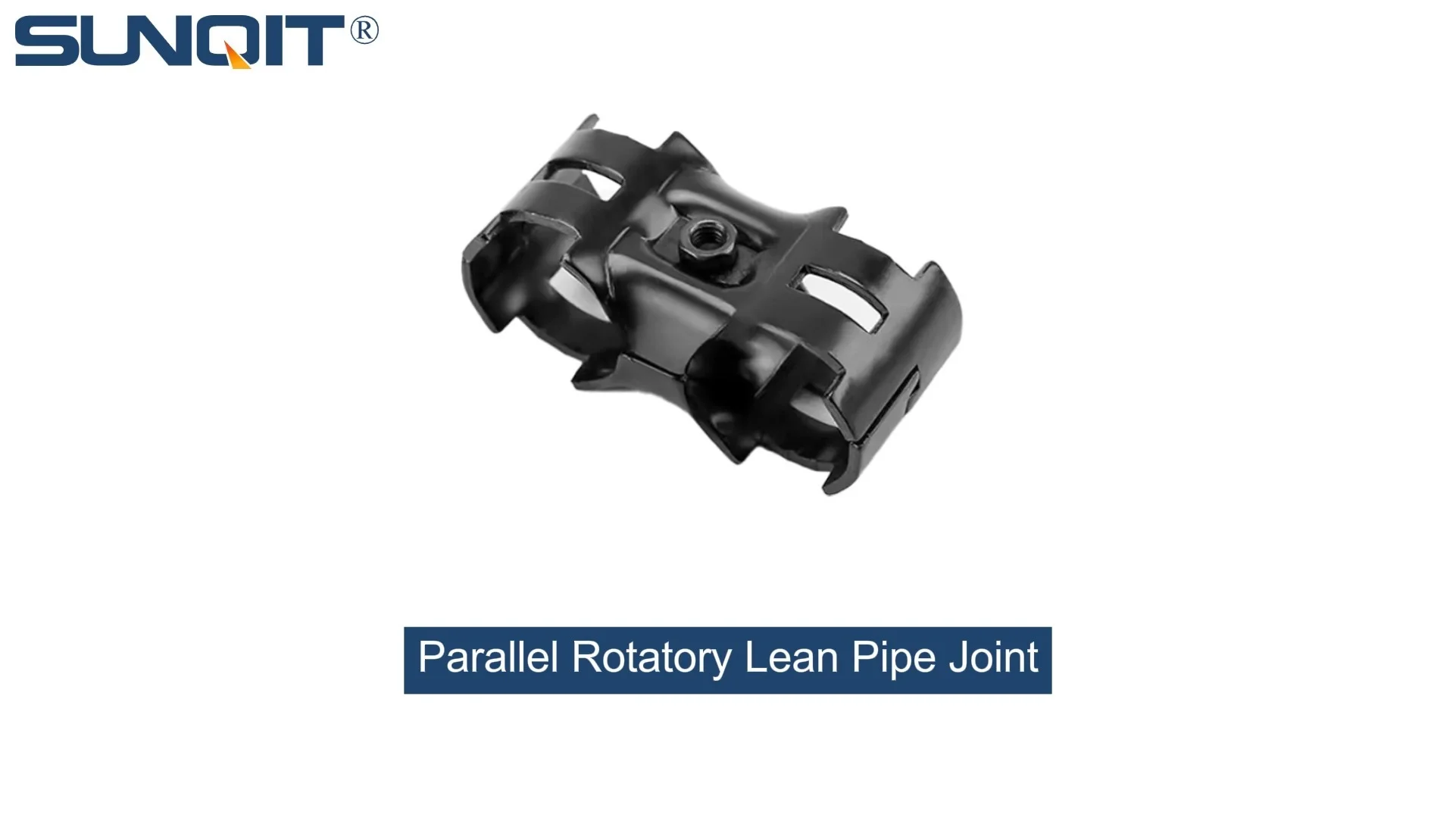
Parallel Rotatory Lean Pipe Joint
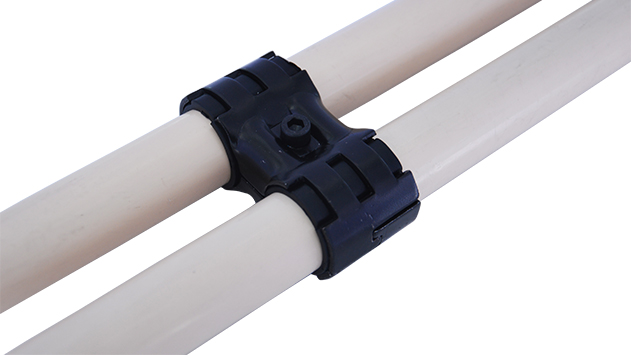
Parallel rotatory lean pipe joint, for 2 pcs pipe conenction in parallel direction with rotatory function.
Walk into any modern manufacturing facility, and you'll likely be met with the hum of machinery, the organized chaos of assembly lines, and the quiet efficiency of lean systems at work. Behind this seamless flow—where materials glide from station to station, tools are within arm's reach, and waste is minimized—lies a network of components working in harmony. Among these, lean pipe joints are the unsung heroes. They're the connectors that hold everything together, enabling the flexibility and precision that make lean manufacturing possible. Today, we're zeroing in on two critical players in this space: the Parallel Rotatory Lean Pipe Joint Chrome and the ever-versatile Swivel Joints. Both have their place, but when it comes to rotation precision—the kind that can make or break a production line's efficiency—how do they stack up?
The Backbone of Lean Systems: Why Joints Matter
Before diving into the specifics of these two joints, let's take a step back and appreciate why they're so crucial. Lean systems, at their core, are about optimizing workflow. That means reducing unnecessary movement, ensuring materials are where they need to be exactly when they're needed, and maintaining consistency in every process. Lean pipes—often made of steel, aluminum, or chrome-plated materials—form the skeleton of workbenches, flow racks, conveyors, and material trolleys. But without the right joints, that skeleton is rigid and unresponsive. Joints are the joints of the lean body; they allow movement, adaptability, and customization. A poorly chosen joint can lead to wobbly workbenches, jamming conveyors, or misaligned assembly lines—all of which eat into productivity and profits. Rotation precision, in particular, is about how accurately and smoothly a joint can move within its intended range. Is it a tight, controlled rotation, or does it wobble? Can it repeat the same movement consistently, or does it drift over time? These are the questions that separate a reliable joint from a problematic one.
Meet the Contenders: Parallel Rotatory Lean Pipe Joint Chrome
First up: the Parallel Rotatory Lean Pipe Joint Chrome. If you've ever worked with lean pipe systems, you've probably encountered this workhorse. As the name suggests, it's a joint designed for parallel rotation—meaning it allows movement along a single, linear axis, keeping the connected pipes in a parallel orientation. But what really sets it apart is the "chrome" in its name. These joints are typically made from high-grade steel, then coated with a layer of chrome. This isn't just for aesthetics (though that shiny finish does look professional); chrome plating adds a hard, corrosion-resistant barrier, making the joint durable enough to withstand the daily grind of factory floors, where dust, oils, and occasional impacts are par for the course.
Design: Built for Stability and Control
The design of the Parallel Rotatory Lean Pipe Joint Chrome is a study in intentionality. Unlike some joints that prioritize flexibility, this one is all about precision. Its internal mechanism—often a combination of bearings and locking pins—ensures that rotation is smooth but not loose. Imagine a hinge on a well-made door: it moves easily, but there's no play or slop in the movement. That's the feel of a quality parallel rotatory joint. The parallel rotation itself is key here. When you connect two lean pipes with this joint, they stay aligned parallel to each other, even as the joint rotates. This is critical in setups where alignment is non-negotiable, like a workbench with a fold-down shelf or a material rack where trays need to slide in and out without binding. The chrome coating also plays a role in rotation precision. Unlike uncoated steel, which can rust or accumulate grime, the smooth chrome surface reduces friction, allowing for consistent movement over time. Even after months of use, the rotation remains as crisp as the day it was installed.
Common Applications: Where Precision Reigns
So where does the Parallel Rotatory Lean Pipe Joint Chrome shine? Think of scenarios where controlled, parallel movement is essential. One classic example is adjustable workbenches. Many factories use workbenches with height-adjustable shelves or tool racks. A parallel rotatory joint ensures that when you lift or lower a shelf, it stays level—no tilting, no jamming. This is especially important for delicate assembly work, where a tilted shelf could cause small parts to roll off or tools to slip. Another common use is in flow racks. These are the racks with sloped shelves that allow materials to slide forward as items are removed (a staple in just-in-time manufacturing). The parallel rotatory joint helps adjust the angle of the slope precisely. Too steep, and parts might slide too fast; too shallow, and they might get stuck. With this joint, you can dial in the exact angle and lock it in place, ensuring a steady, consistent flow. They're also a favorite in production lines where components need to be rotated 90 degrees (like flipping a circuit board during assembly). The parallel rotation ensures the component stays flat and aligned, reducing the risk of errors.
The Versatile Rival: Swivel Joints
Now, let's turn to the other contender: Swivel Joints. If the Parallel Rotatory Lean Pipe Joint Chrome is the precision specialist, swivel joints are the all-rounders. These joints are designed for rotational movement, but unlike their parallel counterparts, they often allow for multi-axis rotation—think 360-degree swiveling or movement in multiple directions. They're the joints you'd use when you need flexibility rather than strict parallelism. Swivel joints come in a variety of materials, from plastic to steel to aluminum, and their design can range from simple ball-and-socket mechanisms to complex, multi-part assemblies. Some are basic and affordable, while others are engineered for heavy loads or high-precision applications. What unites them all is their ability to rotate freely, making them ideal for setups where components need to move in more than one direction.
Design: Flexibility First
Swivel joints prioritize adaptability. Take a standard ball-and-socket swivel joint, for example. The "ball" is a rounded end on one pipe, and the "socket" is a housing that holds it in place, allowing the ball to rotate within the socket. This design permits movement in nearly any direction—up, down, left, right, and even slight twisting. Some swivel joints add a locking mechanism, letting you fix the joint in a specific position once you've got the angle right. But compared to the Parallel Rotatory Lean Pipe Joint Chrome, swivel joints often have more "play" in their movement. That is, there's a small amount of wiggle room between the moving parts. This isn't necessarily a flaw; it's a trade-off for flexibility. A little play allows the joint to accommodate minor misalignments or sudden jolts without breaking. However, this can affect rotation precision. If you need a joint that returns to exactly the same position every time, a basic swivel joint might not be your best bet. The materials matter too. Plastic swivel joints are lightweight and cheap but prone to wear, while steel or aluminum swivel joints (like those used with aluminum pipe systems) are more durable and precise. Still, even metal swivel joints rarely match the tight, controlled rotation of a parallel rotatory joint.
Common Applications: Where Flexibility Takes Center Stage
Swivel joints are everywhere in manufacturing, thanks to their versatility. One of the most common uses is in conveyor systems. Imagine a roller conveyor that needs to switch directions—say, from a main line to a side line. A swivel joint can connect the two conveyor sections, allowing the side line to pivot into place when needed and swing out of the way when not. This flexibility makes it easy to reconfigure the production line for different products. Swivel joints also shine in material handling trolleys. Trolleys with swivel casters (which use swivel joints) can turn on a dime, making them easy to maneuver in tight factory spaces. Even the handles on these trolleys often use swivel joints, allowing workers to adjust the handle angle for comfort. Another application is in ergonomic workstations. For example, a tool holder that swivels so workers can position their tools at the perfect angle, reducing strain. In these cases, the ability to rotate freely is more important than strict precision—no one minds if a tool holder is off by a degree or two, as long as it's easy to adjust.

Rotation Precision Showdown: How They Compare
Now, the moment of truth: how do these two joints stack up when it comes to rotation precision? Let's break it down into key categories.
Range of Motion
The Parallel Rotatory Lean Pipe Joint Chrome is limited by design—its rotation is restricted to a single axis, typically with a range of 0 to 180 degrees (though some models go up to 270 degrees). This limited range is intentional; it ensures the joint stays focused on its job: keeping pipes parallel and moving smoothly along that axis. Swivel joints, on the other hand, often offer a much wider range. Basic swivel joints might allow 360-degree rotation, while more complex ones can move in two or three axes. But here's the catch: more range doesn't equal more precision. A swivel joint's wide rotation can make it harder to control—like a joystick with too much sensitivity. You might get the movement you want, but it could be less predictable than the tight, linear rotation of a parallel joint.
Repeatability and Consistency
Repeatability is about whether a joint can return to the exact same position every time. This is where the Parallel Rotatory Lean Pipe Joint Chrome really shines. Its parallel rotation and tight internal tolerances mean that if you rotate it to 45 degrees, then back to 0, then back to 45, it will hit that 45-degree mark consistently. There's minimal drift or slop. This is critical in automated systems, where machines rely on precise positioning. Swivel joints, especially cheaper or plastic ones, often struggle with repeatability. The ball-and-socket mechanism can wear over time, leading to "play" in the joint. Rotate it to 45 degrees once, and the next time, it might be 43 or 47 degrees—small differences that add up in high-precision tasks. Even high-end swivel joints with locking mechanisms can have slight variations, as the locking pin might not engage in exactly the same spot every time.
Load Capacity and Stability
How much weight can a joint handle while maintaining precision? The Parallel Rotatory Lean Pipe Joint Chrome, with its steel construction and chrome plating, is built for stability under load. The parallel design distributes weight evenly across the joint, reducing stress on any single point. Even when supporting heavy shelves or tools, the rotation remains smooth and controlled. Swivel joints, especially those with multi-axis movement, can be less stable under heavy loads. The ball-and-socket design concentrates stress on the ball, which can lead to wobbling or even failure if overloaded. While there are heavy-duty swivel joints (often made of steel or aluminum pipe), they still tend to sacrifice some precision for flexibility. A loaded swivel joint might rotate smoothly, but it might not hold its position as firmly as a parallel joint, leading to slight sagging over time.
Durability and Maintenance
Precision isn't just about initial performance—it's about maintaining that precision over time. The Parallel Rotatory Lean Pipe Joint Chrome's chrome plating is a big advantage here. Chrome resists rust, scratches, and corrosion, so the joint stays smooth and functional even in dirty or humid environments. The internal bearings are often sealed, keeping out dust and debris that could gum up the works. Maintenance is minimal: a quick wipe down with a cloth is usually enough. Swivel joints, especially those with exposed mechanisms, require more upkeep. Dirt and grime can build up in the ball-and-socket, causing the rotation to become stiff or jerky. Plastic swivel joints can wear down quickly under heavy use, while metal ones might need regular lubrication to keep the movement smooth. Over time, this wear and tear erode precision, making the joint less reliable.

Side-by-Side: A Comparison Table
| Feature | Parallel Rotatory Lean Pipe Joint Chrome | Swivel Joints (Standard) |
|---|---|---|
| Rotation Type | Parallel, single-axis (linear) | Multi-axis (often 360° swivel) |
| Rotation Precision | High (tight tolerances, minimal play) | Moderate to low (more play, less repeatability) |
| Range of Motion | Limited (typically 0–180°) | Wide (360° or multi-directional) |
| Load Capacity | High (steel construction, even weight distribution) | Moderate (varies by material; lower for plastic) |
| Durability | High (chrome-plated steel, corrosion-resistant) | Moderate (depends on material; plastic wears faster) |
| Maintenance | Low (sealed bearings, corrosion-resistant) | Moderate to high (needs cleaning/lubrication) |
| Best For | Precision alignment (workbenches, flow racks, assembly lines) | Flexibility (conveyors, trolleys, adjustable tool holders) |
Real-World Impact: Case Studies in Precision
To understand how these differences play out in real life, let's look at two hypothetical (but realistic) case studies.
Case Study 1: Automotive Assembly Line
An automotive manufacturer was struggling with errors in their circuit board assembly line. Workers were rotating circuit boards 90 degrees to solder components on both sides, but the workbench's plastic swivel joints were causing the boards to tilt slightly during rotation. This led to misaligned solder points and a 5% error rate. The manufacturer switched to Parallel Rotatory Lean Pipe Joint Chrome for the workbench's rotation mechanism. The parallel rotation kept the boards flat and aligned, reducing errors to less than 1%. The chrome-plated joints also held up better to the shop's oil and dust, requiring less maintenance than the old swivel joints.
Case Study 2: E-commerce Fulfillment Center
A fulfillment center needed a conveyor system that could switch packages between main lines and side lines quickly. They initially used steel swivel joints to connect the conveyor sections. While the swivel joints allowed for easy reconfiguration, the heavy packages caused the joints to wobble, leading to occasional jams. The solution? A hybrid approach: Parallel Rotatory Lean Pipe Joint Chrome for the main, straight sections (where stability was key) and heavy-duty aluminum swivel joints for the side line connections (where flexibility was needed). This reduced jams by 70% while still allowing the line to be reconfigured for different package sizes.
Choosing the Right Joint: It's All About Your Needs
So, which joint is better? The answer, as with most manufacturing decisions, is: it depends. Here's a quick guide to help you choose:
Choose Parallel Rotatory Lean Pipe Joint Chrome if… You need precise, repeatable rotation along a single axis. Think assembly lines, adjustable workbenches, flow racks, or any setup where alignment and consistency are critical. You're working with heavy loads, or in a dirty/corrosive environment (thanks to that chrome plating). You want minimal maintenance and long-term durability.
Choose Swivel Joints if… You need flexibility—360-degree rotation, multi-axis movement, or easy reconfiguration. Think conveyor systems, material trolleys, adjustable tool holders, or setups where components need to move in multiple directions. You're working with light to moderate loads, and precision is less critical than adaptability. You're on a budget (basic swivel joints are often cheaper than parallel rotatory ones).
And don't forget: sometimes, the best solution is a mix. As the fulfillment center case study showed, combining parallel joints for stability and swivel joints for flexibility can give you the best of both worlds. The key is to assess each part of your lean system individually: What's the load? How much rotation is needed? How critical is precision here? Answering these questions will guide you to the right joint.
Final Thoughts: Precision, Flexibility, and the Future of Lean Systems
In the world of lean manufacturing, every component matters—and joints are no exception. The Parallel Rotatory Lean Pipe Joint Chrome and Swivel Joints each have their strengths: one offers unbeatable precision and stability, the other unmatched flexibility. Rotation precision isn't just a technical specification; it's a driver of efficiency, quality, and profitability. A joint that moves exactly as intended, every time, reduces errors, speeds up processes, and keeps workers happy (no one likes fighting with a wobbly shelf). As manufacturing continues to evolve—with more automation, tighter tolerances, and higher demands for customization—the role of precision joints will only grow. The Parallel Rotatory Lean Pipe Joint Chrome, with its focus on control and durability, is poised to remain a staple in high-precision environments. Swivel joints, meanwhile, will continue to adapt, with new designs (like high-precision aluminum swivel joints) bridging the gap between flexibility and accuracy.
At the end of the day, whether you choose parallel or swivel, the goal is the same: to build a lean system that works as hard as your team does. And with the right joints holding it all together, that system won't just work—it will thrive.